When you get right down to it, the biggest wins from an applicant tracking system are pretty straightforward: you get huge time savings, you give candidates a much better experience, and you start building a real talent pipeline for the future. These systems handle the repetitive, administrative grunt work, making your hiring process faster, more organized, and fairer for everyone involved.
What Is an Applicant Tracking System Anyway?
Think of your hiring process like a busy airport. Without a good air traffic control system, you’d have chaos—planes (your candidates) would get lost, delayed, or stuck on the tarmac. An Applicant Tracking System (ATS) is that mission-control tower for your entire recruitment operation.
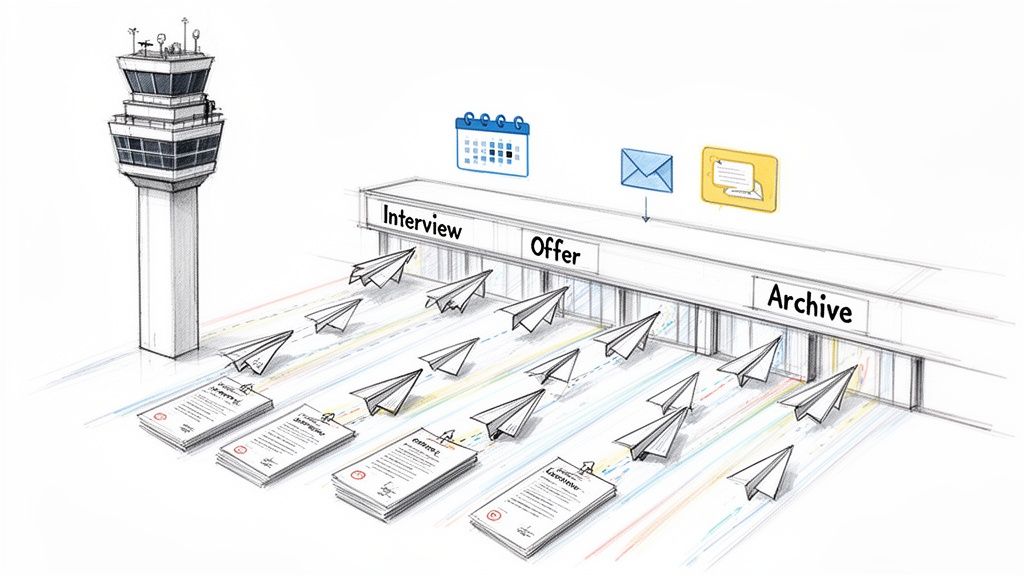
At its heart, an ATS is a central software platform that organizes every single step of the hiring journey. It handles everything from collecting applications and scheduling interviews to sending out status updates. It’s so much more than a digital filing cabinet; it’s an active partner that finally ends the nightmare of tracking candidates in tangled spreadsheets and overflowing email inboxes.
Instead of your team manually reading through hundreds of resumes, the system does the initial heavy lifting. It automatically parses each resume, pulls out key details like skills and work history, and then filters applicants based on the specific qualifications you set for the role. If you want to see this from the job seeker’s side, this guide on how to write a resume to pass ATS offers great insights.
This shift from manual to automated immediately brings a sense of order and control. Everyone on your hiring team gets a clear, unified view of every candidate and where they stand in the process.
An ATS ensures no great candidate slips through the cracks. It provides a single source of truth, transforming a reactive, disorganized process into a proactive, strategic operation.
This newfound organization is the key to unlocking all the other benefits we’ll cover. But before we get into the specifics, it’s helpful to see just how different the “before” and “after” can be.
Manual Hiring vs ATS-Powered Hiring
The table below draws a sharp contrast between old-school, manual recruiting and a modern hiring process powered by an ATS. It really shows how much daily hiring tasks can change for the better.
| Hiring Task | Manual Process (Without ATS) | Automated Process (With ATS) |
|---|---|---|
| Application Review | Manually reading every resume one-by-one, often taking days. | Instantly screens and ranks candidates based on keywords and qualifications. |
| Candidate Communication | Writing individual emails for updates, rejections, and scheduling. | Uses automated templates for consistent, timely communication at every stage. |
| Team Collaboration | Forwarding emails and sharing notes in separate documents or chats. | Centralized platform for team members to leave feedback and view progress. |
| Talent Sourcing | Starting from scratch with new job ads for every open role. | Builds a searchable talent pool of past applicants for future openings. |
As you can see, the difference isn’t just about speed—it’s about creating a smarter, more sustainable way to build your team.
Make Your Hiring Process Faster and More Efficient
In a tight job market, speed isn’t just a nice-to-have; it’s how you win. The best candidates are often off the market in days, not weeks. The biggest delays in hiring—sifting through hundreds of resumes, playing calendar Tetris to schedule interviews, and sending out updates—are exactly where you lose those people to a faster company.
This is where an applicant tracking system (ATS) comes in. It’s built to automate the most repetitive, time-consuming parts of the hiring process that tie up your team.
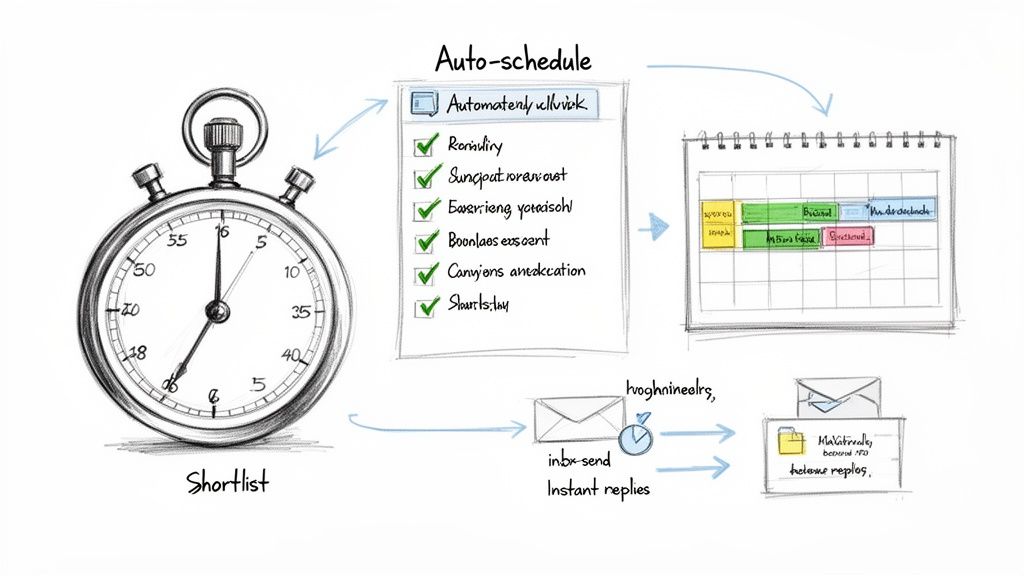
Think of it as a dedicated assistant for your recruiting team. Instead of manually opening every single resume, the ATS can instantly screen and surface the people who actually match your job requirements. This single feature frees up an incredible amount of time, letting your recruiters do what they do best: talk to great candidates, not get buried in administrative work.
From Manual Headaches to Automated Workflows
The gains in efficiency go well beyond just screening resumes. An ATS smooths out the chaotic back-and-forth that plagues the interview process.
- Effortless Scheduling: The system can connect directly to your hiring team’s calendars, find open slots, and let candidates book a time that works for them. No more endless “Are you free at…?” email chains.
- Instant Communication: You can set up automated emails to confirm an application was received, provide an update, or send a polite rejection. This keeps things moving and ensures no candidate feels like their application just disappeared into a black hole.
When your hiring process is this organized, it creates a real advantage. You can move qualified people from application to offer before your competitors even get a chance to schedule a first call. The impact on speed is dramatic and well-documented.
In fact, data shows that companies using an ATS can shorten their time-to-hire by 40%. Some recruiters have even seen that number jump, reporting a reduction of over 86% after adopting the right system.
When you consider that a typical corporate job posting attracts around 250 resumes, trying to manage that volume by hand becomes a logistical nightmare. An ATS cuts through the noise, giving your team a real edge. As you can see from these hiring efficiency statistics, you’re not just buying software; you’re shifting your hiring from a slow, reactive chore to a fast, strategic function.
Elevate the Modern Candidate Experience
Think about it: for most job seekers, the application form is their very first, real interaction with your company. A clunky, confusing, and impersonal process doesn’t just feel outdated—it sends a powerful (and negative) message about how you value people’s time and effort. Top candidates have options, and they expect a hiring experience that’s as smooth as the consumer apps they use every day.
This is where a good applicant tracking system changes the game. It’s designed to get rid of all those frustrating little hurdles that make people give up. For instance, instead of making someone re-type their entire work history right after uploading a resume, a modern ATS can intelligently parse the document and fill in the fields for them. It’s a small detail, but it shows you respect their time from the get-go.
Say Goodbye to the Application Black Hole
One of the most common complaints you hear from job seekers is the feeling of sending their resume into a “black hole.” They spend time crafting a thoughtful application, hit submit, and then… radio silence. An ATS puts an end to this by automating clear communication at every key stage.
- Instant Confirmation: The moment someone applies, the system can fire off a quick email to let them know their application is safely in your hands.
- Status Updates: You can easily set up automated messages to inform candidates when their application is under review or when they’ve been selected to move forward.
- Respectful Rejections: For candidates who aren’t the right fit this time, a professional and polite rejection email provides closure. This simple act of courtesy goes a long way in protecting your employer brand.
This kind of consistent communication makes every applicant feel seen and respected. Even if they don’t get the job, they’re far more likely to think highly of your company, and might even apply again for a future role that’s a better match.
Meet Candidates Where They Are: On Their Phones
Today’s job hunt happens on the go. An incredible 67% of job seekers now apply for roles using their smartphones, which means a mobile-friendly application isn’t a nice-to-have; it’s an absolute necessity.
Companies that get this right see huge advantages. Those with mobile-optimized ATS platforms attract 2.2× more applicants for every job they post. More importantly, they can slash the candidate drop-off rate from a painful 58% down to just 29%. When you consider that a staggering 92% of job seekers admit to abandoning applications before finishing them, making the process easier is one of the biggest impacts an ATS can have. You can learn more about how mobile is reshaping the industry by exploring the latest ATS company trends.
Build a Powerful and Proactive Talent Pipeline
Let’s be honest: the perfect candidate rarely shows up the exact moment you post a job opening. More often than not, hiring becomes a frantic scramble to find someone—anyone—fast. This reactive approach is not just stressful; it often leads to rushed decisions and hires you later regret.
One of the biggest game-changers an ATS provides is the power to break this cycle. It helps you shift from putting out fires to building a long-term talent strategy.
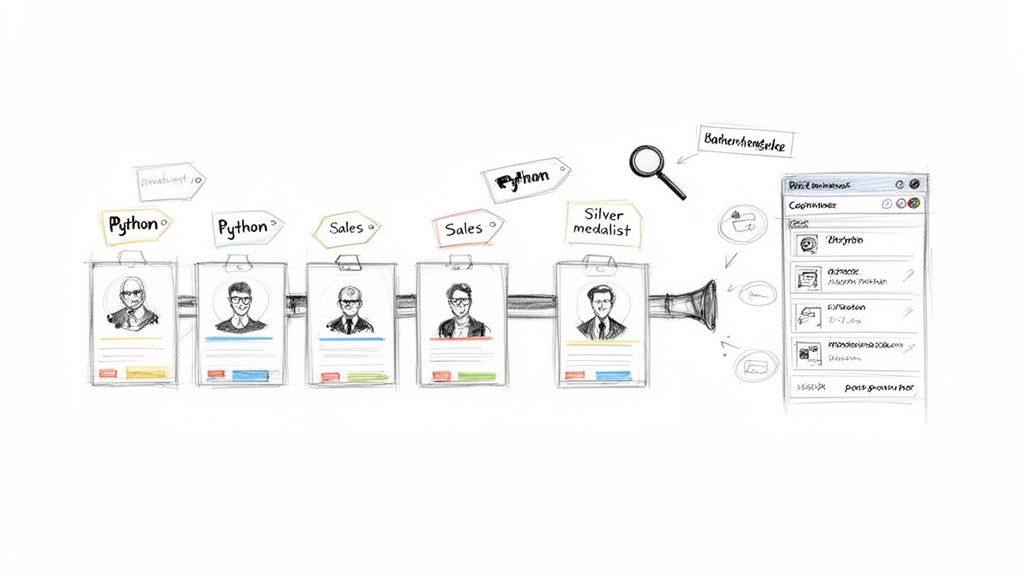
Think of your ATS as your own private, ever-growing talent community. Every person who applies—whether they were hired or not—is now part of this database. This is a goldmine.
It’s especially powerful for those “silver medalists,” the fantastic candidates who were a close second for a previous role. Without an ATS, their resume gets buried in an inbox or lost in a forgotten spreadsheet. With an ATS, they become a valuable, searchable part of your talent pool.
Turn Past Applicants Into Future Hires
Your ATS lets recruiters tag candidates with all sorts of useful information—skills, experience, interview notes, and even how they performed during the process. This transforms a forgotten resume pile into a warm list of people who are already familiar with your company.
- Find Hidden Gems: Maybe that great marketing applicant from last year is the perfect person for the new social media manager role you just created.
- Tag for Skills: You can instantly search your database for specific qualifications. Need someone who is “PMP certified” or a “Salesforce expert”? Just type it in.
- Keep Track of Interest: Make a note of candidates who were genuinely excited about your company’s mission. They’re often the most engaged and easiest to bring back into the conversation.
This completely flips the script on sourcing. When a new job opens up, your first move isn’t to pull out the company credit card for job ads. Instead, you start by searching your own curated community of people who have already raised their hand. For a deeper dive into optimizing your recruitment funnel and building a robust candidate pool, explore strategies for attracting top talent.
Your talent pipeline transforms from an empty bucket you must fill with every new job opening into a reservoir of qualified candidates you can draw from at any time.
The Strategic Advantage of Proactive Sourcing
This proactive method gives you a serious competitive edge. Instead of starting every search from scratch, you begin with a pre-vetted shortlist of warm leads. Imagine the time and money you’ll save on job board fees and advertising campaigns.
By nurturing this internal database, you can spot and connect with top-tier candidates before your competitors even finish writing their job descriptions. This approach doesn’t just speed up your time-to-hire; it boosts the quality of your hires by connecting the right person to the right role at the right moment. Suddenly, all your past recruiting efforts become smart investments that keep paying you back.
Keeping a Distributed Hiring Team in Sync
Hiring is a team sport. But when your players are scattered across different cities—or even continents—it’s tough to keep everyone on the same page. Without a central playbook, critical details get buried in endless email threads, candidate feedback lives in a dozen different Slack channels, and hiring managers are left guessing where an applicant really stands. It’s a recipe for confusion, slow decisions, and a messy experience for everyone involved.
This is exactly where a good applicant tracking system (ATS) steps in. Think of it as the central nervous system for your entire hiring process—a single source of truth where every recruiter, interviewer, and hiring manager can see the same information, in real-time. This centralized command center is one of the most powerful applicant tracking system benefits.
Instead of a manager frantically searching their inbox for interview notes from last week, they can just pull up the candidate’s profile in the ATS. Suddenly, every comment, score, and evaluation is right there, creating a clean, chronological story of the candidate’s journey.
A Shared Space for Smarter, Fairer Decisions
But great collaboration isn’t just about sharing notes; it’s about making consistent, high-quality decisions. An ATS gives you the structure to do just that, which is a game-changer when you’re building a remote-first team and need to ensure fairness across the board.
- Standardized Scorecards: You can build custom scorecards for every role, outlining the exact skills and qualities you’re looking for. This forces everyone to evaluate candidates against the same objective criteria, pushing personal bias out of the equation.
- Real-Time Activity Logs: Get a transparent view of every touchpoint. See who viewed a resume, when an interview was scheduled, and what feedback was left. This level of clarity keeps the whole team aligned and accountable.
- Shared Notes and @-Mentions: Forget siloed conversations. Team members can drop comments and tag colleagues directly within a candidate’s profile to ask a quick question or flag something important. All communication stays right where it belongs.
By bringing everything into one unified platform, an ATS ensures that team feedback is actually collected, organized, and easy to find. This alone stops great candidates from slipping through the cracks because of a missed email or messy notes.
This kind of organization is what makes asynchronous collaboration possible for distributed teams. A recruiter in London can leave their feedback at the end of their day, and their colleague in San Francisco can pick it right up the next morning without missing a beat. This unlocks faster, more cohesive decisions, no matter where your team members are. You can find plenty of companies using these modern hiring systems by checking out opportunities on a remote job search engine.
6. Make Smarter, Data-Driven Hiring Decisions
Let’s be honest: for too long, many hiring decisions have been driven by gut feelings and hunches. While intuition has its place, relying on it alone is like trying to navigate a ship without a compass. You might get lucky, but you’re more likely to drift off course. This is where an applicant tracking system completely changes the game, turning your recruitment efforts from a guessing game into a measurable strategy.
An ATS doesn’t just store resumes; it becomes your central command for hiring intelligence. It quietly gathers data at every single touchpoint, from the moment a candidate applies to the day they’re hired.
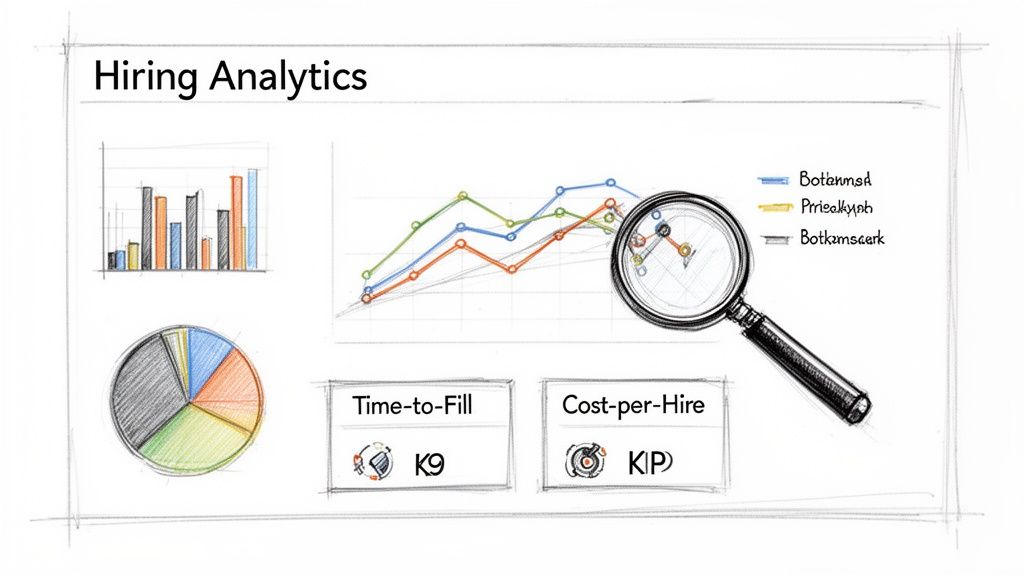
Suddenly, you can see what’s actually working—and what’s just wasting time and money. The platform translates all that raw data into clear, visual dashboards, giving you the power to make strategic choices backed by real numbers.
Finally Answer Your Biggest Hiring Questions
Without an ATS, trying to track key performance indicators (KPIs) is often a nightmare of spreadsheets and manual data entry. With a system in place, you get instant answers to the questions that keep you up at night.
How long is it really taking us to hire? Your Time-to-Fill metric shows you the exact number of days from posting a job to getting an accepted offer. A high number isn’t just a statistic; it’s a red flag pointing to a bottleneck in your screening or interview process that needs a closer look.
Where are our best hires coming from? The Source of Hire report is one of the most valuable pieces of intel you can get. It shows you precisely which job boards, social media channels, or referral programs are delivering candidates who actually get hired. You can finally stop throwing money at sources that don’t perform.
What is this hire actually costing us? By tracking everything from job ad spend to recruiter hours, the Cost-per-Hire metric reveals the true financial investment needed to fill a role. This is crucial for budget planning and proving the efficiency of your team.
This table breaks down some of the most important metrics an ATS tracks and explains why they’re so critical for making informed business decisions.
| Metric | What It Measures | Why It Matters |
|---|---|---|
| Time-to-Fill | The total number of days from opening a job requisition to a candidate accepting an offer. | Identifies bottlenecks in the hiring process and helps you set realistic expectations for hiring managers. |
| Time-to-Hire | The number of days from a candidate entering the pipeline to them accepting an offer. | Measures the efficiency of your candidate evaluation and interview stages. A shorter time improves candidate experience. |
| Source of Hire | The channel or platform where a successful candidate originally found and applied for the job. | Shows which sourcing channels provide the best ROI, allowing you to optimize your recruitment marketing budget. |
| Cost-per-Hire | The total internal and external costs associated with filling a position, divided by the number of hires. | Demonstrates the financial efficiency of your recruitment function and helps justify budget requests. |
| Offer Acceptance Rate | The percentage of candidates who accept a formal job offer. | A low rate can indicate issues with your compensation, benefits, company culture, or the interview experience itself. |
These metrics aren’t just for reports; they are the tools you use to refine and perfect your hiring process over time.
Your ATS turns scattered hiring data into a clear story. It’s the proof you need to justify your budget, show leadership the tangible ROI of your team’s efforts, and build a case for strategic change.
This feedback loop is what separates good recruiting teams from great ones. For example, if your data shows that a particular job board has a high application rate but a terrible hire rate, you know to reallocate that budget to a source that delivers quality. If your time-to-fill is creeping up, you can dig in and see if a specific interview stage is causing delays.
By embracing this data-first approach, you move beyond just filling roles. You start building a predictable, efficient system that consistently brings in the right people and gives your company a serious competitive edge.
Frequently Asked Questions About Applicant Tracking Systems
Applicant tracking systems can feel like a black box, and a lot of myths have popped up around them. Let’s pull back the curtain and answer some of the most common questions people have. Knowing how these tools actually work is the first step to navigating your job search with confidence.
Does an ATS Automatically Reject My Resume?
This is the biggest misconception out there. An ATS doesn’t have a mind of its own, and it’s not designed to automatically throw out applications. Think of it less like a ruthless bouncer and more like a highly organized digital librarian for recruiters.
Its main job is to parse your resume, sort the information, and show it to a human in a consistent, easy-to-read format. While the system uses keywords from the job description to filter and rank candidates, a person always makes the final decision. An ATS simply helps them find the most relevant people faster, saving them from sifting through hundreds of files by hand.
How Can I Optimize My Resume for an ATS?
Getting your resume noticed by the system is all about clarity, not trickery. The good news is that the best practices for an ATS are also best practices for the human who will read it next.
- Mirror the Job Description: Look at the specific language used in the job post. If they’re asking for “project management” and “stakeholder communication,” make sure those exact phrases are in your resume where relevant.
- Keep Formatting Simple: This is not the time for fancy columns, tables, or images in your resume. Stick with standard, clean fonts like Arial or Calibri and use straightforward headings like “Work Experience” and “Education.”
- Use Standard File Types: Your safest bet is almost always a Word document (.docx) or a text-based PDF. These are the formats most systems are built to read flawlessly.
The goal isn’t to “trick” the system. It’s to make it incredibly easy for both the software and the recruiter to see that you’re a great fit for the role.
Are All Applicant Tracking Systems the Same?
Not even close. The term “ATS” is a huge umbrella, covering everything from simple, free tools for small businesses to massive, complex platforms built for global corporations. Some are even designed for specific industries, like healthcare or technology.
This is a crucial point because the quality of an ATS varies wildly. A modern system offers a smooth, mobile-friendly application that takes just a few minutes. An outdated, clunky one creates a frustrating experience that makes you want to give up. A company’s choice of ATS says a lot about how much they value their candidates’ time and experience.
Ready to stop worrying about ATS filters and start finding jobs before they’re flooded with applicants? Remote First Jobs gives you a direct line to over 21,000 remote companies, letting you apply before the crowd. Find your next opportunity at remotefirstjobs.com.