
You’re probably doing what most beginners do. You open LinkedIn, type “remote cybersecurity entry level,” filter for easy apply, and start scrolling. Half the roles don’t look entry level. Some want prior SOC experience. Some want a clearance. Some have so many applicants that your resume disappears before a human sees it.
That doesn’t mean the market is closed. It means the obvious search path is noisy.
Cybersecurity still has a real hiring gap. There are 3.5 million unfilled cybersecurity jobs worldwide, and that shortage has helped drive a 42% year-over-year increase in entry-level remote cybersecurity positions, with remote entry-level pay commonly landing in the $55,000 to $80,000 range according to SecuSpark’s remote cybersecurity jobs analysis. The opening isn’t “apply harder.” The opening is to stop competing where everyone else competes.
Most beginners lose because they treat the search like a lottery. They click into crowded boards, chase vague listings, and send generic resumes to roles that were already flooded days ago. Hiring managers notice the difference between a candidate who found the job late and a candidate who arrived early with the right signal.
That’s the hidden path. Build proof fast. Search smarter than the crowd. Apply to verified roles before they turn into public traffic magnets. If you want cyber security entry level jobs remote, your advantage won’t come from having the fanciest background. It’ll come from showing practical skills and getting in front of the right employer before everyone else does.
Introduction The Hidden Path to Your First Remote Cyber Job
The beginner experience in cyber is frustrating for a reason. The label says “entry level,” but the posting often reads like a wish list for someone who already works in security. Add remote competition on top, and the search starts to feel rigged.
It isn’t rigged. It’s just uneven.
The strongest opportunity right now sits in the gap between market demand and job search behavior. Employers still need people. Beginners still can break in. But the candidates who get traction usually stop relying on crowded platforms as their primary search channel. They build evidence of competence, then they move fast on fresh openings.
Practical rule: In remote hiring, speed matters almost as much as fit. A solid candidate who applies early often beats a similar candidate who applies three days later.
That matters because cyber security entry level jobs remote aren’t one single lane. Some roles are operational. Some are compliance-heavy. Some are closer to IT support with a security angle. If you understand those lanes, you stop wasting time on jobs that look attractive but don’t match your current level.
There’s also a mindset shift beginners need to make. “No experience” doesn’t mean “nothing to show.” It means no formal security title yet. Hiring managers still expect signals. A cert helps. Labs help more. A clear portfolio with documented work helps most.
What usually fails is the passive approach. Endless scrolling. Random applications. Generic bullet points like “passionate about cybersecurity.” That language tells me nothing. A candidate who can explain how they triaged a phishing sample in a home lab, built a simple Splunk dashboard, or documented a vulnerability scan sounds much closer to job-ready.
The path is narrower than social media makes it seem, but it’s also more practical. That’s good news. Practical paths are easier to follow than inspirational ones.
Decoding the Remote Cybersecurity Job Market
Remote entry-level cyber roles exist, but beginners often look at the wrong titles first. They jump toward penetration testing or threat hunting because those sound exciting. In practice, most first jobs come through support, monitoring, analysis, risk, and compliance work.
According to CybersecurityJobs.com’s 2026 remote hiring overview, 12 specific remote no-experience roles are actively hiring, including SOC Analyst roles at $55,000 to $72,000 and GRC Analyst roles at $58,000 to $78,000, with some jobs offering 3% to 5% performance bonuses. That matters because it tells you where actual beginner demand sits.
The roles beginners should target first
The best first target usually depends on what kind of work you enjoy.
If you like logs, alerts, and investigation, start with SOC or junior security analyst roles. If you prefer policy, audit evidence, frameworks, and structured documentation, GRC and compliance are often a better fit. If your background is customer support or IT troubleshooting, security help desk roles can be a clean bridge.
Here’s a practical snapshot.
| Job Title | Core Responsibilities | Typical Salary Range (USD) |
|---|---|---|
| SOC Analyst Tier 1 | Monitor alerts, triage suspicious activity, escalate incidents, document findings | $55,000-$72,000 |
| Junior Security Analyst | Review security events, support investigations, maintain basic controls, assist with reporting | $58,000-$75,000 |
| Compliance Analyst | Gather evidence, support audits, map controls, track policy requirements | $55,000-$70,000 |
| GRC Analyst | Assess risk, document controls, support governance programs, work with frameworks such as NIST CSF | $58,000-$78,000 |
| Security Help Desk | Handle user-facing security issues, access problems, basic troubleshooting, security-related tickets | $45,000-$60,000 |
What these jobs actually look like day to day
A SOC Analyst Tier 1 isn’t spending the day “hacking.” They’re reviewing alerts, checking whether activity looks malicious, following playbooks, and escalating what they can’t confidently resolve. This is a strong fit for people who like process, repetition, and pattern recognition.
A Junior Security Analyst often sits in a broader role. One day might involve reviewing endpoint alerts. Another might involve helping tune a dashboard or updating internal documentation. These jobs reward curiosity because the workload is varied.
A Compliance Analyst spends more time in spreadsheets, tickets, policy reviews, and evidence collection. Beginners sometimes overlook this path, but remote compliance work can be a strong entry point because it values consistency, written communication, and attention to detail.
A GRC Analyst sits a little closer to business risk. You may help map controls to a framework, support audit prep, or track remediation progress. If you’re organized and comfortable explaining technical risk in plain language, this lane can be more beginner-friendly than many people assume.
A lot of new candidates chase the flashiest title. Hiring managers usually care more about whether you chose a role that matches how you actually work.
How to choose your lane
Don’t choose based on prestige. Choose based on what you can credibly prove in the next few months.
Use this filter:
- Pick SOC-type roles if you can show alert triage, log review, SIEM exposure, and incident notes.
- Pick GRC or compliance roles if you can discuss controls, risk thinking, documentation quality, and framework awareness.
- Pick security support roles if your strongest evidence comes from troubleshooting, access issues, customer communication, or ticket-based work.
What doesn’t work is applying across every cyber title you can find. That creates a scattered resume and weak interview story. A hiring manager should be able to tell, within a few seconds, which kind of junior cyber candidate you are.
Building Your Hire Me Signal Without Experience
Most beginners don’t have an experience problem. They have a proof problem.
A hiring manager can work with an unfinished background. We can’t work with vague claims. If you want cyber security entry level jobs remote, your first task is to build a visible signal that says, “I can already handle beginner-level work with supervision.”

A useful benchmark comes from Jobright.ai’s roadmap for entry-level remote cyber roles. It recommends a 12-week signal-building funnel built around daily study, hands-on labs, and a portfolio of 2 to 3 case studies. Most important, it reports that portfolios with 3+ quantified projects pass ATS 85% of the time, compared with 25% for cert-only resumes.
That aligns with what hiring teams tend to notice. A certification gets you into consideration. A documented body of work gives people something concrete to evaluate.
Weeks one through four build baseline fluency
Start with CompTIA Security+ if you’re new. It’s not magic, and it won’t replace hands-on skill, but it gives you a common language for risk, threats, controls, authentication, encryption, and incident response.
A realistic daily pattern looks like this:
- Structured study: Spend focused time on a course or study guide covering core security domains.
- Term review: Drill acronyms and concepts until you can explain them without sounding memorized.
- Practice questions: Review why wrong answers are wrong, not just why the right answer is right.
Your standard shouldn’t be “I watched the videos.” Your standard should be, “I can explain the CIA triad, phishing flow, least privilege, and common controls in plain English.”
Weeks five through eight create hands-on evidence
Most weak applications falter at this point. Candidates list learning platforms, but they can’t describe what they did.
Use beginner-friendly tools and document your work as you go. Good options include TryHackMe, Splunk Free, ELK, Nessus-style vulnerability scanning in a lab, and basic Windows or Linux log review. If you’re targeting SOC work, you should be able to talk through an alert investigation. If you’re targeting GRC, you should be able to explain why a control matters and how you’d track evidence for it.
Aim for work that maps to actual junior tasks:
- Alert investigation: Review simulated phishing, brute-force, or suspicious login activity.
- Dashboard building: Create a simple view for failed logins or unusual source activity.
- Vulnerability interpretation: Run a lab scan and prioritize findings based on risk, not panic.
- Documentation: Write down context, findings, and what action you’d take next.
Hiring lens: I trust a beginner more when they can explain one modest project clearly than when they name ten tools they barely touched.
A common mistake is treating labs like private practice. They shouldn’t stay private. Every useful lab should produce an output you can show.
Weeks nine through twelve turn practice into a portfolio
This is the difference between “I studied cyber” and “I can show work.”
Build 2 to 3 case studies. Each should be short, readable, and tied to a real junior task. Don’t write like a textbook. Write like someone handing over a clear internal investigation note.
A simple structure works well:
Context
What happened? What system, user, or alert were you looking at?Data reviewed
Which logs, screenshots, events, or artifacts did you use?Steps taken
What did you check first? What did you rule out? What came next?Findings
What did you conclude, and how confident were you?Response
What would you escalate, remediate, or monitor?
A title like “Investigating Suspicious RDP Logins in Splunk” is stronger than “Cybersecurity Project 1.” Specificity wins.
Here’s a good time to see how someone walks through beginner cyber work on video:
What works and what wastes time
Not every activity has the same hiring value.
| High-signal move | Low-signal move |
|---|---|
| Finishing a Security+ study plan and explaining core concepts clearly | Collecting half-finished course certificates |
| Investigating simulated alerts and writing up the findings | Listing “familiar with SIEM” with no example |
| Building small dashboards in Splunk or ELK | Watching tool demos without touching the tool |
| Publishing case studies to GitHub or a personal site | Keeping all lab work offline and undocumented |
| Tailoring projects to target roles like SOC or GRC | Applying broadly without role focus |
The portfolio standard hiring managers respect
Your portfolio doesn’t need to be polished like a product launch. It needs to be believable, relevant, and easy to review.
Use this checklist:
- Keep it role-aligned: SOC projects for SOC jobs, risk/control work for GRC jobs.
- Show screenshots carefully: Include enough to prove the work happened, but explain what the screenshot means.
- Use numbers only when they’re real: “Investigated simulated alerts” is fine. If you’ve counted your work accurately, include the count.
- Host it somewhere simple: GitHub is fine. A plain personal site is fine. Clarity matters more than design.
Beginners often think they need advanced offensive security projects to stand out. They usually don’t. Most junior remote teams need someone who can follow a process, write clean notes, ask good questions, and stay calm with basic tools. Build for that reality.
Crafting a Resume That Beats the Bots
A generic resume is a rejection machine.
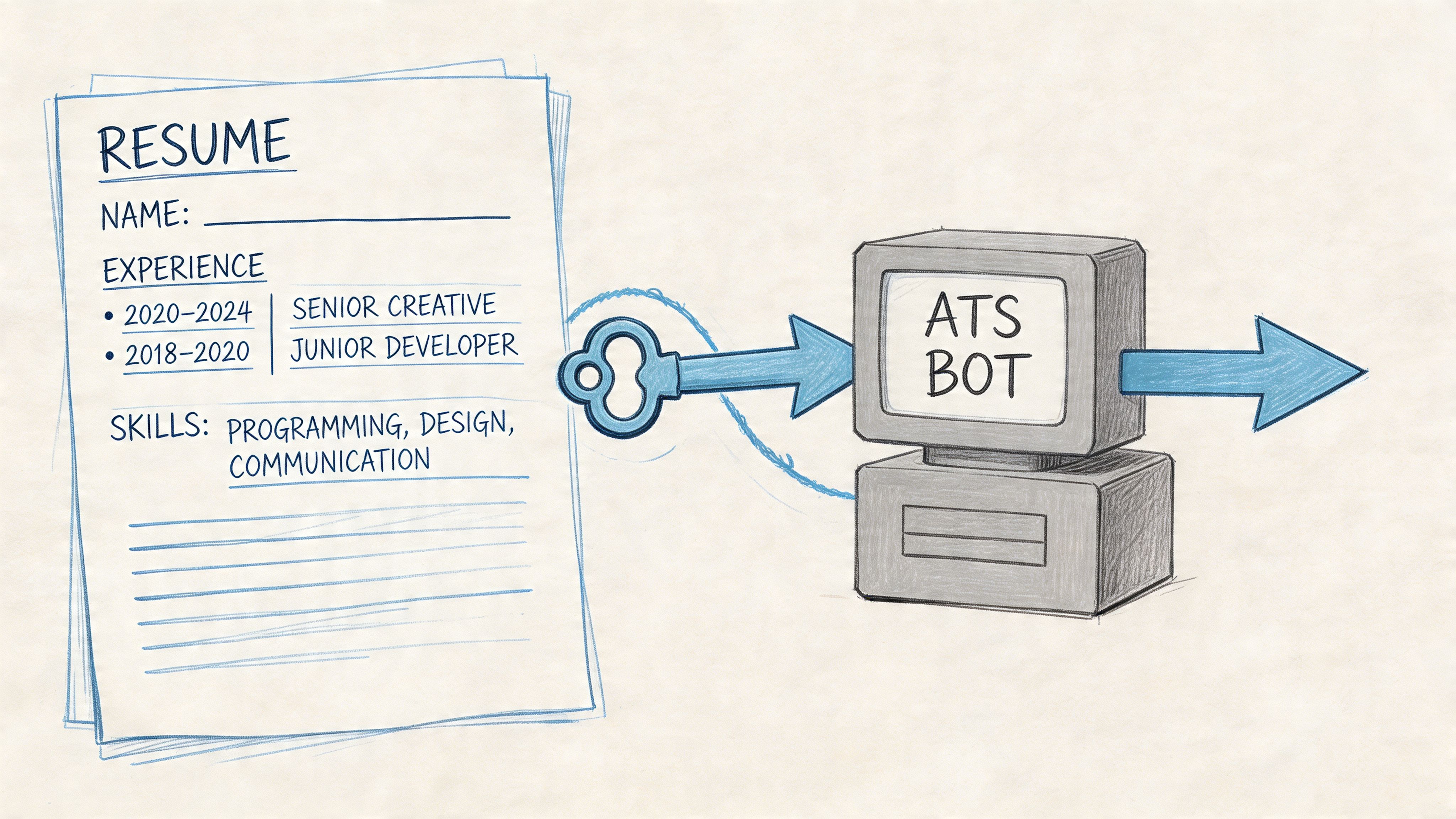
For entry-level cyber roles, especially remote ones, your resume has to do two jobs at once. It has to survive an ATS parser, and it has to make a hiring manager believe your labs count as relevant experience. If it fails either test, it won’t move.
CareerVillage guidance on remote beginner cybersecurity hiring notes that resumes with documented home lab or TryHackMe projects receive 2 to 3 times more recruiter views than resumes that only list certifications, and 80% of recruiters scan a candidate’s GitHub first for entry-level technical roles.
What weak entry-level resumes get wrong
The usual version looks like this:
- Objective statements: “Seeking a challenging cybersecurity role where I can grow.”
- Tool dumping: A long list of products with no context.
- Education-heavy structure: Coursework takes up more space than actual work samples.
- No proof links: GitHub, writeups, and project pages are missing.
That format tells me you want a job. It doesn’t tell me you can do one.
Translate labs into experience
You’re allowed to count relevant project work as experience. You just have to describe it accurately.
Bad version:
Completed TryHackMe modules and learned about SIEM tools.
Better version:
Investigated simulated security alerts in a home lab, documented findings, and built basic dashboards in Splunk to track failed logins and suspicious activity.
Bad version:
Studied vulnerability management.
Better version:
Ran vulnerability scans in a lab environment, reviewed findings, prioritized higher-risk issues, and wrote remediation notes for common exposures.
Keywords matter, but only when earned
Most junior candidates either ignore keywords or overstuff them. Both are mistakes.
Pull language directly from the role you’re applying to, then match it accurately in your summary, skills, and project bullets. Useful terms often include SIEM, CVSS, GRC, NIST, incident response, log analysis, alert triage, risk assessment, and compliance evidence.
If the job asks for “alert triage” and your project says only “security monitoring,” you’re making the ATS do interpretive work it often won’t do.
A better resume structure
Use a simple single-column format with these sections:
Summary One short paragraph suited to the role.
Skills
Tools, tasks, and frameworks you’ve used.Projects
This is the heart of the document for most beginners.Experience
Include adjacent work like IT support, customer support, admin work, or analyst work if it helps your story.Education and certifications
Keep this clean and brief.
If you need help tightening formatting and keyword alignment, Dupple’s guide on how to get your resume past AI is worth reviewing before you start applying.
A before and after example
| Weak bullet | Stronger bullet |
|---|---|
| Learned Splunk in labs | Built and documented a basic Splunk dashboard to monitor failed login patterns in a home lab |
| Completed cyber coursework | Applied Security+ level concepts in hands-on labs covering phishing analysis, log review, and basic incident documentation |
| Interested in risk management | Supported mock GRC tasks by mapping controls, organizing evidence, and summarizing risks in plain language |
The strongest junior resumes are easy to skim. They use real verbs. They point to evidence. They read like someone who already behaves like an analyst, not someone waiting for permission to start.
The Smart Search Finding Jobs Before the Crowd
Most beginners are told to “be persistent” on major job boards. That advice sounds reasonable and fails in practice.
The problem isn’t persistence. The problem is timing. By the time a remote cyber job is heavily circulated on LinkedIn or Indeed, it may already be buried under applicants, duplicate reposts, agency copies, or stale traffic. That’s where beginners burn time.
Indeed-based job market analysis for entry-level remote cyber roles highlights a major issue: many so-called entry-level listings still require 1 to 3 years of experience, and self-taught applicants often get filtered out before review. That’s exactly why first-mover behavior matters. Fresh, verified openings give you a better shot than crowded recycled ones.

Why the spray-and-pray method breaks down
Big boards are useful for market awareness. They’re weak as a primary execution channel for remote beginners.
Here’s why:
- Listings get noisy fast: Popular remote roles attract massive attention.
- Entry-level labels are sloppy: Many posts are junior in title but not in requirements.
- Job freshness is hard to judge: Some posts are old, duplicated, or poorly synced.
- Third-party clutter gets in the way: Agencies and recycled posts make it harder to find direct-hire opportunities.
If you apply late to a role with broad visibility, your resume competes against volume before it competes on merit.
The first-mover strategy in plain terms
The better approach is simple. Find jobs closer to the moment they’re posted, target roles that fit your profile, and submit a customized application before the listing becomes public noise.
That changes your search process from “Where are the most jobs?” to “Where will I see legitimate jobs earliest?”
A practical search routine looks like this:
- Use narrow keywords: Search for terms like junior SOC, entry GRC, compliance analyst, security help desk, or junior security analyst.
- Filter for direct-hire language: Favor company-run applications over vague lead forms.
- Check requirements fast: If the role obviously expects experience you lack, move on.
- Apply in batches: Short focused sessions beat all-day doom scrolling.
- Track sources: Note where better-fit jobs come from so you can double down there.
Field note: Beginners usually improve faster by sending fewer, sharper applications than by blasting the same resume everywhere.
What to look for in a higher-quality search tool
If your goal is to beat the crowd, the search source matters as much as the resume.
Look for tools that prioritize:
| What to look for | Why it matters |
|---|---|
| Direct sourcing from employer career pages | Reduces duplicates and stale reposts |
| Fast detection of new listings | Gives you an earlier application window |
| Filters for remote-first companies | Cuts down on fake “remote” labels |
| Less agency spam | Keeps you focused on actual employers |
| Verified links to real ATS pages | Helps you avoid dead-end applications |
One useful option is Remote First Jobs, which focuses on direct-sourced remote roles rather than relying on the usual board clutter. For beginners pursuing cyber security entry level jobs remote, that kind of setup is valuable because the quality of the lead often matters more than the raw number of results.
A realistic weekly search system
Don’t make job hunting feel random. Run it like a lightweight operations process.
Try this:
Early in the week Search for fresh roles with your target titles. Save only the ones that fit.
Midweek
Tailor resumes for the strongest matches. Reuse a small number of high-quality versions instead of rewriting from scratch every time.
End of week
Review outcomes. Which titles got responses? Which requirements kept showing up? That tells you what to study next and what to stop chasing.
The mistake is waiting until you “feel ready” and then applying to whatever’s available. Better candidates work the other way around. They pick a lane, build matching proof, and use faster sourcing so they arrive before the applicant pile does.
Vetting Opportunities and Acing the Remote Interview
A fresh listing isn’t automatically a good listing. Beginners need to screen for legitimacy just as carefully as they screen for fit.
One issue that catches people off guard is security clearance. According to Builtin NYC’s remote entry-level cyber listings, some U.S.-based roles require “U.S. jurisdiction” or an “active Secret security clearance,” and only an estimated 20% of entry-level remote cyber jobs are clearance-free. If you’re an international applicant or you don’t hold clearance, that’s not a small detail. It’s an immediate filter.
Vet the job before you spend time on it
Use a short checklist.
- Confirm the employer is real: Check that the job appears on the company’s own career page and that the company has a credible online presence.
- Read the requirements as written: If clearance, citizenship, or jurisdiction rules are listed, believe them.
- Watch for vague recruiters: If the posting hides the employer and pushes you into a generic intake process, be cautious.
- Check the application flow: Legitimate companies usually route you through a recognizable ATS or career portal.
- Notice compensation language: Clear salary ranges are a good sign, though not every legitimate posting includes one.
Some jobs aren’t scams. They’re just bad uses of your time. Learn to reject those quickly.
What remote interviewers are really testing
For junior remote cyber roles, technical knowledge matters. So does self-management.
Remote teams often probe for three things:
Can you work without constant hand-holding?
They want signs that you can follow a process, ask smart questions, and document your work.Can you communicate clearly in writing and on calls?
Many junior failures come from weak explanation, not weak effort.Can you walk through your project work calmly?
If you built the lab, you should be able to explain it step by step.
A simple answer style works best. Describe the scenario, what you observed, what you checked, what you concluded, and what you’d escalate.
How to talk about your portfolio without sounding rehearsed
Don’t try to impress with jargon. Teach the interviewer what you did.
A strong walkthrough sounds like this:
- Set the context: “I created a small lab to investigate suspicious login behavior.”
- Name the tools: “I used Splunk to review event data and group failed authentication attempts.”
- Explain your reasoning: “I looked for repetition, source pattern, and timing before deciding whether it looked like normal user error or brute-force behavior.”
- End with action: “I documented the findings and noted when I’d escalate.”
That style shows judgment. Judgment is what hiring managers want from juniors, even more than polished terminology.
If the role mentions clearance and you don’t have it, don’t try to sidestep the issue. Ask whether sponsorship exists or move on. A clean no is better than spending days on a role that was never open to you.
Your Launchpad into a Remote Cybersecurity Career
Breaking into remote cyber doesn’t happen because you got lucky on a giant job board. It happens because you built signal, chose a lane, searched early, and showed up prepared.
That’s the pattern worth trusting.
If you’re serious about cyber security entry level jobs remote, keep the process simple. Learn the baseline. Build hands-on proof. Turn that proof into a resume and portfolio that a hiring manager can skim in minutes. Then stop fighting for attention at the noisiest point in the market. Look for openings before the crowd gets there.
You also don’t need to wait for a perfect role to understand how employers describe junior work. Reviewing a live example like this Junior Analyst in Security Governance, Risk, and Compliance posting can help you see the language, responsibilities, and expectations attached to one realistic entry path.
Start with one move today. Build your first lab. Write your first case study. Tighten one resume version for SOC or GRC. Save a shortlist of companies you’d want to work for. The people who break in aren’t always the smartest applicants. They’re often the clearest and the earliest.
If you’re tired of late applications, ghost jobs, and recycled listings, try Remote First Jobs to find direct-sourced remote roles earlier. It’s built for people who want verified openings from company career pages, not the usual job board noise.