
You refresh LinkedIn for the tenth time today. The same “urgent” remote contract recruiter role from a third-party agency is still sitting there, reposted again, with no sign the company is making hires. Another listing looks promising until the description gets vague, the comp sounds off, or the “recruiter” wants to move the conversation to a sketchy messaging app.
That’s the main problem with searching for remote contract recruiter jobs on mass-market boards. The volume looks good on the surface, but the signal is weak. You burn hours sorting through stale ads, duplicate agency postings, fake urgency, and jobs that were never live in the first place.
Meanwhile, the remote market is still moving fast. Remote job postings rose 20% quarter over quarter in Q1 2026 versus Q4 2025, according to the FlexJobs Remote Work Economy Index. For recruiters, that matters because the best contract work usually appears when hiring teams need help immediately, not after a role has been syndicated across every board on the internet.
The smarter play is to stop relying on the loudest platforms and start using channels that give you one of two advantages. Either they get you closer to the employer, or they get you there faster.
That’s what this list focuses on. Not generic “job sites,” but the platforms and sourcing channels that help experienced recruiters find cleaner listings, direct-hire signals, and lower-competition opportunities before the crowd piles in. Some are broad remote boards with strong filters. Some are niche. One is built specifically around speed and verified employer sourcing.
If you’re tired of chasing noise, this is the shortlist worth keeping open in your browser.
1. Remote First Jobs
If your current search process starts on LinkedIn, you’re probably arriving late.
Remote First Jobs is the strongest option on this list for recruiters who care about timing, listing quality, and direct access to employers. Instead of scraping other job boards, it pulls roles directly from employer ATS pages and career sites across more than 21,000 remote-first companies, which is exactly why the feed feels cleaner than the usual aggregator mess. You can browse Remote First Jobs when you want verified remote openings without dead links, agency clutter, or the usual MLM-style nonsense.
That sourcing model matters more than often acknowledged. A reposted job on a big platform often means you’re one layer removed from the company and one week behind the first wave of applicants. Remote First Jobs cuts out that lag.
Why recruiters get an edge here
The platform currently shows 44,000+ active verified remote jobs and detects 200,000+ new opportunities monthly, while monitoring 21,000+ remote-first companies’ career pages, according to the business context provided for this article. For a contract recruiter, that translates into a practical advantage. You can find openings closer to the moment they go live and apply before they get buried under mainstream-board volume.
Practical rule: Early application matters most when the role is high trust, remote, and lightly staffed on the hiring team. Contract recruiter openings often check all three boxes.
I’d use this site differently than a general board. Don’t treat it like an endless browsing feed. Treat it like a live req monitor. Search recruiter, talent acquisition, sourcer, people partner, and recruiting operations. Then search adjacent functions where companies often hire contract recruiting support around growth spikes, especially sales and marketing.
That second part is important because remote hiring demand isn’t rising evenly. Sales and business development saw the highest increases in the latest FlexJobs index, and account management, marketing, and communications each expanded by 30%+, according to the FlexJobs Remote Work Economy Index. Those are exactly the functions where contract recruiters often get pulled in fast.
What works and what doesn’t
This is a quality-first search engine, not a recruiter marketplace. That’s a strength if you want direct-hire employer roles. It’s less useful if you want gig-style projects, short-term freelance sourcing assignments, or local hybrid contracts.
What works well:
- Direct employer sourcing: Listings come from company ATS and career pages, so you’re not sorting through scraped duplicates.
- Speed advantage: The platform scans continuously and surfaces new jobs within hours, which is where the first-mover edge comes from.
- Cleaner remote signal: It filters out agency spam, fake postings, and common scam categories.
- Mid-senior fit: It’s built for serious remote professionals, not entry-level volume hunting.
What doesn’t:
- Less coverage for non-remote searches: If you’re open to hybrid or local contract work, you’ll need another source.
- Premium positioning: The platform is described as premium, and current access details should be checked on the site.
There’s also a strategic fit with the broader market. Remote jobs draw disproportionate attention, and JobsPikr’s 2025 analysis found they receive 2.5 times more applicants than in-person roles, cited in the business context provided for this piece. That’s why getting to verified listings earlier matters so much. The game isn’t just finding a role. It’s finding it before everyone else does.
Best use case
Use Remote First Jobs as your first stop each morning and again late afternoon. For remote contract recruiter jobs, speed beats volume. This tool is one of the few that supports that approach.
2. Recruiter.com
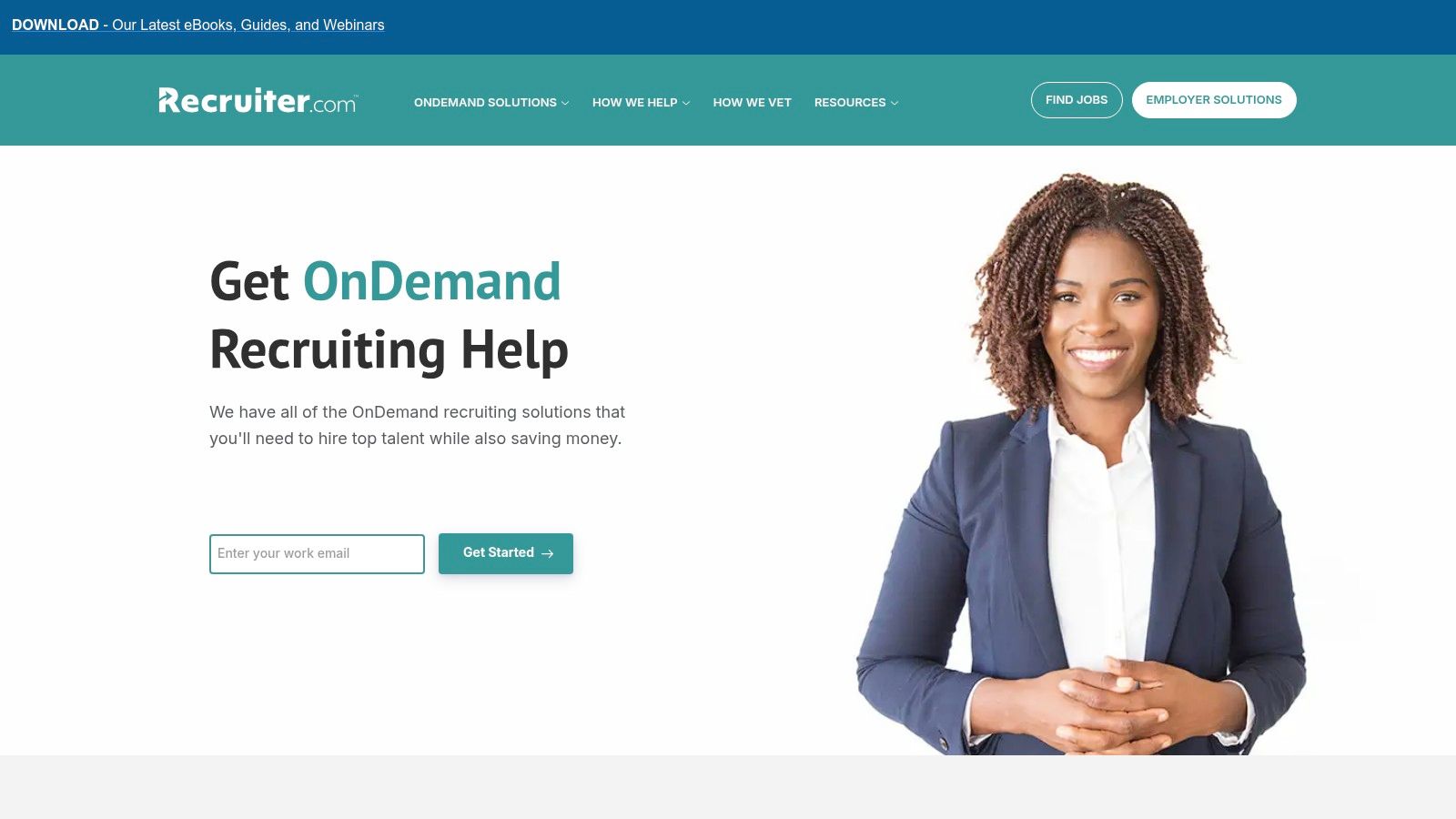
Recruiter.com is different from most boards on this list because it isn’t just a place to search jobs. It’s built around recruiters as the product. That alone makes it worth watching if you want actual contract recruiting engagements rather than generic remote listings.
The strongest part is the OnDemand model. Employers come in looking for recruiting support, and the platform staffs projects with recruiters and sourcers. If you want remote contract recruiter jobs that feel like operational recruiting work, not random freelance lead gen, this is one of the few places where that use case is front and center.
Where it fits in a serious search
I wouldn’t use Recruiter.com as a discovery engine for broad remote hiring trends. I’d use it when I want contract recruiter work with clearer delivery expectations. The platform is much closer to a talent marketplace for recruiting professionals than a normal board.
That changes how you should position yourself. Your profile needs to read like a client-ready service offering. Generic “full-cycle recruiter with strong people skills” language won’t carry much weight here. Employers and intermediaries want to know your stack, your functional strengths, and the environments where you ramp fast.
A few profile elements matter more than usual:
- Functional specialization: Show where you can deliver quickly, such as GTM, technical, G&A, or executive hiring.
- Workflow fluency: Mention ATS tools, scheduling stacks, intake calibration, and reporting habits.
- Contract readiness: Be explicit that you can step into short-term or fractional recruiting support.
- Business language: Frame your work around requisition coverage, hiring manager partnership, and candidate quality.
Strong contract recruiter profiles read less like resumes and more like deployment plans.
One helpful companion skill if you’re trying to turn contract work into repeat business is client development. If you want that side of the craft, this guide on how to get clients for a recruitment agency is useful context.
Trade-offs to expect
The upside is obvious. This is one of the few platforms where “contract recruiter” isn’t an afterthought.
The downsides are practical. Opportunity flow can fluctuate with employer hiring cycles, and you may need to clear two conversations before any project starts, one with Recruiter.com and one with the client. That can slow things down if you’re used to applying directly to hiring teams.
It’s still worth keeping in rotation because it solves a different problem than the other platforms. Most job boards help you find recruiter openings. Recruiter.com can help you land recruiter work.
You can browse the platform at Recruiter.com.
3. FlexJobs
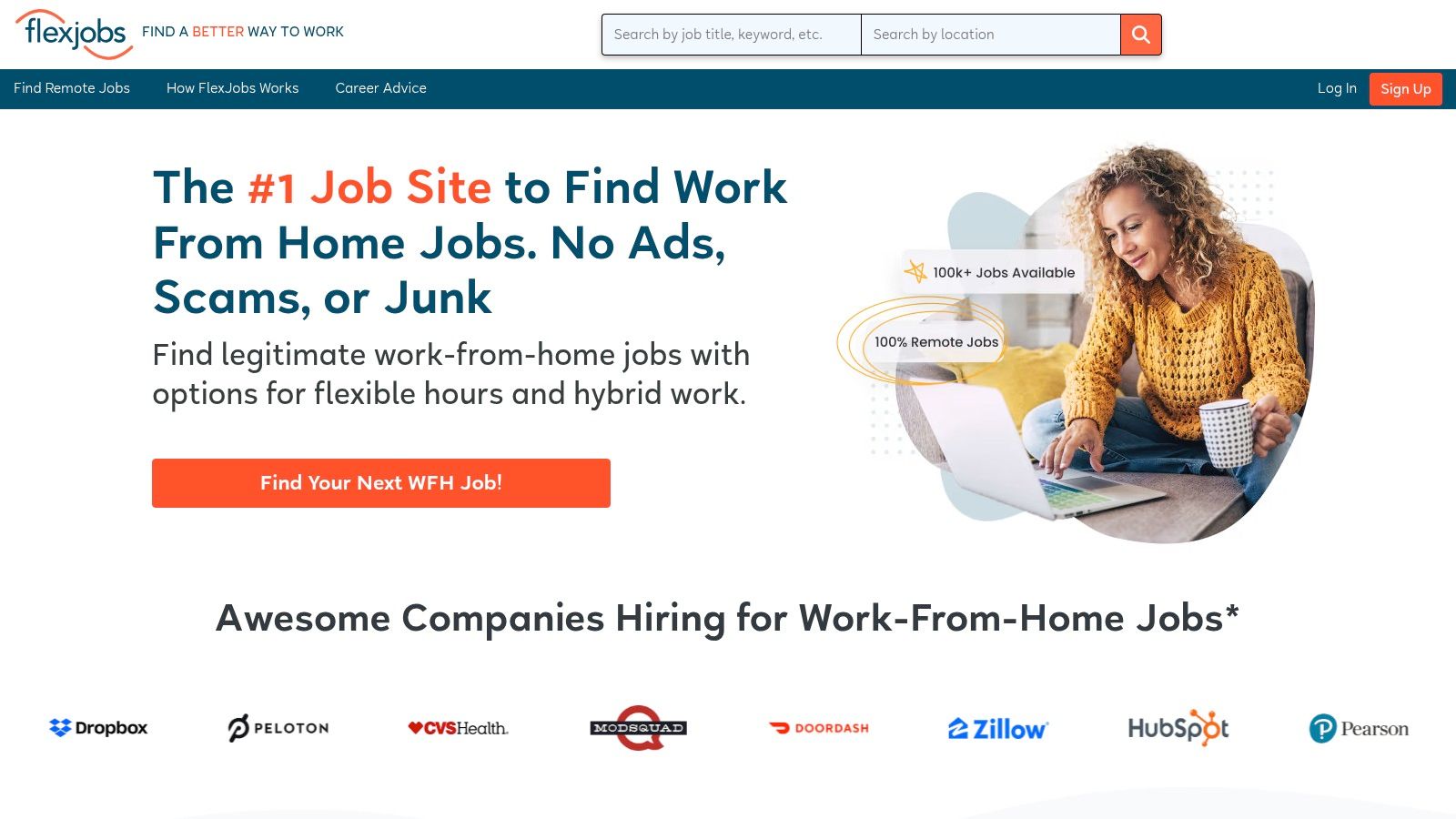
You open a promising remote recruiter posting, click through, and find a dead company page, a vague description, or a role that was filled weeks ago. That is the problem FlexJobs solves better than large general boards.
Its value is not raw speed. Its value is filtration. As noted earlier, remote work remains highly attractive to job seekers, which creates the usual side effects: heavier competition, recycled listings, and more low-trust posts mixed in with legitimate roles. FlexJobs still earns a spot in a contract recruiter search because the board puts more effort into screening what gets published.
Why FlexJobs still makes sense
I use FlexJobs as a quality-control channel. It helps when I want broader market coverage without taking on all the cleanup work that comes with mass-market job boards.
For remote contract recruiter jobs, that usually means better odds of finding a real opening with enough detail to assess fit fast. You can search within recruiting and HR categories, filter for contract or temporary work, and save searches that keep surfacing new listings without starting from scratch each day.
It is also one of the better boards for title variation. That matters because companies hiring contract recruiting support often describe the same need in different language:
- Recruiter: Common for full-cycle contract work and interim coverage.
- Technical recruiter: Useful if your background is in engineering, product, data, or security hiring.
- Talent acquisition partner: Often signals a stakeholder-facing contract role with intake meetings and hiring manager ownership.
- Sourcer or sourcing recruiter: Good fit for recruiters who want top-of-funnel project work rather than full-cycle delivery.
How to use it without slowing yourself down
Treat FlexJobs as a second-pass board. Start with channels that give you direct access or faster posting velocity. Then use FlexJobs to catch the legitimate roles that do not always show up early elsewhere.
Search by business problem, not just job title. A company may need a contract recruiter for sales hiring, customer success hiring, or marketing hiring and never use the exact phrase “contract recruiter” in the title. Recruiters who can cover commercial functions should search those terms directly, then scan the posting for timeline, req volume, and reporting structure.
That is the advantage here. You are not paying for more listings. You are paying for less wasted motion.
The trade-off is straightforward. FlexJobs sits behind a subscription, so it makes the most sense during an active search, not casual browsing. If you are in market for the next 30 to 60 days and want a cleaner review queue, the fee can be justified. If you only check openings occasionally, direct-source platforms will usually give you better return.
You can search listings at FlexJobs.
4. We Work Remotely
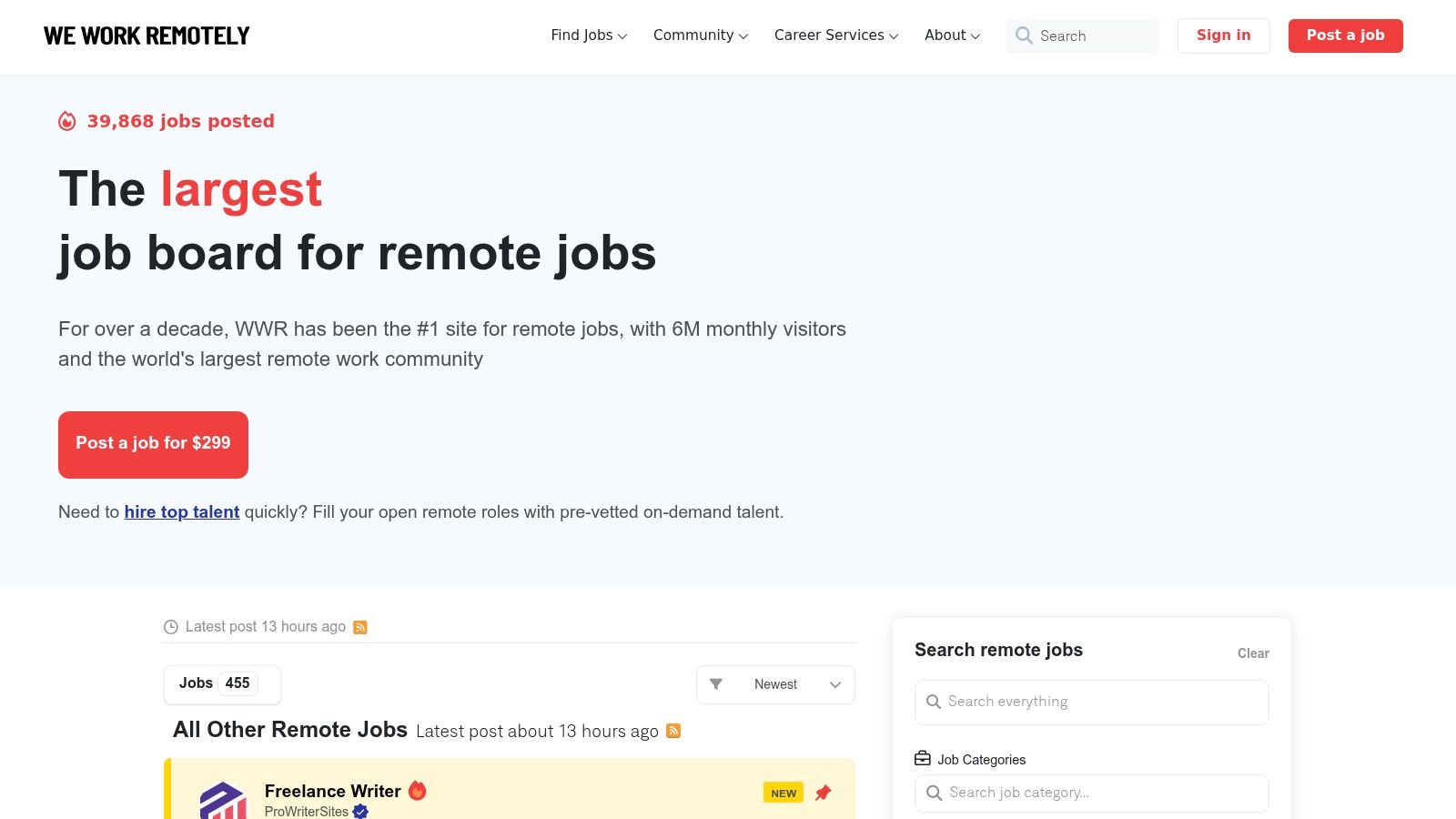
We Work Remotely is the high-volume option I’d keep, with one caveat. You have to search it like a recruiter, not like a hopeful candidate.
It has brand reach, daily listing activity, and a dedicated recruiter category. That means you’ll see openings from startups, smaller distributed companies, and lean teams that may never get much traction outside the remote-job ecosystem. It also lets you sort by region, which matters if you’re balancing US-only roles against work-from-anywhere positions.
How to avoid wasting time on it
A lot of people use We Work Remotely passively. They scroll, save a few jobs, and come back later. That’s the wrong move for remote contract recruiter jobs because the strongest listings on high-traffic boards get hit fast.
Use it as a quick-scan source. Open the recruiter category, filter for your geography, and triage hard. If the listing doesn’t clearly show scope, reporting line, company stage, and whether it’s contract or full-time, move on.
The reason to stay disciplined is competition. Remote roles make up only a small share of overall postings, yet they attract outsized demand. In the verified business context for this article, remote openings were described as representing about 8 to 9% of postings while pulling far more applicant attention. On a visible board like this, delay costs you.
A simple triage filter helps:
- Clear company identity: Skip vague listings that hide the employer unless the role details are unusually strong.
- Concrete scope: Look for req load, hiring volume, or function coverage.
- Remote terms: Separate “remote in the US” from “anywhere” immediately.
- Contract language: Don’t assume temporary, freelance, and contract mean the same thing. Read closely.
Best for startup-adjacent searches
We Work Remotely is especially useful if you recruit well in startup environments. Smaller remote companies often need contract recruiting support when they don’t want to commit to a permanent TA hire yet. That creates good short-term openings for recruiters who can run lean, build process as they go, and manage hiring managers without much infrastructure.
The trade-off is that you’ll need an account to get the full experience, and upgraded plans come with commitment terms. That won’t matter to everyone, but it’s worth knowing upfront.
Use it for volume, but don’t confuse volume with signal. The platform is best when you already know what a good remote recruiting contract looks like.
You can search roles at We Work Remotely.
5. Wellfound
Wellfound is where I’d look when I want startup exposure before roles spread everywhere else.
Formerly AngelList Talent, it still has that startup-native feel. You’re not just searching job titles. You’re searching founder-backed companies, early growth teams, and hiring environments where a recruiter can step in and stabilize demand quickly. That makes it a strong source for remote contract recruiter jobs, especially if you’re comfortable with ambiguity and lighter process.
Where it shines
A lot of startup companies don’t think in terms of “we need a permanent internal TA team member.” They think, “we need someone now who can help us get through this hiring burst.” That often produces interim, contract, and project-style recruiter roles before a larger board would ever catch them.
Wellfound is particularly strong if you’ve done any of the following:
- Built hiring process from scratch: Early-stage teams need this constantly.
- Handled founder-led recruiting: You can translate vague needs into real scorecards.
- Recruited across multiple functions: Startups rarely hire in just one lane.
- Worked lean: They want someone who can source, screen, calibrate, and close without waiting for support.
The upside is speed to signal. The downside is budget reality. Some companies will offer sharp titles and exciting mission language while still expecting senior-level recruiting output on a lean contract budget.
Startup recruiter contracts can be great. They can also become undefined catch-all roles if you don’t pin down scope early.
How to read listings correctly
On Wellfound, job descriptions often tell you more between the lines than in the headline. “Founding recruiter” may really mean a contractor who’ll own all hiring for a while. “Talent partner” may mean a temporary hiring surge role attached to a product launch or funding milestone.
Read for clues:
- Team size: Tiny teams often need broader recruiting ownership.
- Recent momentum: Hiring spikes usually create the best short-term recruiter openings.
- Role mix: If a company is hiring across engineering, GTM, and operations at once, contract support is usually urgent.
- Comp structure: Equity-heavy language can signal a budget mismatch for contractors.
Wellfound is free for job seekers, which makes it an easy board to keep in the mix. It won’t replace cleaner direct-source tools, but it’s excellent for finding startup roles before they become overshared.
You can browse companies and openings at Wellfound.
6. PowerToFly
PowerToFly is useful for a different reason than most boards on this list. It doesn’t just surface jobs. It creates access.
That matters because a lot of remote contract recruiter jobs are filled through warm paths, especially when companies care about trust, stakeholder presence, and inclusive hiring maturity. PowerToFly’s combination of listings, events, and employer-facing community activity gives you more than a static application lane.
The advantage is conversation
If you’re already a strong recruiter, your edge often isn’t your resume. It’s how quickly a hiring leader understands you can step in and run the work. Platforms that create live interaction make that easier.
PowerToFly is good for that. The events and virtual fairs can put you closer to hiring teams than a cold application ever will. That’s particularly useful if your background lines up with companies that value structured hiring, candidate experience, and inclusive recruiting practices.
The market context supports why these tools matter. According to the verified data tied to the iHire State of Online Recruiting 2025, AI adoption in recruitment increased 76.2% year over year, from 14.7% of employers in 2024 to 25.9% in 2025. In practice, that means more initial screening automation and more value placed on recruiters who can bring judgment, process control, and stakeholder alignment beyond basic sourcing.
How to use it well
Don’t rely on keyword filtering alone here because not every recruiter listing is contract. Read the fine print. A lot of viable contract work is framed as temporary coverage, project recruiting, seasonal support, or growth-stage hiring help.
What I’d do:
- Attend selective events: Focus on employers that hire distributed teams and show clear hiring momentum.
- Follow up fast: If you speak with a TA leader or hiring manager, message them while the conversation is still fresh.
- Position around outcomes: Explain where you’ve handled hiring spikes, built process, or improved recruiter-hiring manager calibration.
- Filter aggressively: Great platform, mixed listing types.
PowerToFly works best for recruiters who are comfortable converting community access into actual opportunities. If you only want to click apply and move on, other boards will be more efficient. If you’re good live and know how to turn a warm intro into a contract conversation, it’s a strong channel.
You can search openings and events at PowerToFly.
7. HRJobsRemote.com
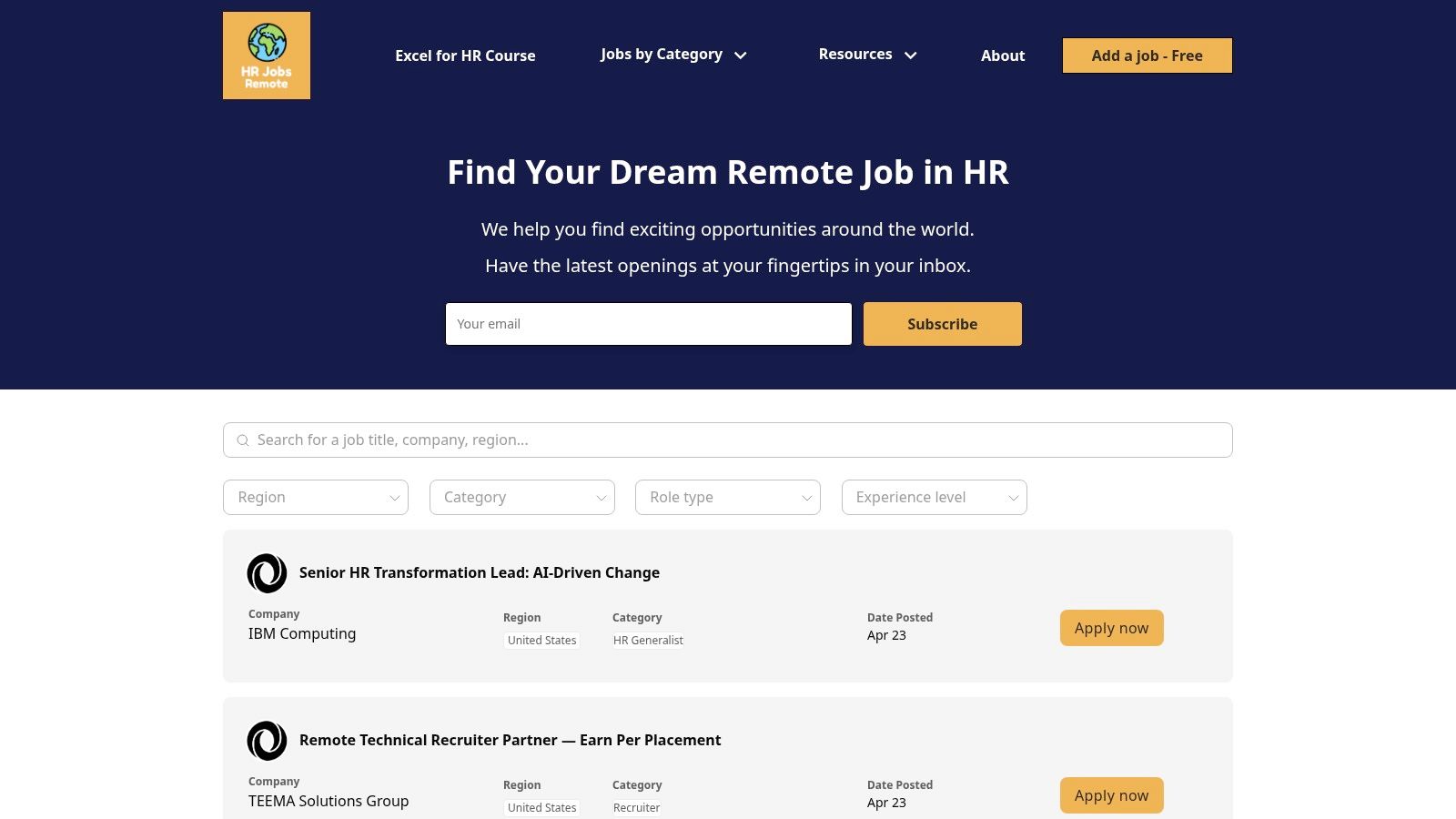
HRJobsRemote.com is the niche board on this list. That’s exactly why it belongs here.
General remote boards make you sort through everything. This site narrows the field to HR, People Ops, and Talent Acquisition. If your goal is remote contract recruiter jobs, that kind of specialization is a real advantage because your scan time drops immediately.
Why niche often wins
The biggest mistake experienced recruiters make in job searches is assuming bigger platforms are automatically better. Usually they’re just bigger. Niche boards often have less volume, but they also have less irrelevant inventory, fewer distractions, and less time wasted on roles that were never a fit.
HRJobsRemote.com is useful when you want to move fast through a TA-only lane. It often surfaces recruiter and sourcer openings at recognizable companies without making you dig through engineering, support, or operations jobs to find them.
That’s especially helpful if you’re already managing multiple channels and just need a clean specialist feed.
Smaller niche boards rarely win on scale. They win on scan efficiency.
What to watch out for
The limitation is simple. Volume varies.
Some weeks you’ll find several strong openings that line up with your background. Other weeks will feel thin. That doesn’t make the board bad. It just means you should use it like a specialist monitor, not your whole search strategy.
There’s another reason this board is useful. Existing content around remote recruiting roles often skips contractor realities, especially around classification, taxes, and cross-border issues. The verified data for this piece notes that guidance on 1099 versus W-2 distinctions, self-employment taxes, and international tax implications is often underserved, even as contract work grows, with the reference context pointing to ZipRecruiter’s remote contract recruiter listings. When you’re reviewing niche recruiter listings, read the employment classification carefully. “Contract” can mean very different things depending on the employer.
A few habits help:
- Check classification language: Confirm whether the role is true independent contractor work or temporary employment.
- Read pay terms carefully: Don’t assume cadence, invoicing, or benefits.
- Look for scope boundaries: Sourcer, recruiter, and TA partner contracts can be very different jobs.
You can browse the board at HRJobsRemote.com.
7-Way Comparison: Remote Contract Recruiter Platforms
| Service | 🔄 Implementation Complexity | ⚡ Resource Requirements | ⭐ Expected Outcomes | 💡 Ideal Use Cases / Key Advantages (📊) |
|---|---|---|---|---|
| Remote First Jobs | Low, sign-up and search; minimal setup | Moderate, likely premium subscription; few hours/week to monitor | High, live, verified remote roles; first-mover advantage | Ideal for mid‑to‑senior tech/product/design/marketing/sales seeking direct-hire remote roles. Key advantages: ATS-level scraping, large indexed pool, low noise. |
| Recruiter.com (OnDemand) | Medium, profile, vetting and client interviews may be required | Moderate, contract recruiter skillset; platform-managed billing and monthly cadence | Medium, access to on-demand recruiter gigs; volume varies with hiring cycles | Ideal for contract/FTC recruiters seeking short-term engagements. Key advantages: contract-first marketplace, AI matching, optional training. |
| FlexJobs | Low, create account; straightforward search & alerts | Low–Moderate, subscription required for full access; time to set alerts | High, editorially vetted listings with reduced scams | Ideal for candidates wanting vetted remote TA/recruiter contract roles. Key advantages: strong vetting, contract filters, saved searches. |
| We Work Remotely | Low, account needed to browse/apply | Low, mostly free; Pro plan has long commitment | Medium–High, high-volume, frequently updated listings | Ideal for broad reach to startups/SMBs for remote recruiter roles. Key advantages: high traffic, daily postings, region filters. |
| Wellfound (AngelList) | Low, profile and application setup | Low, free to apply; expects startup-fit (equity/comp tradeoffs) | Medium, fast access to early-stage recruiter roles | Ideal for recruiters targeting seed-to-growth startups. Key advantages: startup focus, early visibility. |
| PowerToFly | Low–Medium, account plus event participation | Moderate, time for virtual fairs and employer events; some roles require screening | Medium, warm intros and brand-name mid-senior roles | Ideal for underrepresented candidates and TA pros seeking introductions. Key advantages: inclusive employer network, live events. |
| HRJobsRemote.com | Low, niche board, quick scanning | Low, small site; minimal time investment to monitor social updates | Medium, targeted, low-noise TA/recruiter listings | Ideal for Talent Acquisition specialists who want exclusively HR/TA remote roles. Key advantages: 100% TA focus, fast social flags for new posts. |
Your Strategy for Finding the Next Contract Role
Finding remote contract recruiter jobs isn’t a volume game anymore. It’s a timing game, a filtering game, and a judgment game. The recruiters who land the best contracts usually aren’t the ones applying to the most jobs. They’re the ones getting to better opportunities sooner and screening them harder.
The market supports that shift. The global online recruitment market was valued at $35.8 billion in 2025 and is projected to reach $66.8 billion by 2035, with 65% of platforms adopting AI-based resume screening and 70% of employers prioritizing speed-to-hire, according to Market Growth Reports’ online recruitment market analysis. That means your search environment is getting faster, more automated, and less forgiving of slow applications.
So the playbook needs to be tighter.
Start with direct-source platforms first. That’s why Remote First Jobs sits at the top of this list. When a site pulls from employer ATS pages instead of recycling listings from elsewhere, you’re closer to the hiring company and less likely to waste time on dead reqs. That’s the best way to create a real first-mover advantage.
Then layer in specialist channels. Recruiter.com is worth using when you want actual recruiter engagements, not just job posts. HRJobsRemote.com is good when you want a narrow TA-only feed. FlexJobs gives you a broader remote board with stronger vetting than the mass-market options. Wellfound helps if you recruit well in startup environments. PowerToFly gives you a path to conversations, not just applications. We Work Remotely is useful for volume, but only if you stay disciplined.
Here’s the practical sequence I’d use:
- Start with speed: Check direct-source listings first thing in the morning.
- Move to niche: Review recruiter-specific and HR-specific boards next.
- Use broad remote boards last: Only after you’ve hit the higher-signal channels.
- Apply in batches: Don’t browse endlessly. Run short, focused sessions.
- Qualify the contract: Confirm classification, scope, tools, and reporting line before investing in a long application.
You also need to protect yourself from bad-fit contracts. Read every listing for real scope. Is this actual recruiting work, or a vague “talent partner” title that hides unrealistic expectations? Is it a direct employer role, or a repackaged agency ad? Does “contract” mean 1099, fixed-term payroll, or something in between? Those details matter because they shape your taxes, your invoicing, your protections, and your day-to-day experience.
One more thing. Keep your materials aligned to the kind of contract work you want. If you want short-term embedded recruiter roles, your resume should show fast ramp-up, hiring manager partnership, ATS fluency, and multi-req ownership. If you want sourcing-heavy work, make that obvious. If you want startup contracts, show you can operate without much infrastructure.
Don’t make hiring teams guess.
And if you’re managing your outreach like a business, not a casual search, using a lightweight CRM can help you track applications, follow-ups, conversations, and contract status without building an overengineered system.
The goal isn’t to be everywhere. The goal is to show up early, on the right listings, with a profile that matches the work. That’s how experienced recruiters stop chasing stale ads and start landing better remote contract recruiter jobs.
If you’re tired of stale listings, agency reposts, and ghost jobs, start with Remote First Jobs. It gives you faster access to verified remote roles pulled directly from employer career pages, which is exactly the edge most recruiters are missing when they rely on LinkedIn alone.