
Are you a teacher who’s feeling the burnout creeping in? Dreaming of a job with a little more breathing room and flexibility? You’re not alone. Finding great remote jobs for teachers isn’t some niche fantasy anymore—it’s a real, thriving career path that offers a shot at better work-life balance and a whole new set of professional challenges.
Beyond the Classroom Walls
The old idea that teaching has to happen inside four walls is completely outdated. What started as a temporary fix for many schools has blossomed into a permanent and rewarding career for countless educators. If you’re feeling boxed in by the traditional school system, this guide is for you. I’m going to show you how to take all that classroom expertise and channel it into a fulfilling remote career. The best part? You already have the skills—curriculum planning, engaging students, clear communication—that are in high demand in the online education world.
This isn’t just a feeling; the numbers back it up. In early 2020, the world watched as education turned on a dime. School closures impacted over 1.5 billion students across the globe. According to UNESCO, a staggering 90% of the world’s student population was suddenly learning from home. That moment cemented remote learning as a vital piece of modern education. You can get more insights on the rise of online teaching from Indeed.com.
Why Teachers Are Looking for a Change
The pull of remote work is about so much more than just ditching the commute. It’s a fundamental shift in how educators can use their talents and design their lives. I’ve talked to so many teachers who made the switch, and they’re all drawn to it for a few key reasons:
- Real Flexibility: Imagine a schedule that actually fits your life. Whether that means working part-time, setting hours that aren’t 7 a.m. to 3 p.m., or picking up project-based gigs, you get to call the shots.
- Dodging Burnout: Say goodbye to endless commutes, soul-crushing administrative tasks, and the expectation that you’ll be available 24⁄7. Remote work offers an escape hatch from the things that lead to total exhaustion.
- New Career Avenues: Your skills as a teacher can open doors you never even considered. Think instructional design, corporate training, or curriculum development. It’s a chance to find new challenges and keep growing professionally.
The real “aha!” moment is when you realize your experience isn’t just about managing a classroom. It’s about leading groups, designing learning experiences from the ground up, and getting real, measurable results. Those skills are gold in any remote role.
Think of this guide as your roadmap. We’ll walk through the different types of remote jobs out there for teachers, help you translate your classroom skills into a killer application, and give you practical strategies to land a role you’re truly excited about. This isn’t about finding a temporary escape; it’s about building a sustainable, rewarding career on your own terms.
Exploring Your Remote Career Options
When you first start looking for remote jobs for teachers, it’s easy to think it’s all about conducting video lessons for a K-12 class. But that’s just scratching the surface. Your skills in pedagogy, communication, and sheer organization are incredibly valuable, opening up a surprising number of remote roles that offer more flexibility and fresh challenges.
The key is to think beyond the traditional classroom and see where your expertise can take you.
The demand for skilled educators in remote roles has absolutely exploded. After the massive shift to online learning, remote teaching jobs surged by a staggering 200% between 2019 and 2023. By 2024, the field had matured, and now you can find thousands of opportunities across different platforms and specializations.
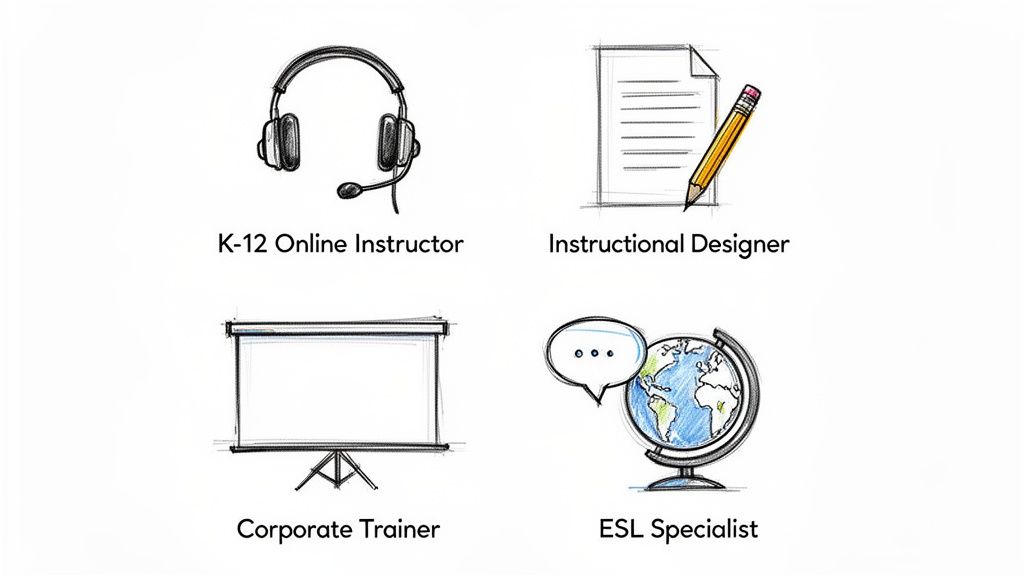
K-12 Online Instructor and Tutor
This is the most direct leap from a physical classroom. As a remote K-12 instructor, you’ll still deliver curriculum, grade assignments, and connect with students and parents, but you’ll do it all through a learning management system (LMS). Think of it as your familiar role, just with a much shorter commute.
Tutoring takes that flexibility even further. It’s a fantastic route for anyone wanting to set their own hours, focus on specific subjects, or build a side income that could turn into a full-time gig. You’re essentially running your own mini-classroom, offering one-on-one support to students who need it most. If this sounds appealing, there are some great resources on jobs for home tutors that can help you get started.
Instructional Designer and Curriculum Developer
Do you get more excited about planning the perfect lesson than delivering it? If you’re the creative force behind the curriculum, a role as an instructional designer or curriculum developer could be your calling. Instead of teaching the students, you’re the one building the entire learning experience.
This career path lets you become the architect of education. You’re not just delivering the lesson; you are creating the entire framework, from learning objectives to final assessments, often using multimedia and interactive tools.
These roles are popping up everywhere, from EdTech startups to major corporations. One day you might be creating an onboarding module for a new software company, and the next you could be developing a full online course for a university. It’s project-based, creative, and highly collaborative work.
Corporate Trainer and ESL Specialist
Your knack for managing a room and breaking down complex topics is pure gold in the business world. Companies are always on the lookout for skilled trainers to upskill their employees on everything from new software to leadership development. This path often brings higher earning potential and the chance to apply your teaching skills in a corporate setting.
Similarly, the world of online English as a Second Language (ESL) is booming. This is your chance to work with students from across the globe, often with a schedule you can build around your life. With a TEFL certificate in hand, you’ll find tons of remote jobs for teachers eager to connect with a global student base.
Comparison of Top Remote Jobs for Teachers
To help you visualize where you might fit best, let’s break down these roles side-by-side. Each path leverages your teaching skills differently, so think about what kind of work genuinely excites you.
| Job Title | Typical Responsibilities | Average Salary Range | Required Qualifications |
|---|---|---|---|
| K-12 Online Instructor | Delivers curriculum, grades, communicates with students/parents via LMS. | $45,000 - $65,000 | State teaching license, subject matter expertise. |
| Instructional Designer | Designs and builds courses, creates learning materials, works on projects. | $60,000 - $90,000 | Experience in pedagogy, familiarity with authoring tools. |
| Corporate Trainer | Develops and delivers training programs for company employees. | $55,000 - $85,000 | Strong presentation skills, subject matter expertise. |
| ESL Specialist | Teaches English to non-native speakers in one-on-one or group settings. | $20 - $50 per hour | TEFL/TESOL certification, fluency in English. |
Ultimately, the best role for you depends on your career goals, desired lifestyle, and what aspects of teaching you love the most. The good news? You have plenty of great options to explore.
Translating Your Teaching Skills for a Remote Role
Your years in the classroom are your single biggest advantage, but you have to learn to speak a new language. The biggest hurdle I see former teachers face is describing their experience using education jargon that just doesn’t land with a corporate recruiter skimming through dozens of resumes.
The trick is to reframe your classroom expertise into universally understood business skills.
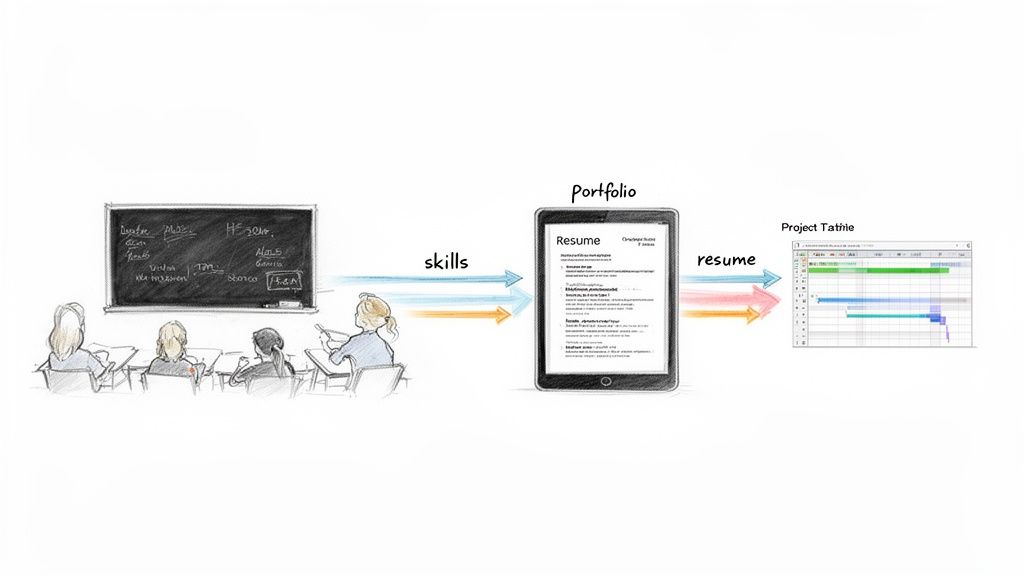
This isn’t about just swapping out a few words. It’s about showcasing the impact behind your actions. Your resume shouldn’t read like a list of duties; it needs to be a highlight reel of your achievements.
From Classroom Manager to Project Leader
Think about what you actually did every day. A simple shift in perspective can make your application light years more relevant to a hiring manager hunting for remote talent.
Instead of: “Managed a classroom of 30 diverse learners.”
Try: “Led and managed a stakeholder group of 30+ individuals, ensuring project milestones and learning objectives were met on schedule.”
Instead of: “Created lesson plans and educational materials.”
Try: “Designed and developed comprehensive training programs and user-facing documentation to drive skill acquisition.”
See the difference? This reframing immediately shows you get the core functions of the business world, making you a much stronger candidate for a variety of remote jobs for teachers.
The goal is to connect the dots for the hiring manager. Don’t make them guess how ‘differentiated instruction’ translates to a corporate training role. Show them you’re a project manager, a content creator, and a data analyst who just happened to work in a school.
Quantify Your Impact with Hard Numbers
Recruiters love data. Numbers provide concrete, undeniable proof of your effectiveness. Your job is to go beyond listing what you did and show the results you delivered. Even if your school didn’t track formal business metrics, you can absolutely estimate the impact of your work.
A simple formula can help: Action Verb + Specific Task + Measurable Result.
- “Increased student engagement in virtual learning by 40% by implementing interactive digital tools like Kahoot and Padlet.”
- “Reduced time spent on administrative grading by 15% weekly through the adoption of an automated assessment platform.”
- “Improved parent-teacher communication response times, resulting in a 25% increase in positive feedback on annual surveys.”
Quantifiable achievements like these make your resume pop. They prove you have a results-oriented mindset, which is gold in any industry.
Optimize Your Application and Build a Portfolio
Before you even think about hitting “submit,” you need to do your homework. Meticulously scan the job description for keywords—the specific skills, software, and responsibilities they mention. Weave these terms naturally throughout your resume and cover letter. This is crucial for getting past the automated applicant tracking systems (ATS) that filter most applications.
Finally, put together a simple digital portfolio. This doesn’t have to be a flashy, custom-coded website. A clean one-page site or even a well-organized Google Drive folder works perfectly.
Include things like:
- Lesson plans (with any sensitive student info removed)
- Short video clips of you teaching (if you have them)
- Examples of student work
- Presentations or workshops you’ve created
This visual proof of your skills is a powerful way to give yourself a competitive edge and show, not just tell, what you can do.
Finding the Best Remote Teaching Jobs
If you’ve ever spent an afternoon endlessly scrolling through massive, generic job boards, you know how draining it can be. It’s a fast track to frustration, sifting through hundreds of irrelevant listings and competing with a sea of applicants for every single role.
There’s a much smarter way to do this. Instead of letting the algorithm dictate your search, you need to bypass the noise and go straight to the platforms that actually specialize in high-quality remote jobs for teachers. This targeted strategy puts you back in the driver’s seat.
Go Beyond the General Job Boards
Let’s be honest: the real gems aren’t usually found on the giant, catch-all platforms. While sites like Indeed or ZipRecruiter cast a wide net, the best opportunities are often hiding on specialized sites that curate roles specifically for educators and remote professionals.
This is where you’ll find a more focused, high-quality stream of jobs. Think of it as fishing in a well-stocked pond instead of the entire ocean.
A perfect example of this is a direct-sourcing job site like Remote First Jobs. It pulls listings straight from company career pages, which gives you a huge advantage. You often find and apply for roles before they even make it to the larger, more saturated job boards.
A few other fantastic resources worth bookmarking are:
- EdSurge: As a leading name in education technology, its job board is packed with roles in ed-tech, curriculum development, and online instruction.
- HigherEdJobs: If you have experience in higher education, this is the go-to platform. You’ll find remote faculty and administrative positions at colleges and universities here.
- VirtualVocations: This site has a team that hand-screens every single job, so you know you’re only seeing legitimate, high-quality remote listings.
The goal is to shift your mindset from a passive “search and apply” routine to an active “source and connect” strategy. By focusing on these niche platforms, you’re not just another applicant in a pool of a thousand—you’re a qualified candidate in a much smaller, more relevant group.
Set Up Your Search for Success
Once you’ve found a few platforms you like, don’t just browse once and move on. The next step is to make your search work for you by setting up tailored job alerts. This gets new, relevant listings sent directly to your inbox, so you never miss an opportunity.
You’ll want to get strategic with your keywords. Instead of just plugging in “remote teacher,” try using more specific phrases that match your actual career goals.
Think along the lines of:
- “Remote instructional designer”
- “Online curriculum developer”
- “Virtual corporate trainer”
- “Work from home ESL instructor”
This proactive approach ensures you’re one of the first to see new openings. In the competitive world of remote teaching jobs, applying early can absolutely make all the difference. By curating your sources and automating your search, you’ll spend way less time sifting through noise and more time crafting amazing applications for roles you’re genuinely excited about.
Acing the Virtual Interview and Negotiation
So, you’ve landed a virtual interview. Great! But don’t make the mistake of treating it like a regular in-person meeting that just happens to be on a screen. It’s a completely different ballgame, and you need a specific strategy to build that all-important rapport and really let your skills shine.
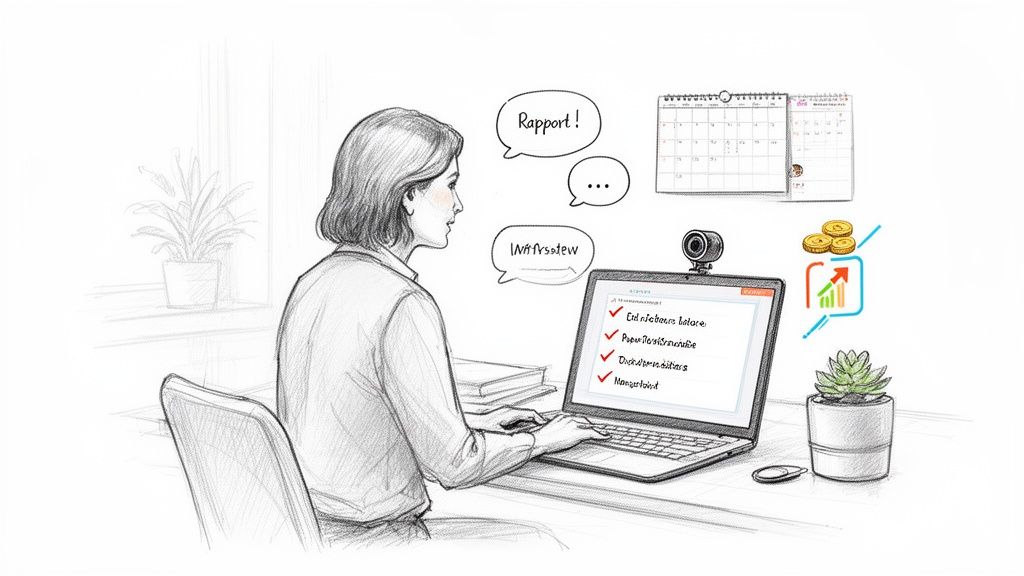
First things first: your tech setup is the interview room. You wouldn’t show up to an office with flickering lights and a distracting mess, right? Same principle applies here. Test your camera, microphone, and internet connection way ahead of time. A clean, well-lit background is always a winner—it looks far more professional than a glitchy virtual background that keeps cutting out.
Once the tech is sorted, it’s time to prep for the actual conversation. Brushing up on common teacher interview questions is a smart move to get your core answers locked in.
Answering Remote-Specific Questions
You’ll get the standard teaching questions, but hiring managers for remote roles have an extra layer of concern: Can you actually thrive without a principal down the hall? They need to know you’re self-sufficient.
Expect to hear things like:
- “How do you build engagement and community through a screen?” This is your chance to talk about specific digital tools you love, like interactive whiteboards or breakout rooms. More importantly, talk about how you use them to create a real sense of connection among students.
- “Describe your approach to time management and organization.” Don’t just say you’re organized. Give concrete examples. Talk about how you structure your day, use digital planners to prioritize tasks, and consistently hit deadlines on your own.
- “How do you handle technical difficulties for yourself or a student?” They want to see that you’re proactive, not panicked. Mention having a simple troubleshooting checklist ready and emphasize your ability to stay calm and guide a student through a tech hiccup.
Building rapport without a handshake is a skill you have to learn. Make a conscious effort to look at your camera, not just the screen, to simulate eye contact. Use active listening cues like nodding, and don’t forget to smile. Your personality has to bridge that digital divide.
Negotiating Your Compensation and Benefits
Once that offer comes through, the conversation naturally shifts to compensation. This isn’t just about salary; it’s your chance to negotiate the full package that makes remote work truly sustainable. Don’t be shy about advocating for what you need.
The salary range for remote educators can be pretty wide. For example, remote teachers in math and statistics can see averages between $50,000 to $120,000 a year in the US, and it can go even higher for specialized roles.
But remember to think beyond the base number. Many remote-first companies offer perks that can make a huge difference in your day-to-day. Think about asking for things like:
- A home office stipend for a decent chair or an extra monitor.
- Professional development funds to keep your skills sharp.
- Reimbursement for high-speed internet—it’s a non-negotiable for this line of work.
- Flexible working hours that let you build a schedule that actually works for you.
When you approach negotiation with clear, confident requests, it shows you’re a professional who knows your worth. A solid, well-negotiated package sets you up for success and ensures you start your new remote teaching career on the best possible footing.
Got Questions About Remote Teaching Jobs? We’ve Got Answers.
Making a career change is a big deal, and it’s totally normal to have a ton of questions swirling around. Let’s tackle some of the most common ones teachers ask when they start thinking about remote work. This should give you the clarity you need to move forward.
Do I Really Need a Special Certification to Teach Online?
It depends, but having one can definitely give you an edge. For most K-12 gigs, your state teaching license is the main ticket. But if you have an extra online teaching endorsement? That tells schools you’ve specifically trained for a digital classroom.
If you’re looking at corporate training or ESL roles, things are a little different. Certifications like a TEFL or credentials in instructional design are gold. They often make the difference between your application getting noticed or lost in the pile.
What Kind of Tech and Equipment Will I Need?
You’ll need the basics to get started: a decent computer, a solid internet connection, a good webcam, and a headset with a mic. Don’t skimp on the internet—it’s your lifeline.
Depending on what you teach, you might need extra gear. Think of a digital drawing tablet if you’re a math or art teacher trying to explain concepts visually. Most employers are upfront about their tech requirements in the job description, and some even offer a stipend to help you build out your home office.
A reliable, fast internet connection is absolutely non-negotiable. It’s so critical that cities with top-notch broadband, like Minneapolis with its 99.04% fiber coverage, are becoming hotspots for remote pros. That just goes to show how fundamental digital infrastructure is.
Can I Really Work From Anywhere in the World?
This is a classic “it depends” situation. Some remote teaching jobs are truly location-independent, letting you log in from a beach in Bali if you want.
However, a lot of US-based roles will require you to live in a specific state. This is usually for tax and licensing reasons, so it’s not something you can fudge. Always, always read the fine print in the job description for location rules. Look for terms like “US-Remote” (meaning you must be in the US) versus “Global” or “Anywhere,” which offer true freedom.
How Can I Spot and Avoid Job Scams?
Your gut is your best guide here. If a job offer seems too good to be true, it probably is.
Be wary of anyone who asks you to pay for your own training or equipment upfront—that’s a huge red flag. Another warning sign is a hiring process done entirely over text message or chat. Legitimate companies have professional hiring processes. Stick to reputable job boards that vet their listings, and if you can, apply directly on the company’s official website. A real employer will never ask you for money to get a job.
Ready to find high-quality remote jobs for teachers without sifting through spam and sketchy listings? Remote First Jobs sources thousands of verified roles directly from company career pages, giving you a head start on the best opportunities. Find your next role on remotefirstjobs.com before everyone else does.