
You’re probably starting from one of two places. Either you’ve decided you want to live in France and keep the flexibility of remote work, or you’re already in France and have discovered that “remote-friendly” job ads often mean one or two days at home, not true location freedom.
That gap between expectation and reality is where most job searches go wrong.
The people who land strong remote jobs france opportunities usually stop treating France like a work-from-anywhere market. They treat it like what it is: a hybrid-first market with real bureaucracy, real employer caution, and a small but valuable slice of fully remote roles. Once you accept that, your strategy gets much sharper. You stop mass-applying. You stop trusting noisy job boards. You start screening for fit, compliance, timing, and employer maturity.
That’s the practical blueprint.
The Reality of Finding Remote Work in France
The fantasy is easy to sell. A laptop, a Paris café, some polished “work from anywhere” ad copy, and a promise that Europe has gone fully distributed.
The actual search is messier. You open LinkedIn, search “remote France,” and get flooded with vague listings, recruiter reposts, and roles that turn out to require office attendance after the second interview. A lot of applicants burn weeks here because they assume volume will beat competition. It won’t.
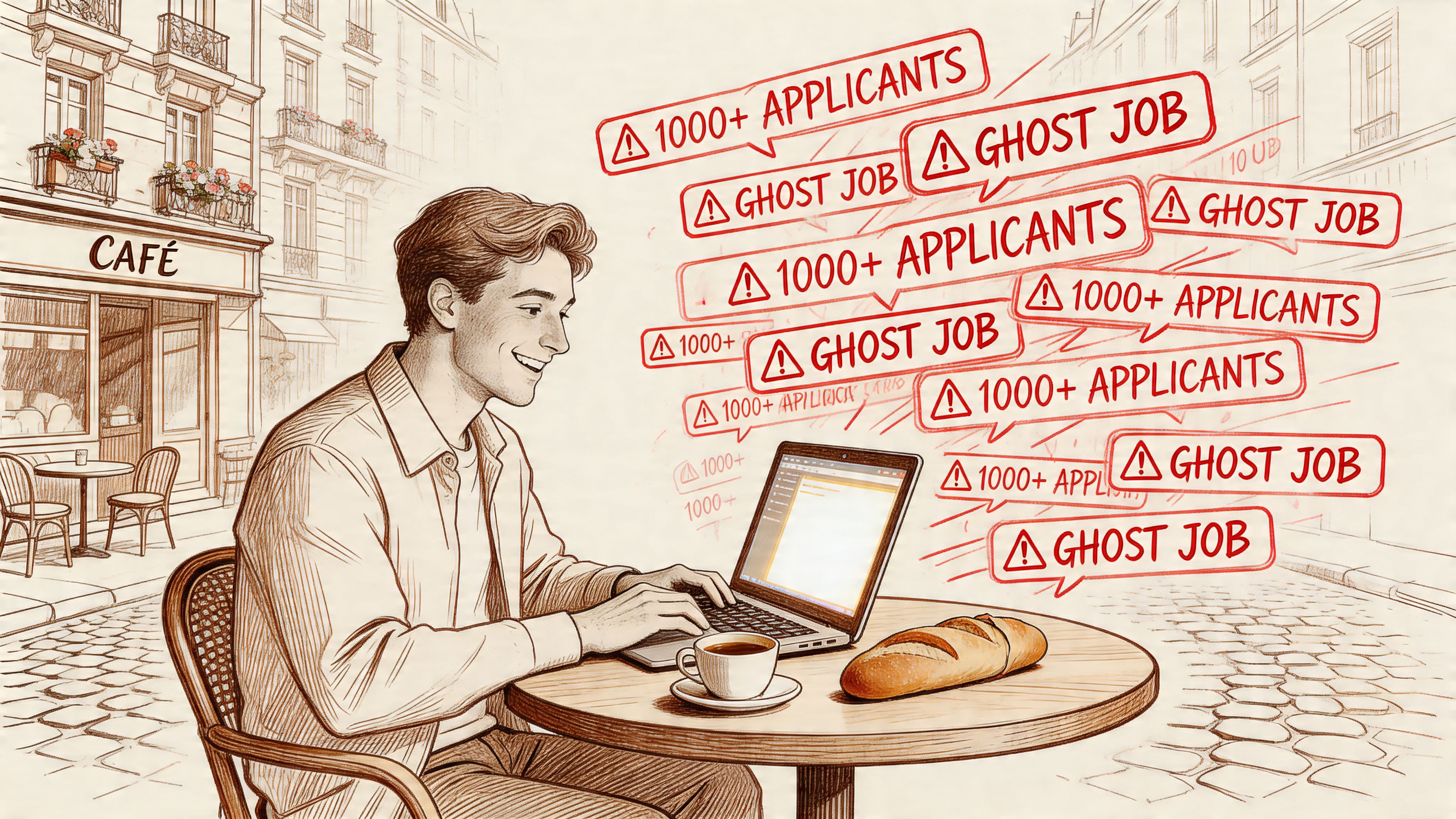
The numbers tell the story clearly. In 2024, only 18.2% of French employees teleworked at least one day per week, and full remote work stayed under 3% in the private sector, according to France remote work data compiled from Insee and related benchmarks. That’s not a remote-first economy. It’s a market where hybrid is normal, on-site is still dominant, and strong remote roles are limited.
What this means for your search
If you’re looking for remote jobs france, you need to assume three things from day one:
- Most “remote” ads are really hybrid ads. Read location language carefully.
- The best fully remote roles attract fast attention. Delay hurts more than imperfect materials.
- Board noise hides the good roles. Verification matters as much as search volume.
Practical rule: In France, don’t ask first, “Are there remote jobs?” Ask, “Which employers are structurally set up to support remote work without backtracking later?”
That small shift changes everything. It pushes you away from aspirational searching and toward realistic targeting, which is exactly where good outcomes start.
Decoding the French Remote and Hybrid Market
France doesn’t resist remote work because employers are old-fashioned by default. The deeper issue is structure. French companies operate inside a labor environment that values formal policy, documented working conditions, and clear boundaries between work time and private life.
That’s why remote work in France often looks more organized and more restrictive than what applicants from the US, UK, or fully distributed startups expect.
A central fact matters here. 38% of jobs in France are considered eligible for remote work, and government mandates have often pushed for a minimum of three remote days per week for those roles, which helped make structured hybrid the norm, as outlined in this overview of French telework rules and obligations. So the market isn’t anti-remote. It’s selective about which roles qualify, and heavily policy-driven in how remote work is managed.
Why hybrid dominates
French employers often prefer remote arrangements they can define tightly. They want rules on availability, equipment, expenses, working hours, and health and safety. That makes sense in a system where labor compliance isn’t a side issue.
One concept shapes this more than many foreign applicants realize: the right to disconnect. In practice, this means employers have to think seriously about off-hours communication, workload, and the boundary between home and work. For you as a candidate, that has two implications.
- Companies with mature remote practices often describe expectations clearly.
- Companies that sound vague in interviews are usually not “flexible.” They’re underprepared.
A lot of applicants misread vagueness as freedom. In France, vagueness usually means friction later.
CDI and CDD are not minor details
Many foreign professionals focus only on whether a role is remote. French employers often care just as much about the contract type.
Here’s the working distinction:
| Contract type | What it usually means for you |
|---|---|
| CDI | Permanent employment. Better long-term stability, stronger footing for relocation, banking, rentals, and career continuity. |
| CDD | Fixed-term employment. Can work well for short projects or market entry, but it gives you less long-range security. |
If your goal is to build a life in France, a remote role on a CDI often supports that plan better than a flashy short-term contract. If your goal is to enter the market and gain local experience, a CDD can still be useful. The mistake is treating them as interchangeable.
How strong applicants read job descriptions
Most weak applications fail before the interview because they don’t decode the language of the ad.
Look for these signals:
- “Télétravail partiel” or office-day references usually mean established hybrid expectations.
- Location-specific wording often reveals payroll, tax, or management constraints.
- Mentions of policy, charter, or equipment are usually good signs. They suggest the employer has already operationalized remote work.
- Overly broad “work from anywhere” language with no contract detail often hides legal or organizational gaps.
A polished ad doesn’t tell you a company is remote-capable. Operational detail does.
The French market rewards applicants who show they understand the system they’re entering. If you treat remote work as a lifestyle perk, you’ll sound naive. If you treat it as a work arrangement shaped by labor law, management habits, and contract design, you’ll sound credible.
Where to Find Verified Remote Jobs Before Anyone Else
Many job seekers searching remote jobs france are still using the wrong channels for the kind of market France is.
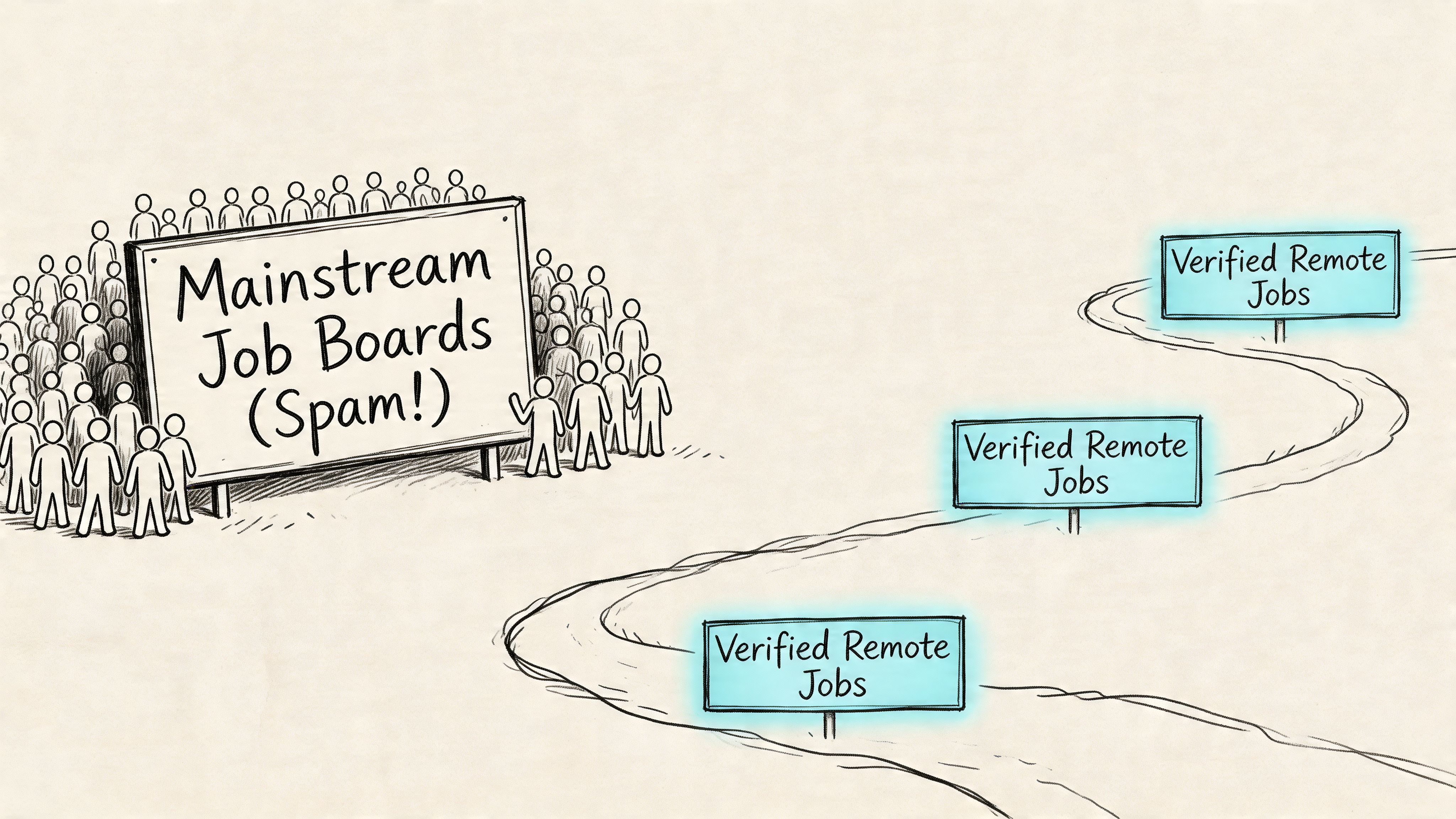
They search broad job boards, sort by “remote,” and apply to whatever looks fresh. That works poorly in a hybrid-heavy country because mainstream platforms over-index on reposts, old listings, agency placements, and jobs that were never fully remote in the first place. By the time a strong role reaches a crowded board, you’re already late.
The better approach is direct sourcing. That means tracking company career pages, not waiting for third-party platforms to repackage the listing for everyone else.
Why speed matters more in France
France doesn’t have an endless pool of top-tier fully remote openings. So when a strong one appears, timing matters more than brute-force application count.
That’s where application mechanics become important. A reported 62% of international applicants fail French ATS filters because of formatting or keyword mistakes, according to EnglishJobs.fr’s discussion of remote listings and ATS adaptation. So your challenge isn’t just finding a role. It’s finding it early enough to submit a culturally and technically compatible application before the queue fills.
What works better than LinkedIn
A smarter search stack usually looks like this:
- Direct company career pages for remote-first or distributed employers.
- Niche remote search tools that monitor employer ATS pages instead of scraping recycled board listings.
- A curated Europe-wide view when you’re flexible on employer location but need France-compatible remote options. This guide to remote jobs in Europe is useful if you want to compare where legitimate distributed roles tend to surface across the region.
- A verified remote search engine like Remote First Jobs, especially if you want direct-hire roles pulled from employer systems rather than recruiter noise.
The advantage here isn’t just convenience. It’s sequence. You want to see the job when it is still a hiring need, not when it has already become public traffic.
How to search with a first-mover mindset
Strong candidates don’t search by title alone. They search by operating model.
Use terms and filters like:
- Fully distributed
- Remote-first
- Work from anywhere
- Async
- Distributed team
- EMEA remote
- France payroll or France-based hiring language
Then screen every result for the practical markers that matter. Does the company explain where they hire? Do they state whether the role is employee-only? Is there contract clarity? Is there any mention of overlap hours, office expectation, or entity coverage in France?
If the ad avoids all of that, be careful.
Red flags that waste your time
Not every remote-looking ad is worth touching. Some are structurally weak from the start.
Watch for patterns like these:
- Third-party recruiter language with no named employer and no clear hiring entity.
- Copy-pasted job text that appears across several regions with no localization.
- “Remote in France” but mandatory city presence later in the posting.
- No mention of reporting line, team structure, or employment type.
- Overpromises about flexibility without any operational detail.
The safest remote role is usually the one attached to a real company page, a real hiring team, and a real legal setup. Not the one with the best headline.
A practical weekly rhythm
Here’s the workflow I recommend to serious applicants:
- Build a target list first. Choose companies that already operate remotely or have distributed teams.
- Set alerts narrowly. Broad “marketing remote France” alerts create junk. Functional and company-based alerts create signal.
- Apply fast, but not sloppy. Early matters. Broken formatting kills that advantage.
- Track responses by source. You’ll quickly see which platforms generate real recruiter contact and which ones generate silence.
- Revisit companies directly. Some employers initially post on their own sites before wider distribution.
This is the part many job seekers resist because it feels less exciting than mass-applying. It’s also what works.
Crafting an Application That Resonates with French Employers
A generic English-language résumé sent unchanged from a US or international job search usually underperforms in France. Not because the candidate lacks skill, but because the application signals the wrong things. It often reads as culturally distant, operationally vague, or careless about local norms.
French employers don’t just evaluate whether you can do the job. They assess whether you understand how work is organized, documented, and communicated.
Your CV needs local logic
You don’t have to erase your background to fit the market. You do have to present it in a way that a French recruiter or hiring manager can process quickly.
A strong CV for France usually does these things well:
- Shows role clarity. Each title should make sense immediately. Avoid inflated startup titles that need explanation.
- Makes location and work authorization easy to spot. If you’re already based in France or eligible to work there, don’t bury it.
- Uses clean chronology. French recruiters tend to prefer a straightforward timeline over highly designed narrative formats.
- Translates outcomes into business language. Not hype. Concrete scope, team context, systems used, and responsibilities.
- Reflects language reality. If your French is working-level, state that directly. If the role is English-speaking, don’t pretend French fluency you can’t defend in an interview.
Photo or no photo? You’ll hear conflicting advice. In France, some candidates still include one, others don’t. My practical view is simple. If the role is international, remote, and skills-driven, you can usually skip it. If you’re applying to a more traditional French employer, review the tone of their existing team and market norms before deciding.
The letter matters more than many foreigners expect
The lettre de motivation still carries weight in parts of the French market, especially when the employer wants to know why you want this role in this setting.
Weak letters repeat the CV.
Strong letters do three things:
- They explain why this company.
- They connect your experience to the actual operating environment.
- They reduce perceived hiring risk.
For remote roles, that third point matters a lot. A French employer may worry that a foreign applicant likes the idea of France more than the practicalities of working within its systems. Your letter should subtly resolve that concern.
How to present remote capability without sounding rehearsed
Saying “I’m a self-starter” won’t help. Everyone says that.
Show remote readiness through evidence:
- Mention experience working across time zones if it’s relevant.
- Refer to asynchronous collaboration habits.
- Describe how you document decisions, manage handoffs, or communicate progress.
- Show that you can operate independently without becoming invisible.
Here’s the key. French employers often trust structure. So frame your remote strengths in structured terms.
For example, instead of saying you “love flexibility,” show that you can maintain responsiveness, document work, and collaborate predictably without daily in-person oversight.
“Remote-ready” in France usually means reliable, legible, and easy to manage at a distance. Not just autonomous.
A short checklist before you apply
Use this before sending any application:
- CV filename cleaned up with your name and role.
- Keywords matched to the posting, without stuffing.
- Contract and location language mirrored from the employer’s wording.
- Work authorization clarified where relevant.
- Cover letter adapted to the team, not just the title.
- Remote capability demonstrated through examples, not adjectives.
- Formatting tested so the document parses cleanly in ATS.
Common mistakes that keep good people out
Some of the strongest candidates get filtered out for avoidable reasons.
A few repeat offenders:
| Mistake | Why it hurts |
|---|---|
| Sending a one-size-fits-all résumé | Signals low intent and weak fit |
| Using heavily designed templates | Can create parsing issues and distract from substance |
| Overemphasizing lifestyle freedom | Makes remote work sound like a perk rather than an operating model |
| Ignoring French wording in the job ad | Misses obvious keyword alignment |
| Writing an overly long cover letter | Suggests poor judgment and weak prioritization |
The goal isn’t to become “French” on paper. It’s to show that you understand the employer’s context and can plug into it with minimal friction. That’s what lowers resistance.
Navigating Visas, Taxes, and Employment Contracts
Many remote job searches for France become unrealistic. This happens when people find a role, get excited, and only then ask whether they can legally work from France, how they’ll be hired, or what tax residency means for them.
Those questions should come earlier.
For non-EU applicants, this part matters even more. The Passeport Talent visa requires a minimum salary of €36,946 at the 2024 threshold, and once you spend 183 days in France, tax residency can trigger progressive tax rates up to 45% plus social charges, as outlined in this overview of France-related remote work and visa complications. A lot of job boards list roles without addressing any of that.
Start with your legal pathway
Your first filter should be simple: employee route or self-employed route.
If an employer can hire you directly in France, the process is usually cleaner from a compliance standpoint. If they can’t, they may ask you to work as an independent contractor, or they may not be able to proceed at all.
Here’s the practical comparison.
French Employment Status Comparison for Remote Workers
| Attribute | Employee (Salarié) | Freelancer (Auto-Entrepreneur) |
|---|---|---|
| Who controls the work relationship | Employer defines employment framework, duties, and payroll setup | You operate as an independent service provider |
| Social protection | Typically stronger and tied to employee status | You manage your own protections within the self-employed framework |
| Administrative burden | Employer handles more of the ongoing employment administration | You carry more of the setup, invoicing, and compliance work |
| Use case | Best for long-term roles with one company and formal integration | Best when the employer cannot hire locally or the work is project-based |
| Perception in hiring | Feels safer to traditional French employers | Works well in some sectors, but not every employer wants contractor arrangements |
| Life admin in France | Often easier for rentals, banking, and proving stable income | Can be workable, but daily admin can be harder to explain |
| Flexibility | Less flexible structurally, more protected | More flexible structurally, less protected |
If your long-term plan includes settling in France, the employee route is usually more stable. If your main priority is flexibility or entering the market quickly, freelance status can work, but it requires stronger self-management.
Questions to ask before you sign anything
Don’t wait until offer stage to clarify basics. Ask early, politely, and directly.
Use questions like these:
- Will I be hired as an employee in France or as a contractor?
- Does the company already have a legal hiring structure for France?
- Is visa sponsorship available if needed?
- What location restrictions apply to this remote role?
- Who handles payroll and statutory compliance?
These questions don’t make you difficult. They make you serious.
Tax residency catches people off guard
A lot of candidates think tax only matters once they “officially move.” In practice, day count, work location, and employment structure can all matter quickly.
Two habits help:
- Keep a clear record of where you’re living and working.
- Get qualified tax advice before you assume your current setup is harmless.
This is especially important if you start remotely from one country while planning a move to France later. The administrative transition can be more complex than the job ad suggests.
If an employer says “You can work from France” but can’t explain how they hire or pay people there, pause. That’s not a small detail. It’s the job.
Property and financial planning matter too
If you expect to stay in France, your employment status affects more than payroll. It can influence how landlords, banks, and lenders view your stability. That becomes even more relevant if you plan to buy property while working independently.
If you’re considering the self-employed path long term, this guide to obtaining a mortgage as a self-employed expatriate is worth reading because it gives a more realistic view of how French institutions assess nontraditional income.
What usually works best
For most international professionals, the cleanest path looks like this:
- Target employers already comfortable hiring in France.
- Confirm contract structure before investing heavily in interviews.
- Check whether your visa path matches the actual compensation on offer.
- Treat tax residency as a planning issue, not an afterthought.
- Use freelance status deliberately, not by default.
France can work very well for remote professionals. But it rewards candidates who treat legal and financial setup as part of the search, not as paperwork for later.
Understanding Salary and Total Compensation in France
A French offer can look smaller than a US or international offer at first glance. That doesn’t automatically make it worse. It does mean you need to read compensation differently.
In France, total value often sits across salary, statutory protections, employer-paid benefits, paid time off, and reimbursements that many foreign applicants ignore until after signing.
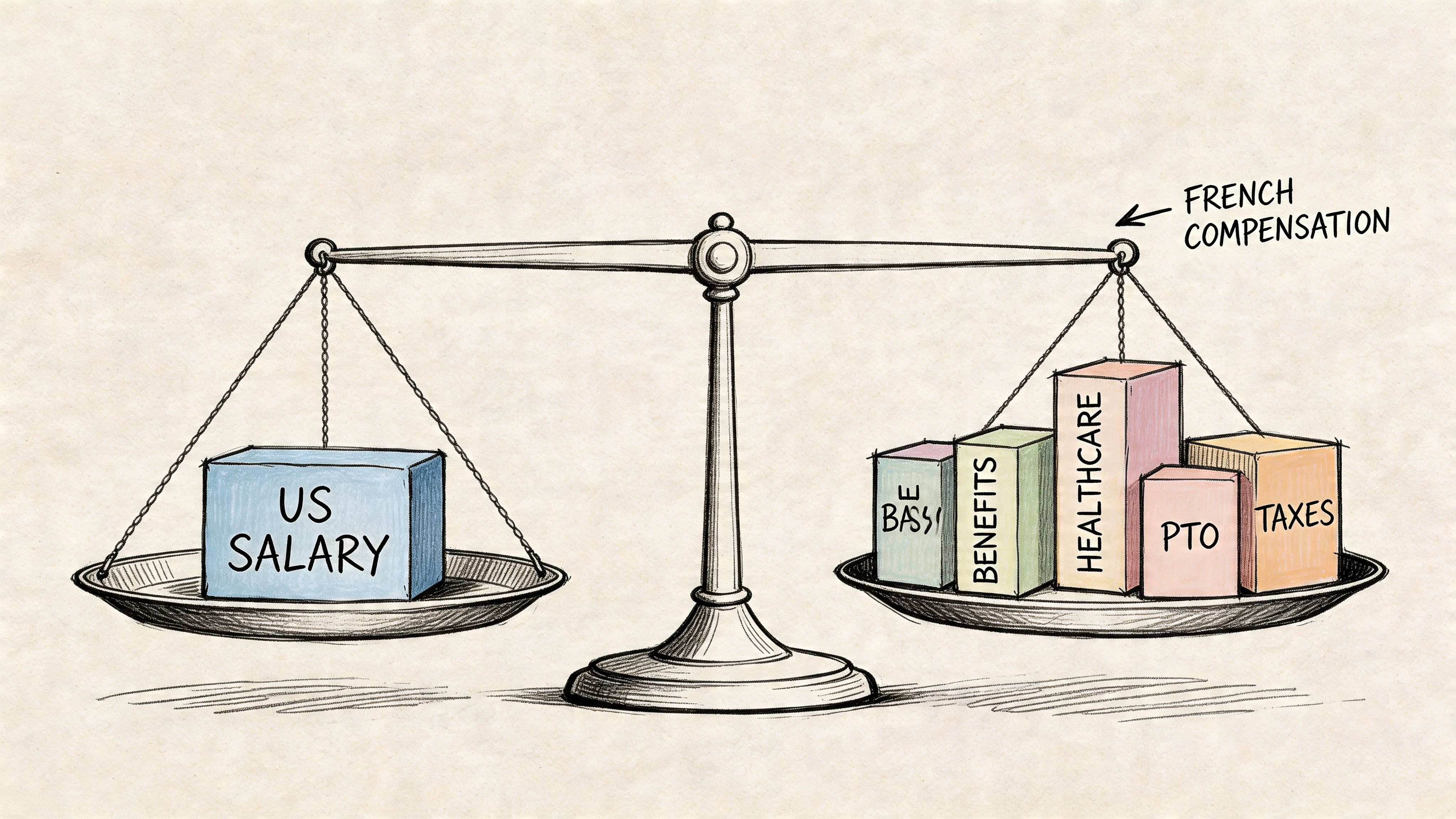
A useful detail here is that 70% of French workers have remote options, and employers are legally bound by a telework charter to cover certain costs, such as a flat rate around €9.10 per month or actual expense reimbursement, according to Eurojob Consulting’s employment barometer and telework overview. That may sound small in isolation, but it points to a bigger idea. French compensation often includes mandatory or semi-structured elements that aren’t obvious in the headline number.
Read the whole package, not just gross pay
When you evaluate an offer, check for:
- Base salary and whether it’s presented in gross annual terms.
- Mutuelle, which is supplemental health coverage.
- Tickets restaurant or meal vouchers.
- RTT days, which can materially improve quality of life.
- Remote work expense coverage under the employer’s telework rules.
- Transport or home-office support, if offered.
- Bonus structure, if there is one.
A candidate who compares only gross salary across countries usually misunderstands the full trade-off.
What a French payslip is telling you
The bulletin de paie can feel dense if you’re not used to it. The main point is simple: deductions support a social system that covers more than many employers elsewhere provide directly.
That doesn’t mean every package is generous. Some aren’t. It means you should ask better questions during negotiation.
Try these:
- Is the role eligible for RTT?
- How is remote expense coverage handled?
- Is the mutuelle employer-supported?
- Are meal vouchers included for remote employees too?
- Is there any flexibility on salary if the rest of the package is fixed?
How to negotiate without sounding off-market
French salary negotiation often rewards preparation and calm more than aggressive anchoring. You don’t need theatrical tactics. You need a reasoned case.
Use this approach:
- Lead with market fit. Explain the scope you’re taking on.
- Tie your ask to role complexity. Team size, cross-functional work, revenue responsibility, product ownership, or language demands.
- Ask about the package structure. Sometimes movement exists in benefits even when salary bands are tighter.
- Stay precise. Long emotional explanations usually weaken your position.
A good negotiation in France sounds informed and measured. It doesn’t sound like a bidding war.
A practical way to compare offers
If you’re choosing between two roles, make a side-by-side sheet with these rows:
| Item | Offer A | Offer B |
|---|---|---|
| Gross salary | ||
| Contract type | ||
| Paid leave and RTT | ||
| Health coverage | ||
| Meal vouchers | ||
| Remote expense support | ||
| Long-term stability | ||
| Day-to-day flexibility |
That exercise usually reveals more than headline pay does. In France, compensation is rarely just the salary figure.
Frequently Asked Questions About Remote Work in France
Can I find fully remote work in France if I don’t speak fluent French
Yes, especially in tech, product, design, marketing, and some international sales roles. But don’t confuse “English-speaking team” with “zero French needed.” Even when the working language is English, some internal documents, HR processes, or client contexts may still involve French.
The practical move is to separate job performance language from life admin language. You may be able to do the role in English while still needing enough French to manage everyday bureaucracy.
Are hybrid roles worth considering if my goal is eventually fully remote
Often, yes.
In France, a well-run hybrid employer can be a better long-term option than a poorly structured “fully remote” company. Hybrid roles can also help you build local credibility, understand employer expectations, and move into stronger remote arrangements later. If the employer has real remote systems, hybrid can be a strategic entry point rather than a compromise.
Should I apply in English or French
Follow the ad first. If the posting is in English, apply in polished English unless the employer asks otherwise. If the posting is in French and the role clearly operates in a French-speaking environment, sending only English materials can signal weak fit.
When in doubt, a customized English CV plus a short, competent French note can work better than overconfident French that falls apart in the interview.
How do I know if a remote role is actually compliant for France
Look for operational clues, not slogans.
A compliant setup usually shows up through contract clarity, location restrictions, hiring entity information, payroll explanation, or direct acknowledgement that the company hires in France. If a recruiter keeps saying “we’ll figure it out later,” assume they haven’t figured it out.
Is freelancing the easier path into France
Sometimes easier at the start, not always easier over time.
Freelancing can remove one barrier when an employer can’t hire directly. But it shifts more responsibility onto you. You’ll handle more administration, need to think harder about tax and business setup, and may face extra friction with housing or financial institutions. It’s a valid path, but not a magic shortcut.
How many applications should I send each week
There isn’t one right number. In France, quality beats volume even more than in looser markets.
A focused batch of well-targeted applications usually outperforms a spray-and-pray routine. If you’re applying broadly but getting no traction, the issue is often source quality, contract mismatch, or poor localization, not effort.
What makes a foreign applicant stand out positively
Three things:
- They understand the employer’s operating reality.
- They make compliance and logistics easy to understand.
- They communicate remote readiness through examples, not slogans.
That combination makes you feel lower-risk, and lower-risk candidates move faster.
If you’re tired of stale listings, ghost jobs, and remote roles that aren’t really remote, Remote First Jobs is one of the best tools for finding verified opportunities earlier in the cycle. It pulls roles directly from employer career pages, which helps you reach legitimate remote openings before they get buried under mass-market job board noise.