
You open a “remote truck dispatcher” listing before breakfast, and by lunch you have seen the same job posted three different ways. One is really a freight agent role paid on commission only. One hides the carrier name. One asks for money up front for training or software access. That is the fundamental problem with truck dispatcher from home jobs. Finding openings is easy. Finding legitimate openings fast enough to beat other applicants is the hard part.
Remote dispatcher work exists, and good roles do get filled. They just do not show up neatly on the biggest job boards. Carriers, roadside companies, and service operations often post these jobs under different titles, at different speeds, and on different systems. If you search one keyword and wait for Indeed alerts, you miss a lot of real opportunities and waste time on reposts, staffing bait, and vague “work from home” ads.
The better approach is to run this search like a dispatcher handles a board. Use verified employer listings first. Broaden the title search to include dispatch-adjacent roles. Apply early, because timing matters more here than polished job-board volume. Then screen every opening for pay structure, shift expectations, equipment or software requirements, and signs that the company is hiding basic operating details.
That is the angle of this guide. It is not just a list of places to click. It is a practical playbook for finding truck dispatcher from home jobs with less noise, comparing where real openings show up, and spotting the scams before they cost you a week.
One useful starting point is a verified remote hiring source like Remote First Jobs, especially for dispatch roles posted under customer support, coordination, operations, and service scheduling titles instead of “truck dispatcher” alone.
Below, I focus on platforms and employers that give you a real shot at getting hired faster, with clearer signals on legitimacy, role type, and how aggressive you need to be when you apply.
1. Remote Customer Service Jobs on Remote First Jobs
If you’re trying to move fast, this is the sharpest starting point on the list. Not because it’s a pure dispatcher board. It isn’t. It works because many legitimate remote dispatch roles show up under customer support, coordination, operations support, service scheduling, and customer service plus dispatch titles long before they get crowded with applicants.
That matters more than most job seekers realize. A lot of people search only “truck dispatcher” and miss adjacent titles like Customer Service & Dispatch Coordinator, Logistics Coordinator, Service Dispatcher, Fleet Support Specialist, or Operations Support. On this feed, that broader net is an advantage, not a distraction.
Why this one works
Remote First Jobs pulls listings directly from employer career pages and ATS feeds rather than scraping other boards, which cuts down on ghost listings and dead-end reposts. It also monitors a large pool of companies continuously, with coverage across more than 21,000 remote-first companies, so you’re not waiting for a recruiter or aggregator to notice a new opening.
That speed matters because application timing is one of the few edges individual candidates control. The same business context behind the platform says it scans 21,135+ companies, tracks 44,000+ verified remote roles, and detects 200,000+ new opportunities monthly. For dispatch-adjacent candidates, that’s useful because these jobs often fill from the first strong batch of applicants rather than staying open forever.
Best use case
Use this page when you want direct-hire remote work and you’re willing to search by function instead of clinging to one title. That’s how you find roles that are dispatcher in substance even when the title isn’t perfect.
A smart search pattern looks like this:
- Search title variants: Try dispatcher, dispatch coordinator, logistics coordinator, fleet coordinator, routing coordinator, operations coordinator.
- Filter by freshness: Prioritize newly posted roles so you’re not joining a pile that’s already deep.
- Check location terms carefully: Many “remote” jobs are remote only within a state, region, or time zone.
- Read for task overlap: If the work includes routing, schedule coordination, service assignment, driver communication, tracking, or exception handling, it may fit your target even without “truck dispatcher” in the headline.
Practical rule: Search for the job, not just the title. Good candidates miss good roles because they search too narrowly.
Trade-offs you need to accept
This feed skews toward roles that companies can fill through support and operations channels. That’s good for discoverability, but it also means you’ll see some positions that are dispatch-adjacent rather than pure over-the-road freight dispatch. If your goal is only dry van, reefer, or flatbed dispatch, you’ll need to read carefully.
You’ll also run into shift-based roles. That’s normal. Remote doesn’t always mean flexible. Dispatch-heavy customer service openings often require evening coverage, weekend coverage, or alignment to a specific U.S. time zone.
Still, this is one of the best places to start if you’re tired of stale job boards and want legitimate openings with less clutter. For job seekers who treat speed like a skill, it gives a real edge.
2. TLP Freight

TLP Freight is the kind of employer page I like because it cuts through a lot of nonsense. You’re not guessing whether the role exists. You’re checking a carrier or brokerage career page directly, which is still one of the cleanest ways to find truck dispatcher from home jobs without recruiter fog.
The appeal here is straightforward. When remote Dispatch & Operations roles open, you’re applying to the employer at the source. That usually gives you clearer responsibility lines, a better read on the company’s operating style, and less risk of sending your resume into a job-board black hole.
What stands out
TLP Freight appears to hire into real operations work rather than abstract “support” language. That matters. In dispatch, vague postings usually signal one of two problems: either the company doesn’t understand the role, or they’re trying to collapse three jobs into one.
A direct employer page helps you look for the right clues:
- Operational ownership: Are they asking you to manage active freight movement, not just answer inbound calls?
- Tool maturity: Do they mention in-house load tools, operations systems, or structured support?
- Growth path: Is there a visible route into operations leadership or sales support?
Those details tell you whether the company sees dispatch as a core function or a disposable back-office role.
The real trade-off
Openings can be intermittent. That’s the downside with employer career pages. They’re excellent when the timing lines up, and invisible when it doesn’t. So don’t treat TLP Freight like a one-and-done application. Treat it like a page worth revisiting or monitoring.
Compensation can also vary by posting. Some dispatch roles are salary-based, some blend salary with performance expectations, and some are structured around broader operations ownership. If pay isn’t stated clearly, push for specifics early.
Smaller teams can be a good thing in dispatch. You often get clearer accountability, faster feedback, and less internal bureaucracy.
For candidates with some freight knowledge already, TLP Freight can be a strong fit because direct-hire carrier and brokerage environments usually reward people who can keep drivers moving, solve problems cleanly, and communicate without drama. If that’s your profile, this is the kind of employer page worth checking before the broader market notices.
You can review openings on the TLP Freight careers page.
3. Gatik
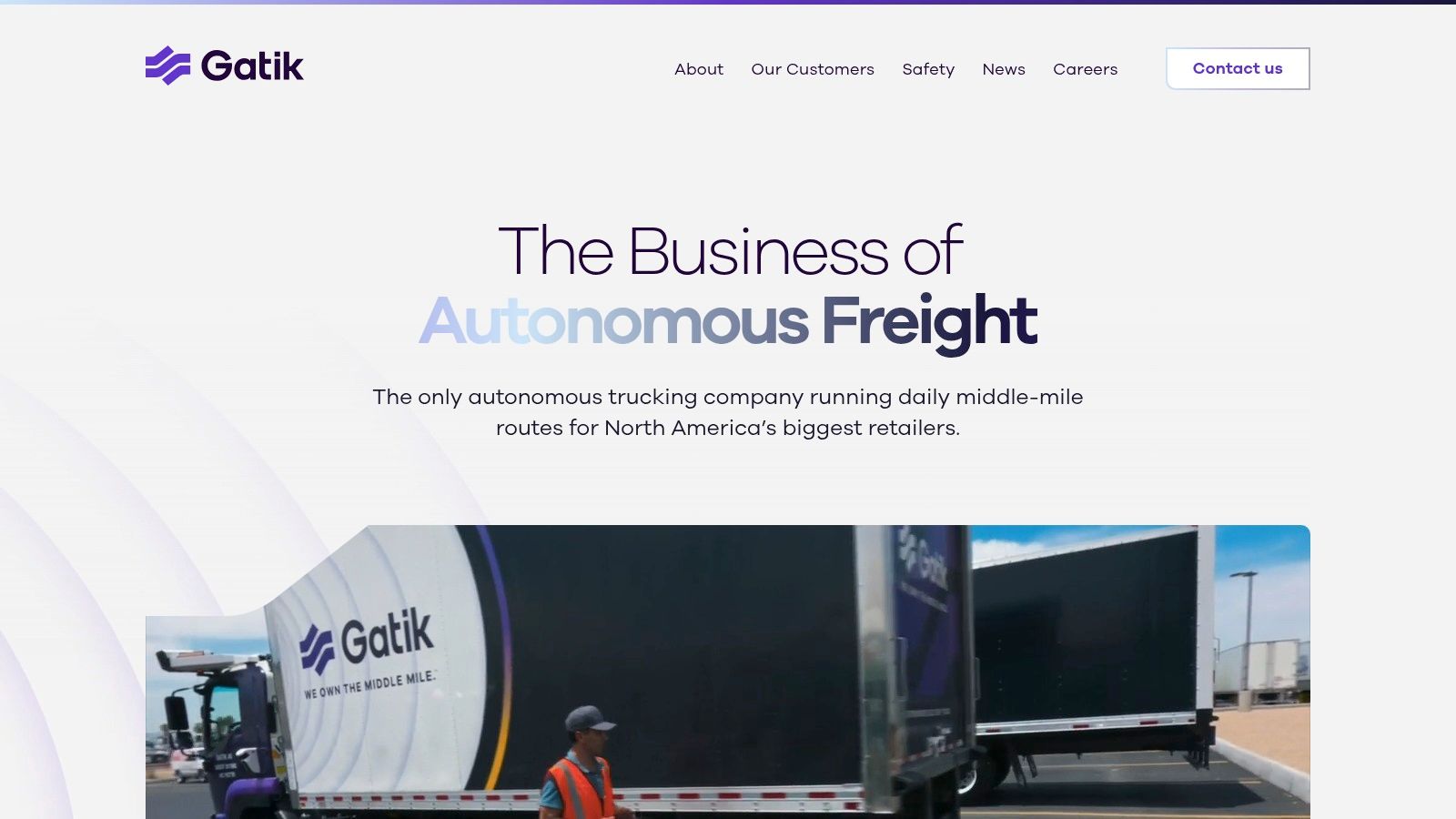
A remote dispatcher opening at Gatik will feel different from a standard carrier desk on day one. The company operates in autonomous middle-mile logistics, so the job centers on tightly managed fleet movement, route execution, incident response, and service reliability for commercial customers.
That difference matters.
If you want a role that builds relevant dispatch experience while also putting modern logistics systems on your resume, Gatik is one of the better companies to watch. The work tends to reward people who stay calm during live exceptions, document clearly, and follow process without getting rigid.
Why Gatik stands out
Gatik can be a strong target for applicants who want more than basic load coverage. In a setup like this, dispatch is tied closely to operational control. You may be monitoring routes, coordinating with field teams, handling disruptions, and keeping service commitments on track in a more structured environment than you will find at many small fleets.
That structure is a real advantage for job seekers. Scam listings and low-quality dispatcher jobs usually stay vague. A legitimate operations employer usually gets specific about tools, shift coverage, escalation paths, and performance expectations. If a Gatik posting is well written, that is a good sign.
There is a trade-off, though. Recognizable logistics tech companies attract a heavy applicant pool, and hiring managers can be pickier about communication quality, schedule fit, and operational judgment.
What to check before you apply
Read the location line carefully. Some Gatik roles are labeled remote but still prefer candidates in a certain time zone or near a defined operating area. If a posting mentions Texas hours, Dallas Fort Worth proximity, or fixed shift coverage, treat that as a real filter, not a suggestion.
Also check whether the role is true dispatch, fleet operations support, or a broader coordination job. Titles can blur together. The details in the responsibilities section matter more than the headline.
Here are the signals I would look for:
- Clear live-ops ownership: The posting should mention route monitoring, issue handling, incident response, or fleet coordination.
- Specific system use: Good listings reference dashboards, tracking tools, operating software, or internal workflows.
- Defined schedule expectations: Shift windows, weekends, after-hours coverage, or on-call expectations should be spelled out.
- Serious communication standards: Watch for language around escalation, documentation, stakeholder updates, and service levels.
Who has the best shot
Gatik makes more sense for candidates with some operations exposure already. That does not mean you need years in truck dispatch. It does mean you should be able to show that you can manage moving pieces without getting sloppy.
Strong applicants usually bring some combination of:
- Fast prioritization: You can tell the difference between a real service risk and a minor delay.
- Clean written updates: Your notes are useful, short, and easy for the next person to act on.
- Comfort with structured workflows: You can work inside a process and still make good judgment calls when something breaks.
A lot of applicants say they can multitask. Hiring teams care more about whether you can protect service, escalate early, and keep records straight.
If you want a more future-facing version of truck dispatcher from home jobs, start with Gatik.
4. HONK
HONK sits a little outside classic heavy freight dispatch, and that’s exactly why it belongs on this list. A lot of people searching for truck dispatcher from home jobs are open to adjacent dispatch work if the company is remote-first, the systems are solid, and the job gives them real coordination experience. HONK can check those boxes.
Its dispatch-style roles tend to revolve around roadside, towing, transport coordination, live status handling, and exception management. That’s not the same as booking linehaul freight for owner-operators, but many of the core skills overlap. You’re still triaging urgent requests, communicating under pressure, and keeping multiple parties aligned in real time.
Where HONK makes sense
This is a good option for strong communicators who want a legitimate remote dispatch workflow without waiting for the perfect OTR carrier opening. If your background includes customer-facing coordination, service scheduling, call-heavy operations, or transportation support, HONK may be easier to break into than a strict truckload dispatch role.
There’s also value in joining a company built around distributed operations. Remote-first employers usually have better habits around tooling, communication, and accountability than companies that only recently started hiring from home.
The downside
It’s fast-paced and measured. If you hate queue-based work, SLAs, and performance expectations tied to speed and resolution quality, this won’t feel comfortable.
It’s also not pure semi-truck dispatching. That matters if your only goal is to move into dry van, reefer, flatbed, or box truck operations. You need to decide whether your priority is “remote dispatch experience now” or “traditional trucking dispatch only.”
How to use HONK strategically
Think of this as a bridge role if needed. A lot of applicants get stuck because they insist on a narrow version of dispatch experience while having no direct dispatch experience at all. That’s not always a winning strategy.
A role like this can help you build the right story:
- Crisis communication: You handled urgent service situations with multiple stakeholders.
- Dispatch discipline: You tracked active jobs, vendor response, timing, and exceptions.
- Remote execution: You performed the work in a distributed environment with no office support.
Those are all sellable later.
One caution on job-search expectations. A background review of the market found that many “no experience needed” claims in dispatcher marketing don’t match employer reality, and that a large share of remote truck dispatcher roles ask for prior dispatching, logistics, or trucking experience (experience gap analysis). HONK can be valuable because it may give you legitimate dispatch-adjacent experience without requiring that you already know every trucking workflow.
If that trade-off works for you, check HONK careers and company information.
5. Five Star Roadside
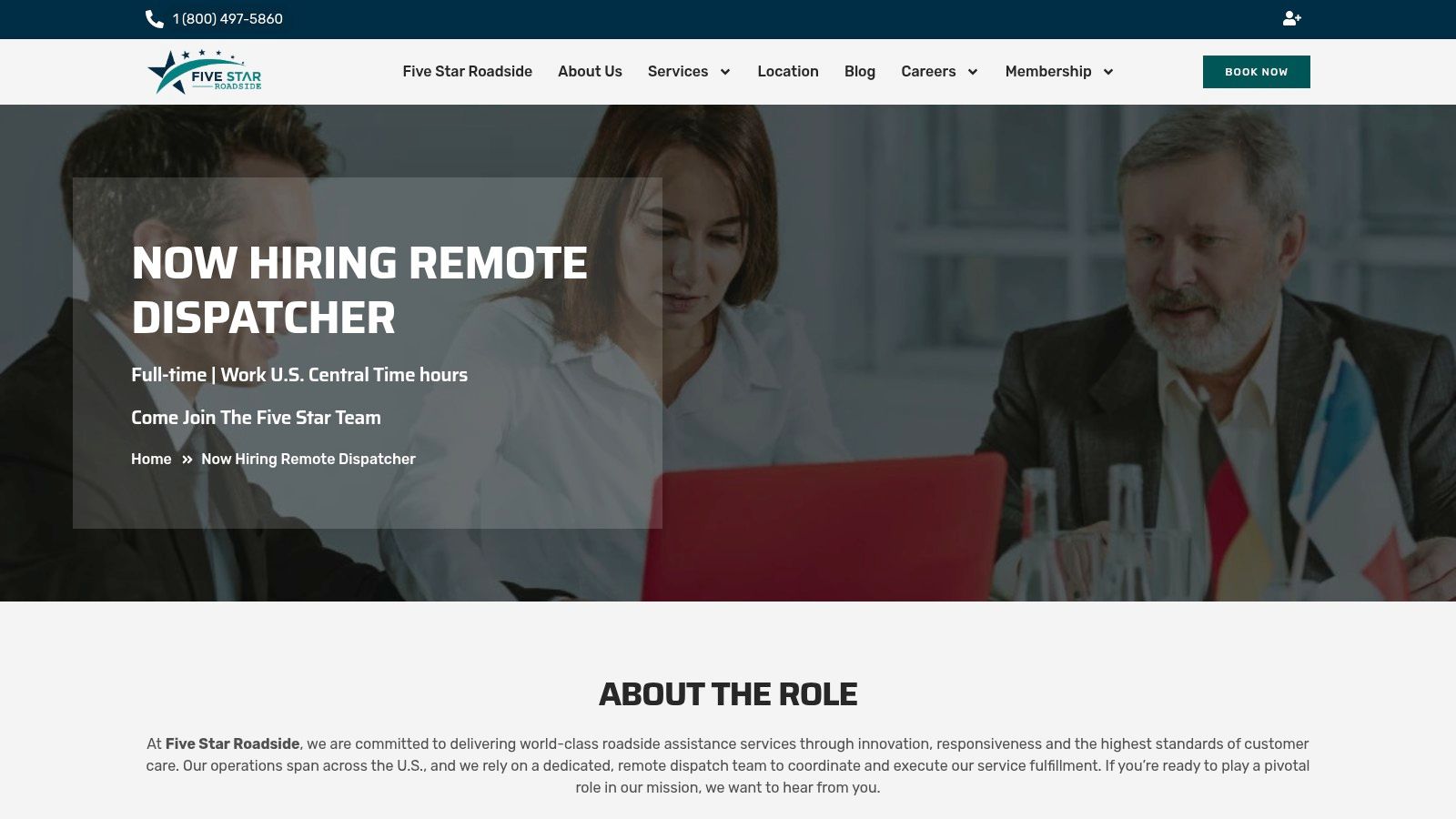
Five Star Roadside is a practical option for people who want remote dispatch work and don’t mind urgency. This isn’t a “set your own pace” kind of job. It’s closer to real-time coordination with a lot of phone and status management, which is exactly why some applicants do well here and others burn out fast.
The company’s remote dispatcher roles focus on intake, technician dispatch, tracking, and follow-through. If you’re good on the phone, type clean notes, and can keep your head when things go sideways, that skill set translates well.
What the job tends to reward
Roadside dispatch rewards operational steadiness more than polished corporate language. Can you gather the right information fast? Can you route the work to the right person? Can you keep the customer calm without making promises the field team can’t keep? That’s the job.
For some applicants, this can be a better entry point than freight dispatch because the workflow is more immediate and easier to understand from the outside. For others, the constant urgency is a deal-breaker.
The fit question
This role works better if you’re comfortable with:
- Live call handling: You’ll likely spend real time on the phone, not just in email.
- Time-pressure decisions: Delays and escalations aren’t occasional. They’re part of the day.
- Schedule discipline: Coverage can be tied to specific U.S. time windows, including Central Time.
That schedule piece matters. Many remote applicants say they want flexibility, but what they really want is predictability. Those aren’t the same thing.
Where it helps your long-term search
If your goal is eventually to move into traditional trucking operations, a roadside dispatcher role can still strengthen your profile. Employers care when candidates can show calm communication, active job tracking, and consistent follow-up in a distributed environment.
Cloud tools have helped make this kind of remote dispatch practical at scale. One industry write-up described remote truck dispatching as increasingly data-centric and noted that adoption of cloud dispatch software among independent dispatchers has grown, making multi-state oversight from home more realistic (remote dispatch tool adoption).
If you’re trying to break in, don’t dismiss roadside dispatch too quickly. A real dispatch environment beats another month of sending resumes to fake “entry-level trucking” jobs.
The main caution is niche fit. Confirm whether the role covers the kinds of vehicles and workflows you want to learn. If your long-term target is heavy-duty trucking, ask direct questions about volume, workflow, and coordination responsibilities before accepting an offer.
You can review the role on the Five Star Roadside remote dispatcher page.
6. FlexJobs
FlexJobs is useful for one reason above all others. It lowers noise. If you’ve spent enough time on mainstream boards, you know how valuable that is. Searching truck dispatcher from home jobs on giant public platforms often means sorting through irrelevant titles, reposted agency ads, old openings, and listings that were remote once but aren’t anymore.
FlexJobs gives you a cleaner hunting ground for dispatcher, fleet coordinator, routing coordinator, and after-hours tracking roles. It’s not trucking-only, and that’s both a strength and a weakness.
Why power searchers like it
The platform tends to be better for people who already know how to search. If you can combine title variations, remote filters, schedule preferences, and adjacent role names, you’ll usually get more useful results than you would on a broad board.
That matters because dispatch titles vary wildly. One company says dispatcher. Another says operations coordinator. Another says fleet support. If your search strategy is rigid, you’ll miss half the market.
The trade-off you’re paying for
FlexJobs requires a paid membership for full access. That means you should treat it like a focused search tool, not something you browse casually.
Use it when you’re ready to do the work properly:
- Build saved searches: Don’t rely on memory.
- Search adjacent terms: Dispatcher alone is too narrow.
- Screen for employer specificity: Favor listings with clear operational detail.
- Apply off-platform when possible: If there’s a direct employer path, take it.
That last point matters. Even on vetted platforms, direct employer applications usually give you cleaner ownership and better status visibility than staying entirely inside a board ecosystem.
What it’s best for
FlexJobs is especially useful if your background is mixed. Maybe you’ve done customer support, service scheduling, transportation admin, or field operations, but not formal trucking dispatch. This platform can surface roles that bridge those experiences better than trucking-pure boards do.
It’s also a decent second-layer search tool. I wouldn’t rely on it alone, but I would use it alongside direct employer pages and a faster feed like Remote First Jobs. That combination gives you breadth without forcing you back into the chaos of giant public boards.
If you want a vetted marketplace approach, start with FlexJobs dispatcher listings.
7. US Trucking Job
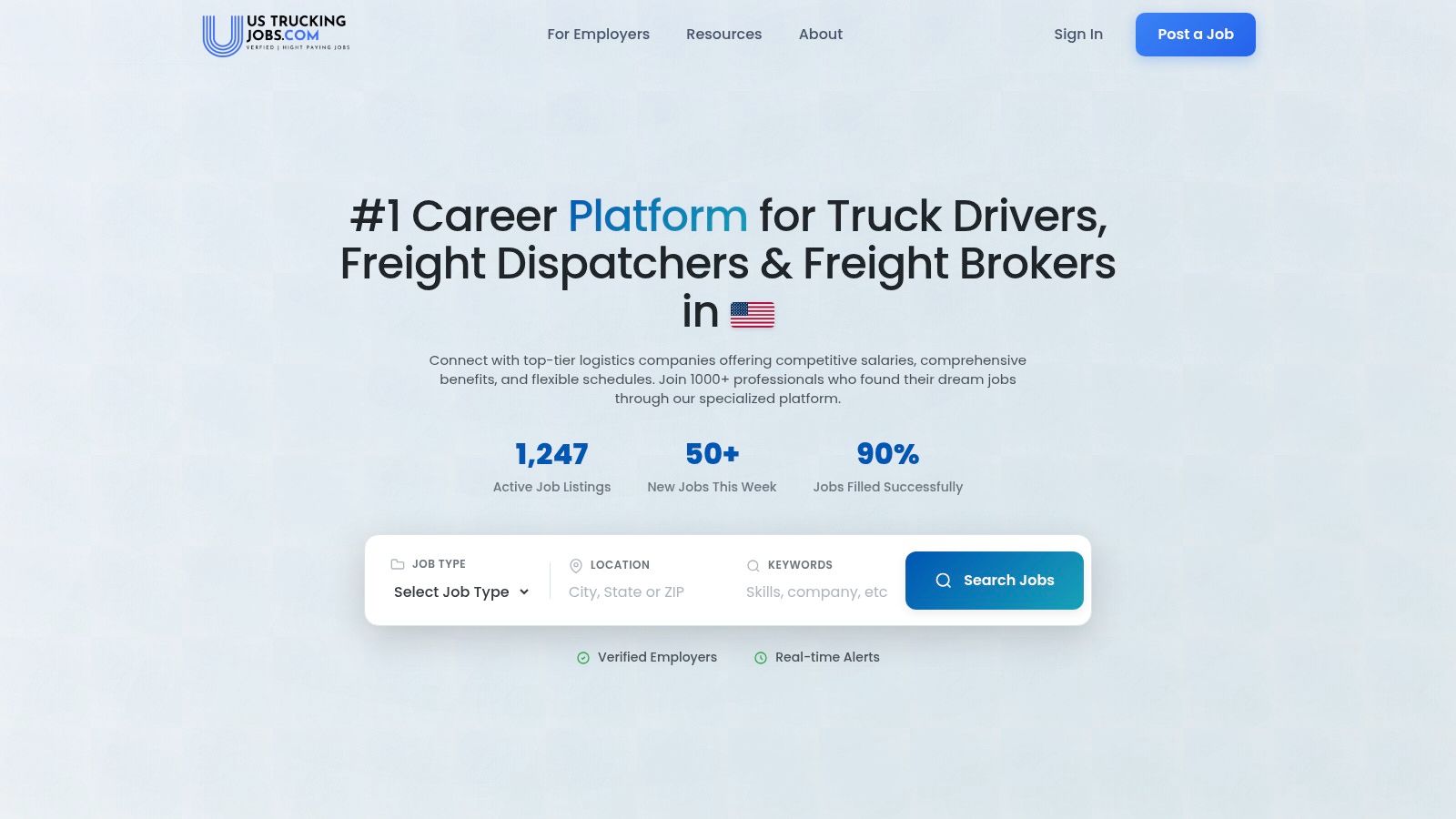
US Trucking Job is a niche board, and niche is exactly the point. When you’re looking for truck dispatcher from home jobs, tightly scoped boards often outperform giant ones because the surrounding listings stay closer to the actual freight market. You’re not wading through unrelated “dispatch” jobs from maintenance, healthcare, or local service industries unless the board broadens too far.
That narrower focus is useful if you already know you want trucking-specific work. It can surface dispatcher, broker, and operations roles with less general board clutter.
What makes it worth checking
The board is built around the U.S. trucking and logistics labor market, so the intent is aligned with what you’re trying to find. That sounds obvious, but alignment matters. Generic boards optimize for volume. Niche boards usually optimize for relevance.
For a candidate who wants freight-oriented roles, that means better odds of finding:
- Dispatcher listings tied to trucking workflows
- Operations roles near freight functions
- Direct employer links instead of abstract recruiter funnels
That doesn’t mean every posting is great. It means the starting pool is more usable.
Where caution still matters
Smaller boards don’t get a free pass on trust. Verify every employer, every application path, and every job description. A niche board can still carry weak postings or outdated ones.
I’d use this board as a discovery tool, then validate the company before spending serious time on the application. Check whether the employer has a real site, a real operations footprint, and a careers page that matches the listing.
A practical way to use it
Use US Trucking Job when you want to stay close to trucking language and avoid broad-board distraction. Then pair it with direct employer research. That workflow usually beats applying blind.
One more advantage of staying close to the freight side of the market. It helps you sharpen your vocabulary for applications. If a posting mentions bills of lading, detention, tracking, lane planning, or fleet coordination, you need to recognize those terms immediately. If you want a quick refresher on one of the most common shipping documents, this guide on what is a bill of lading is useful background.
For focused trucking job discovery, check US Trucking Job.
Remote Truck Dispatcher Jobs: 7-Company Comparison
| Item | Implementation complexity 🔄 | Resource requirements ⚡ | Expected outcomes ⭐ | Ideal use cases 💡 | Key advantages 📊 |
|---|---|---|---|---|---|
| Remote Customer Service Jobs on Remote First Jobs | 🔄 Low, browse curated feed and apply quickly | ⚡ Low, web access, resume; no fee | ⭐⭐⭐⭐, fast discovery of verified remote customer-service/dispatch roles | 💡 Job seekers wanting at-home dispatcher/support-coordinator roles and first-mover advantage | 📊 Live curated feed; direct ATS sourcing; rapid updates |
| TLP Freight | 🔄 Medium, employer-specific hiring process | ⚡ Medium, domain experience helpful; confirm comp details | ⭐⭐⭐, direct-hire dispatcher roles with growth paths | 💡 Candidates seeking smaller-team dispatcher roles with clear ownership | 📊 100% remote when open; in-house tools; direct employer applications |
| Gatik | 🔄 Medium, coordinating AV fleet adds operational complexity | ⚡ Medium, logistics/AV familiarity; may favor TX time zones | ⭐⭐⭐⭐, future-leaning AV logistics experience and growth potential | 💡 Applicants interested in autonomous middle-mile operations and SLAs | 📊 Remote dispatcher roles; exposure to Level-4 AV and retailer SLAs |
| HONK (Honk for Help) | 🔄 Low–Medium, remote-first workflows but high throughput | ⚡ Medium, strong real-time chat/phone skills; handle volume | ⭐⭐⭐, steady remote dispatch with enterprise clients | 💡 Communicators comfortable with live dispatch, tracking, and escalations | 📊 Remote-first; enterprise partners (insurers/fleets); established workflows |
| Five Star Roadside | 🔄 Low, standard dispatch processes with urgent cases | ⚡ Medium, phone etiquette, US Central coverage, possible nights/weekends | ⭐⭐⭐, hands-on roadside dispatch experience | 💡 Candidates comfortable with emergency/roadside workflows and Central Time shifts | 📊 100% remote dispatch; direct employer hiring; defined duties |
| FlexJobs | 🔄 Low, platform search and alerts; membership setup | ⚡ Medium, paid membership for full access; profile/resume tools | ⭐⭐⭐⭐, human-vetted listings with lower scam risk | 💡 Job seekers wanting screened remote logistics/dispatcher opportunities | 📊 Human-vetted postings; aggregated roles; alerts and search tools |
| US Trucking Job | 🔄 Low, niche board with focused listings | ⚡ Low, free access; direct employer links | ⭐⭐⭐, targeted trucking and dispatcher listings | 💡 Seekers focused specifically on US trucking/dispatch roles | 📊 Dedicated trucking scope; lower noise; free for job seekers |
Your Go-Forward Plan Apply Smart And Get Hired Faster
You find a remote dispatcher opening at 9:10 a.m. By lunch, it has 150 applicants, half of them spraying the same resume at every logistics job they can find. Speed matters in this niche, but blind speed gets people buried. The advantage comes from applying early, applying to the right roles, and filtering out bad listings before they waste your time.
Start with pay expectations, but read them like an operator, not like a marketer. Remote truck dispatcher pay varies hard by freight type, shift coverage, after-hours responsibility, and whether you are joining as an employee or working in a more independent setup. Entry-level remote roles usually come in lower because the company is absorbing training risk. Higher-paying roles tend to ask for broker, carrier, TMS, or live dispatch experience, and they usually expect you to handle exceptions without hand-holding.
That trade-off matters.
A posting that offers top-of-market pay, no experience, full flexibility, paid training, and instant hiring is usually selling a fantasy. Legitimate employers describe the freight, the schedule, the tools, and the pressure points. Bad actors stay vague because the pitch matters more to them than the work.
Use a simple screening rule before you apply. If the listing does not tell you what you would dispatch, who you would support, what hours you would cover, or what system you would use, treat it as unverified until you confirm those details on the company site.
Scam detection in dispatcher hiring is mostly pattern recognition:
- Walk away if they ask for money for training, software, or background processing before hire.
- Be cautious if the interview happens only through text, Telegram, or WhatsApp.
- Skip listings that hide the company name or read like generic customer service ads with “dispatcher” pasted in.
- Verify that the company has an actual operating business, a working website, and a careers page or traceable hiring presence.
- Check whether the role explains the freight, customers, service area, or dispatch hours in plain language.
Once a role passes that filter, move fast. Keep a clean PDF resume ready. Keep a short cover note ready. Save a plain-text version too, because some applicant tracking systems strip formatting and create a mess.
Do not rewrite everything for every job. Rewrite the top third. That is where hiring teams look first.
A strong cover note for this field usually does four things:
- Names the exact role
- Shows you understand live operations
- Proves you can coordinate, document, and communicate under pressure
- Makes your availability easy to assess
Use something this direct:
I’m applying for the remote dispatcher role because my background fits fast-paced coordination, customer communication, and time-sensitive problem solving. I’m comfortable handling multiple active requests, documenting updates clearly, and staying responsive in a remote operating environment. I’d welcome the chance to discuss how I can support your dispatch team.
That is enough. Hiring managers do not need your autobiography.
Application timing also changes your odds more than people think. Direct employer pages and smaller niche boards often give you a better shot than giant job platforms because the applicant pile is smaller in the first 24 to 48 hours. That is why this search should be run like a pipeline, not a casual browse. Track a shortlist of verified companies, check them repeatedly, and apply while the posting is still fresh.
A practical go-forward plan looks like this:
- Build a target list from verified employer pages and vetted platforms.
- Separate true dispatcher roles from roadside coordination, customer service, and logistics support jobs.
- Apply same day when a strong match appears.
- Verify the company before sharing personal details.
- Follow up once if the posting stays open for several days.
If you want better odds, stop acting like a general applicant. Act like someone who understands dispatch work, understands hiring speed, and knows how to spot a weak listing. That alone puts you ahead of the crowd applying with generic resumes to stale posts.
If you’re done wasting time on stale listings, Remote First Jobs is the best place to start. It pulls remote roles directly from employer career pages, filters out junk, and helps you catch legitimate openings before they get swarmed on LinkedIn or Indeed. For truck dispatcher from home jobs and adjacent dispatch roles, that timing advantage is often the difference between getting seen and getting buried.