
Finding the best companies with remote jobs requires more than just a quick search; it demands a targeted strategy. The rise of remote work has created immense opportunity, but it has also flooded the market, making it difficult to distinguish genuine, high-quality remote-first employers from those simply testing the waters. This guide cuts through the noise. We’ve compiled a definitive list of companies that are not just offering remote positions, but are deeply committed to a remote-centric culture, offering robust support, competitive benefits, and clear career progression for their distributed teams.
This is not another generic list. Instead, we provide actionable intelligence on what makes each company a top choice. For each employer, you’ll find a detailed profile covering their industry, typical remote roles, and what sets their culture apart. We’ll also give you a tactical play-by-play on how to navigate their specific application process, increasing your chances of getting noticed. For those just entering the field, understanding how to effectively start an IT career can provide a foundational advantage in securing these competitive roles. Consider this your roadmap to finding a remote job at a company that truly values and empowers its global workforce.
1. FlexJobs
FlexJobs isn’t a company that hires for remote roles itself; instead, it’s a premium job board and research hub dedicated entirely to remote, hybrid, and flexible work. It earns its top spot by serving as an invaluable starting point for identifying the best companies with remote jobs through its meticulously researched and hand-screened listings. The platform is renowned for filtering out scams and low-quality postings, ensuring that every opportunity is legitimate.
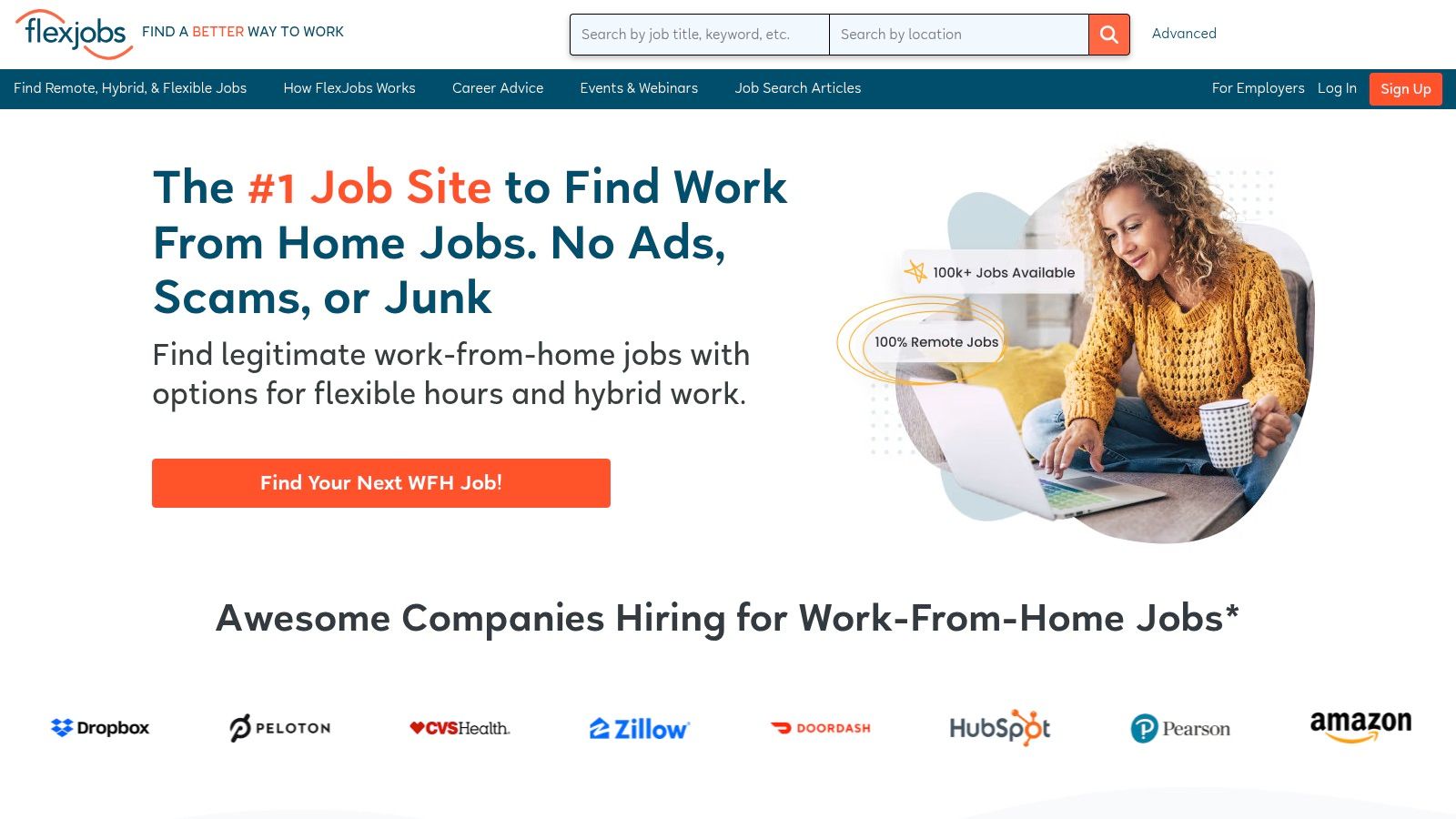
Its most significant contribution is the annual “Top 100 Companies to Watch for Remote Jobs” list. This data-driven report analyzes thousands of companies to identify those that posted the highest number of remote positions over the previous year, offering a reliable, vetted list of employers actively committed to remote hiring.
Why It Stands Out
What makes FlexJobs unique is its dual function as both a job board and a research tool. Beyond just listings, it provides detailed company profiles, career coaching, resume reviews, and skills tests. This comprehensive approach helps you not only find opportunities but also prepare to land them. While many job boards scrape listings automatically, every single job on FlexJobs is verified by a human, saving you time and protecting you from fraudulent posts. For more details on its features compared to others, check out this guide on the best job boards for remote work.
How to Use It Effectively
- Focus on the “Top 100” List: Use the annual and seasonal “Top Companies” reports as a primary list of targets. Visit the profiles of companies that interest you to see their current openings directly on FlexJobs.
- Utilize Advanced Filters: Go beyond simple keywords. Filter jobs by career level (e.g., “Senior Level Manager”), job type (e.g., “Employee,” “Freelance”), and schedule (e.g., “Full-Time,” “Part-Time”) to narrow your search.
- Leverage Career Resources: Take advantage of the webinars, articles, and skills tests included with your membership to strengthen your application and interview skills.
Access Requirements: Full access to job listings requires a paid subscription, with plans starting around $25 per month (discounts for longer-term subscriptions are often available). This paywall is its biggest drawback, but it funds the human-screening process that ensures listing quality.
2. Remote.co
Remote.co is more than just a job board; it’s a comprehensive resource hub for anyone invested in the remote work ecosystem. While it features thousands of remote job listings, its real power lies in its deep dive into the operations of remote-first companies. This makes it an excellent platform for identifying and researching the best companies with remote jobs by understanding their culture and practices before you even apply.

The platform curates content directly from over 140 remote companies, offering insights on everything from productivity tools to team management. Its goal is to connect job seekers with employers who genuinely understand and excel at distributed work, moving beyond a simple list of vacancies to provide a holistic view of the remote landscape.
Why It Stands Out
What truly distinguishes Remote.co is its “Company Q&A” section. Here, leaders from top remote companies answer pointed questions about how they manage their distributed teams, what their culture is like, and what they look for in candidates. This feature provides an unparalleled, behind-the-scenes look that helps you assess cultural fit and tailor your application. It’s a research tool that empowers you to target companies that align with your work style. To further understand what makes these companies successful, you can explore some of the best practices for remote teams.
How to Use It Effectively
- Start with the Company Q&As: Before browsing jobs, explore the Q&A section. Identify companies whose philosophies and operational styles resonate with you, and then check their open positions.
- Use the Curated “Hiring Now” Articles: Look for articles that group companies hiring for specific roles (e.g., “Companies Hiring for Remote Cybersecurity Jobs”). This is a quick way to find relevant opportunities from actively hiring employers.
- Cross-Reference Job Postings: While Remote.co is a great discovery tool, the quality and detail of job posts can vary. Use it to find companies, then visit their official career pages to get the most accurate and up-to-date information.
Access Requirements: Access to job listings and all informational content on Remote.co is free. However, since it aggregates posts from various sources, the quality and pay transparency can be inconsistent. Job seekers should do their own due diligence on individual postings.
3. We Work Remotely (WWR)
As one of the largest and most established remote-only job boards, We Work Remotely (WWR) is a go-to resource for discovering companies that are actively and consistently hiring remote talent. Instead of mixing remote roles with hybrid or on-site positions, WWR is exclusively dedicated to location-independent opportunities, making it a highly focused platform for identifying the best companies with remote jobs. Its longevity in the market means it attracts high-profile, remote-first brands that repeatedly post openings.
The platform is designed for straightforward browsing by job category, such as “Programming,” “Design,” and “Customer Support.” By observing which companies post frequently in your field, you can quickly build a target list of employers committed to building distributed teams. This makes WWR an excellent tool for passive research as well as active job searching.
Why It Stands Out
We Work Remotely’s strength lies in its simplicity and large, high-quality inventory. The user interface is clean and free of distractions, allowing you to focus entirely on the job listings. Unlike aggregator sites, companies pay a premium to post on WWR, which naturally filters for serious employers with approved budgets for remote roles. Its wide distribution network, which includes integrations with Google Jobs, also ensures that listings get significant visibility, attracting a large talent pool. To see how it compares to other platforms, you can find a deeper dive into the top remote job websites.
How to Use It Effectively
- Track Recurring Posters: Pay attention to the companies that appear on WWR consistently. A recurring presence is a strong indicator of a growing, remote-friendly culture.
- Explore Company Profiles: Click through to the “Top Remote Companies” pages to see an employer’s full history of job postings on the platform. This provides insight into the types of roles they hire for and how often.
- Set Up Job Alerts: Create targeted alerts for specific categories or keywords. This automates the process of identifying new roles from your target companies as soon as they are posted.
Access Requirements: Access to browse and apply for jobs is completely free for job seekers. The platform is funded by employers who pay a flat fee to post a job listing, ensuring there is no cost barrier for candidates looking for their next remote opportunity.
4. Built In (Fully Remote Companies and Awards)
Built In is a tech and startup community platform that has become a powerful resource for finding the best companies with remote jobs, particularly within the US tech sector. While it’s not exclusively a remote job board, its dedicated “Fully Remote” company directory and annual awards lists make it an essential tool for discovering employers who have fully embraced a distributed work model. It provides rich, detailed profiles of companies actively hiring remote talent.
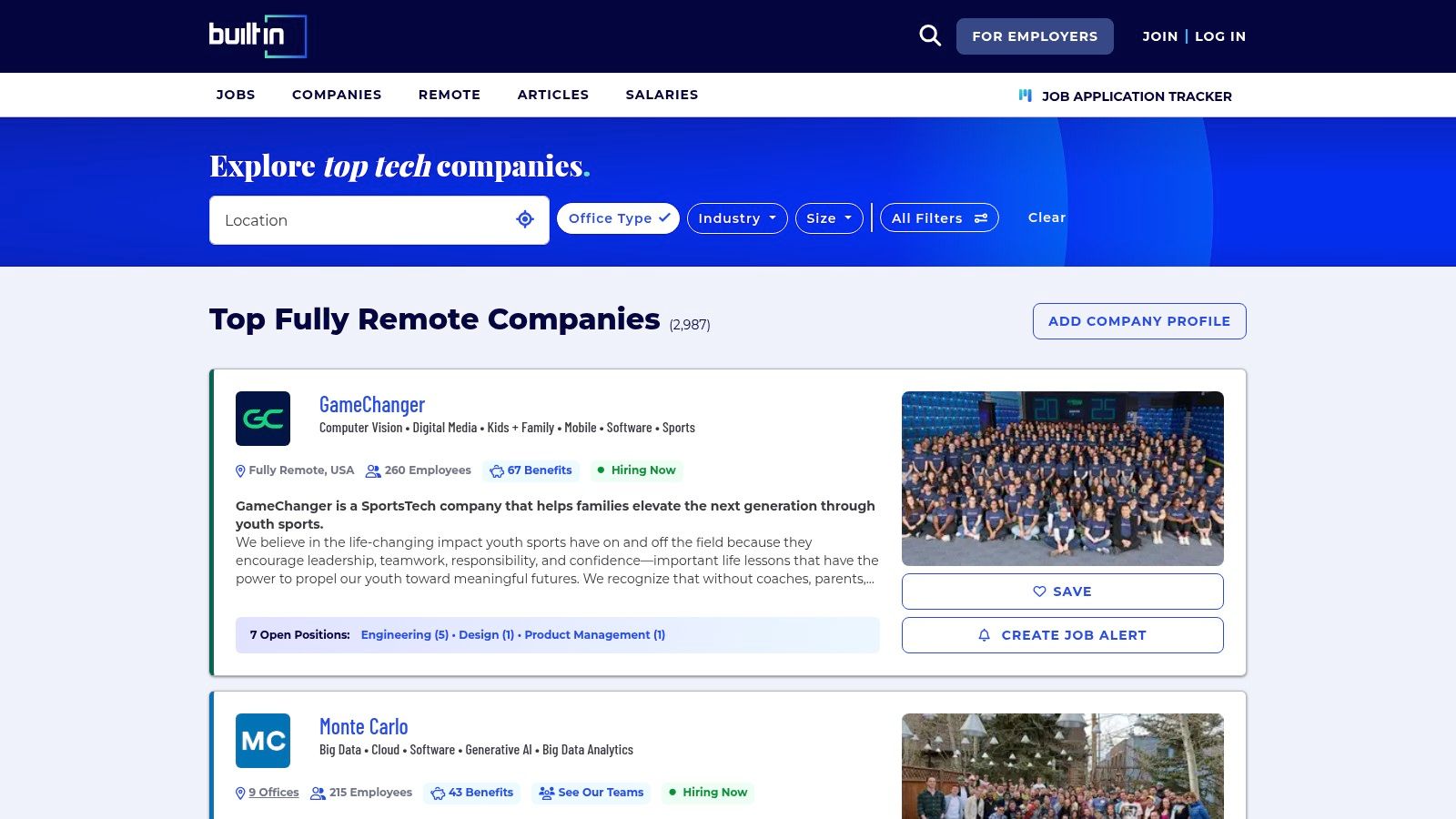
The platform is best known for its “Best Places to Work Awards,” which includes a specific category for the “100 Best Remote-First Companies to Work For.” This curated list goes beyond just job volume and considers employer benefits, people-first policies, and employee-submitted data to identify top-tier remote workplaces.
Why It Stands Out
Built In’s biggest advantage is the depth of its company profiles, which are geared toward helping you understand a company’s culture and compensation philosophy before you even apply. Profiles often include detailed breakdowns of benefits, from home office stipends and wellness programs to professional development budgets and parental leave policies. This transparency allows you to easily compare perks and find an employer whose values align with your own. While its primary focus is on the tech industry, its detailed insights into company culture are invaluable for anyone targeting remote-first organizations. To see how Built In’s top picks compare to others, explore this guide to the best remote companies to work for.
How to Use It Effectively
- Browse the “Fully Remote” Directory: Start at the Built In Fully Remote Companies page. Use the filters to narrow the list by company size, industry (e.g., “Fintech,” “Healthtech”), and tech stack.
- Study the “Best Places to Work” Lists: Review the annual awards lists for remote companies. These are often employers with exceptional cultures and benefits, making them prime targets for your job search.
- Compare Benefits Directly: Use the detailed company profiles to create a shortlist based on the perks that matter most to you, whether it’s a generous PTO policy, 401(k) matching, or a home office setup budget.
Access Requirements: Built In is completely free to use for job seekers. You can browse company profiles, view job listings, and read articles without creating an account or paying a subscription fee. This open access makes it an excellent research tool for the initial stages of your remote job hunt.
5. LinkedIn
LinkedIn has evolved from a professional networking site into one of the most powerful job search platforms available, especially for identifying best companies with remote jobs. It’s not just a job board; it’s an ecosystem where you can find openings, research company culture, and network with key decision-makers all in one place. Its massive scale means it has an unparalleled inventory of remote roles across nearly every industry in the US and globally.
The platform’s strength lies in its data-rich company pages and robust search filters. You can instantly see a company’s headcount trends, recent hires, and typical employee backgrounds, giving you critical intelligence before you even apply. Recruiters actively use the platform to source candidates, making a well-optimized profile a passive job-seeking tool.
Why It Stands Out
What makes LinkedIn unique is its seamless integration of job searching and professional networking. While other sites just list jobs, LinkedIn allows you to see who works at a company, find alumni from your school who are employed there, and directly connect with hiring managers. Its “Open to Work” feature lets you privately signal to recruiters that you are looking for remote positions, bringing opportunities directly to you. The platform also curates its annual “Top Companies” list, which often highlights employers with strong remote work policies.
How to Use It Effectively
- Master the Search Filters: Use the “Remote” location filter, but also look for keywords like “work from home,” “distributed team,” and “remote-first” in the job description search bar. Apply the “Easy Apply” filter for quick applications or focus on standard applications for more competitive roles.
- Optimize Your Profile for Remote Work: Your profile is your primary marketing tool. Explicitly state your interest in remote work in your headline and “About” section. For a comprehensive guide on this, learn more about how to optimize your LinkedIn profile for remote opportunities.
- Research and Network: Before applying, visit the company’s page. Look at its recent posts, check employee profiles to understand the company culture, and try to find a connection to get an internal referral.
Access Requirements: LinkedIn is free to use for job searching and networking. A premium subscription (starting around $29.99/month) offers additional benefits like InMail credits to message people outside your network, insights on who viewed your profile, and detailed applicant analytics, but it is not required to find and apply for jobs.
6. Indeed
As one of the world’s largest job search engines, Indeed isn’t a remote-first company itself but serves as a massive aggregator where you can find listings from thousands of the best companies with remote jobs. Its sheer volume of listings makes it an essential tool for market research and discovering opportunities that might not appear on niche remote job boards. The platform’s robust search filters and vast repository of company reviews provide a powerful combination for any remote job seeker.
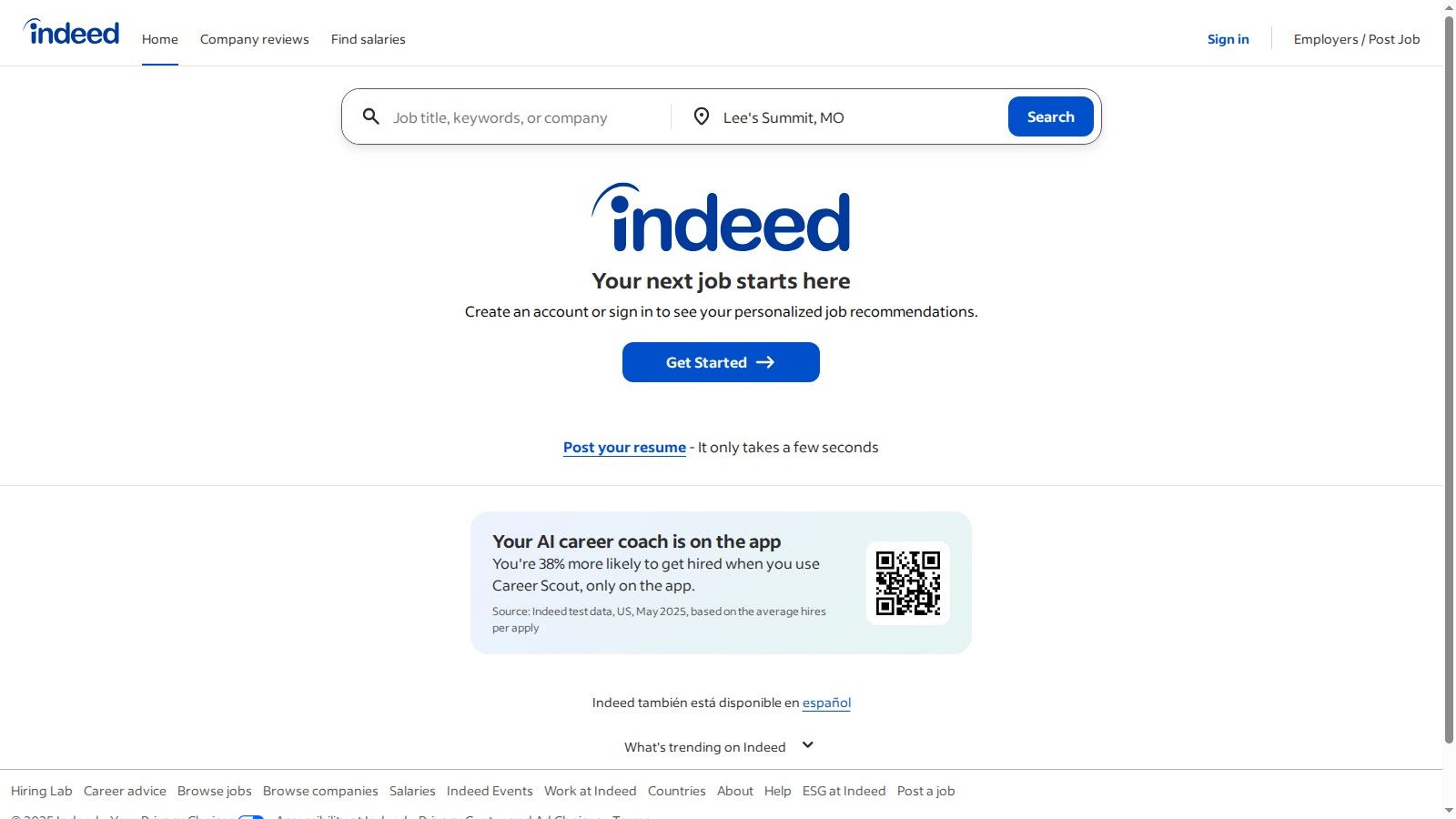
Indeed’s primary value for remote job hunters lies in its comprehensive data. You can not only search for remote or hybrid positions but also cross-reference potential employers with thousands of employee reviews and salary data points. This allows you to vet a company’s culture and compensation practices before you even apply, ensuring a better fit for your remote career.
Why It Stands Out
What distinguishes Indeed is its scale and integrated company insights. While other platforms specialize, Indeed offers a bird’s-eye view of the entire job market, including remote work trends. The ability to filter by “Remote” and then immediately dive into a company’s dedicated page to read reviews from current and former employees is invaluable. This helps you gauge whether a company’s remote culture is genuinely supportive or just a recent policy change. It’s an all-in-one platform for searching, researching, and applying.
How to Use It Effectively
- Use Precise Search Queries: Combine the “Remote” location filter with specific keywords. Use boolean search terms like
"customer support" AND "fully remote" NOT "hybrid"to refine your results and eliminate irrelevant postings. - Deep Dive into Company Pages: Before applying, always visit the company’s profile on Indeed. Pay close attention to the “Work/Life Balance” and “Management” scores in the reviews section, as these are critical indicators of a healthy remote environment.
- Set Up Job Alerts: Create targeted job alerts for your ideal remote role. For example, set an alert for “Remote Project Manager” in the “Technology” industry to get relevant new listings sent directly to your inbox.
Access Requirements: Indeed is completely free for job seekers. You can search for jobs, read reviews, and apply without any subscription fees. Its business model relies on employers paying to post and promote listings, which means you may encounter sponsored posts, staffing agency listings, and some duplicate content that require careful vetting.
7. Wellfound (formerly AngelList Talent)
Wellfound, which rebranded from AngelList Talent, is a premier job platform specifically designed for the startup ecosystem. It isn’t a single company hiring remotely but a vibrant marketplace connecting talented professionals with thousands of innovative startups, a significant portion of which are remote-first. It earns a spot on this list because it’s one of the best places to find transparent, high-growth opportunities with companies that build their culture around remote work from day one.
The platform excels at providing deep insights into each startup, including funding rounds, team size, and market traction. This context is invaluable for job seekers trying to identify stable and promising companies with remote jobs in the often-volatile startup world. Wellfound is particularly strong for roles in tech, product, design, and marketing.
Why It Stands Out
What truly sets Wellfound apart is its focus on transparency and its startup-centric features. Many listings include explicit salary and equity ranges upfront, removing guesswork from the application process. Its powerful filters allow you to search specifically for “Distributed Teams” or by time-zone compatibility (e.g., “US Only”), which are critical for finding genuinely location-independent roles. The user experience is modern, with a “one-click apply” feature that streamlines the process significantly.
How to Use It Effectively
- Build a Compelling Profile: Your Wellfound profile acts as your resume. Take time to detail your skills, experience, and what you’re looking for. You can even get “featured,” which surfaces your profile to recruiters at top remote startups.
- Use the “Distributed Team Only” Filter: This is the most effective way to cut through the noise and find companies that are fully remote and have the infrastructure to support a distributed workforce.
- Research the Companies: Don’t just apply. Use the rich company profiles to understand the startup’s mission, funding stage, and leadership team. This will help you tailor your application and ask intelligent questions during interviews.
Access Requirements: The platform is completely free for job seekers. Its primary drawback is the inherent risk associated with startups; some roles may be equity-heavy or offer fewer benefits than established corporations.
Top 7 Remote Job Platforms Comparison
| Platform | Implementation Complexity 🔄 | Resource Requirements ⚡ | Expected Outcomes ⭐ / 📊 | Ideal Use Cases 💡 | Key Advantages ⭐ |
|---|---|---|---|---|---|
| FlexJobs | Low–Medium 🔄 — curated, hand‑screened listings | Paid membership for full access; low time investment ⚡ | High quality, vetted leads; reliable company rankings ⭐📊 | Build a vetted target list; access career resources and coaching 💡 | Human‑screened jobs; Top 100 remote companies; strong vetting ⭐ |
| Remote.co | Low 🔄 — browse jobs and company Q&As | Mostly free; time to review Q&As and listings ⚡ | Good for culture insight; job quality varies ⭐📊 | Evaluate remote culture while sourcing roles across functions 💡 | Company Q&As; broad role coverage; frequent updates ⭐ |
| We Work Remotely (WWR) | Low 🔄 — simple category browsing | Free browsing; set up alerts; vet listings ⚡ | Large volume of remote openings; duplicate/scam risk 📊 | Spot remote‑first employers and repeat hirers 💡 | Very large remote‑only inventory; recurrent company postings ⭐ |
| Built In (Fully Remote) | Medium 🔄 — filterable employer comparisons | Free; some tech‑centric browsing time ⚡ | Strong insights on perks/benefits for US tech firms ⭐📊 | Compare benefits and employer size in tech/product/data roles 💡 | Detailed employer profiles; awards and perks comparisons ⭐ |
| Medium 🔄 — requires profile and networking | Free basic use; optional paid tools; networking time ⚡ | Massive inventory and networking leads; verify remote scope 📊 | Network into brand‑name remote employers and research fit 💡 | Largest professional network; detailed company trends and people ⭐ | |
| Indeed | Low 🔄 — powerful filters and search | Free; time to filter duplicates and agency posts ⚡ | Comprehensive coverage; mixed post quality; strong reviews/salary data 📊 | Validate how often employers post remote roles; check reviews 💡 | Wide coverage across industries; company reviews and salary info ⭐ |
| Wellfound (AngelList) | Low–Medium 🔄 — startup‑focused searches | Free for candidates; profile setup and apply time ⚡ | Strong for remote startups with transparent salary/equity ⭐📊 | Find remote‑first startups and scaleups in tech/product roles 💡 | Startup profiles with salary/equity transparency; targeted filters ⭐ |
Final Thoughts
Navigating the landscape of remote work can feel like exploring a vast, new territory. But armed with the right tools and a strategic approach, you can pinpoint the opportunities that align perfectly with your career goals and lifestyle aspirations. Throughout this guide, we’ve explored a curated selection of platforms, each offering a unique gateway to some of the best companies with remote jobs available today.
From the rigorously vetted listings on FlexJobs to the startup-centric ecosystem of Wellfound, the key is understanding that no single platform holds all the answers. Your most effective job search strategy will involve a multi-channel approach, leveraging the distinct strengths of each tool. WWR and Remote.co offer a direct line to remote-first culture, while giants like LinkedIn and Indeed provide unparalleled volume and powerful networking features.
Key Takeaways for Your Remote Job Search
To distill our findings into actionable steps, keep these core principles at the forefront of your search:
- Diversify Your Platforms: Don’t put all your applications in one basket. Create profiles and set up alerts on at least two or three different platforms, such as a niche board like We Work Remotely and a broad-reach site like LinkedIn, to maximize your exposure.
- Customize Your Approach: A generic application gets lost in the noise. Tailor your resume and cover letter for each company, referencing their mission, values, and the specific requirements of the role. Use the company profiles on sites like Built In to gather this intelligence.
- Leverage Filtering and Alerts: Your time is valuable. Use advanced search filters to narrow down opportunities by time zone, industry, and role. Set up daily or weekly job alerts to ensure you’re among the first to see new, relevant postings.
- Think Beyond the Application: The job search is also about building connections. Use LinkedIn to follow target companies, engage with their content, and connect with current employees or hiring managers. This proactive engagement can make a significant difference.
Charting Your Course to a Fulfilling Remote Career
Ultimately, finding your place at one of the best companies with remote jobs is a journey of matching your skills and values with an organization that champions a similar ethos. The companies featured on these platforms are not just offering a job; they are offering a different way to work, one built on trust, autonomy, and results.
As you move forward, focus on presenting yourself as a proactive, self-motivated professional who thrives in a distributed environment. Highlight past remote work experience, showcase your communication skills, and demonstrate your ability to manage your time and projects effectively. This is your opportunity to build a career that isn’t confined by geography but is defined by impact and freedom.
Ready to cut through the noise and find curated remote opportunities in one place? Remote First Jobs handpicks the best remote roles from top companies, saving you time and connecting you directly with employers who truly embrace the future of work. Start your focused job search today at Remote First Jobs.