The world of work has fundamentally shifted. As companies embrace distributed models, the ability to thrive in a remote setting is no longer a niche skill; it is a core competency for career longevity and professional success. Many guides offer surface-level advice like “buy a good chair,” but the real challenge is mastering the nuanced arts of communication, productivity, and career development without the structure of a physical office. The most successful remote professionals understand that effectiveness isn’t just about having a quiet room to take calls in; it’s about building intentional systems for work and growth.
This comprehensive guide moves beyond the basics to provide ten actionable best practices for working remotely. We have designed these strategies for ambitious professionals, strategic job seekers, and the forward-thinking companies that hire them. You will learn how to implement structured daily routines, adopt an asynchronous-first communication mindset, and maintain visibility without succumbing to micromanagement. Furthermore, we will explore often-overlooked yet critical areas such as establishing robust home office cybersecurity, managing the unique psychological demands of remote work to prevent burnout, and strategically navigating the modern job market.
Each point is structured to be immediately applicable, offering a framework not just to survive, but to excel in a remote-first career. Whether you are a seasoned remote worker looking to refine your habits or a professional transitioning to a distributed role, these principles provide a roadmap for building a sustainable, productive, and fulfilling career outside the traditional office walls.
1. Establish a Dedicated Remote Workspace
Creating a designated, distraction-free workspace is a foundational pillar for remote work success. Unlike a traditional office, which inherently separates professional and personal spheres, remote workers must intentionally engineer their environment. This practice establishes crucial psychological boundaries, signaling to your brain when it’s time to focus on work and when it’s time to unplug.
A dedicated space not only boosts productivity by minimizing interruptions but also enhances professionalism, a critical factor during video interviews and client meetings. It’s about creating an environment that supports focus, efficiency, and mental well-being, forming the physical bedrock of your remote career. This is one of the most impactful best practices for working remotely because it directly addresses the core challenge of blending home and work life.

Why This Practice Is Essential
A dedicated workspace solves three key remote work challenges: it reduces distractions, prevents burnout by creating a clear work-life separation, and projects a professional image. For instance, a working parent might use an enclosed office with a lock to ensure uninterrupted focus during deep work sessions, while a digital nomad might rely on co-working spaces to maintain a professional setting and network with others.
Actionable Steps for Implementation
Creating an effective remote workspace doesn’t require a large room, just intentional design. Focus on ergonomics and function to build a space that works for you. For a comprehensive approach, explore this ultimate work-from-home office setup guide to ensure you cover all the essentials.
- Invest in Ergonomics: Prioritize a quality chair, an appropriate desk (like a standing desk to reduce fatigue), and an external monitor to maintain good posture. Avoid working from your couch or bed. For more detailed advice, you can learn more about creating an ergonomic home office setup.
- Control Your Environment: Use noise-canceling headphones to block out household sounds. Position your desk so you aren’t facing a window to avoid screen glare, and ensure you have adequate lighting for video calls.
- Maintain Professionalism: For video calls, use a neutral, professional background or a blur feature. Keep your desk tidy to reduce mental clutter and present a clean, organized appearance to colleagues and potential employers.
2. Implement Structured Daily Routines and Time Blocks
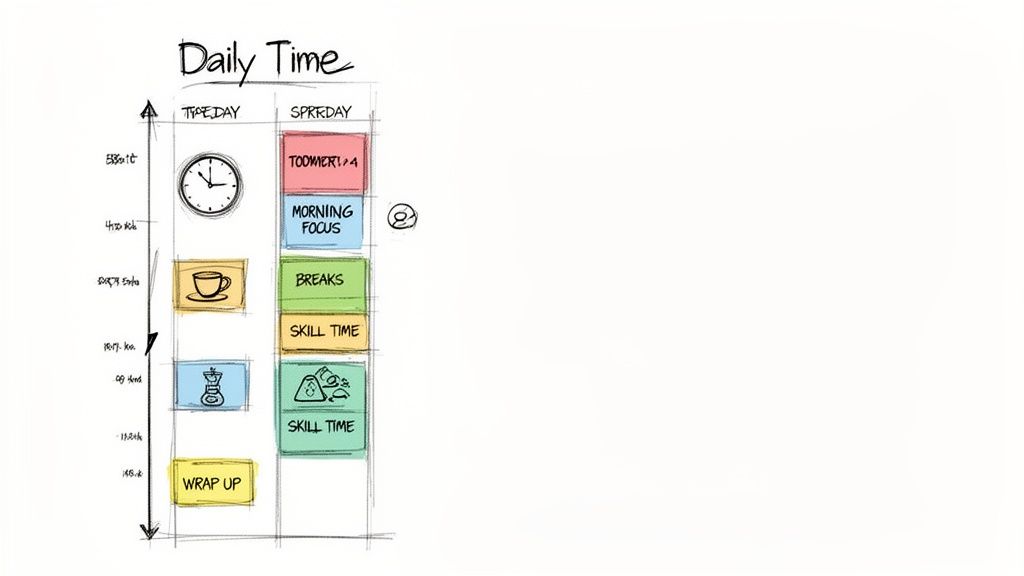
Remote work removes the natural structure of commuting and traditional office hours, making intentional scheduling one of the most critical best practices for working remotely. Implementing a structured daily routine with time blocking divides your day into focused periods for specific activities, from deep work to administrative tasks. This methodology directly combats the common remote work pitfall of unstructured days, which can lead to decreased productivity, procrastination, or burnout.
Creating a routine establishes a clear rhythm for your day, signaling to your brain when to be productive and when to rest. By proactively assigning tasks to specific time slots, you reclaim control over your schedule, ensuring that high-priority items are addressed during your peak energy hours. This practice transforms your workday from a reactive, chaotic experience into a deliberate and efficient one.
Why This Practice Is Essential
A structured routine solves the core remote challenges of time management and work-life bleed. It enforces discipline, enhances focus, and creates the necessary boundaries to protect personal time. For instance, a job seeker might dedicate 9 a.m. to 12 p.m. daily for targeted applications on platforms like Remote First Jobs, while a marketing professional could block off the first two hours of their day for deep work before checking emails or Slack, preventing distractions from derailing their priorities.
Actionable Steps for Implementation
Building an effective routine is about intentionality, not rigidity. Use digital tools to your advantage and be realistic about what you can accomplish in each block. The goal is to create a sustainable framework that boosts focus and minimizes mental fatigue.
- Use a Digital Calendar: Leverage tools like Google Calendar or Outlook to visually block out your entire day. Schedule everything, including work tasks, breaks, lunch, and a hard stop time. This creates a clear, visual commitment to your plan.
- Identify and Protect Peak Hours: Determine when you are most productive (e.g., early morning) and schedule your most important, high-focus tasks during that window. Guard this time fiercely against meetings and minor interruptions.
- Incorporate Breaks and a “Shutdown” Ritual: Schedule short 5-10 minute breaks between deep work blocks to recharge. Critically, define a clear end to your workday and create a “shutdown ritual,” like closing your laptop and tidying your desk, to signal the transition to personal time.
- Experiment with Time Management Techniques: Integrate proven methods like the Pomodoro Technique (25-minute focused sprints followed by a 5-minute break) within your time blocks to maintain high levels of concentration on complex tasks.
3. Maintain Clear Communication Protocols and an Asynchronous-First Mindset
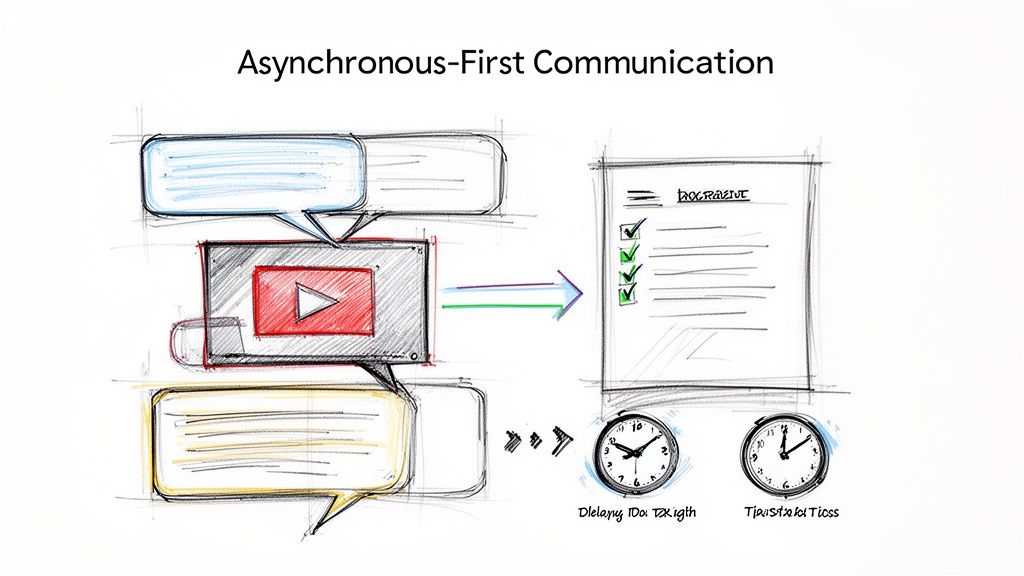
Effective remote work hinges on intentional, crystal-clear communication, especially across different time zones. Adopting an asynchronous-first mindset means prioritizing written updates, recorded videos, and detailed documentation over real-time meetings. This approach respects diverse schedules and creates a searchable, permanent record of decisions and discussions. It’s a fundamental shift from the synchronous, “tap-on-the-shoulder” culture of traditional offices.
This is one of the most critical best practices for working remotely because it directly combats meeting fatigue, prevents information silos, and empowers team members to contribute thoughtfully on their own time. Companies like GitLab and Automattic have scaled globally by embedding this philosophy into their operations, proving its effectiveness for distributed teams.
Why This Practice Is Essential
An asynchronous-first model solves the core challenges of remote collaboration: it respects time zone differences, reduces the pressure for immediate responses, and promotes deep, uninterrupted work. For example, a developer in Prague can review a detailed project update from a product manager in San Francisco without having to attend a late-night call. This creates a more inclusive and productive environment where thoughtful contributions are valued over quick replies.
Actionable Steps for Implementation
Implementing an asynchronous-first culture requires deliberate protocols and the right tools. The goal is to make documentation the default and real-time meetings the exception, reserved for urgent or highly collaborative sessions.
- Establish a Communication Matrix: Create a clear guide defining which channel to use for which type of message. For instance, use a project management tool for task updates, a specific Slack channel for social chatter, and email for formal announcements.
- Document Everything by Default: All significant decisions, project plans, and meeting outcomes should be documented in a central, accessible location like a company wiki or shared document. This becomes your single source of truth.
- Set Clear Response Expectations: Encourage team members to communicate their availability and set expectations like, “I will respond to non-urgent messages within 24 hours.” This reduces anxiety and the perceived need for instant replies.
- Leverage Video and Screen Recordings: Instead of scheduling a meeting to explain a complex process, record a short video using tools like Loom. This allows team members to review the information at their own pace and refer back to it later.
4. Strategic Job Search: Real-Time Alerts, Targeted Applications, and Proactive Sourcing
The remote job market is fiercely competitive, with high-quality roles often filled within hours of posting. A passive approach is no longer sufficient. A strategic job search combines proactive automation with a targeted, quality-over-quantity application process. This methodology ensures you are among the first to see new opportunities and submit applications that stand out.
This practice is essential because it gives you a significant first-mover advantage. By using real-time alerts from direct sources like Remote First Jobs, which scans over 21,000 company career pages 24⁄7, you can discover roles days before they appear on larger platforms like LinkedIn. This proactive stance, combined with meticulously tailored applications, maximizes your visibility and conversion rate, turning the job hunt from a numbers game into a strategic campaign. Adopting this as one of your best practices for working remotely is crucial for landing a role that truly fits your skills and lifestyle.
Why This Practice Is Essential
A strategic job search solves two critical challenges: speed and signal. It combats the high volume and low-quality “ghost jobs” on mass-market platforms by focusing on direct, verified sources. For instance, a software developer might use highly specific alerts to find senior roles in their time zone, while a product manager could create a “target 50” list of remote-first companies and systematically tailor each application to address that company’s specific product challenges, demonstrating genuine interest and a high level of preparation.
Actionable Steps for Implementation
Transitioning to a strategic search means shifting from a reactive to a proactive mindset. It’s about building a system that delivers low-competition opportunities directly to you and ensuring every application you send is impactful.
- Set Up Hyper-Specific, Real-Time Alerts: Create 3-5 precise job alerts using keywords that reflect your ideal role (e.g., “Senior Product Manager, fully distributed, US time zones”). This filters out noise and delivers only relevant opportunities.
- Build a Target Company List: Identify 50-100 remote-first companies that align with your career goals and values. Use a database like Remote First Jobs to find companies that match your criteria and monitor their career pages directly.
- Focus on Quality Over Quantity: Aim for 5-10 high-quality, customized applications per week instead of 30+ generic ones. Tailor your cover letter and resume for each role, referencing specific company initiatives or product features to show you’ve done your research.
- Apply Immediately: The first 24 hours of a job posting are critical. A strategic alert system allows you to apply within the first few hours, significantly increasing the chances your application will be reviewed.
5. Invest in Continuous Skill Development and Visible Proof of Work
In a remote setting, the informal mentorship and casual knowledge transfer common in physical offices disappear. Professionals must take deliberate ownership of their growth by continuously upskilling and, just as importantly, creating visible evidence of their capabilities. This practice helps combat the ‘out of sight, out of mind’ challenge inherent in distributed work, ensuring your contributions and expertise remain tangible and recognized.
Building a public portfolio of your work is no longer just for creatives; it is a critical differentiator for nearly every remote role. Whether through a GitHub repository, published case studies, or professional certifications, this visible proof of work substantiates the skills listed on your resume. This is one of the most crucial best practices for working remotely, especially for job seekers competing in a global talent pool where demonstrating capability is more impactful than simply stating it.
Why This Practice Is Essential
Visible proof of work solves two core remote challenges: it validates your skills to potential employers who can’t observe you in person, and it provides tangible evidence of your ongoing professional development. For example, a developer can showcase a GitHub profile with over 20 well-documented projects to prove their coding proficiency, while a product manager might publish detailed case studies on Medium to demonstrate their strategic thinking and problem-solving abilities.
Actionable Steps for Implementation
Creating a portfolio requires consistency and a focus on quality over quantity. The goal is to build a living showcase of your skills that evolves with your career. To go deeper, you can learn more about the importance of continuous learning for your remote career and how it directly impacts your long-term success.
- Choose a High-Quality Platform: Select a platform that is standard for your industry. Use GitHub for development, Dribbble or Behance for design, and a personal blog or Medium for writing, marketing, or product management case studies.
- Update Your Portfolio Consistently: Dedicate time each month to add new projects, case studies, or certifications. This demonstrates active growth and a commitment to your craft, showing recruiters you are current and engaged.
- Integrate Proof into Applications: Don’t assume hiring managers will find your work. Directly link to your portfolio, GitHub, or relevant case studies in your resume and cover letter to make it easy for them to see your skills in action.
- Pursue Recognized Certifications: When upskilling, prioritize certifications from reputable providers like Google, AWS, Microsoft, or Coursera. These carry more weight and are more easily verifiable by employers than credentials from unknown platforms.
6. Establish Accountability and Visibility Practices Without Micromanagement
Remote work introduces a unique trust challenge: managers need visibility into progress, while employees fear invasive surveillance. The solution lies in building mature accountability systems that focus on tangible output and transparent progress, rather than constant check-ins or monitoring software. This approach shifts the focus from perceived activity to actual results, fostering trust and autonomy.
By prioritizing clear goals and asynchronous updates, teams can demonstrate productivity without succumbing to micromanagement. This practice is a hallmark of healthy, high-functioning remote companies, creating a culture of ownership and mutual respect. Mastering this balance is one of the most critical best practices for working remotely, as it directly addresses the core tension between freedom and responsibility.
Why This Practice Is Essential
Effective accountability practices solve the remote trust paradox. They give managers the visibility they need to guide projects and provide support, while empowering employees with the autonomy to manage their own time and workflow. For example, a company like Zapier documents all processes and progress openly in Notion, making work visible to everyone without requiring constant status meetings. Similarly, GitLab publishes its company-wide OKRs, aligning the entire team on measurable outcomes rather than hours worked.
Actionable Steps for Implementation
Building trust-based accountability requires clear systems and consistent communication. Focus on creating transparent workflows that make progress self-evident.
- Set Measurable Goals: Define specific, measurable objectives and key results (OKRs) at the start of each quarter. Avoid vague goals like “improve marketing efforts” and instead use concrete targets like “increase organic lead generation by 15%.”
- Embrace Asynchronous Updates: Use a structured format for weekly async updates in a shared channel (e.g., Slack). Outline progress against goals, highlight any blockers, and state priorities for the upcoming week. This keeps everyone informed without interrupting deep work.
- Utilize Transparent Project Tools: Leverage project management platforms like Asana, Trello, or Notion to create public visibility into workflows and task status. This allows anyone to see what’s being worked on without needing to ask.
- Avoid Surveillance Software: Explicitly reject tools that monitor keystrokes, take screenshots, or track mouse movement. These tools destroy trust, foster anxiety, and are a clear sign of an immature remote culture. During interviews, job seekers can ask, “How do you measure success in this role?” to gauge if a company values output over digital presenteeism.
7. Build and Maintain Professional Networks Beyond Your Employer
In a traditional office, professional relationships often grow organically through casual conversations and shared projects. Remote work removes these spontaneous interactions, making it crucial to intentionally build and maintain a professional network outside your immediate company. This practice is essential for career growth, knowledge sharing, and long-term job security in a distributed workforce.
Actively engaging with external communities prevents professional isolation and keeps you connected to industry trends, new technologies, and emerging opportunities. For instance, a software developer building a personal brand on GitHub or a product manager participating in a Reforge cohort is not just learning; they are creating a safety net of contacts and a reputation that transcends their current role. This is one of the most critical best practices for working remotely as it directly mitigates the risk of career stagnation.
Why This Practice Is Essential
A strong external network provides access to mentorship, peer support, and future job prospects that you wouldn’t find within your company’s digital walls. It solves the remote challenges of limited visibility and reduced “weak-tie” connections that are vital for career advancement. For example, a marketer in an industry-specific Slack community can get immediate feedback on a campaign from hundreds of peers, while a remote professional attending a virtual conference can connect with leaders and recruiters from across the globe, opening doors to new roles.
Actionable Steps for Implementation
Building a robust network is about quality over quantity. Focus on genuine contribution and relationship-building rather than just collecting contacts. For a deeper dive, you can learn more about how to build a professional network while working remotely.
- Engage in High-Value Communities: Identify one or two influential online communities, forums, or professional groups in your field. Instead of lurking, contribute consistently by asking thoughtful questions and sharing your own insights. Give more than you take.
- Schedule Intentional Connections: Proactively schedule two to three virtual “coffee chats” per month with interesting people in your network. Use these informal meetings to maintain relationships, exchange ideas, and offer help without a specific agenda.
- Attend Industry Events: Make it a goal to attend at least one major industry conference annually, whether virtual or in-person. These events are concentrated opportunities to learn, meet new people, and strengthen existing connections.
- Share Your Learnings Publicly: Add value to your network by documenting what you’re learning. Write a blog post, create a tweet thread, or share a case study. This positions you as an expert and attracts like-minded professionals.
8. Implement Cybersecurity and Data Privacy Practices for Home Offices
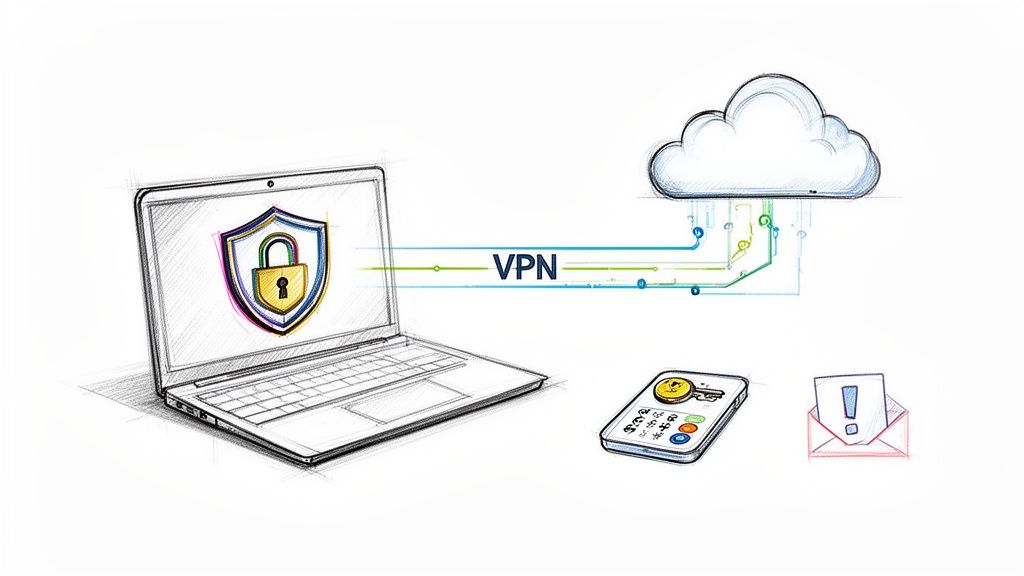
Working remotely requires handling sensitive company data, client information, or proprietary code, often from home networks that lack enterprise-grade security. Implementing robust cybersecurity practices is therefore essential to protect both yourself and your employer from data breaches, financial loss, and legal liability. This becomes non-negotiable in sectors like tech, finance, and healthcare, where data integrity is paramount.
Adopting strong security measures is one of the most critical best practices for working remotely, as it transforms your home office from a potential vulnerability into a secure extension of the corporate network. It demonstrates responsibility and trustworthiness, key traits for any remote professional, while safeguarding the company’s digital assets and reputation.
Why This Practice Is Essential
A proactive approach to cybersecurity prevents unauthorized access to sensitive information and ensures compliance with industry regulations. For example, a tech company often requires remote developers to connect exclusively through a corporate VPN to protect source code. Similarly, a financial services firm may mandate multi-factor authentication and full-disk encryption on all employee devices to prevent costly data leaks.
Actionable Steps for Implementation
Securing your remote setup involves layering multiple defenses to protect your devices and data. Start with fundamental habits and tools that provide the greatest protection for the least effort. For a deeper dive, you can explore more detailed cybersecurity tips for remote workers to build a comprehensive defense.
- Enable Multi-Factor Authentication (MFA): Activate MFA on all your work-related accounts, especially email, cloud storage, and internal company tools. This provides a crucial second layer of security beyond just a password.
- Use a Password Manager: Employ a trusted password manager like Bitwarden or 1Password to create and store strong, unique passwords for every service. This eliminates the risk of a single password breach compromising multiple accounts.
- Keep Software Updated: Enable automatic software updates on your computer, phone, and applications. These updates frequently contain critical patches for newly discovered security vulnerabilities.
- Separate Work and Personal Use: If possible, use a dedicated device for work. If not, create separate user profiles on your computer to keep work data and applications isolated from personal activities, reducing the risk of cross-contamination from malware.
9. Develop Resilience and Manage Remote Work Isolation and Burnout
While remote work eliminates commutes and office distractions, it can introduce new challenges like social isolation, blurred work-life boundaries, and an “always-on” culture that leads to burnout. Developing psychological resilience through self-awareness, strict boundary-setting, and intentional social connection is essential for a sustainable remote career. This practice directly confronts the mental and emotional toll that unstructured remote environments can take.
This approach is one of the most critical best practices for working remotely because it prioritizes long-term well-being over short-term productivity gains. It acknowledges that professional success is built on a foundation of mental health, especially for those balancing caregiving or other significant personal responsibilities alongside their careers. By proactively managing these risks, you can ensure your remote work journey is both productive and fulfilling.
Why This Practice Is Essential
Building resilience directly counters the primary psychological pitfalls of remote work: isolation and burnout. For instance, a working parent can use structured routines and firm end-of-day rituals to protect family time, while a solo digital nomad might join virtual coworking communities like Focusmate to maintain social accountability and combat loneliness. Many tech companies now offer mental health support through apps like Calm or BetterHelp, recognizing that employee well-being is a business imperative. For a deeper dive into understanding and addressing the prevalence of workforce burnout, which can be exacerbated by remote work, consider this resource.
Actionable Steps for Implementation
Proactively managing your mental well-being requires a conscious and consistent effort. Focus on creating clear boundaries and scheduling time for both social connection and personal disconnection. To get started, you can learn more about preventing remote work burnout with targeted strategies.
- Enforce a Hard Stop: Set a firm end time for your workday. When that time arrives, close your laptop, turn off notifications, and if possible, leave your workspace. Changing clothes can also create a powerful psychological shift from “work mode” to “home mode.”
- Schedule Rest and Movement: Integrate short breaks into your calendar. Take a 10-minute walk every two hours or block out a 30-minute workout midday to reset your mind and body. Use “do not disturb” features on your communication tools after hours.
- Fight Isolation Actively: Schedule at least one virtual coffee or lunch each week with a colleague to maintain social bonds. Joining virtual coworking sessions can provide a sense of community and shared focus, helping you feel less alone.
- Leverage Support Systems: If you feel overwhelmed, communicate with your manager. A supportive remote-first company will work with you to adjust your workload or expectations. Utilize any employee assistance programs (EAPs) available for professional counseling.
10. Evaluate Company Culture and Remote-First Maturity Before Accepting Offers
Not all remote opportunities are created equal. One of the most crucial best practices for working remotely involves looking beyond the job description to vet the company’s remote maturity. Many companies shifted to remote work out of necessity, not strategy, resulting in poor communication, excessive meetings, and a culture of digital presenteeism that negates the benefits of flexibility and autonomy.
True remote-first organizations are built on a foundation of trust, asynchronous communication, and intentional processes that support a distributed team. In contrast, “remote-allowed” companies often replicate a broken office culture online. Thoroughly evaluating a potential employer’s remote infrastructure before accepting an offer is essential to avoid joining a dysfunctional environment and to secure a role that genuinely supports a healthy, productive remote career.
Why This Practice Is Essential
This vetting process protects you from joining a company where remote work is merely a temporary policy rather than a core part of its identity. A developer, for example, might ask about asynchronous code reviews and documentation practices to gauge if the company values deep work. Similarly, a digital nomad must confirm if a company’s “work from anywhere” policy has hidden restrictions, such as fixed time zones or regional pay scales that hinder true location independence.
Actionable Steps for Implementation
Go into the interview process prepared to ask pointed questions that reveal the company’s true remote culture. Your goal is to gather evidence of their operational maturity beyond their marketing claims. A key part of implementing best practices for working remotely is choosing the right environment to begin with.
- Question Their Origins: Ask directly, “How long has the company been remote-first?” A company founded as a distributed team will have fundamentally different processes than one that pivoted during the pandemic.
- Probe Daily Operations: Ask the hiring manager, “What does a typical day look like for the team?” and “How many synchronous meetings are expected per week?” A high number of mandatory meetings is often a red flag for a lack of trust and weak asynchronous systems.
- Test for Asynchronous Maturity: A powerful question is, “Can you share an example of a complex decision that was made asynchronously?” The answer reveals if they genuinely trust their team to collaborate effectively without constant meetings.
- Seek Unfiltered Feedback: Request a brief, informal chat with a potential team member, not just the manager. This provides a more authentic glimpse into the day-to-day culture. Also, check recent Glassdoor reviews, paying close attention to comments about remote work, flexibility, and management.
- Clarify Flexibility Policies: Inquire about policies on flexible hours, time zone accommodation, and paid time off. Be wary of “unlimited PTO” without clear guidelines, as it can often result in employees taking less time off.
10-Point Remote Work Best Practices Comparison
| 🔄 Implementation Complexity | ⚡ Resource Requirements | 📊 Expected Outcomes | 💡 Ideal Use Cases | ⭐ Key Advantages |
|---|---|---|---|---|
| Establish a Dedicated Remote Workspace — 🔄 Medium: planning, setup, space constraints | ⚡ Medium‑High: desk/chair, monitor, lighting, reliable internet | 📊 Higher focus & productivity (reported 25–40%); professional video presence | 💡 Interviews, full‑time remote roles, client-facing work | ⭐ Improved productivity, professional impressions, ergonomic health |
| Implement Structured Daily Routines & Time Blocks — 🔄 Low‑Medium: habit formation and discipline | ⚡ Low: calendar apps, timers | 📊 More consistent output, reduced decision fatigue, lower burnout risk | 💡 Job seekers, deep‑work tasks, those prone to distraction | ⭐ Predictable productivity and accountability |
| Maintain Clear Communication Protocols & Asynchronous‑First Mindset — 🔄 Medium: culture change, documentation habits | ⚡ Low‑Medium: collaboration tools, knowledge base, recording tools | 📊 Fewer meetings, clearer records, better cross‑timezone collaboration | 💡 Distributed teams, global hiring, inclusive communication styles | ⭐ Scalable coordination; reduced meeting fatigue |
| Strategic Job Search (Real‑Time Alerts & Proactive Sourcing) — 🔄 Medium: initial filter and sourcing setup | ⚡ Low‑Medium: job platforms, ATS integration, tracking sheet | 📊 Faster discovery; higher offer rates (quality apps ~5–10% vs 1–2%) | 💡 Active remote job seekers in competitive markets | ⭐ First‑mover advantage; higher conversion via targeted apps |
| Invest in Continuous Skill Development & Visible Proof of Work — 🔄 Medium‑High: ongoing learning and portfolio curation | ⚡ Medium: courses, certifications, portfolio hosting | 📊 Stronger hireability, searchable evidence for recruiters, career growth | 💡 Career changers, senior candidates, tech/design roles | ⭐ Demonstrable competence; improved marketability |
| Establish Accountability & Visibility Practices Without Micromanagement — 🔄 Medium: define OKRs, reporting cadence | ⚡ Low‑Medium: PM tools, time for async updates | 📊 Increased trust, output‑focused performance, clearer progress tracking | 💡 Remote managers, teams wanting autonomy and transparency | ⭐ Builds trust; reduces need for surveillance |
| Build & Maintain Professional Networks Beyond Employer — 🔄 Low‑Medium: selecting and engaging with communities | ⚡ Low: time, occasional event fees | 📊 Expanded opportunities, referrals, reduced isolation | 💡 Freelancers, job seekers, those seeking mentorship | ⭐ Referral channels and knowledge sharing; social support |
| Implement Cybersecurity & Data Privacy Practices for Home Offices — 🔄 Medium: policy adherence and secure setup | ⚡ Medium: VPN, MFA, password manager, device security | 📊 Lower breach risk; compliance for regulated roles; employer confidence | 💡 Tech, finance, healthcare, regulated industries | ⭐ Protects data; meets compliance and builds trust |
| Develop Resilience & Manage Isolation/Burnout — 🔄 Medium: continuous boundary-setting and self‑care | ⚡ Low‑Medium: wellness tools, possible therapy costs | 📊 Reduced burnout, better mental health, sustained productivity | 💡 Caregivers, long‑term remote workers, high‑stress roles | ⭐ Greater sustainability; improved wellbeing and retention |
| Evaluate Company Culture & Remote‑First Maturity Before Accepting Offers — 🔄 Low‑Medium: due diligence during hiring | ⚡ Low: research time, reference calls | 📊 Better fit, higher job satisfaction, lower early turnover | 💡 Candidates vetting offers, those prioritizing healthy remote cultures | ⭐ Avoid toxic remote environments; make informed hiring decisions |
Your Blueprint for a Thriving Remote Career
The transition to a successful remote career is not a passive event; it is an active, ongoing process of intentional design. Throughout this guide, we’ve explored the foundational pillars that separate temporary work-from-home arrangements from sustainable, long-term remote success. Moving beyond generic advice, we have detailed the specific, actionable strategies that empower professionals to build resilient, productive, and fulfilling careers outside the traditional office. The central theme is clear: mastering the best practices for working remotely requires a proactive and strategic mindset.
This isn’t just about setting up a home office and logging into Slack. It’s about architecting your entire professional life with purpose. It involves creating a physical and digital environment that fosters deep work, adopting communication protocols that champion clarity and an asynchronous-first approach, and managing your time with disciplined routines and strategic time blocks. These habits form the bedrock of individual performance.
From Individual Habits to Organizational Alignment
However, personal productivity is only one side of the equation. True remote work mastery extends into how you manage your career trajectory and interact with the broader professional landscape. This means taking ownership of your visibility through transparent accountability practices, continuously upskilling with tangible proof of work, and actively cultivating professional networks that transcend your current employer. It also requires a vigilant approach to digital security and a non-negotiable commitment to your mental and emotional well-being, building resilience against the unique challenges of remote isolation and burnout.
Perhaps the most critical takeaway is for those currently navigating the job market. The ultimate success of your remote career is profoundly influenced by the maturity of your employer’s remote culture.
Key Insight: Your personal remote work habits can only take you so far. Joining a company that has deeply integrated remote-first principles into its DNA is the single most important factor for long-term satisfaction and growth.
Before accepting any offer, you must become an expert at evaluating a company’s commitment to remote work. This means asking tough questions about their communication norms, their approach to performance management, and their investment in tools and processes that support a distributed team. A company that merely tolerates remote work will never provide the same level of support, trust, and opportunity as one that was built to be remote-first from its inception.
Your Actionable Next Steps
To transform these insights into a tangible reality, focus on these three immediate actions:
- Conduct a Self-Audit: Review the ten best practices outlined in this article. Where are you strong? Where are the gaps? Create a personal development plan to address one or two weak spots over the next quarter.
- Elevate Your Job Search Criteria: Stop applying for jobs based on title alone. Add “Remote-First Maturity” to your list of non-negotiables. Use your interview process to probe for evidence of asynchronous workflows, transparent documentation, and intentional culture-building activities.
- Implement One New Habit Today: Don’t wait. Choose one small, actionable change you can make right now. It could be time-blocking your afternoon, setting up a real-time alert for specific roles, or scheduling a virtual coffee chat to expand your network.
Ultimately, building a thriving remote career is about exercising agency over your work and life. By diligently applying these best practices for working remotely, you are not just adapting to a new way of working; you are seizing an opportunity to create a more autonomous, flexible, and impactful professional future on your own terms.
Ready to find a company that truly embodies these best practices for working remotely? Stop wasting time on crowded job boards and discover opportunities at genuinely remote-first companies on Remote First Jobs. Our platform connects you directly with verified, high-quality roles at organizations built for distributed success. Start your search for a better remote career today at Remote First Jobs.