Knowing how to stay focused while working from home is really about mastering the art of creating structure where there isn’t any. It’s about intentionally designing a workspace that works for you, building a routine that tells your brain it’s time to shift gears, and setting some firm boundaries—both with the people in your house and the pings on your screen.
The Remote Work Focus Paradox
Welcome to the modern work reality. Your commute might be a ten-second walk from the kitchen, but that pile of laundry in the corner has a way of staring you down all day.
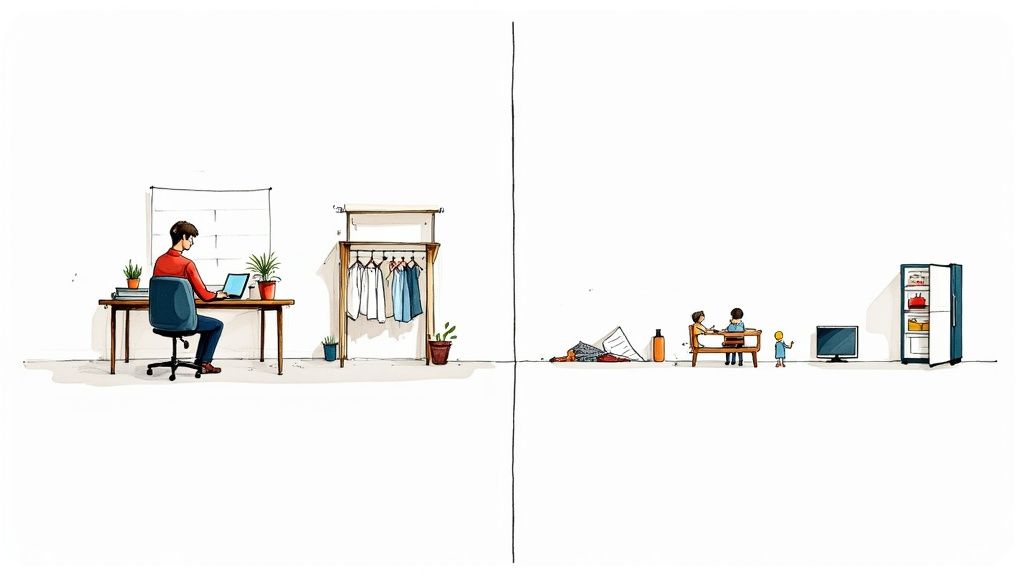
This is the strange paradox of working from home: one day, it feels like the perfect setup for uninterrupted deep work, and the next, it’s an impossible battle against a thousand tiny distractions. If that constant push-and-pull sounds familiar, you’re not alone. It’s a nearly universal experience for remote professionals.
On the one hand, the upsides are huge. You get back hours you used to lose to traffic, you dodge the endless chatter of an open office, and you have real autonomy over your schedule. The data shows this isn’t just a feeling; the shift to remote work has genuinely reshaped productivity. In fact, a staggering 70% of professionals say it’s significantly easier to get focused work done from home.
Remote workers save an average of 72 minutes per day by eliminating their commute, with about 40% of that time redirected toward productive work. This adds up to roughly 62 extra hours of productivity each year just from avoiding office interruptions. Discover more remote work statistics.
But all that freedom comes with its own unique set of challenges that can completely derail your concentration.
The Home Environment Challenge
The very comfort of your home can quickly become its biggest weakness. Unlike a traditional office, your house is packed with personal to-dos and tempting comforts. The lines between your professional and personal life get blurry fast, making it tough to truly switch off when the workday is done.
Some of the most common hurdles include:
- Domestic Distractions: That sudden, overwhelming urge to do the dishes, walk the dog, or just throw in one load of laundry can feel way more urgent than your next task.
- Family and Roommate Interruptions: Loved ones don’t always grasp that being physically present doesn’t mean you’re actually available.
- Lack of Structure: Without the built-in rhythms of an office—like scheduled lunch breaks or the social cue of seeing coworkers pack up—your day can feel completely formless and unproductive.
This guide is here to validate those struggles and give you real, practical solutions. By understanding both the pros and the cons, you can start building effective systems that help you win the day.
Mastering how to stay focused when you work from home isn’t about finding some magic bullet; it’s about developing the right habits and mindset. And if you’re looking for roles that fully embrace this work style, exploring dedicated job boards is a great place to start. You might want to browse the thousands of verified openings on Remote First Jobs.
Design a Workspace That Commands Focus
Your brain is constantly picking up cues from your surroundings. When you try to work from the couch, it gets mixed signals—is it time to grind or time to binge Netflix? This is why carving out a space that’s just for work is one of the most powerful things you can do to win the focus battle at home.
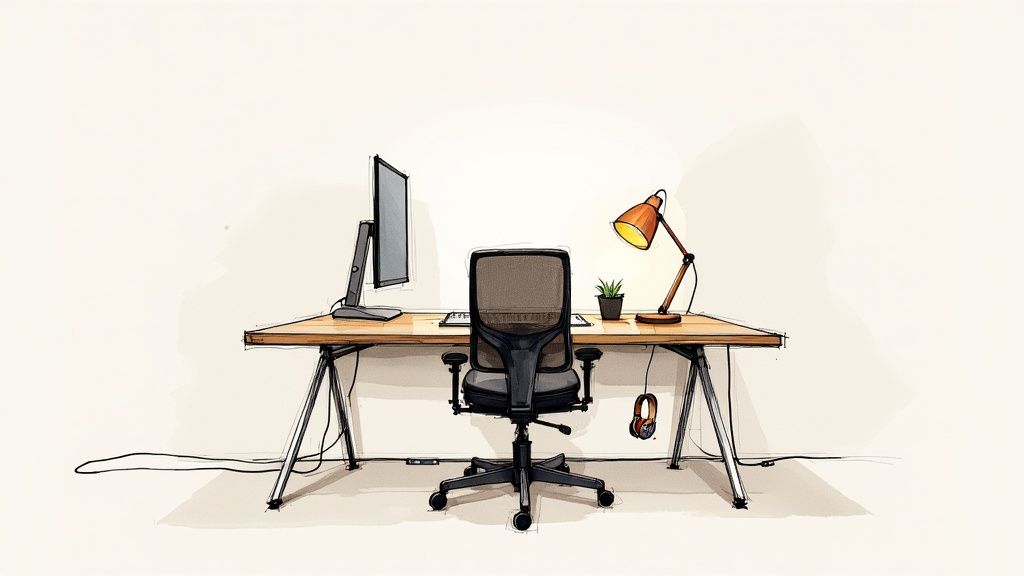
You don’t need a spare room with a locked door. It could be a specific corner of your bedroom or even one end of the dining table. The key is to condition your brain to associate that single spot with productive effort. You’re building a “fortress of focus” that walls off interruptions and primes you for deep work.
Build Your Ergonomic Foundation
Nothing kills focus faster than physical discomfort. You can’t possibly concentrate on a complex spreadsheet when your back is screaming or your wrists are aching. Investing in good ergonomics isn’t a luxury—it’s a non-negotiable for anyone who wants to be productive long-term.
Start with the basics:
- A supportive chair: Make sure your feet can rest flat on the floor and your lower back feels supported. Even an adjustable lumbar pillow can be a game-changer if a brand-new chair isn’t in the budget.
- Proper screen height: Your monitor should be positioned so the top of the screen is at or just below eye level. A monitor stand or a sturdy stack of books works perfectly to get your laptop to the right height and prevent neck strain.
- Comfortable peripherals: An external keyboard and mouse are your best friends. They help you avoid the dreaded “laptop hunch” that leads to wrist and shoulder pain after a few hours.
Getting these things right eliminates physical distractions, freeing up your mental energy for the work that actually matters.
Optimize Light and Sound
Your sensory environment has a massive impact on your ability to concentrate. A cluttered desk creates mental clutter, and in the same way, bad lighting or unpredictable noises can completely drain your cognitive battery.
Good lighting is about more than just seeing your screen. Research has shown that cool, blue-toned light can actually boost alertness and productivity, which is perfect for your workspace during the day. If you can, set up your desk near a window to get plenty of natural light, and add a good desk lamp to prevent eye strain on cloudy days or late nights.
Sound is the other piece of the puzzle. The random noises of a busy household—the dog barking, the washing machine finishing—can shatter your concentration in an instant. The solution is to create a controlled “soundscape.” For a deeper dive into this, you can explore these practical strategies for staying focused while working from home.
Your brain thrives on consistency. Creating a dedicated workspace trains your mind to enter ‘work mode’ the moment you sit down, making the transition from personal time to professional time nearly automatic.
To get a handle on your auditory environment, try these:
- Noise-canceling headphones: An absolute must-have for blocking out sudden, jarring noises from family, pets, or the construction crew next door.
- White noise or ambient sound apps: Tools like MyNoise or A Soft Murmur provide a steady, unobtrusive background noise that can mask interruptions and help you lock in.
By taking control of what you see and hear, you create an environment where your brain can easily slip into—and stay in—a state of flow.
Declutter Your Physical and Digital Desktops
Clutter is a known anxiety trigger and a huge barrier to focus. That messy desk with old coffee mugs, stacks of mail, and random junk is constantly fighting for your attention, even if you don’t realize it.
Make it a habit to take 10 minutes at the end of each day to reset your workspace. Put things away, wipe down the surface, and lay out what you need for tomorrow. It’s a simple ritual that signals the end of the workday and gives you a clean slate to start fresh.
The same exact principle applies to your digital workspace. A computer desktop littered with icons, a chaotic downloads folder, or an inbox with thousands of unread emails creates the same mental drag.
Organize your files into a logical folder system and clear off your desktop so only the essentials are visible. This simple act of digital housekeeping reduces decision fatigue and helps you find what you need without getting sidetracked. A clean space—both physical and digital—is a calm space, and a calm space is where focus lives.
Master Your Schedule with Proven Time Management
When you’re working from home, the day doesn’t have the same built-in structure as an office. Without morning commutes or scheduled lunch breaks to act as guideposts, your hours can easily bleed into one another, making it tough to stay on track.
This is where a real time management system becomes your secret weapon. It’s not just about having a to-do list; it’s about having a game plan for how and when you’ll tackle those tasks. Adopting a proven method cuts down on decision fatigue—that mental drain from constantly figuring out what to do next—and helps you build unstoppable momentum.
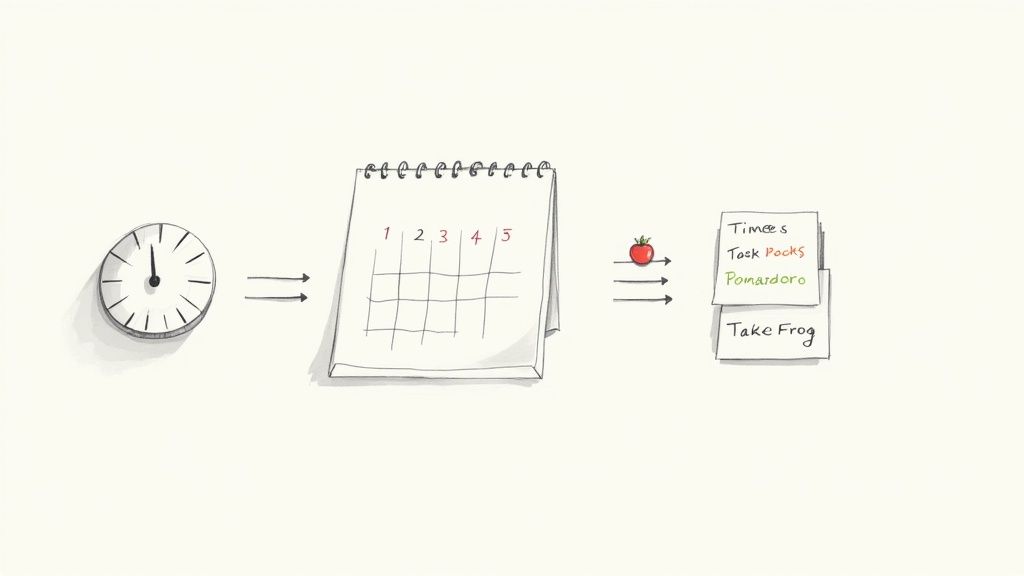
The Pomodoro Technique for Burst Productivity
The Pomodoro Technique is a classic for a reason: it’s incredibly simple and it just works. You work in focused 25-minute sprints (called “pomodoros”), then take a short 5-minute break. After four of these cycles, you earn a longer break of 15-30 minutes.
This method is brilliant because it forces you into short bursts of deep concentration, making huge tasks feel way less intimidating. It’s a game-changer for:
- Creative Work: A 25-minute timer is perfect for hammering out a draft or brainstorming ideas without the pressure of finishing everything at once.
- Repetitive Tasks: For soul-crushing things like data entry or inbox cleanup, the timer turns the process into a mini-challenge and keeps your mind from wandering off.
The real magic, though, is in the breaks. Don’t use them to check your phone or email. Get up, stretch, grab some water, or just stare out the window. This lets your brain actually recharge, heading off the burnout that completely kills long-term focus.
Structure Your Day with Time Blocking
If the Pomodoro Technique is about managing your focus in sprints, time blocking is about commanding your entire day like a CEO. The idea is to divide your day into specific blocks of time and assign a single task or a group of related tasks to each one.
For instance, your calendar might look something like this:
- 9:00 AM - 9:30 AM: Clear emails & map out the day
- 9:30 AM - 11:30 AM: Deep work on Project A (no interruptions allowed)
- 11:30 AM - 12:00 PM: Team sync-up call
- 12:00 PM - 1:00 PM: Lunch (and actually get away from your desk)
Time blocking gives you a clear, visual road map for your day. You stop reacting to whatever pops up and start proactively telling your time where to go. This creates a powerful sense of control and cuts through the mental chaos of a never-ending to-do list.
By giving every minute of your day a job, you completely eliminate the “what should I do next?” paralysis. That clarity is the bedrock of consistent focus when you’re working remotely.
Conquer Your Toughest Task with Eat the Frog
The “Eat the Frog” method, made famous by Brian Tracy, is built on one powerful idea: do your biggest, most important, and probably most dreaded task first thing in the morning. That one “frog” is the thing you’re most likely to put off, but it’s also the one that will have the biggest positive impact on your day.
When you get it done before distractions and low energy creep in, you score a massive win early on. This creates a wave of momentum and accomplishment that you can ride through the rest of your tasks. It ensures that even if your afternoon gets completely derailed, you’ve already moved the needle on what really matters.
Choosing Your Focus Technique
Not every method clicks for every person or every task. The trick is to find the right tool for the job. Your personality, how you like to work, and the kinds of projects on your plate will all influence which approach works best for you.
To help you decide, here’s a quick breakdown of these powerful techniques.
| Technique | Best For | How It Works | Key Benefit |
|---|---|---|---|
| Pomodoro Technique | Creative bursts, repetitive tasks, and fighting burnout. | Work in 25-minute sprints with 5-minute breaks. | Builds intense focus in short, manageable intervals. |
| Time Blocking | People who need structure and a clear daily plan. | Schedule your entire day in specific time blocks. | Reduces decision fatigue and creates a proactive workflow. |
| Eat the Frog | Procrastinators and those with high-impact projects. | Complete your most challenging task first thing. | Generates early momentum and guarantees progress on key goals. |
Don’t be afraid to experiment. You might discover that time blocking is your go-to for weekdays, while the Pomodoro Technique is perfect for crushing a personal project on the weekend. The goal isn’t to follow one system religiously but to build a toolkit of strategies you can pull from to master your schedule and win back your focus.
Tame Digital and Domestic Distractions
Let’s be honest. When you work from home, your biggest focus battles are fought on two fronts: the never-ending stream of digital pings and the completely unpredictable interruptions of your home life.
Learning how to stay focused isn’t about finding some mythical, silent monk-like state. It’s about building a tough, resilient system that fiercely protects your attention from both sides.
While the perks of remote work are huge, the distractions are real. Somewhere between 30% and 40% of remote employees say they struggle to stay focused because of family, pets, or the siren song of household chores.
This isn’t just a feeling; the data backs it up. Research from 2022 showed that people in heavily remote jobs were working about one hour less per day than they did in 2019, with a good chunk of that time shifting over to leisure activities. You can dig into more of the numbers on how remote work statistics have evolved on yomly.com.
But that’s not a knock on anyone’s work ethic. It’s just a realistic look at the challenge we’re all facing. The good news is you can absolutely reclaim that time with the right game plan.
Build Your Digital Fortress
Your laptop and phone are your most important tools, but they’re also brilliantly engineered to hijack your attention. Every single notification is a tiny, insidious interruption that yanks you right out of deep work. You have to get deliberate about controlling that noise.
Your first line of defense is a notification audit. Don’t let every app on your devices scream for your attention whenever it feels like it. It’s time to get ruthless.
- Kill Non-Essential Alerts: Seriously, go through your settings right now. Turn off notifications for social media, news apps, and anything else that isn’t absolutely critical to getting your job done.
- Embrace Focus Modes: Your phone’s operating system (both iOS and Android) has some incredibly powerful “Focus” or “Do Not Disturb” features. Set up a dedicated “Work” mode that only lets calls and texts from your most important contacts get through.
- Use Website Blockers: If you find yourself mindlessly drifting over to the same few websites during the day, take away the temptation. Browser extensions like Freedom or LeechBlock are fantastic for temporarily blocking access so you can stay on task.
This isn’t about becoming a digital hermit. It’s about carving out sacred, uninterrupted blocks of time where you can sink into your work without the constant chatter.
Think about this: a single, seemingly harmless notification can completely derail your concentration for more than 20 minutes. Taking back control of your digital space isn’t a “nice-to-have”—it’s a requirement for doing high-quality work from home.
Set Clear Boundaries at Home
The second front in the war against distractions is right there in your house. Your partner, kids, roommates, and even your dog don’t run on your work schedule. The only way to manage this is with clear, kind communication.
Start by setting some “rules of engagement” for your workday. This means having an actual conversation about when you’re available and when you simply can’t be bothered. A closed door should be the universal signal for “I’m in the zone.”
If you have young kids or live with others who need more frequent check-ins, visual cues are a lifesaver. A simple sign on your door can work wonders. Green means “Come on in!” Red means “Do not enter unless the house is on fire.”
It also helps to schedule “interruption-friendly” times. Let your family know they have your undivided attention during your lunch break or for a 15-minute coffee break in the afternoon. Giving them a predictable window to connect with you makes it a lot easier for them to respect your focus time.
These conversations might feel a little formal or awkward at first, but trust me, they are essential for your sanity and productivity. You’re not just setting rules for yourself; you’re teaching the people you live with how to be your biggest supporters. When you tame both the digital and domestic chaos, you create the space you need to truly concentrate and do your best work.
Protect Your Mental Energy to Sustain Productivity
Real, sustainable focus isn’t about brute-forcing your way through the day. It’s about being smart with your mental energy. Pushing through exhaustion is a fast track to burnout—the ultimate productivity killer and a huge reason why so many people struggle to stay focused working from home for the long haul.
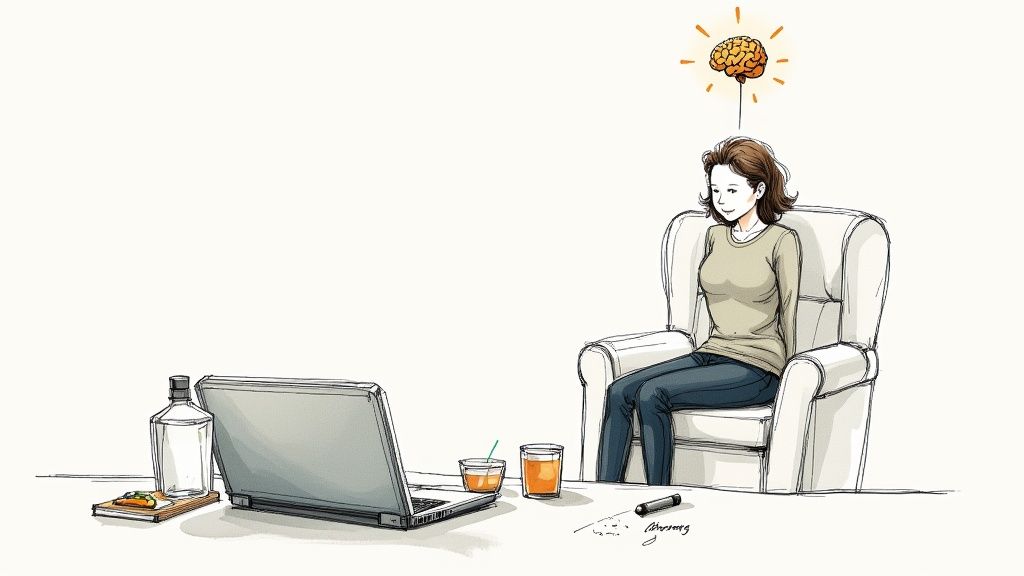
Here’s the thing: protecting your well-being isn’t a distraction from your work. It’s the foundation of it. Your cognitive performance—your ability to solve problems, think creatively, and actually concentrate—is directly tied to your physical and mental state. If you neglect one, the other is going to suffer. It’s that simple.
Embrace Strategic Breaks for Real Recovery
We’ve all heard the advice to “take a break,” but most people get it wrong. Mindlessly scrolling through Instagram for ten minutes isn’t a restorative break; it’s just swapping one mental drain for another. To really recharge, your breaks have to be intentional.
Think about it this way: different types of work drain different kinds of energy. After an hour spent elbow-deep in a spreadsheet, you might need a creative or sensory break, not just a physical one.
- Physical Rest: This is the obvious one. Get up, stretch, do a few jumping jacks, or just walk around the block. The goal is to get your blood flowing and shake off the tension from sitting.
- Sensory Rest: Staring at a screen for hours is just plain overstimulating. Close your eyes for a few minutes, look out the window at something far away, or find a quiet room to give your eyes and ears a much-needed time-out.
- Creative Rest: If your job is all about constant problem-solving, you need to refill your creative tank. That could mean listening to music, doodling in a notebook, or spending five minutes on a hobby that has nothing to do with work.
When you match the type of break to the type of energy you’ve spent, you make your recovery time infinitely more effective.
Create a Clear End-of-Day Ritual
One of the biggest traps of remote work is the complete meltdown of boundaries between your job and your life. When your “office” is always just a few steps away, it’s way too easy to let work bleed into evenings and weekends. This is where an end-of-day ritual becomes your best friend.
It’s just a simple, consistent routine that tells your brain, “Okay, the workday is officially done.” It’s like a mental “off switch.”
Your shutdown ritual doesn’t need to be complicated. It’s a small set of actions that create a psychological boundary, allowing you to mentally disconnect and be fully present in your personal life.
Here’s a sample ritual you can steal or adapt:
- Review and Plan: Spend the last 15 minutes of your day looking at what you accomplished and creating a clear, prioritized to-do list for tomorrow. This stops work thoughts from swirling around in your head all night.
- Tidy Your Workspace: Clear off your desk, put away papers, and wipe it down. This physical act of “closing up shop” is powerfully symbolic.
- Log Off Completely: Don’t just minimize your work tabs. Close all work-related apps, sign out of your accounts, and shut down your computer.
This simple process helps you shift out of “work mode” and prevents the chronic stress that comes from feeling like you’re always on the clock.
Fuel Your Brain for Peak Performance
Finally, let’s not forget basic biology. Your brain is an organ, and it needs the right fuel to function properly. Dehydration and poor nutrition are notorious culprits behind that midday slump and brain fog.
Keep a big water bottle on your desk and sip from it all day. Even mild dehydration can tank your cognitive function and concentration. Same goes for food. Prioritize meals and snacks that provide steady energy—think complex carbs, lean proteins, and healthy fats—instead of sugary stuff that leads to an inevitable crash.
For a deeper dive into strategies for maintaining peak performance, check out these extra tips to boost your energy and focus throughout the workday. Sustained productivity is a holistic game, and fueling your body is a non-negotiable part of winning it.
Your Remote Focus Questions, Answered
Even when you’ve got a solid plan, the reality of working from home throws curveballs. Nailing your focus isn’t a one-and-done thing; it’s about tweaking and adjusting as you go. Let’s tackle some of the most common hurdles I see remote workers face.
How Can I Stay Motivated Without a Team Around Me?
This one is huge. That buzz of an office, the shared energy, the casual check-ins—it’s tough to replicate. When you’re solo, it’s easy for motivation to just… evaporate. The trick is to build your own structure for accountability.
Start by getting super specific with your daily goals. A vague to-do list won’t cut it. You need to know exactly what “finished” looks like for every single task. That little dopamine hit you get from checking something off a list? That’s what you’re chasing. It’s a powerful self-fueling cycle.
And don’t underestimate the power of a quick chat. Schedule regular, quick check-ins with your manager or a work buddy. Even a 10-minute video call to kick off the day can bring back some of that team spirit and remind you that you’re not just working in a vacuum.
What if I Don’t Have a Separate Room for an Office?
Welcome to the club! This is the reality for so many of us, and it definitely doesn’t mean you’re doomed. The goal here isn’t about physical walls; it’s about creating mental walls. You have to train your brain to associate a specific spot—even the corner of your kitchen island—with work.
Here’s how you can pull that off:
- Create a “Commute”: This sounds small, but it works. Have a simple ritual for starting and ending your day. Maybe it’s brewing a specific type of coffee before you start. At 5 PM, it’s packing your laptop away in its bag and putting it in a closet. The “office” is now officially closed.
- Lean on Sensory Cues: When it’s work time, pop on your noise-canceling headphones. Light a specific candle you only use for work. Fire up a particular focus playlist on Spotify. These little triggers tell your brain it’s time to shift gears.
- Reset the Space: Because your workspace doubles as a living space, you have to be ruthless about clearing away work clutter at the end of the day. A clean table lets you mentally disconnect and actually enjoy your home.
You can absolutely build a hyper-effective workspace without a dedicated room. It just takes being a little more intentional.
The most effective remote workspaces are defined by psychological boundaries, not physical walls. Consistent routines and sensory triggers can turn any corner of your home into a high-focus zone.
How Do I Handle Guilt for Taking Breaks?
Ah, remote work guilt. It’s a real thing. When your laptop is always right there, it feels like you should always be productive. That’s a fast track to burnout, my friend.
You have to completely reframe how you think about breaks. They aren’t a weakness or a sign you’re slacking. They are a strategic tool for high performance.
Think about it: your brain isn’t a machine that can run at 100% for eight hours straight. It needs downtime to process information, solve problems in the background, and recharge for the next focused sprint. A well-timed break almost always improves the quality of your work when you return.
If you struggle to give yourself permission, schedule them. Put a 15-minute break right in your calendar, just like a meeting. When you treat your breaks with that level of importance, you start to see them for what they are: essential.
Is It Okay to Do Household Chores During the Day?
This is a tricky one, and the answer is a firm: it depends. Mindlessly wandering off to do chores whenever you feel stuck is a productivity killer. But using a chore strategically as a break? That can be a game-changer.
The difference is intention. For instance, using a 5-minute Pomodoro break to quickly unload the dishwasher gets you up, moving, and away from the screen—perfect.
The danger is the snowball effect, where one small chore turns into an hour-long cleaning session. The fix is simple: set a timer. Decided to fold a load of laundry? Give yourself 10 minutes, and when that alarm goes off, you’re done. Period. Used this way, chores can actually boost your focus. Let them run wild, and they’ll sink your day.
At Remote First Jobs, we know that landing a great remote role is just the beginning. Thriving in that role means mastering skills like deep focus. We’re here to connect you with top-tier remote-first companies and give you the resources you need to succeed. Find your next opportunity with us.