If you picture a marketing team as an orchestra, the strategist is the composer writing the music, and the specialists—the writers, designers, analysts—are the virtuoso musicians. So, who’s the remote marketing coordinator? They’re the conductor, the one making sure every section plays in perfect harmony to create a masterpiece.
This role is the central nervous system for a distributed team, turning big-picture ideas into coordinated, tangible action.
What a Remote Marketing Coordinator Actually Does

Most job descriptions for remote marketing coordinator jobs are full of fluff like “support marketing initiatives” or “assist with campaign execution.” Sure, that’s part of it, but those phrases totally miss the point. At its heart, a remote marketing coordinator is the logistical backbone and communication hub for a department spread across different cities and time zones.
They’re the ultimate project managers, the ones who make sure all the moving parts of a complex campaign click together flawlessly. Without them, even the most brilliant strategy can quickly spiral into chaos—missed deadlines, garbled communication, and a whole lot of wasted money. They don’t just “assist”; they actively push projects across the finish line.
The Central Hub of a Distributed Team
In a remote setup, this role becomes even more critical. When your team isn’t sharing an office, the coordinator acts as the single source of truth, connecting teammates who might be thousands of miles apart and keeping everyone aligned on goals, timelines, and deliverables.
Think about it: a content strategist maps out a new blog post. The coordinator then grabs the baton, assigning the article to a writer, scheduling the graphic designer to create visuals, looping in the SEO specialist for keywords, and finally, making sure the social media manager has everything they need for a killer promotion. They wrangle this whole process, usually in a project management tool, and keep it from becoming a total mess.
A great remote coordinator doesn’t just manage tasks; they manage clarity. They ensure every specialist, from the writer in Austin to the designer in Lisbon, knows exactly what is expected of them and when.
This central position requires a unique blend of skills. You have to be obsessively organized, a master of asynchronous communication, and fluent in tools like Asana or Trello. Success isn’t measured by your own creative output, but by the polished, successful output of the entire team.
You’re the enabler, the facilitator, and the operational engine that keeps a modern marketing machine humming. This vital function makes it an excellent entry point into the marketing world, with entry-level salaries typically falling between $45,000 to $60,000 per year.
A Look at Daily Responsibilities and Key Tasks
So, the conductor analogy gives us the big picture, but what does a remote marketing coordinator actually do all day? Forget a predictable 9-to-5 grind; this role is a dynamic blend of project management, clear communication, and administrative know-how, all juggled through a digital toolkit.
No two days are ever really the same, but the work consistently revolves around three core pillars: campaign execution, content management, and performance reporting. This framework is what keeps the marketing engine running smoothly, ensuring great ideas don’t just stay on a whiteboard but get launched, tracked, and fine-tuned—even when the whole team is spread out across the country.
Driving Campaign Execution
First and foremost, a remote marketing coordinator turns strategy into reality. They’re the boots on the ground (digitally speaking) making sure every piece of a marketing campaign is delivered on time and looks exactly like it’s supposed to.
This is way more than just checking off a to-do list. It’s all about proactive communication and nimble problem-solving. A coordinator might kick off their morning by:
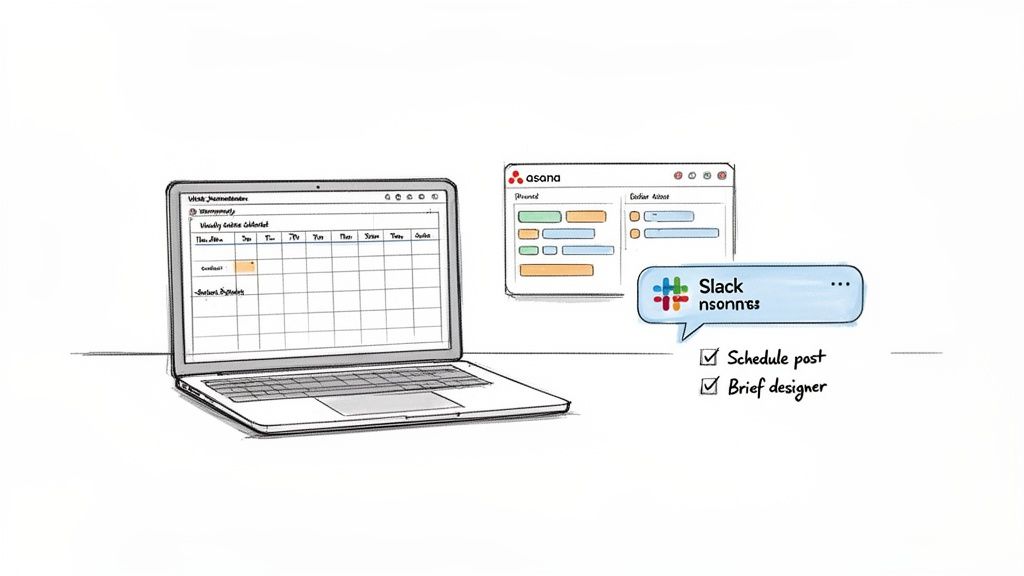
- Briefing a Freelancer: Jumping into a quick Slack huddle with a freelance graphic designer to go over the creative brief for a new set of social media ads.
- Managing Timelines: Updating the project board in Asana or Trello, which automatically pings the editor that a blog post draft is ready for their review.
- Coordinating Vendor Logistics: Making sure an invoice from the paid media agency gets processed and that the agency has the right tracking links for an upcoming product launch.
Each of these tasks, while small on its own, is a critical gear that keeps the larger marketing machine turning.
To get a clearer picture of how these tasks fit together, here’s a sample breakdown of a typical day.
A Day in the Life of a Remote Marketing Coordinator
| Time Block | Core Task | Tools Used |
|---|---|---|
| 9:00 - 9:30 AM | Daily Check-in & Prioritization | Slack, Asana, Google Calendar |
| 9:30 - 11:00 AM | Content Scheduling & Publishing | Sprout Social, WordPress, HubSpot |
| 11:00 AM - 12:00 PM | Vendor & Freelancer Coordination | Email, Slack, Zoom |
| 12:00 - 1:00 PM | Lunch Break | - |
| 1:00 - 2:30 PM | Campaign Progress Updates | Asana, Trello, Google Sheets |
| 2:30 - 4:00 PM | Performance Data Compilation | Google Analytics, SEMrush, Social Media Insights |
| 4:00 - 5:00 PM | Prep for Next Day & Final Comms | Google Docs, Slack |
As you can see, the day is a mix of focused individual work and collaborative check-ins, all managed through a suite of digital tools.
Managing the Content Pipeline
Content is the fuel for almost all modern marketing, and the coordinator basically runs the entire supply chain. They’re the ones overseeing the content calendar, making sure a steady flow of articles, videos, and posts gets produced, approved, and published on schedule.
A remote marketing coordinator’s virtual office isn’t a physical space—it’s a collection of tools. Platforms like Slack for communication, Asana for project tracking, and Google Workspace for collaboration become the essential infrastructure for getting work done.
A coordinator’s morning might be spent scheduling a week’s worth of posts in a tool like Sprout Social or Buffer. The afternoon could involve chasing down approvals from the legal team for a new case study or prepping a batch of approved blog posts for upload into the company’s CMS.
This is a skill in high demand. The need for coordinators who can manage campaigns from anywhere is only growing, especially since 76% of workers say they’d look for a new job if forced back into an office. Top companies are getting the message. Virtual Vocations’ Top 100 list showed these employers posted 20% of elite remote jobs in 2025, many of which were coordinator roles. You can read the full analysis on how remote work is shaping the future of employment.
Compiling and Presenting Performance Data
Finally, a huge part of the job is closing the loop by tracking how campaigns are actually performing. Marketing coordinators pull data from different sources to create clear, simple reports that show the team what’s working and what’s falling flat.
They don’t have to be deep-dive data scientists, but they do need to be comfortable finding their way around analytics platforms. They might pull key metrics from Google Analytics, export engagement data from a social platform, or consolidate lead numbers from a CRM like HubSpot.
They then turn this raw data into something digestible, like a weekly performance dashboard or a few slides for the team’s monthly review meeting. This keeps everyone accountable and helps the team make smarter, data-driven decisions moving forward.
The Must-Have Skills for Remote Marketing Success
To really nail a remote marketing coordinator role, it’s not just about knowing your marketing stuff. It’s about proving you can get the job done without a manager peeking over your shoulder.
Hiring managers are looking for a specific blend of technical skill and professional maturity. They need someone who can both execute the work and manage themselves effectively from day one.
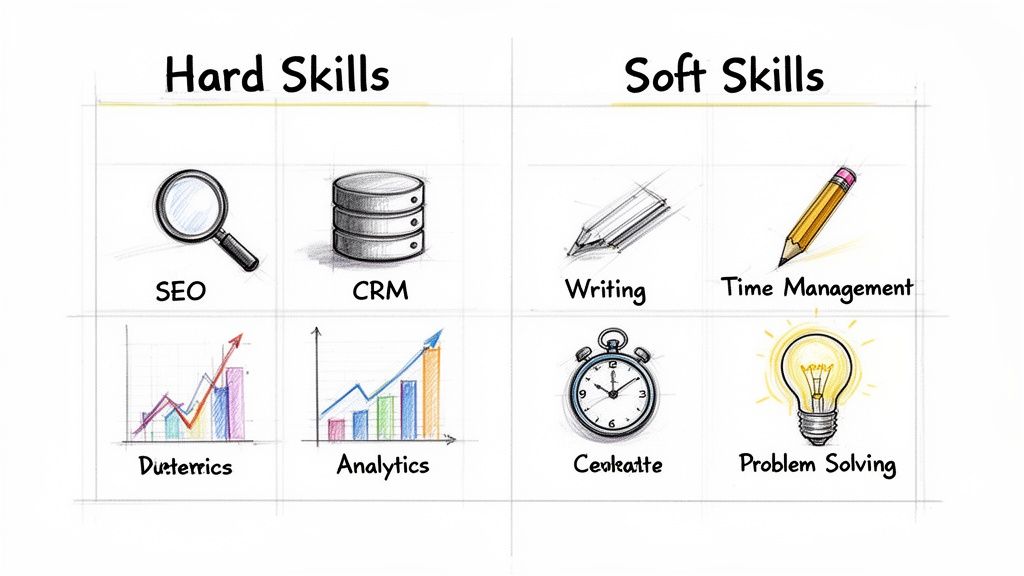
These abilities are your ticket to not just landing one of the many remote marketing coordinator jobs out there, but actually crushing it. We can split them into two buckets: the hard skills (what you can do) and the soft skills (how you do it).
Hard Skills: The Technical Toolkit
Hard skills are the concrete, teachable abilities you bring to the table. Think of them as the foundation of your day-to-day work—proof that you’re fluent in the tools and processes that make a modern marketing department tick.
For a remote coordinator, these are non-negotiable. They show you can jump right in with minimal hand-holding. Success in a remote marketing role hinges on efficiency, and mastering the leading social media management software is a perfect example of a must-have skill that helps you streamline your work.
Here’s what hiring managers are scanning your resume for:
- Project Management Software: You have to be comfortable in platforms like Asana, Trello, or Monday.com. These tools are the virtual office where you’ll track tasks, update stakeholders, and make sure nothing falls through the cracks.
- CRM and Marketing Automation: Experience with HubSpot, Marketo, or Salesforce is huge. Coordinators are often in these systems daily, managing email lists, scheduling campaigns, or pulling basic performance reports.
- Foundational SEO Knowledge: You don’t need to be an SEO guru, but you absolutely need to grasp the fundamentals. This means understanding keyword research, on-page optimization, and how to use tools like SEMrush or Ahrefs to find opportunities.
- Analytics and Reporting: Being comfortable inside Google Analytics is a core requirement. You should be able to navigate the platform to find key metrics on website traffic, user behavior, and campaign results to build simple, insightful reports.
- Content Management Systems (CMS): A solid working knowledge of a CMS like WordPress or Webflow is critical. You’ll almost certainly be tasked with formatting, uploading, and publishing blog posts or landing pages.
These skills prove you have the technical chops to execute tasks on your own, efficiently and accurately.
Soft Skills: The Remote Professional’s Mindset
If hard skills get you the interview, soft skills get you the job—and help you keep it. In a remote setup, these personal attributes are even more important because they directly shape how you communicate, collaborate, and stay productive when you’re not sharing an office.
The most successful remote coordinators are not just task-doers; they are proactive communicators and resourceful problem-solvers. They don’t wait to be told what to do next—they anticipate needs and take initiative.
These are the soft skills that make top candidates stand out:
- Exceptional Written Communication: Your ability to write clear, concise, and professional emails and Slack messages is everything. Without body language, your words have to do all the heavy lifting to prevent confusion and keep projects moving.
- Disciplined Time Management: Can you own your schedule, prioritize your tasks, and hit deadlines without supervision? This is about more than just avoiding procrastination; it’s about strategically managing your own focus and energy.
- Proactive Problem-Solving: Things go wrong. A campaign link breaks. A freelancer misses a deadline. A great remote coordinator doesn’t just report the problem—they show up with a potential solution already in mind.
- Adaptability and Resourcefulness: You need to be comfortable with change and good at finding answers on your own. Whether it’s learning new software on the fly or troubleshooting a small technical hiccup, self-sufficiency is a remote superpower.
Put them together, and this mix of hard and soft skills creates a powerful profile. It tells a hiring manager you have both the technical ability and the professional maturity to thrive in remote marketing coordinator jobs.
Navigating Your Salary and Career Growth Path
Landing a remote marketing coordinator job isn’t just about finding your next gig—it’s your on-ramp to a seriously promising career. Getting a handle on what you can earn and where this role can take you is key to seeing its real, long-term value.
Let’s talk money. Your salary as a remote marketing coordinator will hinge on a few things: your years in the game, the company’s size and funding stage, and even where its headquarters is based. If you’re just starting out, you can expect to see offers in the $45,000 to $60,000 range. But if you walk in with a few years of solid experience under your belt, that number can climb quite a bit.
Understanding Your Earning Potential
The good news? Skilled remote marketers are in high demand, and that’s pushing salaries up. The remote job market is booming, with a projected 19% growth for marketing coordinators expected through 2028. That translates to over 150,300 new roles hitting the market.
This surge means big opportunities, especially if you dive into a specialty like marketing operations. It’s not unheard of for coordinator-level pros in that niche to pull in between $102,000 to $160,000 a year. The demand is real. Learn more about remote marketing job trends and salary benchmarks.
But don’t just fixate on the base salary. Your total compensation package tells the full story. Many remote companies sweeten the deal with perks like a home office stipend, wellness allowances, or a budget for professional development. When you’re weighing offers, look at the whole picture. And remember, knowing how to negotiate remote work in job offers is just as important as negotiating salary—it’s how you lock in the flexibility you want.
Charting Your Career Trajectory
Think of the remote marketing coordinator role as your launchpad. The skills you sharpen here—project management, communicating across different teams, and digging into data—are the exact same ones you’ll need for more senior positions. You get a 360-degree view of how a marketing department actually works, which is an invaluable perspective for your future growth.
So, where can you go from here? This hands-on experience sets you up for some exciting career paths. Before we look at the numbers, here’s a typical progression:
- Marketing Specialist: After you’ve mastered the coordinator role, you could specialize in an area that really clicks with you, like SEO, content strategy, or email marketing.
- Campaign or Project Manager: All those organizational skills you’ve built make you a perfect fit to manage bigger, more complex marketing campaigns from start to finish.
- Marketing Manager: Stick with it for a few years, and you could step into a management role, leading a team of specialists and helping shape the overall marketing strategy.
The table below breaks down what that career path can look like in terms of experience and earning potential.
Remote Marketing Career Progression and Salary Benchmarks
| Role | Years of Experience | Typical Remote Salary Range |
|---|---|---|
| Marketing Coordinator | 0-2 years | $45,000 – $60,000 |
| Marketing Specialist | 2-4 years | $60,000 – $85,000 |
| Marketing Manager | 4-7 years | $85,000 – $120,000 |
| Senior Marketing Manager | 7-10 years | $120,000 – $160,000 |
| Director of Marketing | 10+ years | $160,000+ |
As you can see, starting as a coordinator puts you on a clear and lucrative track.
The coordinator role is a powerful incubator for future marketing leaders. It’s where you learn the operational realities of marketing, building a foundation that specialists in siloed roles often miss.
Ultimately, this position is your ticket to higher-level strategic roles. Plenty of successful VPs of Marketing and Chief Marketing Officers got their start by mastering the fundamentals of coordination and execution. It’s a role that truly rewards hard work and a proactive mindset with some serious long-term career dividends.
How to Find Real Remote Marketing Coordinator Jobs
If you’ve ever lost a weekend scrolling through massive job boards, you know the feeling. You fire off applications for dozens of remote marketing coordinator jobs that seem perfect, only to get… crickets. So much of what you’re seeing are “ghost jobs”—old listings, filled positions, or just bait to collect resumes. It’s a soul-crushing cycle.
The big problem with those huge, conventional job sites is they’re always a step behind. By the time a role shows up there, it might have been live for weeks, drawing in hundreds—sometimes thousands—of applicants. Your resume gets buried before you even have a chance.
To actually get noticed, you need a different game plan. One that gets you to the front of the line, not the bottom of the pile.
Ditch the Aggregators and Go Straight to the Source
Picture the typical job board as a chaotic, overcrowded flea market. It’s loud, messy, and nearly impossible to find the real gems. A direct-sourcing engine, on the other hand, is like having a key that opens the back door to every company’s career page. Instead of just scraping old listings from other boards, it scans company websites directly, 24⁄7.
This “straight-from-the-source” approach is a total game-changer. It means you see new openings the second they’re posted—long before they ever make it to the mainstream platforms. This gives you a massive timing advantage, letting you be one of the very first people to apply.
And that timing is everything. While marketing roles are growing steadily, the demand for remote marketing coordinators is absolutely exploding. We’re looking at a projected 19% growth for these specific roles, which translates to over 150,300 new positions coming from more than 13,800 employers hiring remotely. A platform that gets you to these fresh listings first isn’t just nice to have; it’s your secret weapon. Get more insights into the remote work economy from FlexJobs.
A Step-by-Step Guide to Finding Verified Jobs
Using a direct-sourcing engine like Remote First Jobs is incredibly simple and clean. It’s built to filter out all the junk—the spam, the agency filler, the expired listings—so you only see real, active jobs. Right now, there are over 44,000 verified remote jobs live on the platform from 21,135+ companies.
Here’s how to quickly dial in your search:
- Start Broad: Kick things off by just searching for “marketing.” This gives you a quick snapshot of the entire landscape and shows you which companies are hiring right now.
- Get Specific with Filters: Now, start narrowing it down. Filter for the “Marketing Coordinator” title or similar variations. You can also add filters for your seniority level to make sure you’re only seeing roles that are a perfect fit for your experience.
- Set Up Real-Time Alerts: This is the most critical step. Create an alert based on your filtered search. The moment a new remote marketing coordinator job that matches your criteria is found, you’ll get a notification. No more hunting—the opportunities come straight to you.
Here’s what a clean, filtered search for marketing jobs looks like. Notice what’s missing? All the ads and spam that clutter up other sites.
By switching to this direct-sourcing method, you stop being just another applicant lost in the crowd. You become one of the first people the hiring manager sees.
The single biggest advantage in a remote job search isn’t just the quality of your application—it’s the timing. Applying within the first 48 hours dramatically increases your chances of getting noticed by a hiring manager.
This proactive approach is non-negotiable if you’re serious about landing a top-tier remote marketing coordinator job. It shifts your entire strategy from quantity to quality, ensuring every application you send has a real shot. Ready to stop endlessly scrolling and start connecting with real opportunities? Explore the verified listings on Remote First Jobs and feel the difference.
Crafting an Application That Gets Noticed
 In a crowded remote job market, a generic application is the quickest ticket to the “no” pile. Hiring managers are drowning in resumes, which means you have just a few seconds to convince them you’re the solution they’ve been looking for. Every single piece of your application, from your resume bullets to your cover letter, has to be sharp, specific, and tailored to them.
Think of your application less like a history of your past jobs and more like a direct pitch for the value you’ll bring in the future. You have to connect the dots for the hiring manager, showing them precisely how your skills will make their team better, even from hundreds of miles away.
Bulletproof Your Resume with Quantifiable Wins
Vague statements like “managed social media” or “assisted with campaigns” are application killers. They tell a hiring manager what you did, but not how well you did it. To really stand out, you have to translate those duties into achievements backed by numbers.
This small shift from listing duties to showcasing your impact is what grabs a recruiter’s attention. It proves you’re a results-driven professional—a non-negotiable trait for anyone applying to remote marketing coordinator jobs.
Here’s how to reframe your experience with some hard numbers:
Instead of: “Managed the company’s content calendar.”
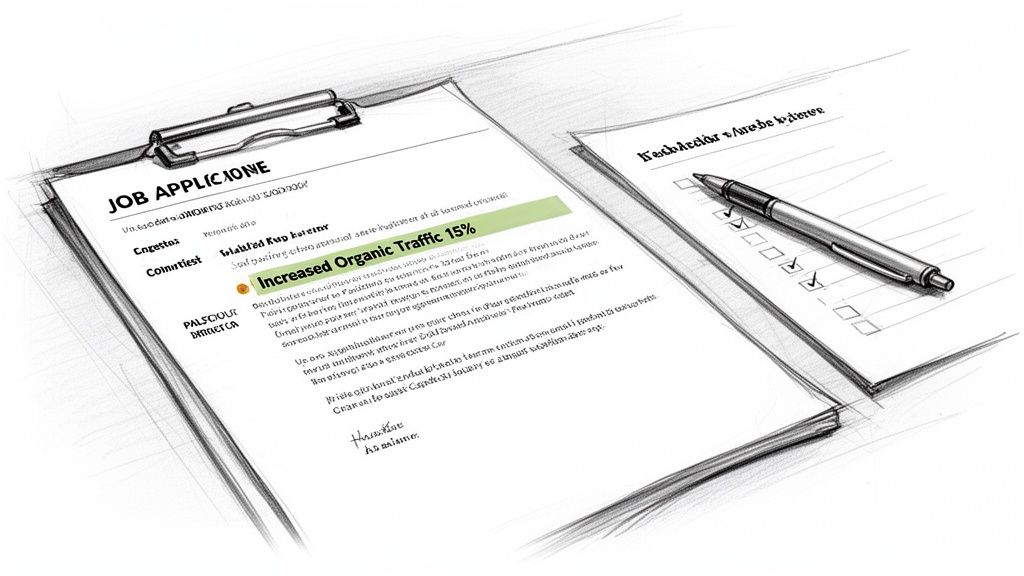
Try: “Managed a content calendar that increased organic blog traffic by 15% in three months by aligning topics with SEO keyword strategy.”
Instead of: “Coordinated email marketing campaigns.”
Try: “Coordinated 12 email campaigns, achieving an average open rate of 28%, which was 5% above the industry benchmark.”
Instead of: “Helped organize webinars and online events.”
Try: “Supported the execution of a 4-part webinar series, resulting in 350+ qualified leads for the sales team.”
See the difference? Specific, data-backed statements prove your value in a way generic descriptions never could.
Hook Them with a Powerful Cover Letter
Your cover letter is your first real shot at showing off your personality and communication chops—two things that are under a microscope for remote roles. Don’t waste that precious opening line with the tired “I am writing to express my interest…” Start with a hook that grabs them immediately and shows you’ve actually done your research.
A great cover letter for a remote role isn’t just a formality; it’s your first demonstration of excellent written communication and proactive thinking. It should show, not just tell, that you are the right fit.
Try kicking things off with one of these approaches:
- The “I’m a Fan” Hook: “As a long-time user of [Company’s Product], I was thrilled to see the opening for a Remote Marketing Coordinator. I’ve always admired your [mention a specific campaign or value], and I’m confident my experience in [your key skill] can help you achieve [company goal].”
- The “Problem-Solver” Hook: “I noticed your team recently launched [mention a new initiative]. My experience driving a 20% increase in engagement for a similar launch at my previous role could bring significant value as you scale this project.”
Openers like these prove you’re not just blasting out resumes—you’re genuinely engaged and already thinking about how you can contribute.
Prepare for the Remote-Specific Interview Questions
Finally, acing the interview for a remote marketing coordinator role means being ready for questions designed to test your self-sufficiency and communication style.
Get ready to answer questions like:
- “How do you stay organized and prioritize tasks without direct supervision?”
- “Describe a time you had to coordinate with a team across different time zones. What was the challenge, and how did you solve it?”
- “What tools do you use to communicate and collaborate with a remote team?”
Your goal is to confidently show them you’re a disciplined, proactive, and resourceful candidate who knows how to thrive in a distributed team.
Frequently Asked Questions
Jumping into the search for a remote marketing coordinator job can feel like you have a million questions. Let’s clear up some of the most common ones so you can move forward with confidence.
Think of this as your final gut-check before you dive in.
Do I Need Previous Remote Work Experience?
Not always, but it definitely gives you a leg up. Many companies are perfectly willing to hire someone new to remote work, as long as you can show you have the self-discipline to handle it. Think about skills like rock-solid time management, being a proactive communicator, and knowing how to find answers on your own.
Be ready to share specific stories in your interview. Talk about a time you managed a project with minimal supervision or used tools like Slack or Asana to keep a team in sync. Proving you have the right mindset often matters more than having a resume full of remote-only jobs.
What Are the Biggest Challenges in This Role?
The two things that trip people up most are communication and time management. It’s a whole different ballgame when you can’t just pop over to a colleague’s desk for a quick question. You have to get really good at asynchronous communication—writing things out clearly and concisely so there’s no room for confusion.
On top of that, you’re the boss of your own schedule. That requires serious discipline. It’s on you to tune out the distractions at home, stay on task, and nail your deadlines without a manager physically looking over your shoulder.
The best remote coordinators don’t just manage projects; they’re masters of managing their own time, attention, and communication. They create their own structure and drive results from anywhere.
Which Industries Hire the Most Remote Marketing Coordinators?
While almost every industry has a marketing team, a few are way ahead of the curve when it comes to hiring remote coordinators. These are usually the fast-moving, digital-first sectors that embraced distributed work early on.
- Technology and SaaS: Software companies are practically always looking for coordinators to help with product launches and digital campaigns.
- E-commerce and Retail: Online stores live and die by their digital marketing, making this role absolutely critical for driving sales.
- Digital Agencies: Marketing and ad agencies are constantly juggling client projects, and they rely on sharp coordinators to keep everything on track.
If you focus your search on these booming industries, you’ll have a much better shot at finding great remote marketing coordinator jobs.
Tired of scrolling through the same old job boards? Remote First Jobs cuts through the noise by scanning thousands of company career pages directly, so you see the freshest, verified roles first. Find your next remote marketing coordinator job today.