So, you’re wondering if that work-from-home job you’re eyeing is a scam. It’s a fair question. The honest answer is: sometimes. While millions of people have found incredible, legitimate remote roles, the high demand has unfortunately created a playground for scammers.
The key isn’t to be afraid of remote work. It’s about learning how to tell a real opportunity from a clever fake.
The Reality of Work From Home Job Scams
If a remote job offer felt a little too perfect, your gut might be onto something. The shift to remote work has been like a modern gold rush. Alongside the real treasure—flexible, high-paying careers—are plenty of swindlers selling fake maps.
Scammers are masters of psychology. They know how to tap into the hopes and anxieties of job seekers, creating a sense of urgency to make you skip the fine print. They’ll dangle the promise of a huge income for very little effort, preying on people who just want a good opportunity.
The Alarming Growth of Remote Scams
This isn’t just a hunch; the numbers paint a startling picture. The problem goes beyond fake job offers and into all sorts of online schemes promising quick money. That’s why getting an honest assessment of online ventures is so important for spotting potential red flags early on.
The financial toll is staggering. Between 2020 and 2024, reported losses from remote job scams exploded from $90 million to over $501 million. That’s a jaw-dropping 456% increase in just four years.
This explosion is partly due to new tactics. For example, “task scams”—which were almost unheard of in 2020—now account for nearly 40% of all reported job scams. These usually start with an out-of-the-blue text message promising easy money for simple online tasks, luring victims into a trap.
You can dig deeper into how these schemes have evolved by checking out the latest remote job scam statistics from GoRemoteJob.com.
My goal here is to help you move from a place of uncertainty to one of informed confidence. When you understand the common tricks, you can navigate your job search safely and land a role that actually delivers on the promise of remote work.
Let’s start by learning how to spot the immediate differences between a real job and a scam at a glance.
Legitimate Remote Job vs Scam Job At a Glance
Use this quick comparison to immediately spot the differences between a genuine career opportunity and a fraudulent scheme.
| Characteristic | Legitimate Remote Job | Common Scam Signal |
|---|---|---|
| Interview Process | Multiple rounds of video interviews with real team members. | A single, brief text or chat-based “interview.” |
| Job Offer | A formal, written offer letter with clear salary and benefit details. | A vague offer sent via text or social media with unrealistic pay. |
| Communication | Professional emails from a verifiable company domain (e.g., [email protected]). | Communication from personal email accounts (e.g., Gmail, Yahoo). |
| Onboarding | Requires standard I-9 and W-4 tax forms after you’ve been hired. | Asks for bank details or social security number before a formal offer. |
| Equipment | The company provides equipment or offers a stipend for you to buy it. | You are required to pay for your own equipment or “training materials.” |
| Urgency | The hiring process is thorough and takes time. | High-pressure tactics demanding an immediate decision. |
This table is a great first line of defense. Keep these points in mind as you review job postings, and you’ll be much better equipped to weed out the fakes.
The Most Common Types of Remote Job Scams

The best way to spot a scam is to know the playbook. Scammers aren’t all that creative—they tend to recycle a few core schemes, just with different window dressing. Each one is built to hit a specific psychological trigger. Once you can recognize the underlying pattern, you’ll be able to sniff out a fake job from a mile away.
So, let’s pull back the curtain on the most common remote job scams you’re likely to run into.
The Task-Based Scam
This one has exploded in popularity recently. It usually kicks off with an unsolicited text or a social media message that dangles the promise of easy money for simple tasks. Think liking social media posts, watching videos, or cranking out fake reviews.
They reel you in by making it feel like a game. You’ll get added to a group chat, handed a few simple tasks, and then—here’s the hook—they’ll send you a small payment to build your trust. Once you’re convinced it’s real, they’ll introduce a “premium” task that requires you to deposit your own money, promising a much bigger payout.
But that big payday never arrives. Instead, they’ll keep asking for more money to “unlock” your earnings or fix a “problem.” The entire platform is a front designed to drain your bank account, and the second you stop paying, the scammers ghost you.
The Equipment Purchase Scam
This scam can feel frighteningly real because it mimics a legitimate hiring process almost perfectly. You might go through a text-based interview, get a professional-looking offer letter, and feel the genuine excitement of landing a new role.
The trap is sprung right when you get to onboarding. The “hiring manager” tells you that you need specific software or equipment to do the job. Conveniently, they direct you to buy it from their “preferred vendor,” which is just a bogus website they control.
You’re told to pay for the overpriced gear yourself, with the assurance you’ll be reimbursed in your first paycheck. After you’ve paid, it goes one of two ways:
- The “company” disappears completely, taking your money with them.
- They add another layer with a fake check scam. They send you a fraudulent check to “cover” the costs, but it eventually bounces, leaving you on the hook with your bank.
The Reshipping and Data Entry Mule Scam
This one is especially nasty because it doesn’t just steal your money—it turns you into an unwitting accomplice in a criminal enterprise. Scammers need a way to move stolen goods or launder money without getting caught, and they use hopeful job seekers as middlemen.
Reshipping Scam: You’re hired to receive packages at your home, check the contents, and then forward them to another address, which is often overseas. What you don’t know is that the merchandise was bought with stolen credit cards. Your role is simply to muddy the waters and hide the trail back to the criminals.
Data Entry Scam: The job title might be “Invoice Processor” or something similar. In reality, you’re not just entering data; you’re transferring illegally obtained funds between accounts. You’ve just become what law enforcement calls a money mule.
In both scenarios, the work seems harmless enough. But getting involved, even unknowingly, can lead to some serious legal trouble when authorities trace the illegal activity back to your address.
The Investment-Driven Job Scam
While most scams go for quick, smaller hits, this one plays the long game for a massive payout. It targets your ambition, disguising itself as a high-stakes career opportunity in a field like cryptocurrency or investment management. The “job” requires you to invest your own cash to “show your commitment” or gain access to a special trading platform they’ve created.
These scams are less common than the task-based ones, but the financial damage is off the charts. According to FTC data, investment-related fraud leads to an average loss of $53,915 per case, making it incredibly destructive. You can dig into more scam statistics from ElectroIQ to see just how these different schemes stack up.
Red Flags That Signal a Job Scam

This is where you sharpen your instincts. We’ve covered the common types of scams, but this is your field guide for spotting them in the wild. Think of it as developing a “scam detector” sense—your best defense when you’re wondering, “Is this work-from-home job a scam?”
You have to learn how to recognize the cues, both subtle and glaring, that an opportunity just isn’t right. These red flags almost always show up long before anyone asks for money, giving you plenty of time to walk away completely unharmed.
Vague Job Descriptions with Unrealistic Promises
The very first warning sign is often right in the job description itself. Scammers are casting a wide net, so they keep their descriptions incredibly vague. Their goal is to appeal to as many people as possible, so they focus on the reward, not the actual role.
Be on high alert for postings that promise a huge income for little to no work or experience. A listing for a “Package Processor” paying $50 an hour with no skills required? That’s a classic red flag.
Real companies need people with specific skills. Their job descriptions are detailed, outlining clear responsibilities, qualifications, and the value you’re expected to bring to their team. If the job posting reads more like a lottery ticket than a career opportunity, it’s a trap.
Unprofessional Communication and Platforms
Pay close attention to how a recruiter contacts you and where the conversation goes. Legitimate companies invest in a professional hiring process, and their communication style is a dead giveaway.
Here are some immediate communication red flags:
- Personal Email Addresses: A real recruiter will almost never reach out from a personal email like
[email protected]. They’ll use a corporate domain, like[email protected]. - Text-Only Interviews: An entire interview process conducted over WhatsApp, Telegram, or any other text-based chat app is a massive warning sign. Real interviews happen over the phone or, more commonly, a video call on a platform like Zoom or Google Meet.
- Poor Grammar and Spelling: Official company communication is polished and proofread. A job offer riddled with typos and awkward phrasing screams unprofessionalism and is a strong indicator of a scam.
A legitimate company will never ask you to install a special app just to get a job. They already have established, professional tools for interviewing candidates. If you’re being pushed to download an unfamiliar chat program, be highly skeptical.
Requests for Personal Financial Information Upfront
This is one of the brightest red flags you will ever see. There is no legitimate reason for any employer to ask for your bank account details, social security number, or a copy of your driver’s license before you have signed a formal, verifiable offer of employment.
Scammers want this information for one of two things: identity theft or setting you up for a financial scam. This kind of sensitive data is collected after you’re hired, using secure and official HR paperwork like an I-9 or W-4 form. Never, ever share these details over email or a messaging app.
You Are Asked to Pay for Something
This is the ultimate deal-breaker. Legitimate employers pay you; you do not pay them. It’s that simple. Scammers flip this model on its head by inventing reasons for you to send them money.
Watch out for these common scenarios:
- Paying for Training: A real company invests in its employees. They will pay for your training as part of your onboarding.
- Paying for Equipment: You should never have to pay for a “starter kit” or be forced to buy a laptop from their “preferred vendor.” Real employers either provide the equipment directly or offer a stipend to reimburse you after you purchase it.
- The Fake Check Scam: This one is especially nasty. They send you a check for more than the cost of your equipment and ask you to wire back the difference. The check is always fraudulent, and when it inevitably bounces a few days later, you’re on the hook with your bank for the full amount.
How to Properly Vet Any Remote Job Opportunity
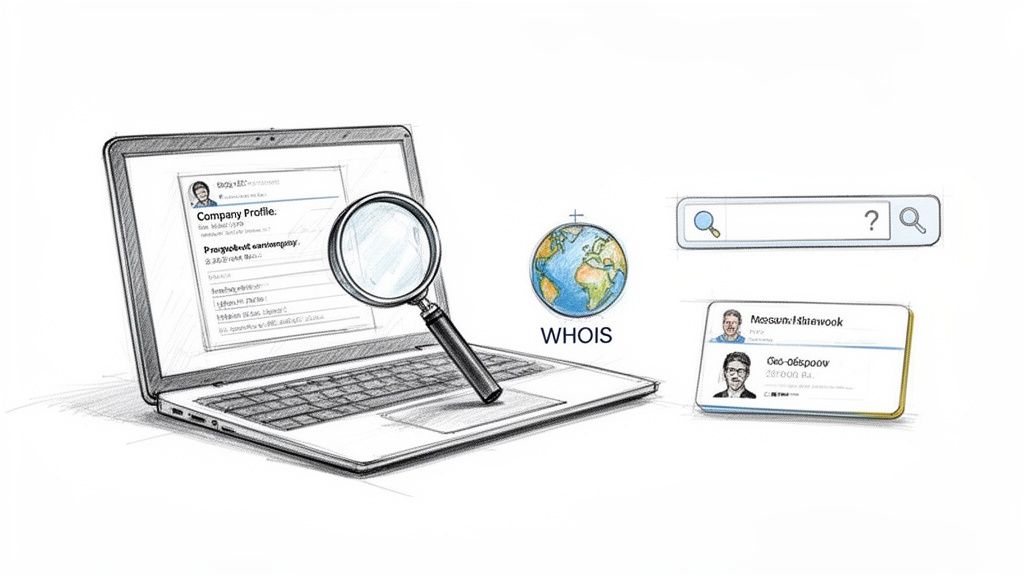
Knowing the red flags is your defense, but actively investigating a job is your offense. Don’t just wait for something to feel “off”—it’s time to put on your detective hat. This simple shift in mindset puts you in control, helping you weed out the fakes before you waste a single minute applying.
Think of it as doing a little sleuthing for your own career. A few minutes of research upfront can save you from weeks of headaches and potential financial loss. The following steps give you a clear, repeatable process to verify any remote job you come across.
Step 1: Check the Official Company Website
This is your first, most critical move. No matter where you find a job posting—a major job board, social media, or an email—your first action should always be to go directly to the company’s official website and find their careers or jobs page.
If the job isn’t listed there, assume it’s a scam until you can prove otherwise. Scammers love to impersonate big, well-known companies because a familiar name creates instant trust. In fact, Amazon was the most impersonated employer (30% of reported cases), followed by remote work agencies (29%) and major logistics companies like USPS and UPS (17%).
A real job opening will almost always be on the company’s own site. If it’s missing, you’ve probably just dodged a bullet.
Step 2: Investigate the People and the Company
Once you’ve confirmed the job exists on the official site, it’s time to verify the person who contacted you and check the company’s digital footprint. A legitimate business leaves a clear, professional trail online.
Your Investigation Checklist:
- Verify the Recruiter on LinkedIn: Look up the recruiter by name. Do they have a complete, professional profile? Does it show they currently work at the company they claim to represent? A sparse, new, or nonexistent profile is a huge red flag.
- Analyze the Company’s Digital Footprint: Does the business have active social media accounts? A blog with recent posts? Any press releases? A real, thriving company will have an active presence, not just a static, single-page website.
- Search for Reviews and Scam Reports: Just Google it. A quick search for “[Company Name] + scam” or “[Company Name] + reviews” can be incredibly revealing. Complaints from other job seekers are one of the clearest warnings to walk away.
And remember, while you’re spotting red flags, you also want to make a great impression. Learning how to update your LinkedIn profile for success ensures you stand out to legitimate recruiters.
Step 3: Check the Website’s Age and Authenticity
Scammers are clever and often create fake websites that look nearly identical to real ones. They might change one letter in the URL or use a different domain extension (like .net instead of .com) hoping you won’t notice.
A powerful, free tool for this is a WHOIS lookup. You can use an online WHOIS tool to search for the domain of the website where you’re applying. This search tells you exactly when the domain was registered.
If the website for a supposedly well-established company was created just a few weeks ago, you are almost certainly dealing with a scam. It’s a simple, quick check that can expose a fraudulent operation in seconds. Real companies have domains that are years, if not decades, old.
Following these three steps gives you a solid vetting system that makes it incredibly difficult for a scam to get past you. It turns you from a passive target into an active investigator. And if you’d rather skip the manual work, platforms like Remote First Jobs do the heavy lifting by sourcing listings directly from verified company career pages, cutting out much of the risk from the start.
What to Do If You Encounter a Job Scam
That gut-wrenching moment when you realize a job offer was a scam is incredibly stressful. It feels like a personal violation, and it’s easy to feel embarrassed or angry. The most important thing is to push those feelings aside for a moment and act quickly.
Your immediate, decisive steps can stop the scammers in their tracks, limit the damage, and protect other job seekers from falling into the same trap.
First things first: cease all communication immediately. Don’t try to argue with them, call them out, or get your money back yourself. Just cut them off completely. Block their phone numbers, email addresses, and any social media or messaging profiles they used.
Once you’ve gone silent, shift your focus to damage control. If you sent them money or shared any banking information, call your bank or credit card company right away. Explain that you’ve been scammed, ask them to freeze the accounts, and see if any fraudulent charges can be reversed. If you gave them a copy of your ID or your Social Security number, you need to place a fraud alert with one of the major credit bureaus.
Your Immediate Action Plan
When you’re dealing with the fallout from a scam, time is not on your side. Working through these steps methodically is the best way to secure your information and start the reporting process. This isn’t just about protecting yourself; it’s about adding your voice to a larger effort to shut these criminals down.
- Step 1: Cut Off All Contact. Stop all communication right now. Block them on every platform they used to reach you—phone, email, WhatsApp, Telegram, you name it.
- Step 2: Secure Your Finances. Immediately call your bank and credit card companies. Report any unauthorized transactions, freeze your accounts, and ask what options you have for reversing payments.
- Step 3: Protect Your Identity. If you shared any sensitive personal information, head straight to the Federal Trade Commission’s identity theft resource page. It offers a clear, step-by-step recovery plan.
Reporting the Scam Is Your Civic Duty
After you’ve locked down your personal and financial information, reporting the scam is the next critical move. It might feel like a hassle when you’re already stressed, but it’s one of the most powerful things you can do. Every report gives authorities another piece of the puzzle they need to spot patterns, build cases, and take these operations offline.
Think of reporting as a civic duty. Your single report, combined with thousands of others, creates a clear picture for law enforcement, protecting countless other job seekers from becoming victims.
Your report helps agencies track these scammers and warn the public about the latest schemes they’re using. Here’s where you need to file reports:
- The Federal Trade Commission (FTC): This is the primary government agency for tracking scam complaints. You can file a detailed report on their official site at ReportFraud.ftc.gov.
- The FBI’s Internet Crime Complaint Center (IC3): For any scam that happened online—which is most of them—filing a complaint with the IC3 is crucial for federal law enforcement.
- The Job Platform: Go back to the job board or social media site where you first found the listing and report it. This helps them take down the post and ban the scammer’s account, stopping them from targeting more people on that platform.
Frequently Asked Questions About Remote Job Scams
Even when you know the big red flags, some situations can still feel a little… off. It’s totally normal to have those lingering doubts. Let’s clear up a few of the most common “what if” scenarios that trip people up during their job search.
Are Jobs Using Telegram Or WhatsApp For Interviews Always Scams?
It’s not a 100% guarantee, but it is a massive red flag. Any “interview” that happens only through text on an app like WhatsApp or Telegram is almost certainly a scam. It’s one of their signature moves.
Legitimate companies want to meet you. They’ll use professional video platforms like Google Meet, Zoom, or Microsoft Teams to conduct a proper, face-to-face interview.
Your move is simple: always insist on a video call. A real recruiter won’t bat an eye at this request. A scammer, on the other hand, will either make up a flimsy excuse or just ghost you completely.
Can I Get A High-Paying Remote Job With No Experience?
You have every right to be skeptical of job posts promising huge paychecks (like ”$75/hour”) for simple tasks that require zero experience. This is the classic bait scammers use for task-based scams or to trick you into becoming a money mule.
Real entry-level jobs absolutely exist, but they pay competitive, market-rate salaries that match the work you’ll be doing. A promise of wildly high pay for low-skill work is one of the most reliable signs you’re looking at a scam.
What If A Company Sends Me A Check To Buy Equipment?
Stop everything. This is the oldest trick in the book—the classic “fake check” scam. If you get a check, cut off all communication immediately.
Here’s how it works: they send you a fraudulent check. You deposit it, and your bank might make the funds available for a few days before the check is officially cleared. The scammers then tell you to buy equipment from their “approved vendor” (which is just them) or wire back a supposed “overpayment.”
A week or so later, your bank discovers the check is fake and it bounces. The bank will then pull the entire amount back out of your account, leaving you on the hook for the money you sent the scammers. A real company will never send you a check and ask you to send money back for any reason. They’ll either ship equipment to you directly or have you buy it and submit an expense report for reimbursement.
Tired of second-guessing every job post? Remote First Jobs eliminates the risk by sourcing over 44,000 active listings directly from the career pages of 21,000+ verified companies. Skip the scams and apply to real, high-quality roles before anyone else. Find your next opportunity with confidence at https://remotefirstjobs.com.