The remote work revolution has transformed the traditional office into a concept without borders, turning bustling cities, quiet beach towns, and mountain retreats into viable workspaces. With the freedom to work from anywhere, the most significant challenge is no longer finding a remote job, but choosing the right destination. This decision involves more than just beautiful scenery; it’s a complex puzzle of logistics, lifestyle, and personal finances. For professionals tired of endless competition and ghost jobs on major platforms, finding the perfect international base can be the ultimate career upgrade.
This guide provides a comprehensive breakdown of the best countries for remote workers, moving beyond surface-level travel advice. We dive deep into the critical factors that determine a successful move: digital nomad visa requirements, realistic cost of living, internet speed and reliability, tax implications, and safety. We’ll also cover crucial elements like healthcare access; to ensure peace of mind and proper medical coverage while living and working abroad, an ultimate guide to health insurance for digital nomads is an invaluable resource.
Our goal is to give you a clear, actionable framework for making an informed choice. We’ve developed a scoring methodology to help you compare destinations objectively based on what matters most to you. Whether you’re a seasoned digital nomad, a family looking for a better work-life balance, or a professional eager to build a global network, this list will help you pinpoint the ideal country to call your next office.
1. Portugal – Europe’s Remote Work Hub
Portugal has firmly established itself as one of the best countries for remote workers by blending affordability, a welcoming culture, and a robust infrastructure tailored for digital nomads. The country offers a vibrant mix of historic charm and modern convenience, with cities like Lisbon and Porto becoming major hubs for distributed teams and independent professionals. Its mild climate, stunning coastline, and high quality of life are major draws.

The Portuguese government actively encourages remote work through its dedicated Digital Nomad Visa (D8 visa), which simplifies the residency process for non-EU citizens earning a stable remote income. This visa provides a clear legal pathway to live and work in the country, granting access to its public healthcare system and the ability to travel freely within the Schengen Area.
Key Benefits and Actionable Tips
The community aspect is a significant advantage. Major events like the Digital Nomad Summit and a high concentration of coworking spaces, such as Second Home in Lisbon, have fostered a strong network for remote professionals. This makes it easy to connect, collaborate, and find support.
To make the move smoother, consider these practical steps:
- Apply Early: Begin your Digital Nomad Visa application well in advance, as processing can take several weeks to a few months.
- Explore Beyond Lisbon: For better value and a more local experience, consider basing yourself in Porto, Cascais, or the Algarve region.
- Track Your Stay: Be mindful of residency requirements, which often involve staying in the country for at least 183 days per year to maintain your visa status and tax residency. Finding your next opportunity doesn’t have to be hard, you can learn more about finding your ideal remote job on Remote First Jobs.
2. Mexico – Latin America’s Remote Work Leader
Mexico has rapidly become a top choice for remote workers, especially those from North America, due to its cultural richness, affordability, and strategic time-zone alignment. The country offers a diverse landscape, from the bustling metropolis of Mexico City to the laid-back Caribbean beaches of Playa del Carmen, creating a vibrant ecosystem for digital nomads. Its blend of modern infrastructure in urban centers and a welcoming, lively culture makes it one of the best countries for remote workers seeking a dynamic lifestyle.
Mexico facilitates long-term stays through its Temporary Resident Visa, which is ideal for remote workers who can prove a stable monthly income or significant savings. This visa grants the right to live in the country for up to four years and provides a clear pathway for professionals who aren’t employed by a Mexican company. This accessibility, combined with strong internet connectivity in major hubs, has solidified its reputation as a leading remote work destination.
Key Benefits and Actionable Tips
The strong community is a major draw, with large, active groups of digital nomads and international tech founders, particularly in Mexico City and Playa del Carmen. These hubs offer numerous coworking spaces, networking events, and social activities, making it easy to build both professional and personal connections. This established infrastructure provides an excellent support system for new arrivals.
To ensure a successful transition, focus on these practical steps:
- Document Income Thoroughly: For the Temporary Resident Visa, meticulously prepare financial documents like tax returns, bank statements, and proof of remote employment.
- Choose Your Base Wisely: Select a city based on your lifestyle priorities. Opt for Mexico City for its career opportunities and cultural scene, or choose Playa del Carmen for a beach-focused, relaxed pace.
- Establish Local Finances: Once you have your residency card, open a local bank account to simplify daily transactions and avoid international transfer fees.
3. Spain – Mediterranean Lifestyle with Modern Infrastructure
Spain combines a relaxed Mediterranean lifestyle with the robust infrastructure and stability of a major European nation, making it one of the best countries for remote workers. Cities like Barcelona, Madrid, and Valencia have become thriving centers for tech innovation and digital nomad communities, offering excellent connectivity, vibrant culture, and a high quality of life. The country’s famous cuisine, sunny weather, and relatively low cost of living compared to other Western European nations are significant draws.
To attract global talent, Spain introduced its own Digital Nomad Visa, streamlining the legal process for non-EU citizens to reside in the country while working for foreign companies. This visa grants the right to live and work in Spain for an initial period of up to one year, with the possibility of renewal. It also provides access to public services and allows for travel throughout the Schengen Area, offering a secure and official pathway to embrace the remote work lifestyle.
Key Benefits and Actionable Tips
The burgeoning tech and startup scene is a key benefit, especially in cities like Barcelona, which hosts major international conferences and boasts a large startup network. Valencia is also emerging as a popular, value-friendly alternative with its own dedicated innovation district. This ecosystem provides ample networking opportunities and a supportive environment for professional growth.
To ensure a successful relocation, follow these actionable tips:
- Secure Housing First: Before applying for the visa, secure a short-term rental or temporary housing, as proof of accommodation is often required.
- Explore Cost-Effective Cities: For a lower cost of living and a more authentic Spanish experience, consider alternatives to major hubs like Valencia, Malaga, or Seville.
- Use Official Channels: Submit your visa application through Spain’s official immigration portals or consulates to avoid third-party delays and ensure all requirements are met correctly. Finding the right remote role to support your move is crucial; you can discover opportunities with global companies on Remote First Jobs.
4. Thailand – Southeast Asia’s Most Established Remote Destination
Thailand has long been a cornerstone of the digital nomad movement, offering an unbeatable combination of affordability, world-class cuisine, and vibrant culture. This Southeast Asian hub provides a diverse backdrop for remote work, from the bustling megacity of Bangkok to the laid-back, creative atmosphere of Chiang Mai and the stunning beaches of Phuket. Its well-established infrastructure and large expatriate community make it one of the best countries for remote workers just starting their journey.
While traditionally operating on tourist visas, Thailand is now introducing more formal options like the Long-Term Resident (LTR) visa for “Work-From-Thailand Professionals,” signaling a growing recognition of its remote workforce. This shift provides a more stable legal framework for professionals seeking to base themselves in the country long-term, offering benefits like a 10-year renewable visa and a reduced personal income tax rate.
Key Benefits and Actionable Tips
The community is a massive draw, especially in hubs like Chiang Mai, which is famous for its concentration of digital nomads and countless networking events. Major cities are also filled with high-quality, affordable coworking spaces like The Hive in Bangkok or Punspace in Chiang Mai, providing reliable internet and opportunities to connect with other professionals.
To make your transition to Thailand seamless, follow these tips:
- Secure Reliable Internet: Upon arrival, purchase a local SIM card from providers like AIS or TrueMove H for dependable 4G/5G connectivity.
- Join a Coworking Space: Even if your accommodation has Wi-Fi, a coworking membership offers a stable connection, a productive environment, and instant access to the local remote work community.
- Understand Visa Runs: If using a tourist visa, familiarize yourself with the regulations and requirements for visa extensions and border runs to ensure you remain compliant.
5. Colombia – Rising Star with Tech Talent & Affordable Living
Colombia has emerged as a dynamic and surprisingly affordable destination, making it one of the best countries for remote workers in Latin America. Its reputation is rapidly shifting from a troubled past to a future-focused present, with cities like Medellín and Bogotá becoming vibrant tech hubs. The country offers an incredible value proposition, combining a very low cost of living with improving infrastructure and famously welcoming locals.
The Colombian government recently launched a Digital Nomad Visa, streamlining the process for remote professionals to live and work there for up to two years. This visa is designed for individuals earning at least three times the national minimum wage from a foreign source. It provides a legal framework to enjoy the country’s rich culture, beautiful landscapes, and growing remote work community without the uncertainty of short-term tourist stays.
Key Benefits and Actionable Tips
The transformation of cities like Medellín, exemplified by its innovation hub Ruta N, has cultivated a thriving ecosystem for tech talent and entrepreneurs. This growth has attracted a strong network of digital nomads and coworking brands like Selina, which has established multiple locations across the country, making it easy to find community and a reliable workspace.
To ensure a successful transition, consider these recommendations:
- Start in Medellín: For the best combination of modern infrastructure, a large expat community, and reliable internet, begin your Colombian journey in Medellín.
- Apply for Your Visa in Advance: While the process is new, it’s wise to apply for the Digital Nomad Visa well ahead of your travel plans to account for any processing delays.
- Learn Basic Spanish: While you can get by with English in major hubs, learning some basic Spanish will significantly enrich your daily interactions and cultural immersion.
6. Vietnam – Emerging Hub with Exceptional Value & Culture
Vietnam is rapidly gaining recognition as one of the best countries for remote workers, offering an unbeatable combination of extremely low living costs, a vibrant culture, and rapidly improving infrastructure. The country presents a dynamic environment where ancient traditions meet modern energy, especially in cities like Ho Chi Minh City, Hanoi, and Da Nang. Its stunning natural beauty, from Halong Bay’s limestone karsts to the Mekong Delta’s lush landscapes, provides an incredible backdrop for a work-life balance.
While Vietnam does not yet offer a dedicated digital nomad visa, many remote workers utilize its lenient e-visa and tourist visa policies for short-to-medium-term stays. This straightforward entry process, combined with a burgeoning startup scene and growing communities of expats and digital nomads, makes it an accessible and exciting option. The energy in its major cities is palpable, with countless cafes, coworking spaces, and networking events catering to a global workforce.
Key Benefits and Actionable Tips
The primary draw is the exceptional value for money, which allows for a high quality of life on a modest budget. The local food scene is world-renowned, and connectivity is surprisingly robust and affordable in urban centers, making it easy to stay productive. This affordability extends to housing, transportation, and leisure activities.
To make your experience in Vietnam successful, consider these tips:
- Leverage E-Visas: The 90-day e-visa is the most convenient option for many nationalities. Plan your stays around visa runs or use it to explore neighboring countries.
- Start in Major Hubs: Begin in Ho Chi Minh City or Da Nang, where digital infrastructure and nomad communities are most established, before venturing to more remote areas.
- Embrace the Cafe Culture: Vietnam’s coffee culture is legendary. Thousands of cafes offer reliable Wi-Fi and a great atmosphere for working alongside locals and other professionals.
7. Costa Rica – Work-Life Balance Paradise with Stability
Costa Rica has become a magnet for remote workers seeking an unparalleled work-life balance surrounded by nature, backed by political stability and a high quality of life. The country’s “Pura Vida” (pure life) philosophy permeates daily life, offering a relaxed yet productive environment. Popular bases range from the bustling capital, San José, to the vibrant beach towns of Tamarindo and Santa Teresa, which host sizable remote worker and expat communities.
The government supports this trend with its Digital Nomad Visa (Rentista), specifically designed for foreigners earning a stable income from abroad. This visa provides a clear pathway to residency, offering a one-year stay that can be renewed. It solidifies Costa Rica’s position as one of the best countries for remote workers by providing a legal framework to enjoy its world-renowned biodiversity, excellent healthcare, and welcoming culture long-term.
Key Benefits and Actionable Tips
Costa Rica’s strong commitment to sustainability and its incredible natural landscapes, from rainforests to pristine beaches, provide a unique backdrop for remote work. This focus on well-being attracts professionals looking to escape the traditional corporate grind and find a healthier rhythm.
To ensure a smooth transition, focus on these practical steps:
- Test the Waters: Consider starting your journey on a standard tourist visa, which typically allows a 90-day stay, to explore different regions before committing to a long-term residency application.
- Assess Healthcare: Research your healthcare options thoroughly. Decide between the public system (CAJA), which visa holders can access, and private insurance, which offers faster access to specialists and more English-speaking providers.
- Connect Locally: While expat communities are strong, learning basic Spanish will significantly enhance your experience and integration into the local culture. You can find your ideal remote job on Remote First Jobs to start your journey.
8. Indonesia (Bali) – Exotic Escape with Booming Nomad Community
Indonesia, particularly the island of Bali, has become synonymous with the digital nomad lifestyle. It offers an unparalleled combination of low living costs, a vibrant wellness culture, and a massive, well-established community of remote workers. Hubs like Canggu, Ubud, and Seminyak cater to different tastes, from surf-centric social scenes to spiritual and creative retreats, making it one of the best countries for remote workers seeking both adventure and community.
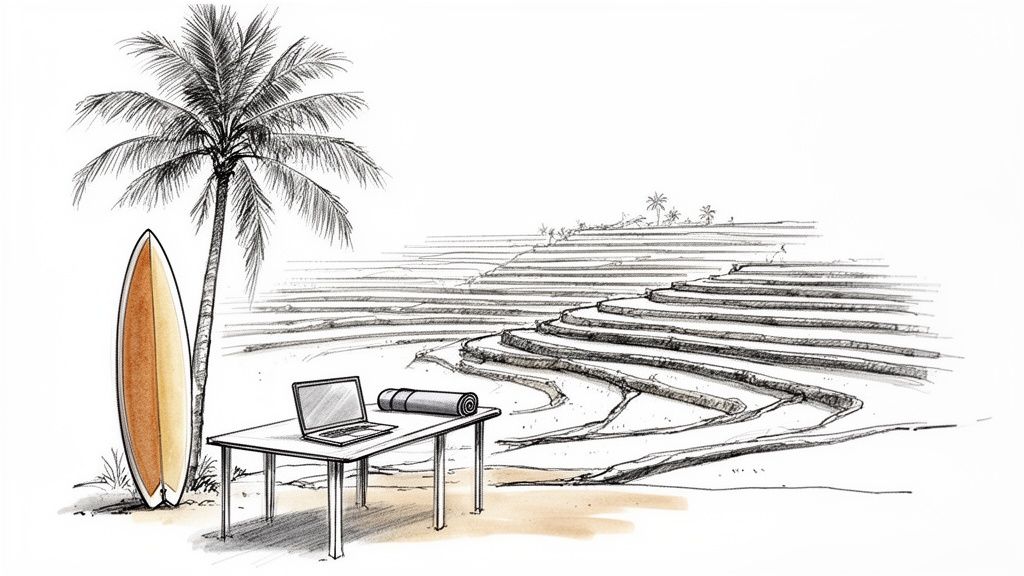
The Indonesian government is adapting to this trend with options like the B211a visa, which allows for longer stays, and plans for a dedicated digital nomad visa. For now, many remote workers utilize visa-on-arrival and subsequent extensions. This accessibility, combined with excellent coworking infrastructure and a welcoming local culture, has cemented Bali’s status as a top-tier destination for location-independent professionals.
Key Benefits and Actionable Tips
The community is a primary draw. Canggu is famous for its high concentration of nomads and venues like Tropical Nomad Coworking Space, while Ubud attracts a wellness-focused crowd with spaces such as Outpost. This makes networking and finding a like-minded tribe incredibly easy.
To ensure a successful stay, consider these tips:
- Choose Your Base Wisely: Research your ideal vibe. Canggu is for socializing and surfing, Ubud is for yoga and creativity, and Seminyak offers a more upscale, resort-like experience.
- Navigate Visas Carefully: Start with a Visa on Arrival (VOA) but plan ahead. For longer stays, look into the B211a visa or consult a visa agent on the ground to handle extensions and avoid overstaying.
- Get a Scooter: Renting a scooter is the most common way to get around, but always wear a helmet and have an international driving permit. Ride-hailing apps like Gojek and Grab are also excellent alternatives.
9. Argentina – South American Stability with European Flair
Argentina offers remote workers a unique blend of European-inspired culture, vibrant urban life, and remarkable affordability. The country attracts professionals with its cosmopolitan cities like Buenos Aires, a major cultural and tech hub, alongside stunning natural landscapes from Patagonia to the Andes. Its growing tech scene and low cost of living make it a compelling choice for those seeking a dynamic South American base.
While Argentina is still developing a formal digital nomad visa, many remote workers enter on a 90-day tourist visa, which can often be extended. This provides a flexible entry point to experience the country before pursuing longer-term residency. The government has shown interest in attracting remote talent, so new visa pathways are anticipated.
Key Benefits and Actionable Tips
The biggest draw is the high quality of life available at a fraction of the cost of North America or Europe, especially for those earning in foreign currency. Buenos Aires boasts a rich arts scene, world-class cuisine, and countless cafes perfect for working, while cities like Córdoba and Mendoza offer a more relaxed pace with even lower expenses.
To get the most out of your stay, follow these tips:
- Manage Your Finances: Monitor the fluctuating currency exchange rates. Use remittance tools like Wise or explore the local “blue dollar” market to maximize the value of your income.
- Start with a Tourist Visa: If eligible, enter on a standard tourist visa to explore the country and begin your residency research on the ground.
- Choose Your City Wisely: Base yourself in Buenos Aires for networking and tech opportunities, or consider Córdoba or Mendoza for a better work-life balance and lower costs.
10. Philippines – English-Friendly Islands & Good Value
The Philippines stands out as an excellent choice for remote workers prioritizing affordability, an English-speaking environment, and a tropical island lifestyle. Its combination of low living costs, stunning natural beauty, and a welcoming culture makes it one of the best countries for remote workers looking for a high-value Asian base. Cities like Cebu and Manila provide modern infrastructure, while smaller towns offer a more relaxed pace.
While the Philippines does not yet offer a specific digital nomad visa, many remote workers utilize long-stay tourist visas, which can be extended for up to 36 months. This provides a straightforward way to establish a base in the country. Known for its English-friendly environment and excellent value, the Philippines offers a compelling option for remote workers; to learn more about the Philippines, including potential visa information, you can find further details here.
Key Benefits and Actionable Tips
The country’s high English proficiency eliminates language barriers, making it easy to navigate daily life and build social connections. Growing remote work hubs like Cebu and Dumaguete have burgeoning coworking scenes and strong expat communities, offering a solid support network for newcomers. This accessibility is a major advantage for those new to the digital nomad lifestyle.
To ensure a successful move, consider these practical steps:
- Test Internet Speeds: Connectivity can vary significantly. Before committing to a lease, test the internet speed in your specific neighborhood to ensure it meets your work requirements.
- Start in a Hub: Consider starting in Manila or Cebu for a few weeks. These cities offer better infrastructure for onboarding before you move to a more relaxed island town for a better lifestyle.
- Plan Your Visa Runs: Understand the visa extension process thoroughly. Plan your renewals and any necessary border runs well in advance to maintain legal status without stress.
11. Germany – Central Europe with Strong Infrastructure
Germany offers a compelling proposition for remote workers who prioritize stability, world-class infrastructure, and a central European base. It is one of the best countries for remote workers seeking strong legal protections and efficient public services. Major cities like Berlin, Munich, and Hamburg are vibrant tech and startup hubs, fostering a dynamic environment for professionals with extensive networking opportunities and a high quality of life.
The country provides a clear legal framework for freelancers and self-employed individuals through its residence permit for the purpose of self-employment (§ 21 AufenthG). While not a dedicated “digital nomad visa,” this permit allows non-EU citizens to live and work in Germany, provided they can prove their business is economically viable and beneficial to the region. This pathway grants access to Germany’s excellent healthcare system and robust social security.
Key Benefits and Actionable Tips
Germany’s strong economy and central location make it an ideal base for accessing the entire EU market. The country is renowned for its reliable internet, efficient public transportation, and a culture that values work-life balance. Berlin’s international community, in particular, offers countless coworking spaces and tech events, making it easy to build a professional network.
To ensure a successful relocation, focus on these steps:
- Prepare Visa Documentation: The freelance visa application can be complex. Be ready to provide a solid business plan, financial forecasts, and potentially letters of intent from German clients.
- Budget for Taxes and Healthcare: Germany has a higher cost of living and tax burden compared to other nomad hubs. Plan your budget accordingly and ensure you enroll in the mandatory health insurance system promptly.
- Register Your Address (Anmeldung): One of the first and most critical steps upon arrival is registering your address with the local authorities. This is required for nearly everything, from opening a bank account to getting a tax ID.
12. Greece – Mediterranean Value & Islands
Greece offers an irresistible blend of ancient history, stunning natural beauty, and a laid-back Mediterranean lifestyle, making it one of the best countries for remote workers seeking value and inspiration. The country is attracting a growing community of digital nomads with its world-famous islands, sunny climate, and significantly lower cost of living compared to other European hotspots. Cities like Athens and Thessaloniki, along with islands such as Crete, are emerging as vibrant hubs for remote professionals.
To formalize its appeal, the Greek government introduced a Digital Nomad Visa for non-EU citizens. This visa allows eligible remote workers earning at least €3,500 per month to live in the country for up to two years, with the possibility of renewal. The initiative simplifies the legal framework, providing a clear path for professionals to enjoy the Greek lifestyle while maintaining their international careers.
Key Benefits and Actionable Tips
The main draw is the unparalleled work-life balance. Imagine finishing your workday with a swim in the Aegean Sea or exploring ancient ruins. The rise of coworking spaces in Athens and on islands like Crete provides the necessary infrastructure and community for those who need a dedicated office environment.
To ensure a successful move, keep these tips in mind:
- Verify Island Connectivity: Before committing to a long-term stay on a specific island, thoroughly check the local internet infrastructure and speeds.
- Consider Off-Season Stays: Living on the islands during the shoulder or off-season (October to April) can dramatically reduce costs and offer a quieter, more authentic experience.
- Navigate the Bureaucracy: The visa application process can involve paperwork. Consider hiring a local lawyer or consultant to help navigate the requirements smoothly. For those looking for a role to support their move, websites like Remote First Jobs offer a curated list of verified remote opportunities.
Top 12 Remote-Work Countries Comparison
| Destination | Implementation complexity 🔄 | Resource requirements 💡 | Expected outcomes ⭐📊 | Ideal use cases | Key advantages ⚡ |
|---|---|---|---|---|---|
| Portugal – Europe’s Remote Work Hub | Moderate 🔄 — clear visa paths (D7, Digital Nomad) but processing delays | €700–1,200/mo; nomad visa ~€1,050/mo | ⭐⭐⭐⭐ — excellent urban internet & EU access 📊 | EU-based remote teams; nomads wanting Schengen access | Affordable EU base; strong infrastructure; active communities |
| Mexico – Latin America’s Remote Work Leader | Moderate 🔄 — multiple visa types; income proof often required | $600–1,200/mo; Temporal visa ~ $2,700/mo proof | ⭐⭐⭐⭐ — strong connectivity in metros; NA timezone benefit 📊 | North America-aligned contractors; beach or city lifestyle | Timezone overlap with US; low cost; established nomad hubs |
| Spain – Mediterranean Lifestyle with Modern Infrastructure | Moderate–High 🔄 — bureaucratic, income thresholds for some visas | €800–1,400/mo; digital nomad income thresholds can be high | ⭐⭐⭐⭐ — very reliable infra and EU business access 📊 | Startup founders; professionals needing EU stability | EU market access; high QoL; robust public services |
| Thailand – Southeast Asia’s Most Established Remote Destination | Low–Moderate 🔄 — tourist visas common; long-term options limited | $400–900/mo; very low living cost but visa renewals frequent | ⭐⭐⭐ — strong nomad community; variable legal stability 📊 | Budget nomads; community-focused remote workers | Very low cost; large nomad ecosystem; wellness options |
| Colombia – Rising Star with Tech Talent & Affordable Living | Moderate 🔄 — emerging visa paths; regional variability | $500–1,000/mo; improving but city-dependent costs | ⭐⭐⭐ — growing infra and tech talent pools 📊 | Hiring regional tech talent; value-driven nomads | Affordable living; friendly communities; rising startup scene |
| Vietnam – Emerging Hub with Exceptional Value & Culture | Low 🔄 — e‑visa and short-stay options; longer residency limited | $350–750/mo; easy e-visa (often 90 days) | ⭐⭐⭐ — excellent value; infrastructure improving 📊 | Cost-sensitive nomads; cultural immersion seekers | Lowest cost base; simple e-visa access; vibrant cities |
| Costa Rica – Work-Life Balance Paradise with Stability | Moderate–High 🔄 — residency requires income thresholds or investment | $1,000–2,000/mo; higher visa income requirements | ⭐⭐⭐ — outstanding lifestyle, higher operational cost 📊 | Nature-focused long-term residents; families | Stable democracy; strong environmental and healthcare standards |
| Indonesia (Bali) – Exotic Escape with Booming Nomad Community | Moderate 🔄 — VOA/visa runs common; KITAS possible with sponsorship | $400–900/mo; VOA short-term, longer stays need planning | ⭐⭐⭐ — large community but mixed infra reliability 📊 | Wellness-focused nomads; community networking | Large nomad scene; low costs; extensive coworking |
| Argentina – South American Stability with European Flair | Moderate 🔄 — tourist-to-residency routes exist; bureaucracy | $600–1,200/mo; inflation/currency risk affects budgeting | ⭐⭐⭐ — strong urban culture and decent infra 📊 | Urban culture seekers; Spanish immersion; tech roles | European-style cities at lower cost; lively cultural life |
| Philippines – English-Friendly Islands & Good Value | Low–Moderate 🔄 — tourist stays extendable; SRRV for retirees | $500–1,200/mo; variable by island and city | ⭐⭐⭐ — English ease; infrastructure varies by island 📊 | English-speaking freelancers; island lifestyle seekers | Widespread English; coastal living; growing coworking |
| Germany – Central Europe with Strong Infrastructure | High 🔄 — strict but clear freelance/job visa requirements | €1,200–2,000/mo; higher taxes and social contributions | ⭐⭐⭐⭐⭐ — top-tier infrastructure and legal clarity 📊 | Freelancers needing EU legal status; business operations | Exceptional infrastructure; legal protections; EU access |
| Greece – Mediterranean Value & Islands | Moderate 🔄 — new digital nomad visa; seasonal island variability | €700–1,400/mo; island costs fluctuate seasonally | ⭐⭐⭐ — excellent lifestyle; some connectivity limits on islands 📊 | Seasonal island living; Mediterranean lifestyle seekers | Islands & climate; improving nomad policy; EU benefits |
From Dream to Reality: How to Land Your Next Remote Role
Choosing your ideal destination from our list of the best countries for remote workers is the exhilarating part of the journey. You might be picturing yourself working from a balcony in Lisbon, a café in Medellín, or a co-working space near the beaches of Bali. This vision is what fuels the dream, but turning that dream into a sustainable reality hinges on one critical component: securing a high-quality remote role that supports your new lifestyle.
This article has equipped you with the essential details for each country, from visa requirements and cost of living to internet speeds and tax implications. We’ve explored how Portugal offers a gateway to Europe, how Mexico provides an unbeatable blend of culture and convenience, and how emerging hubs like Vietnam and Colombia deliver exceptional value. The key takeaway is that the perfect country is a personal choice, deeply connected to your career goals, financial situation, and desired work-life balance. But the universal truth for every aspiring digital nomad or remote professional is that a great job is the engine that powers the entire experience.
The Strategic Shift: Moving Beyond Saturated Job Boards
The biggest hurdle for many isn’t a lack of desire but a flawed job search strategy. Relying solely on massive platforms like LinkedIn can feel like shouting into a void. A single remote job posting can attract thousands of applications within hours, making it nearly impossible for even the most qualified candidates to stand out. This is where a strategic shift in your approach becomes a game-changer.
Instead of competing with the masses, the goal is to get ahead of them. The secret lies in finding opportunities at their source, directly from company career pages, before they are syndicated across the internet. This is how you move from being one of 2,000 applicants to one of the first 20.
Actionable Steps to Secure Your Ideal Remote Job
Mastering your job search is just as important as choosing your destination. Here’s how you can transform your strategy from passive scrolling to proactive career-building:
Define Your Non-Negotiables: Before you apply, clarify what you need. Is it a “work from anywhere” policy for true global freedom? A specific time zone overlap? A company that supports visa applications? Knowing this prevents you from wasting time on roles that don’t align with your logistical needs for living in one of the best countries for remote workers.
Target “Remote-First” Companies: Focus your energy on organizations where remote work is part of their DNA, not a temporary pandemic-era perk. These companies have the infrastructure, culture, and benefits in place to support a distributed team effectively. They understand the unique needs of employees working from different corners of the globe.
Use a Specialized Job Aggregator: This is the most crucial step. Instead of manually checking hundreds of company websites, leverage a tool that does it for you. Platforms designed specifically for remote work cut through the noise of “ghost jobs,” MLM schemes, and recruiter spam that plague mainstream sites. They give you direct access to verified listings, often uncovering hidden gems that never make it to the big boards.
Key Insight: The most competitive job seekers don’t just apply for jobs; they build a system that gives them access to opportunities before the general public. Your job search platform is the most important tool in that system.
By shifting your focus from high-competition platforms to a source-first strategy, you dramatically increase your chances of landing a role that not only pays the bills but truly enables your desired lifestyle. This methodical approach turns the overwhelming job hunt into a targeted, efficient, and ultimately successful endeavor, paving the way for your new life in one of the world’s top remote work destinations.
Ready to stop competing and start applying to fresh, verified opportunities? Remote First Jobs sources roles directly from over 21,000 company career pages, giving you a critical head start on high-quality listings before they hit the mainstream. Find your perfect remote role and make your dream of working from the world’s best countries a reality at Remote First Jobs.