The ‘one-size-fits-all’ office is a relic. As businesses navigate the new landscape of work, the hybrid model has emerged not just as a trend but as a strategic imperative. Yet, ‘hybrid’ is not a single solution; it is a spectrum of possibilities, each with unique advantages and operational complexities. Moving past generic definitions, the real value lies in understanding the specific blueprints that leading companies are actively deploying.
This guide moves beyond surface-level descriptions to provide a strategic breakdown of distinct hybrid work model examples. We will analyze the core logic behind each approach, dissect the tactical execution, and provide actionable takeaways for leaders designing policy or professionals seeking the right environment. From highly structured, office-centric schedules to flexible, remote-first frameworks, the variety is vast.
We will explore the specific designs that companies use to balance autonomy, collaboration, and productivity. By examining these real-world applications, you will gain a deeper understanding of which structures succeed and why. Whether you’re building a new work policy from the ground up or refining an existing one, this deep dive into proven hybrid work model examples offers the practical insights needed to make informed decisions for your organization’s future.
1. At-Will Hybrid Model
The At-Will Hybrid Model offers the highest degree of employee autonomy. In this framework, individuals have complete freedom to decide on a daily basis whether to work from the office, from home, or another location entirely. There is no mandated schedule or requirement for in-office days, prioritizing employee choice, trust, and flexibility above all else. This approach allows workers to align their work environment with their specific tasks, personal needs, and productivity rhythms.
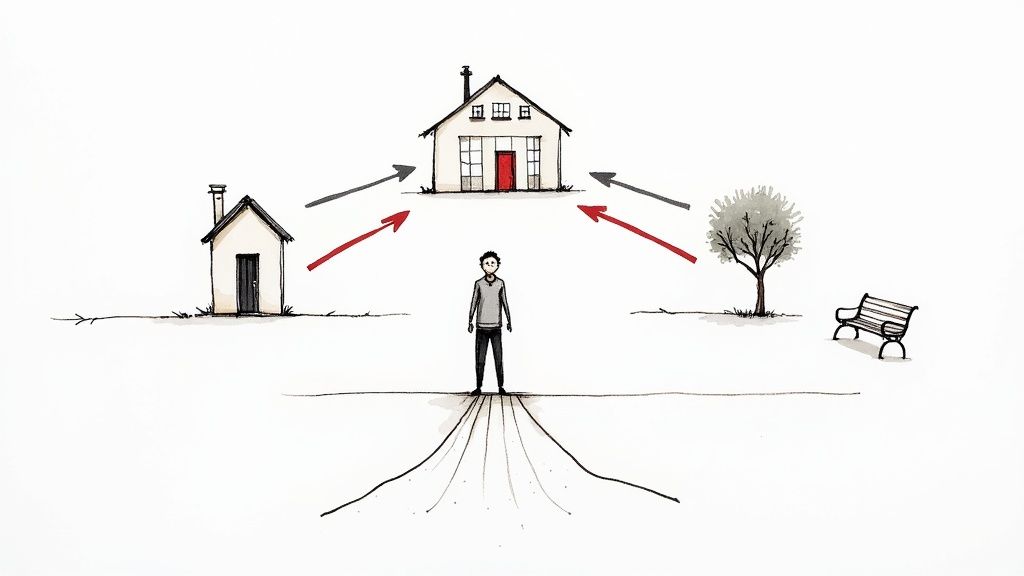
This model has been championed by several forward-thinking tech companies. Dropbox’s “Virtual First” policy, for instance, treats the office as a collaboration hub for specific, intentional gatherings rather than a daily workplace. Similarly, Atlassian’s “Team Anywhere” policy empowers teams to decide their own working arrangements, reflecting a deep trust in their ability to deliver results regardless of location.
Strategic Analysis
The core strategy behind the At-Will model is to attract and retain top talent by offering unparalleled flexibility. It shifts the focus from employee presence to employee output and well-being. By removing rigid location mandates, companies position themselves as highly desirable employers in a competitive market.
Key Insight: This model isn’t just about remote work; it’s a fundamental shift in corporate culture towards trust and results-oriented performance management. The office transforms from a default location into a purposeful destination for collaboration and connection.
Actionable Takeaways for Implementation
For companies considering this approach, success hinges on a robust support structure.
Rethink Office Space: Implement hot-desking and a reliable space-booking system. The office becomes a service, not a requirement.
Establish Clear Protocols: Define explicit communication standards, including expected response times for asynchronous channels like Slack or email.
Make the Office a Magnet: Create compelling reasons for employees to commute. Organize collaborative workshops, team-building events, and social gatherings that make in-person time valuable.
Invest in Asynchronous Tools: Foster strong asynchronous communication practices using project management software and shared documentation to ensure everyone stays aligned, regardless of their time zone or location. For more insights on roles that fit this structure, you can explore various hybrid jobs.
2. Fixed Hybrid Schedule Model
The Fixed Hybrid Schedule Model provides a predictable and structured approach by mandating specific days for in-office attendance and remote work. Organizations using this model typically require employees to be in the office 2-3 set days per week, such as Tuesday through Thursday, creating a consistent schedule that simplifies planning for both individuals and teams. This method aims to balance the benefits of in-person collaboration with the flexibility of remote work.
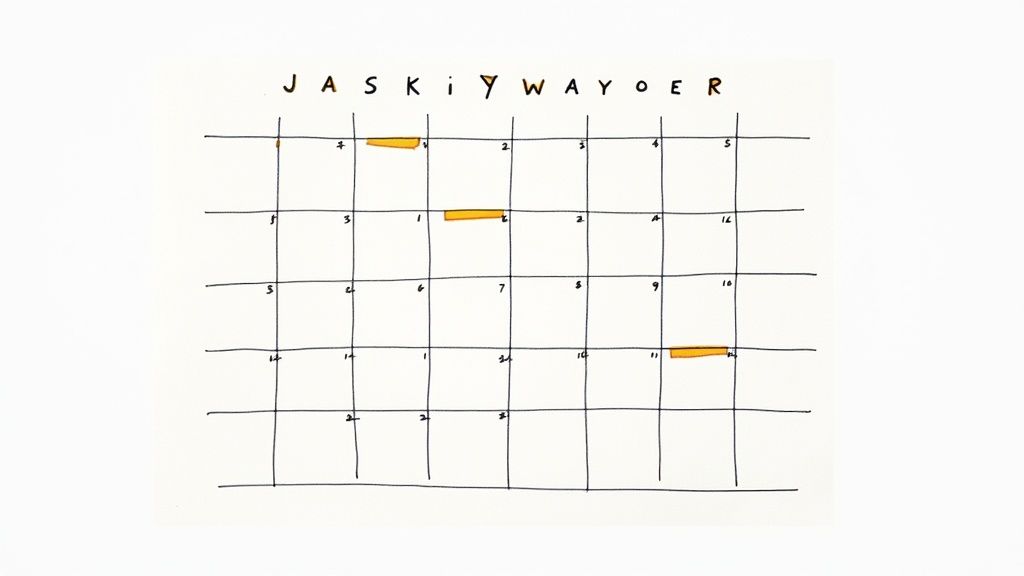
This model has been widely adopted by large corporations seeking to maintain a strong office culture. Apple, for instance, requires employees in the office on Tuesdays, Thursdays, and a third team-specific day. Similarly, Google has implemented a three-day-per-week office schedule to foster community and innovation, showcasing how established companies are using fixed hybrid work model examples to structure their return-to-office plans.
Strategic Analysis
The core strategy of the Fixed Hybrid Schedule Model is to guarantee critical face-to-face interaction while still offering a degree of flexibility. By setting specific “anchor days,” companies ensure that teams are physically present at the same time, maximizing opportunities for collaboration, spontaneous problem-solving, and cultural cohesion. It standardizes the employee experience and simplifies resource management, from office space allocation to scheduling company-wide events.
Key Insight: This model is designed to optimize the office for collaboration and the home for focus. It’s a structured compromise that preserves the social and creative benefits of a shared workplace while acknowledging employee demand for remote work.
Actionable Takeaways for Implementation
For organizations adopting a fixed schedule, clear communication and intentional planning are crucial.
Establish ‘Anchor Days’: Designate specific days (e.g., Tuesday-Thursday) when all or most employees are required to be present to maximize collaborative energy.
Align Schedules with Work: Structure the week so that in-office days are dedicated to meetings, workshops, and team projects, while remote days are reserved for deep, focused work.
Survey Your Teams: Before finalizing the schedule, survey employees to identify which days are most convenient, which can help increase buy-in and reduce friction.
Communicate with Clarity: Ensure the policy is clearly defined and communicated well in advance. Provide the business rationale behind the chosen days to foster understanding and alignment.
3. Manager-Scheduled Hybrid Model
The Manager-Scheduled Hybrid Model offers a decentralized approach, empowering individual team leaders to set in-office and remote work schedules for their direct reports. This framework allows managers to tailor work arrangements to specific team needs, project cycles, and collaborative requirements. Instead of a one-size-fits-all company policy, managers have the autonomy to decide which days are best for in-person collaboration, client meetings, or focused remote work.
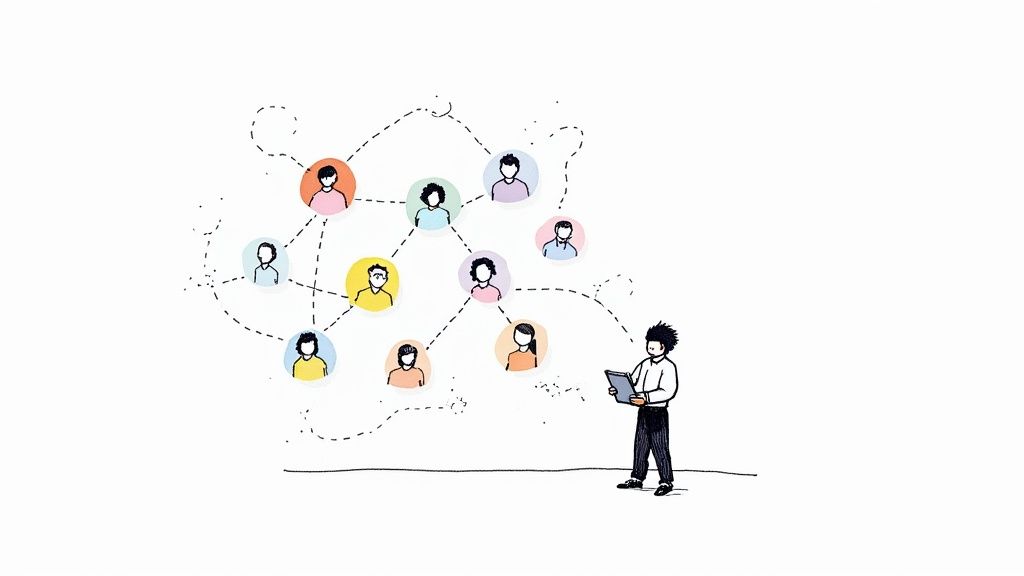
This model is prominent among large, diverse organizations where different departments have vastly different operational needs. Microsoft, for instance, allows managers to approve hybrid plans based on team roles and functions. Similarly, Amazon empowers directors to determine how their teams will work, and Salesforce has given managers the authority to decide if their teams should be in the office one to three days per week, reflecting a belief that those closest to the work know best.
Strategic Analysis
The strategy behind the Manager-Scheduled model is to balance organizational structure with team-level flexibility. It recognizes that the work of a software engineering team differs greatly from that of a sales team. By delegating scheduling decisions, companies can optimize productivity and collaboration at a granular level without imposing a rigid, and potentially ineffective, company-wide mandate.
Key Insight: This model shifts the responsibility for hybrid success from a central HR function to frontline leadership. It empowers managers to be strategic orchestrators of their team’s work environment, but it also requires that they are equipped with the right training and principles to make fair and effective decisions.
Actionable Takeaways for Implementation
Success with this model depends on providing managers with clear guardrails and support.
Establish a Clear Framework: Provide managers with guiding principles and a clear decision-making framework, such as minimum or maximum office days, to ensure a baseline of consistency.
Train Your Leaders: Equip managers with training on equitable scheduling, unconscious bias, and managing hybrid teams to prevent disparities and favoritism. This is a key part of effective remote work best practices.
Promote Transparency: Encourage managers to be transparent with their teams about the rationale behind scheduling decisions to build trust and ensure everyone understands the “why.”
Monitor for Equity: Regularly review scheduling data across teams to identify and address any inconsistencies or potential inequities in how the hybrid policy is being applied. For more detailed guidance, consider exploring best practices for hybrid and remote environments.
4. Split-Week Hybrid Model
The Split-Week Hybrid Model provides a structured and predictable schedule by dividing the workweek into designated in-office and remote portions. A common approach is to have employees in the office for the first part of the week (e.g., Monday-Wednesday) and working remotely for the latter part (Thursday-Friday). This creates a consistent rhythm that separates collaborative, in-person days from focused, independent workdays.

This model is particularly popular among large professional services and financial firms that need to balance deep-focus analytical work with client-facing collaboration. Industry leaders like PwC and Deloitte have implemented variations of this model, allowing teams to establish predictable schedules that maximize the benefits of both environments. Many technology startups also adopt a Tuesday-Thursday in-office block, concentrating high-intensity collaboration into a core set of days.
Strategic Analysis
The strategy behind the Split-Week model is to create structure and predictability, making it easier to plan collaborative work versus individual tasks. By setting clear expectations for when employees are physically present, companies can optimize their office space and resources while still offering a meaningful degree of flexibility. This approach is one of the more structured hybrid work model examples, designed for organizations that thrive on routine.
Key Insight: This model minimizes the coordination chaos of more flexible hybrid arrangements. Everyone knows who will be in the office and when, which simplifies scheduling for critical meetings, workshops, and team-building events, ensuring that in-person time is used effectively.
Actionable Takeaways for Implementation
For organizations aiming to implement a Split-Week model, deliberate planning is crucial.
Align Work Types to Locations: Proactively schedule collaborative work, major team meetings, and brainstorming sessions for in-office days. Reserve remote days for deep work, report writing, and individual tasks.
Create a Seamless Tech Experience: Ensure employees have the necessary technology and ergonomic setups at both locations to transition smoothly between office and home without losing productivity.
Offer a Morale-Boosting Perk: Consider making Friday a guaranteed remote day. This predictable three-day weekend start can significantly improve employee morale and work-life balance.
Build in Limited Flexibility: While the structure is key, allow for occasional swaps or exceptions to accommodate personal appointments or life events. This shows trust and prevents the policy from feeling overly rigid.
5. Role-Based Hybrid Model
The Role-Based Hybrid Model customizes work arrangements according to specific job functions and responsibilities, rejecting a one-size-fits-all policy. Under this framework, hybrid schedules are determined by the nature of the work itself, considering factors like necessary client interaction, access to specialized on-site equipment, or the need for close-quarter team collaboration. For instance, customer-facing sales teams may be required in-office more frequently, while software developers might enjoy greater remote flexibility.
This tailored approach is common in large, complex organizations. IBM has long used role-specific guidelines to manage its global workforce. Similarly, major financial institutions often require traders to be on-site due to compliance and technology needs, while allowing financial analysts more remote days. Healthcare systems also adopt this model, with different policies for clinical staff who require physical presence versus administrative staff who can work remotely.
Strategic Analysis
The core strategy of the Role-Based model is to optimize productivity and operational effectiveness by aligning the work environment with the specific demands of each job. It acknowledges that not all roles benefit equally from remote work and seeks to maximize the advantages of both in-person and remote settings where they are most impactful. This pragmatic approach balances employee desires for flexibility with non-negotiable business requirements.
Key Insight: This model focuses on operational logic rather than universal employee choice. Success depends on clear, transparent, and equitable justification for why certain roles have different flexibility levels, preventing perceptions of unfairness or a two-tiered system.
Actionable Takeaways for Implementation
For companies adopting this model, communication and clear criteria are paramount.
Document Clear Criteria: Develop and share a rubric that outlines why roles are categorized differently. Base decisions on objective factors like client needs, security protocols, or equipment access.
Focus on Equity, Not Equality: Ensure fairness within similar role categories, but communicate that different jobs have different needs. Frame the conversation around operational requirements, not employee privileges.
Provide Compensating Benefits: For roles requiring more on-site presence, consider offering other perks like commuter benefits, subsidized meals, or enhanced professional development opportunities to maintain morale.
Create Cross-Functional Connections: Intentionally design in-person events and collaborative projects that bring together employees from different role categories to foster a unified company culture. For more information, you can explore various jobs with flexibility.
6. Office-First Hybrid Model
The Office-First Hybrid Model prioritizes in-person work as the primary mode of operation while offering limited, structured flexibility. Employees are typically expected to be in the office for the majority of the week, often four days, with the option to work remotely for one designated day. This approach is designed to preserve the traditional benefits of an office environment, such as spontaneous collaboration, strong team cohesion, and cultural immersion, while still providing a small degree of flexibility.
This model is heavily favored by companies in sectors where in-person oversight, security, and established traditions are paramount. Goldman Sachs, under CEO David Solomon, has been a vocal proponent, emphasizing an “apprenticeship culture” that they believe thrives on face-to-face interaction. Similarly, JPMorgan Chase has required most of its workforce to return to the office, reflecting a belief that innovation and company culture are best fostered in person.
Strategic Analysis
The strategy behind the Office-First model is to retain the perceived advantages of a centralized workplace while appeasing the demand for some flexibility. It aims to maintain high levels of managerial oversight, reinforce a traditional corporate culture, and facilitate the kind of serendipitous interactions that drive certain types of innovation. This makes it one of the more conservative hybrid work model examples, acting as a cautious step away from a fully office-based structure.
Key Insight: This model treats remote work as a specific, limited perk rather than a fundamental operational shift. The office remains the center of gravity for culture, collaboration, and career progression, with remote days serving as a valve for focus time or personal convenience.
Actionable Takeaways for Implementation
For organizations adopting this model, the key is to make office time meaningful and remote time productive.
Structure Remote Days: Clearly define which day(s) are available for remote work. Encourage employees to use this time for deep, focused tasks that don’t require immediate collaboration.
Enhance the Office Experience: Since employees are present most of the time, invest in amenities, technology, and spaces that make the office an attractive and highly productive environment.
Communicate Expectations Clearly: Be upfront during the hiring process and internal communications about the in-office requirements to avoid misalignment.
Create In-Office Magnets: Designate office days for critical team meetings, brainstorming sessions, and company-wide events to maximize the value of face-to-face interaction. You can learn more about how this model aligns with current remote work trends and employee expectations.
7. Remote-First Hybrid Model
The Remote-First Hybrid Model establishes remote work as the primary, default mode of operation. Unlike other hybrid work model examples, this approach designs all company processes, culture, and communication to serve a distributed workforce first. The physical office is not a requirement but an optional resource, available for employees who prefer it for collaboration, socializing, or focused work.
This model has been successfully pioneered by tech leaders who were remote long before the pandemic. GitLab has operated as a fully remote company with no physical offices, documenting its processes extensively in a public handbook. Shopify adopted a “digital by default” policy, and Coinbase shifted to a remote-first structure to decentralize its operations and access a wider talent pool. These companies ensure location does not create a disadvantage.
Strategic Analysis
The core strategy of the Remote-First model is to create a level playing field for all employees, regardless of location. It aims to eliminate proximity bias by ensuring that opportunities, information, and influence are accessible to everyone equally. This approach fundamentally decouples work from a specific geographic location, unlocking access to a global talent market and enabling a more diverse workforce.
Key Insight: This model isn’t just about allowing remote work; it’s about building an entire operating system around it. The office transitions from the company’s headquarters to an amenity, a perk for those who choose to use it, rather than the center of the corporate universe.
Actionable Takeaways for Implementation
For organizations aspiring to become truly remote-first, the commitment must be systemic.
Document Everything: Create a comprehensive and accessible central source of truth (like a company wiki or handbook). This ensures all employees have equal access to information.
Invest in Remote Infrastructure: Provide home office stipends, top-tier collaboration software, and necessary equipment to create an effective and ergonomic workspace for every employee.
Design Offices for Collaboration: Repurpose physical spaces as intentional hubs for team gatherings, workshops, and social events, not rows of individual desks.
Promote Asynchronous Communication: Establish clear norms for asynchronous tools to reduce meeting fatigue and accommodate different time zones. Explore what a remote-first company looks like and how to learn more about what remote-first means.
7 Hybrid Work Model Comparison
| Hybrid Model | Implementation Complexity 🔄 | Resource Requirements ⚡ | Expected Outcomes 📊 | Ideal Use Cases 💡 | Key Advantages ⭐ |
|---|---|---|---|---|---|
| At-Will Hybrid Model | Moderate: requires strong digital tools and self-management | High: robust digital infrastructure and communication platforms | High flexibility, employee autonomy, variable office occupancy | Tech companies, creative agencies, autonomous and digitally mature teams | Maximum employee flexibility, high satisfaction, attracts top talent |
| Fixed Hybrid Schedule Model | Low: structured schedules set company-wide | Moderate: predictable office resource planning | Consistent collaboration days, easier management | Large orgs needing routine, strong collaborative culture | Easy planning, reliable teamwork days, reduces decision fatigue |
| Manager-Scheduled Hybrid Model | Moderate to High: depends on managerial fairness and guidelines | Moderate: variable, depends on manager decisions | Tailored team schedules, possible inconsistency | Organizations with diverse roles, strong middle management | Customized team dynamics, responsive to projects |
| Split-Week Hybrid Model | Low to Moderate: fixed consecutive office/remote days | Moderate: routine office resource use | Clear work mode boundaries, predictable rhythm | Professional services, structured collaborative and solo work | Predictable, balanced work-life, momentum in office days |
| Role-Based Hybrid Model | High: complex policy administration and communication | Moderate to High: varies by role requirements | Optimized productivity by role, potential inequality | Diverse job functions, industries with distinct role needs | Role-specific efficiency, reduces unnecessary office use |
| Office-First Hybrid Model | Low: traditional in-office focus with limited remote | High: significant office space and amenities | Strong culture, spontaneous collaboration | Traditional industries, compliance-heavy, mentorship cultures | Strong team cohesion, easy onboarding, preserves office culture |
| Remote-First Hybrid Model | High: requires cultural shift, tech investment | Moderate: less office space, more tech tools | Inclusive remote-first environment, global reach | Tech and digital-native companies, distributed teams | Maximum flexibility, global talent, reduced real estate costs |
Crafting Your Perfect Hybrid Strategy
As we’ve explored through these diverse hybrid work model examples, from the flexibility of At-Will models to the structure of Fixed Schedules, one truth becomes clear: there is no universal solution. The journey to a successful hybrid workplace is not about finding a perfect template to copy. Instead, it’s about thoughtful, intentional design tailored to your organization’s unique DNA.
The most successful companies, like those we’ve analyzed, don’t just pick a model; they build a framework based on core principles. They understand that a hybrid strategy is a living system, not a static policy set in stone. It requires continuous feedback, a willingness to iterate, and a deep commitment to equity.
Synthesizing the Key Lessons
The critical takeaway from these real-world examples is the shift from prescription to principle. Rather than fixating on which days employees are in the office, leading companies focus on why they should be there. This intentional approach ensures that office time is purposeful, dedicated to collaboration, mentorship, and culture-building activities that are genuinely enhanced by in-person interaction.
Reflecting on the models, several core themes emerge:
Intentionality Over Mandates: The most effective strategies are designed to achieve specific business outcomes, whether that’s fostering innovation, improving work-life balance, or attracting top talent. They avoid arbitrary rules in favor of clear, goal-oriented guidelines.
Equity as a Foundation: A successful hybrid model ensures fairness in opportunity, visibility, and access to resources for all employees, regardless of their location. This involves investing in technology, training managers on leading distributed teams, and redesigning processes to be location-agnostic.
Empowerment Through Trust: From manager-led schedules to at-will flexibility, the common thread is a culture of trust. Empowering teams and their leaders to determine what works best for their specific functions drives engagement and accountability far more effectively than a top-down directive.
Your Actionable Path Forward
Building your own hybrid model can feel daunting, but you can start with a strategic, phased approach. Begin by auditing your organization’s needs. Survey your employees to understand their preferences and challenges, and engage managers to identify what their teams require to be successful.
Next, define the “why” behind your model. What are you trying to achieve? Is it greater employee autonomy, reduced operational costs, or access to a wider talent pool? Your goals will be the north star that guides your design choices. Finally, launch a pilot program with a specific department or team. This allows you to test your assumptions, gather data, and refine your approach before a company-wide rollout. Mastering these concepts is no longer a competitive advantage; it’s a fundamental requirement for building a resilient, agile, and people-centric organization poised for future success.
Finding a company that aligns with your ideal work style is the next crucial step. Explore thousands of opportunities with forward-thinking organizations on Remote First Jobs. Discover roles at companies that have mastered the art of hybrid work, and find a workplace where you can truly thrive. Visit Remote First Jobs to start your search today.