Understanding What’s Really Happening With Remote Work
Managing distributed teams effectively requires a deep understanding of the current remote work environment. It’s more than simply letting employees work from home; it’s about a fundamental change in how we approach work, communication, and teamwork. Traditional management strategies often fail in this new environment because they rely on outdated ideas about being present in the office and centralized control. This requires a transition to outcome-focused management, where the focus is on results, not hours worked.
This change has been significantly sped up by recent global events. The rise of distributed teams, for example, has been greatly influenced by the COVID-19 pandemic. Since 2020, remote work has become common, not an exception. By 2025, it’s projected that roughly 22% of the U.S. workforce, about 32.6 million Americans, will be working remotely. This shift has pushed companies to adapt to new management strategies that prioritize flexibility and collaboration. Find more detailed statistics here: The State of Remote Work 2025. This rapid adoption highlights the need for leaders to understand the details of managing a workforce that isn’t physically together.
Different Models of Distributed Teams
Organizations looking ahead are exploring various models to optimize their distributed work arrangements. These range from fully remote setups, with no central office, to hybrid models combining remote work and in-office collaboration. Understanding the pros and cons of each model is key to selecting the best fit for your team and business objectives.
Fully Remote: Offers access to a larger talent pool and reduces overhead, but demands strong communication and culture-building strategies.
Hybrid: Combines the advantages of in-person interaction and remote flexibility but needs careful planning to avoid creating an uneven playing field where remote workers feel left out.
The Culture Shift
Successfully managing distributed teams also means cultivating a culture of trust, autonomy, and accountability. This involves giving employees the power to manage their own time and workload, establishing clear expectations and metrics, and promoting open communication. You might be interested in: How to master remote work culture.
Traditional performance management systems, built around observation and physical presence, are no longer effective. Instead, managers need to concentrate on outcomes. This involves giving regular feedback and support, and acknowledging contributions based on results rather than visibility. This change in thinking is critical to realizing the full benefits of a distributed team.
Communication That Actually Connects Your Team

Effective communication is the foundation of any successful team. This becomes even more important when managing a distributed team. The casual, everyday interactions of a physical office are missing, requiring leaders to proactively create systems and structures that support clear and consistent communication across various locations and time zones.
Asynchronous Vs. Synchronous Communication: Finding the Right Balance
One of the key challenges of managing distributed teams is determining when to communicate in real-time (synchronously) and when to use delayed communication (asynchronously). Synchronous communication, like video conferencing through platforms like Zoom, is ideal for brainstorming, complex discussions, and decision-making.
However, scheduling these meetings across multiple time zones can be difficult and disruptive. Asynchronous methods, such as email, instant messaging platforms like Slack, and project management tools like Asana, allow team members to work at their own pace and respond when ready.
This flexibility minimizes interruptions but can cause delays if not managed properly. Finding the right balance between these two communication styles is essential for team productivity and effective collaboration.
Structuring Virtual Meetings for Maximum Engagement
Virtual meetings can often be unproductive and time-consuming. To maximize synchronous communication, effective meeting structure is vital. Start with a clear agenda distributed beforehand, allowing participants to prepare.
During the meeting, allocate specific time slots for each topic to keep discussions focused. Actively engaging participants through questions and interactive elements can prevent attendees from becoming disengaged.
Building a Culture of Transparency and Documentation
Transparency is paramount for building trust and ensuring alignment within a distributed team. Regular updates and open access to information prevent misunderstandings and empower team members. This doesn’t mean overwhelming the team with constant communication.
Instead, implement a well-organized and easily navigable documentation system. A centralized knowledge base, accessible to all, streamlines information sharing and reduces the need for repetitive questions. Distributed teams often rely on digital collaboration tools like Microsoft Teams to manage tasks and communication across different time zones.
Creating a culture of open communication, combined with readily available information, builds a sense of connection and shared purpose, even when team members are geographically separated. You can explore further resources on remote work, such as The State of Remote Work 2025 and How to master effective remote work training.
Making Hybrid Work Actually Work For Everyone
Hybrid work isn’t just about splitting time between home and the office. It’s about a fundamental shift in how we think about work, focusing on systems that prioritize both productivity and employee well-being. This means companies need to create flexible structures that meet individual needs while keeping the team working together effectively. This can be tough, but many companies are finding innovative solutions that get results.
Designing Workflows For The Hybrid Model
One key to successful hybrid work is designing workflows that support both in-office and remote employees. This requires careful planning of how tasks are assigned, tracked, and completed. For example, teams might use a project management system like Asana to allow everyone visibility on progress and deadlines, no matter where they are. Clear communication protocols are also essential. This ensures everyone stays informed and connected. For more insights, check out this helpful resource: How to master remote employee engagement. These deliberate workflows build a solid foundation for a productive hybrid team.
Location-Independent Management: A Key To Success
Managing distributed teams well means adopting a location-independent management style. Focus on results, not physical presence. This often means rethinking traditional performance measurements. Instead of tracking hours worked, consider evaluating employees on the quality and timeliness of their work. A key trend is the rise of hybrid work models, allowing employees to divide their time between home and office, using digital workflows for seamless collaboration. Hybrid work is no longer a temporary solution, but a long-term strategy. Learn more about future workforce trends: 2025 Workforce Trends. This adaptability is vital for navigating the changing world of work.
Avoiding Common Hybrid Work Pitfalls
While hybrid work has many advantages, it’s important to be mindful of potential problems. One common mistake is unintentionally favoring in-office employees, giving them greater access to information or opportunities. Maintaining team cohesion can also be a challenge when some members are physically present and others aren’t. Proactively addressing these issues is crucial for creating a truly fair and productive hybrid work environment. This means fostering inclusivity and ensuring all employees feel valued and connected, regardless of location.
Tools That Transform How Your Team Collaborates
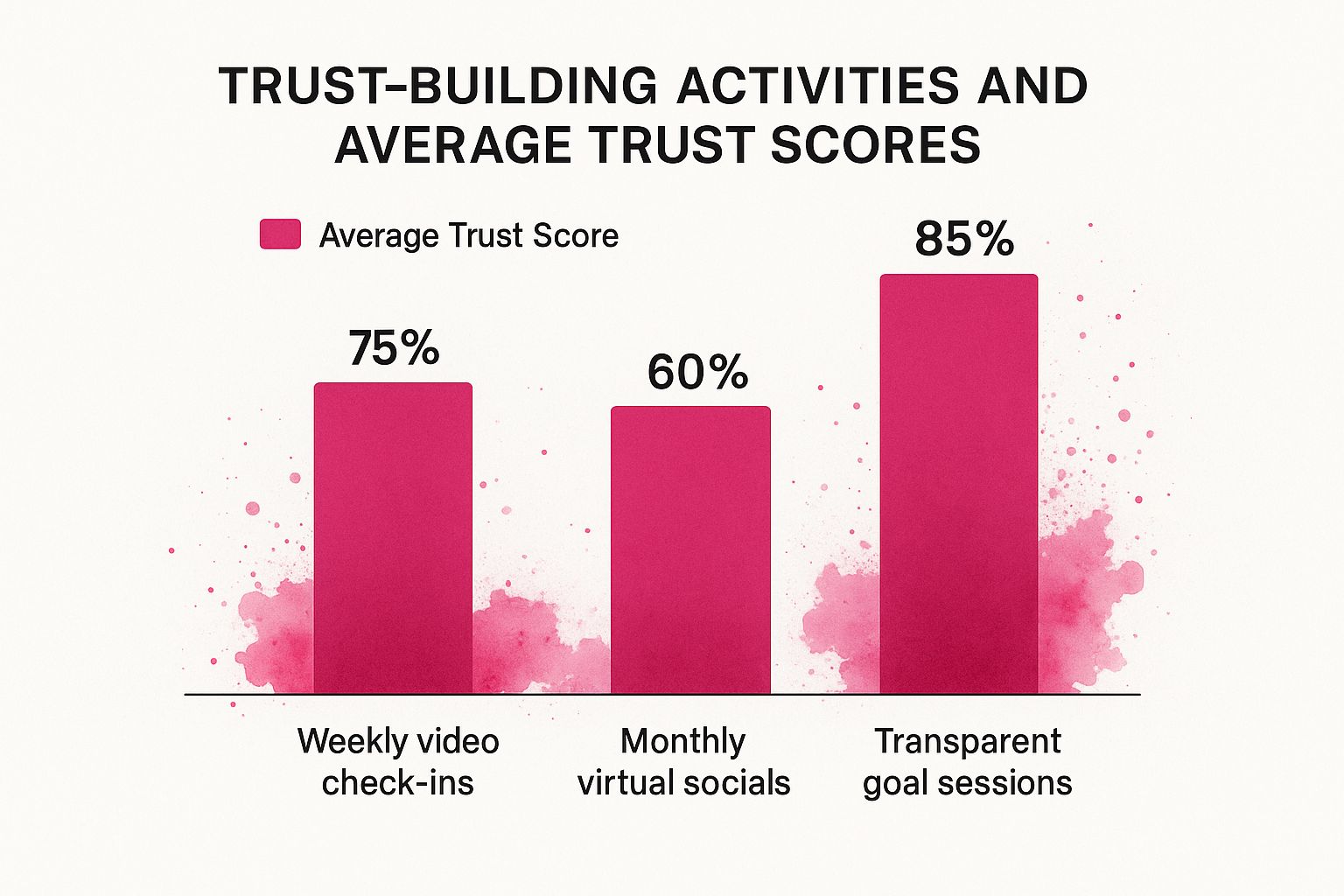
This chart illustrates how different activities impact trust-building in distributed teams. Weekly video check-ins result in average trust scores of 75%, monthly virtual socials achieve 60%, and transparent goal sessions reach 85%. Open communication about goals and objectives clearly fosters the strongest trust within these teams. This emphasizes the importance of transparency in a remote work setting. The right tools are also essential for distributed team success.
It’s about going beyond standard software and choosing technology that genuinely supports a distributed workforce. This means prioritizing tools that enhance collaboration, communication, and overall productivity.
Project management platforms, like Asana, Trello, and Monday.com, are vital for keeping everyone on the same page. These platforms offer features such as task assignments, progress tracking, and file sharing. This streamlines workflows and boosts visibility across the team.
Communication tools specifically designed for distributed teams are equally important. Think of platforms like Slack, Microsoft Teams, and Google Chat. These provide instant messaging, video conferencing, and file sharing, enabling seamless communication across various locations and time zones. These tools become the virtual office for distributed teams. You might also find our guide on remote work tools helpful: Our guide on remote work tools.
Emerging Technologies and AI in Collaboration
The technology a distributed team uses has a big impact on their success, and emerging technologies continue to change how these teams work together. In 2025, hyper-personalized collaboration tools, especially those powered by AI, are gaining popularity. For more information on distributed software development teams, see this resource. These tools adapt to each team member’s preferences, time zones, and productivity patterns, minimizing distractions and maximizing efficiency.
AI-powered meeting schedulers, for instance, can automatically determine the optimal meeting times across different time zones. Intelligent assistants can help manage tasks and prioritize important communications. This shift toward personalization improves productivity and work-life balance for distributed teams.
Security Considerations for Distributed Teams
Security is a primary concern for distributed teams. With team members accessing company systems and data from various networks and locations, the potential for cyberattacks and data breaches increases.
Robust security measures, like two-factor authentication, virtual private networks (VPNs), and strong password policies, are essential. Educating team members about cybersecurity best practices is also critical. This includes training on how to spot phishing scams, create secure passwords, and maintain devices with up-to-date antivirus software. These precautions build a secure digital workspace and protect sensitive company information.
To help teams choose the right tools, we’ve compiled a comparison table:
Essential Tool Categories for Distributed Teams A comprehensive comparison of must-have tool categories with features, benefits, and use cases for distributed team management.
| Tool Category | Primary Function | Key Features | Best For | Integration Level |
|---|---|---|---|---|
| Project Management Platforms | Task Management & Collaboration | Task assignment, progress tracking, file sharing, Kanban boards | Teams needing to organize projects, track progress, & collaborate on deliverables | High, integrates with communication, file sharing, & other tools |
| Communication Tools | Real-time Communication & Collaboration | Instant messaging, video conferencing, file sharing, screen sharing | Teams needing to communicate quickly & effectively across different locations & time zones | High, integrates with project management, calendar, & other productivity tools |
| Security Software | Protecting sensitive data & systems | VPN, two-factor authentication, encryption, antivirus | All distributed teams to ensure data security & prevent cyberattacks | Medium, often integrates with other security tools & platforms |
| AI-Powered Collaboration Tools | Personalized & Efficient Workflows | Automated scheduling, intelligent assistants, personalized insights | Teams looking to optimize productivity & improve work-life balance | Varies, integration is evolving rapidly |
This table summarizes the key tools needed for effective distributed team management. From project management and communication to essential security measures and emerging AI-powered solutions, selecting the right tools empowers teams to thrive in a distributed work environment.
Managing Performance Without Micromanaging People
The biggest shift in managing distributed teams isn’t about the latest tech—it’s about moving from tracking activity to prioritizing outcomes. This new focus requires trust, clearly defined expectations, and a results-driven approach. Instead of counting hours in the office, successful distributed team leaders concentrate on the value each person brings. This shift can be tricky, but it’s vital for unlocking the true power of a distributed team. Learn more about effective strategies in our article on How to master managing remote teams.
Establishing Clear Expectations and Metrics
Effective performance management for distributed teams starts with setting crystal-clear expectations. This begins with well-defined roles and responsibilities. Every team member needs to understand how their individual work contributes to the overall team goals.
Measurable metrics are also essential for objective performance evaluations. These metrics should align directly with team objectives and provide concrete ways to track progress and measure success. For instance, instead of tracking a developer’s coding hours, focus on the number of features successfully shipped.
Accountability Systems That Empower
Accountability is crucial, but it shouldn’t feel oppressive. Effective accountability systems empower distributed teams. Regular check-ins focused on progress and obstacles create opportunities for support and feedback. These check-ins should be collaborative and solution-oriented, providing team members with the resources they need to succeed. Project management software offers a great platform for transparent progress tracking and open communication.
Performance Conversations That Fuel Growth
Performance conversations should be ongoing dialogues, not just annual reviews. Regular feedback, both positive and constructive, helps team members understand their strengths and areas for improvement. These discussions should be future-focused, emphasizing growth and continuous improvement. This fosters a culture of learning and development. Recognizing and celebrating accomplishments, big or small, reinforces positive behaviors and boosts morale.
Building Trust and Ownership
Trust is the foundation of any successful distributed team. Managers who trust their team members to manage their own time and workload foster a sense of ownership and accountability. This autonomy leads to a more engaged and productive team.
Offering flexibility in schedules and locations demonstrates respect for individual needs and promotes a healthy work-life balance. This flexibility, paired with clear expectations and open communication, builds a strong, thriving distributed team.
Building Real Connection In A Virtual World
Creating a genuine team culture in a distributed setting takes more than just good intentions. It requires a well-defined strategy. Successfully managing distributed teams hinges on fostering connections and engagement across geographical distances. This means understanding the unique challenges inherent in virtual work and implementing the right strategies to build a strong sense of community.
Virtual Team-Building: Finding What Clicks
Team-building activities can be incredibly effective, but not all virtual activities are created equal. Some, like online escape rooms or virtual coffee breaks, can be engaging and help build camaraderie. Others, however, might not land well. The key is to choose activities that align with your team’s interests and encourage active participation.
This might involve polling your team members to understand their preferences. You can also experiment with different formats to find what resonates best. Maybe a virtual cooking class is a hit, or perhaps a team-based online game sparks friendly competition.
Recreating the Water Cooler Moment
One of the biggest hurdles in managing distributed teams is the absence of spontaneous interactions that happen naturally in a physical office. These casual conversations are vital for building relationships and sparking new ideas. Therefore, creating similar opportunities for connection in a virtual environment is essential.
Consider setting up dedicated Slack channels for non-work discussions. Hosting virtual social events, like online game nights or movie watch parties, can also be a great way to connect. Encouraging virtual coffee breaks between team members can foster more personal connections.
Smooth Onboarding From Day One
Onboarding new team members in a distributed environment requires a more structured approach than traditional methods. Clearly defined processes and easily accessible resources are key. This could involve creating a comprehensive onboarding document, assigning a mentor to guide new hires, or utilizing a project management tool like Asana to track onboarding tasks.
Regular check-ins are also essential. These check-ins ensure new hires feel supported, connected, and have a clear understanding of their role and responsibilities. A smooth onboarding experience sets the stage for a positive and productive working relationship.
Cultivating Culture Beyond the Office Walls
Successfully managing distributed teams also means nurturing a strong cultural identity, even without a shared physical space. This involves consistently communicating core values, celebrating team wins, and creating opportunities for team members to connect personally.
Doing this fosters a sense of belonging and helps maintain a consistent company culture across different locations. This unified culture helps attract and retain top talent, ultimately contributing to the company’s long-term success.
To help illustrate how to cultivate a thriving remote team culture, consider the following strategies:
Culture Building Strategies for Distributed Teams
Proven strategies for building strong team culture in distributed environments, comparing traditional vs. distributed approaches
| Strategy | Implementation Method | Frequency | Expected Outcome | Success Metrics |
|---|---|---|---|---|
| Regular Team Meetings | Video conferencing using platforms like Zoom or Google Meet | Weekly/Bi-weekly | Enhanced communication and project alignment | Increased project completion rates, team survey results |
| Social Events | Virtual happy hours, online games, team lunches | Monthly/Quarterly | Stronger team bonds, improved morale | Increased employee engagement, positive feedback |
| Recognition & Rewards | Public acknowledgment, gift cards, bonuses | As deserved | Increased motivation and productivity | Improved performance metrics, employee retention rates |
| Casual Communication Channels | Dedicated Slack channels, virtual water cooler | Ongoing | Fostering informal connections, improved team cohesion | Increased team interaction, positive feedback |
| Onboarding & Mentorship | Structured onboarding process, assigned mentors | During initial onboarding | Faster integration of new hires | Improved new hire retention, faster time to productivity |
The table above showcases various strategies, from regular team meetings using video conferencing tools like Zoom or Google Meet to establishing casual communication channels and implementing robust onboarding and mentorship programs. Tracking success metrics like project completion rates, employee engagement, and new hire retention can provide valuable insights into the effectiveness of your culture-building efforts.
By implementing these strategies and continuously adapting to the evolving needs of a distributed team, companies can cultivate a thriving virtual work environment that fosters connection, productivity, and overall success.
Scaling Without Losing What Makes You Great
Scaling a distributed team comes with its own set of hurdles. While growth is exciting, rapid expansion can strain the very things that made your team successful in the first place. Maintaining a strong company culture, consistent performance, and streamlined communication gets trickier as your team spreads across different locations and time zones. This section offers guidance for navigating this next stage of growth.
Structuring for Scale: Avoiding Bureaucratic Bottlenecks
As your team grows, a nimble structure is key. Avoid overly complex hierarchies, which can stifle communication and slow down decision-making. Consider a pod-based structure, where small, self-managing teams focus on specific projects or functions. This fosters autonomy and accountability.
Clear communication pathways between pods and leadership are also essential. This ensures everyone stays aligned with overall company goals and prevents information silos. A decentralized structure allows for quicker responses to market changes and empowers individuals to take ownership.
Processes That Grow With You
Existing processes often break down under the pressure of rapid growth. This doesn’t mean creating endless red tape. Instead, focus on building scalable processes that adapt as your team expands.
For example, document key workflows and decision-making processes in a central knowledge base. This maintains consistency as new team members join. Also, consider automating repetitive tasks. This frees up team members to focus on more strategic work. This approach ensures efficiency without sacrificing agility. Many organizations are also exploring outsourced teams to scale operations efficiently. This trend toward hybrid and outsourced models is fueled by the need for agility and cost savings. Discover more about workforce trends here.
Maintaining Standards Across the Miles
Maintaining consistent quality and performance across a larger, distributed team requires clear standards. Document best practices for each role, and create centralized training resources.
Regular virtual check-ins and peer feedback sessions help maintain quality control and identify areas for improvement. These check-ins offer opportunities for coaching and mentorship, promoting continuous development even across distances. This collaborative approach keeps everyone aligned and working toward shared goals.
Leading Through Growth: Developing Distributed Leaders
As your team grows, developing strong distributed leadership is critical. Equip managers with the skills to lead remote teams effectively. This includes training in communication, trust-building, and outcome-based management.
Encourage mentorship programs and peer-to-peer learning to build leadership capacity within the team. Empowering distributed leaders to make decisions and resolve issues independently streamlines operations and fosters a sense of ownership. Investing in leadership development ensures continued success as your team scales.
Find the best remote talent and scale your distributed team effectively with Remote First Jobs. Connect with top remote professionals today!