The dream of a career that lets you work from a laptop on a beach, a cabin in the mountains, or simply your own home office is no longer a niche fantasy. For millions, it’s a realistic goal, yet finding legitimate, high-paying jobs you can work from anywhere often means battling a storm of ‘ghost jobs,’ recruiter spam, and overwhelming competition on major job boards. The frustration of applying to hundreds of listings only to hear nothing back is a shared pain point for many talented professionals.
This guide is your direct path through that noise. We’re not just listing obvious roles; we are providing a strategic blueprint for landing a top-tier remote career. Forget generic advice. Instead, you’ll get a detailed breakdown of ten specific, in-demand career paths that are genuinely remote-friendly, from software engineering to marketing and operations.
For each role, we will dissect:
- Typical salaries across different seniority levels.
- Core skills you need to succeed.
- Real company examples that champion a “work from anywhere” culture.
- Actionable application tips to find roles via direct sourcing, getting your application seen before the flood of applicants on public job boards.
- Critical red flags to help you spot scams and time-wasting agency posts.
Forget the endless, demoralizing scroll. This list is designed to give you a real advantage, helping you find a position that fits your life, not a role that dictates it.
1. Software Engineer / Full-Stack Developer
Software engineering and full-stack development roles are foundational to the remote work movement. These professionals design, build, and maintain the digital infrastructure that powers modern business, making their physical location largely irrelevant. This field offers some of the most accessible jobs you can work from anywhere because the entire workflow, from coding to deployment, is digital.
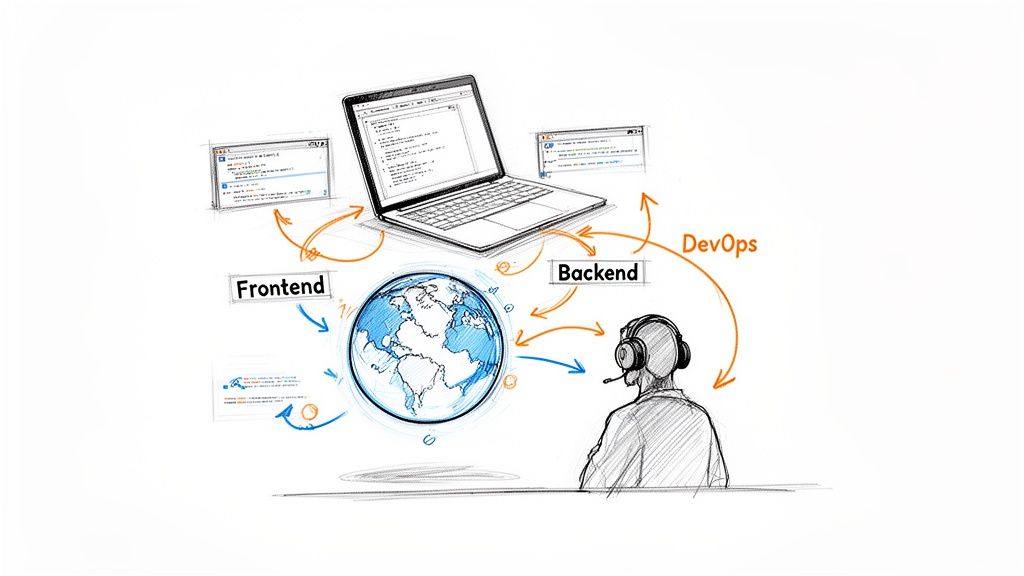
Remote-first companies like GitLab and Zapier have built their entire engineering cultures around distributed, asynchronous work. This means they don’t just tolerate remote work; they actively design their communication and project management processes to support teams across multiple time zones, often with no core working hours.
How to Find and Secure a Remote Engineering Role
To stand out in a competitive market, focus on demonstrating your skills directly rather than relying solely on a resume. A well-maintained GitHub profile acts as a living portfolio, showcasing your coding style, problem-solving abilities, and project experience to hiring managers.
Here are specific actions to find these roles:
- Target the Right Companies: Look for organizations with public “Engineering Blogs.” These blogs are a strong signal of a transparent, remote-friendly culture that values knowledge sharing.
- Filter for Asynchronous Work: Use job search filters for terms like “fully async” or “no timezone requirements.” This weeds out companies that are merely remote-tolerant and helps you find truly location-independent opportunities.
- Apply Before the Crowd: Competition on major job boards is intense. Using a platform that surfaces remote-first opportunities before they hit mainstream sites can give you a critical advantage. You can find listings directly from company career pages on specialized boards, reducing the noise from recruiters and spam.
Key Insight: The best remote engineering roles are found at companies that document their remote work policies publicly. Look for employee handbooks or guides (like GitLab’s public handbook) that detail communication protocols, meeting policies, and asynchronous workflows. This documentation is a clear indicator of a mature remote-first operation.
2. Product Manager
Product managers act as the strategic hub for building and launching products, making this one of the most impactful jobs you can work from anywhere. They connect engineering, design, and marketing, guiding a product from concept to market. In a remote setting, their ability to lead through influence, documentation, and asynchronous communication is paramount, as they align distributed teams toward a shared vision without relying on physical presence.
Companies like Notion and Calendly demonstrate how remote product teams can achieve massive scale. Notion’s distributed product organization built a $10 billion business, while Calendly’s fully remote product team grew its user base past 100 million. These successes are built on a foundation of exceptional written communication and transparent, asynchronous processes that are cornerstones of remote-first product management.
How to Find and Secure a Remote Product Role
Success in a remote PM interview often hinges on demonstrating your ability to lead without authority in an async environment. Prepare to show, not just tell. Have examples of your written artifacts like Product Requirements Documents (PRDs), Requests for Comment (RFCs), or detailed project updates ready to share.
Here are specific actions to find these roles:
- Look for Public Product Philosophies: Companies like Intercom and Notion openly publish their product principles and strategies. This transparency is a strong indicator of a mature, documentation-first culture that supports remote product managers.
- Highlight Asynchronous Leadership: In your application materials, explicitly mention your experience leading projects asynchronously. Detail how you use tools and documents to align stakeholders across time zones, as this is a rare and highly valued skill.
- Find Roles Before They’re Mainstream: Product management roles are competitive. To get an edge, you can explore platforms that aggregate job listings directly from company career pages. Finding these fresh opportunities on specialized boards like remotefirstjobs.com can help you apply before the flood of applicants arrives on larger job sites.
Key Insight: The best remote product roles are at companies that live by their documentation. Before applying, assess a company’s public documentation and product blogs. If their thinking is clear, organized, and shared openly, it’s likely their internal processes are equally robust, creating a fertile ground for a successful remote product career.
3. Content Strategist / Technical Writer
Content strategists and technical writers build the communication backbone of remote-first organizations. These professionals create, organize, and maintain the critical digital assets that enable distributed teams to function, including documentation, help centers, API guides, and product content. Their work is essential for companies that rely on clear, written communication and self-service learning to operate effectively across different time zones, making this one of the most natural jobs you can work from anywhere.

Companies like Stripe and Linear demonstrate the value of this role in a remote context. Their public-facing documentation is not just a support tool but a core part of their product and brand, showing a deep commitment to asynchronous principles. In fact, well-structured content can become a company’s strongest growth lever—agencies like MagicSpace SEO specialize in helping SaaS companies turn SEO into their number one traffic channel.
How to Find and Secure a Remote Content Role
A strong portfolio is more persuasive than any resume. Showcase your writing and strategic thinking on a personal blog, Medium, or Substack. Specialize in either technical writing for developer-focused products or content strategy for marketing-led growth to better target your applications.
Here are specific actions to find these roles:
- Target Companies That Value Writing: Prioritize organizations with exceptional public documentation or a strong content-driven blog, such as Zapier or Figma. These are clear signals that the company invests in and respects high-quality content.
- Demonstrate Asynchronous Impact: When applying, highlight projects that show your ability to support async work. For example, mention how you “developed a self-serve help center that reduced support ticket volume by 25%” or “wrote API documentation that cut down developer onboarding time.”
- Apply Directly and Early: Positions at top remote companies are in high demand. Use a specialized platform to discover remote-first opportunities before they are syndicated to major job boards. By monitoring direct-from-company career pages on sites like Remote First Jobs, you can apply ahead of the crowd.
Key Insight: The best remote content roles are at companies where documentation is treated as a product, not an afterthought. Look for public changelogs, comprehensive API guides, and detailed “how-to” libraries. This focus indicates a culture that understands the critical role of written communication in a distributed environment.
4. Customer Success Manager / Account Manager
Customer Success Managers (CSMs) and Account Managers are central to the health of modern B2B companies, especially in the SaaS industry. They nurture client relationships, drive user adoption, and identify expansion opportunities, making their role critical for retention and growth. These positions are excellent jobs you can work from anywhere because their success depends on clear communication and data analysis, not physical presence, especially when managing a globally distributed customer base.
Remote-first companies like HubSpot, Slack, and Notion have built large, distributed customer success teams. Their operations are designed around asynchronous-first playbooks, allowing them to effectively serve customers across every time zone. Instead of relying on in-person meetings, they use product-led workflows, detailed documentation, and async communication to scale support and build lasting relationships.
How to Find and Secure a Remote CSM Role
To succeed, you must demonstrate your direct impact on business metrics. Go beyond simply listing responsibilities on your resume and instead quantify your achievements, such as reducing churn or increasing account expansion revenue. Your ability to build rapport through digital channels is paramount.
Here are specific actions to find these roles:
- Quantify Your Impact: Frame your experience with concrete results. Use phrases like, “Reduced customer churn from X% to Y% by implementing a new onboarding program” or “Grew account portfolio by Z% through proactive upsell strategies.”
- Highlight Global Experience: Emphasize any experience with “multi-timezone account management.” This signals to employers that you are comfortable with the complexities of asynchronous communication and global client needs.
- Target the Right Roles: Focus your search on “Customer Success Manager” titles rather than “Sales Development Rep” (SDR). CSM roles are inherently more focused on long-term relationship building and are a more natural fit for truly remote, location-independent work.
- Apply to Companies Directly: You can often find openings on specialized platforms that monitor company career pages before they are widely advertised. Finding these direct-source remote jobs helps you avoid the noise and competition on mainstream job boards.
Key Insight: The strongest candidates are prepared to discuss their async communication strategies for building and maintaining client relationships. During an interview, explain how you would use tools like video messages, shared documents, and structured check-ins to foster trust and demonstrate value without ever meeting in person.
5. Data Analyst / Business Intelligence Engineer
Data analysts and Business Intelligence (BI) engineers turn raw data into actionable insights, a process that is perfectly suited for remote work. These professionals extract, clean, and visualize data to help distributed companies make informed decisions. This role is one of the most location-independent jobs you can work from anywhere because data access and analysis tools are entirely cloud-based.

Remote-first companies like Zapier and Calendly build their growth strategies around data-driven insights. Instead of relying on constant meetings, they empower teams with self-service dashboards and asynchronous reporting. This culture means data teams are critical, designing the infrastructure that allows anyone in the company to answer their own questions.
How to Find and Secure a Remote Data Role
To succeed, you must demonstrate practical skills in a public portfolio, showing how you translate data into business value. A GitHub repository with well-documented SQL queries and data analysis projects is far more compelling than a resume alone.
Here are specific actions to find these roles:
- Master In-Demand Tools: Learn modern data stack technologies like dbt (data build tool). Proficiency with dbt is a strong signal to remote-first companies that you understand current best practices for data transformation.
- Show, Don’t Tell: When applying, quantify your impact. Instead of saying you “built dashboards,” describe the outcome: “Designed a self-serve marketing dashboard that reduced ad-hoc data requests by 40%.”
- Apply Strategically: Major job boards are flooded with applicants within hours of a posting. To gain an edge, you can find recently posted roles from company career pages on specialized boards, allowing you to apply before the competition gets fierce. For example, some platforms surface these direct listings much faster than mainstream sites.
Key Insight: The most attractive remote data candidates prove they can work asynchronously. Create a public project that analyzes a dataset, documents your process, and presents your findings in a clear dashboard or report. This shows hiring managers you can deliver results independently without constant supervision.
6. Marketing Manager / Growth Marketing Specialist
Marketing managers and growth specialists are critical for driving brand awareness, customer acquisition, and retention in remote-first companies. These roles encompass everything from content marketing and demand generation to product marketing and growth experimentation. Marketing is naturally suited for distributed teams because campaigns are built through documents and data, not constant meetings, and results are measured globally across diverse user bases. This makes it one of the most flexible jobs you can work from anywhere.
Pioneering remote companies like Zapier and Figma exemplify modern remote marketing. Zapier built its empire on a content-driven growth model, with a blog that attracts hundreds of thousands of monthly readers. Figma relied on community-driven marketing, empowering its users to become its most effective evangelists. These strategies are inherently asynchronous and data-driven, perfect for a distributed workforce.
How to Find and Secure a Remote Marketing Role
To succeed, you must demonstrate your impact with concrete results, not just a list of responsibilities. A portfolio showcasing your work is essential, whether it’s a collection of blog posts, campaign case studies, or detailed launch postmortems. For those interested in the marketing field, you can also learn how one professional thrived as a remote Marketing Manager.
Here are specific actions to find these roles:
- Specialize and Showcase Metrics: Focus on either growth marketing (experimentation, analytics) or content marketing (writing, SEO). Quantify your achievements clearly, such as “Grew organic traffic from 5k to 50k monthly visitors in 6 months” or “Improved lead conversion rate by 15% through A/B testing.”
- Target Companies with Public Playbooks: Seek out organizations like Zapier or Figma that openly share their marketing strategies. This transparency is a strong indicator of a culture that values knowledge sharing and is likely remote-friendly.
- Apply Before It’s Mainstream: Marketing roles, especially at popular remote companies, attract significant attention on platforms like LinkedIn and often go to referrals. Using a specialized job board to find direct-from-company listings can help you apply early before the competition becomes overwhelming.
Key Insight: A powerful marketing portfolio isn’t just about showing what you created; it’s about proving the results you generated. Include screenshots of analytics dashboards, before-and-after metrics, and a clear narrative explaining how your work contributed to business goals like user acquisition or revenue growth.
7. UX/UI Designer
User Experience (UX) and User Interface (UI) design roles are perfectly suited for remote work because the entire creative and collaborative process happens in digital environments. These professionals shape how users interact with software, websites, and apps, and their location has no bearing on the quality of their work. This field provides some of the best jobs you can work from anywhere, as collaboration is managed through tools like Figma, asynchronous feedback loops, and well-documented design systems.
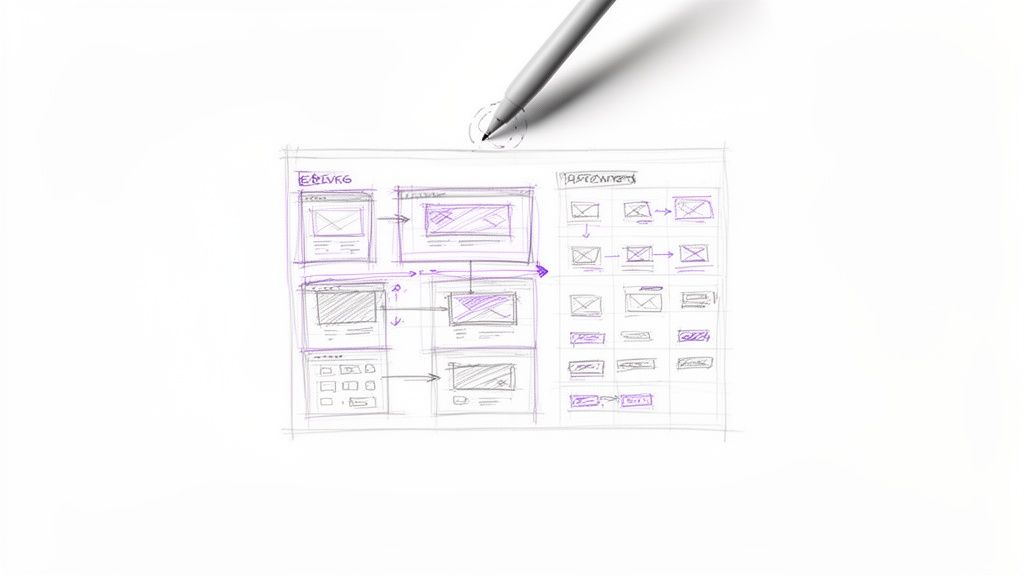
Design-forward companies like Figma, Notion, and Slack built their products with distributed teams. For instance, Calendly’s intuitive scheduling experience was crafted by a remote design team focused on asynchronous collaboration. These companies don’t just permit remote work; their design culture is built around clear written communication and shared digital canvases, making them true location-independent employers.
How to Find and Secure a Remote Design Role
To succeed in the global talent pool, your portfolio must demonstrate your design process, not just the polished final product. A Figma or Behance profile that walks through your thinking, from wireframes to high-fidelity prototypes, is more powerful than a simple resume. Showcasing how you handled feedback and solved problems is key.
Here are specific actions to find these roles:
- Highlight Asynchronous Case Studies: In your portfolio, create a case study titled something like, “Designed a new feature for a global team across 8 time zones.” This explicitly shows you have the skills for distributed work.
- Master Design Systems: Proficiency in tools like Storybook and Figma’s component libraries is critical for remote teams. Mention these skills prominently, as they demonstrate your ability to contribute to scalable, consistent design.
- Target Companies with Strong Design Reputations: Focus on organizations known for their product design, like Notion or Slack. These companies often have mature remote cultures and public design blogs that offer insight into their work.
- Apply Directly and Early: Design roles on platforms like Dribbble and LinkedIn are quickly saturated. Use direct sourcing job boards to find openings on company career pages before they are widely advertised, giving you an edge over the competition.
Key Insight: The strongest signal of a great remote design job is a publicly available design system or a detailed design blog. Companies that invest in documenting their design principles, components, and collaboration methods are serious about supporting a distributed team. This transparency proves they have a mature, asynchronous-first culture.
8. Sales Development Representative / Account Executive
Sales Development Representative (SDR) and Account Executive (AE) roles are cornerstones of revenue generation for modern companies, particularly in the SaaS industry. These positions have become some of the most measurable jobs you can work from anywhere because success is tied directly to performance metrics like quota attainment, not physical presence. Your output is your resume, making your location secondary to your ability to drive business growth.
Remote-first sales teams are becoming the norm. Companies like Zapier and Calendly built their entire sales organizations through remote hiring, with teams operating across dozens of countries. This distributed model allows them to serve a global customer base effectively and hire the best talent regardless of location. The focus is on results, supported by powerful revenue intelligence tools like Gong that provide coaching and performance insights in an asynchronous environment.
How to Find and Secure a Remote Sales Role
To succeed in a competitive remote sales market, you must prove your ability to generate revenue. Your resume and interviews should be data-driven, showcasing concrete achievements rather than just listing responsibilities.
Here are specific actions to find these roles:
- Highlight Performance Metrics: Frame your experience around quantifiable results. Instead of saying you “managed accounts,” state that you “Achieved 120% of annual quota” or “Generated $500k in new ARR.” This immediately demonstrates your value.
- Target High-Growth Companies: Focus your search on high-growth Series B to Series D startups. These companies often have aggressive growth targets, proven product-market fit, and the highest commission potential.
- Show SaaS Business Acumen: Demonstrate your understanding of key SaaS metrics like Customer Acquisition Cost (CAC), Lifetime Value (LTV), and payback period. Mentioning these in your cover letter or interviews signals you think like a business partner, not just a salesperson.
- Apply Directly and Early: Use specialized job boards that source listings directly from company career pages. This helps you bypass the flood of recruiter spam on major platforms and apply before the roles are widely advertised.
Key Insight: The most desirable remote sales jobs are found at companies that treat their sales team as a strategic growth engine, not just a cost center. Look for organizations that openly discuss their sales methodology and invest in communities like Pavilion for professional development. This indicates a culture that values sales excellence and career progression.
9. Operations Manager / Recruiting Coordinator
Operations managers and recruiting coordinators are the backbone of a successful remote company. These professionals build and maintain the internal systems for hiring, onboarding, and daily administration that allow distributed teams to function smoothly. Their work is critical because effective operations enable a remote-first organization to scale, making these some of the most essential jobs you can work from anywhere.
True remote-first companies like GitLab and Automattic demonstrate that operational excellence is a prerequisite for growth. GitLab’s public ‘Handbook’ is a masterclass in documenting every process, while Automattic has scaled its recruiting and operations to support over a thousand distributed employees. These roles are perfect for systems-thinkers who can create efficient, documented workflows that reduce friction for a team they may never meet in person.
How to Find and Secure a Remote Operations Role
To secure a remote operations role, you must prove you can build and improve systems asynchronously. Showcase your ability to create order from chaos by quantifying your impact. Instead of just listing duties, focus on metrics that demonstrate efficiency gains, like how you reduced time-to-hire or automated a manual process.
Here are specific actions to find these roles:
- Highlight Process Improvement: On your resume, use concrete metrics like, “Automated the new-hire onboarding sequence, reducing manual admin time by 15 hours per week.” This shows you think in terms of impact, not just tasks.
- Demonstrate Remote-First Fluency: Showcase your understanding of the unique challenges in distributed work. Mention specific experience, such as “Designed an onboarding program for a globally distributed team across 10+ time zones.”
- Master Automation Tools: Proficiency with no-code tools like Zapier or Airtable is non-negotiable for modern ops roles. Highlight these skills to show you can build the automated workflows that power async-first companies.
- Target Transparent Companies: Seek out organizations with a public “Handbook” or detailed culture documentation. This is a strong signal of a mature, process-driven remote environment where ops professionals are highly valued.
Key Insight: The best remote operations and recruiting roles are at companies that treat their internal processes like a product. Look for signs of “documentation-first” culture. If a company publicly shares its operational philosophies (like Zapier’s async guides), it’s a clear indicator that they invest heavily in the people who build and run their internal engine.
10. Developer Advocate / DevRel Engineer
Developer advocates and DevRel engineers act as the crucial link between a technology company and its community of developers. These roles are inherently suited for remote work, as advocates build communities globally, create educational content, speak at conferences, and gather product feedback from developers worldwide. This makes it one of the most dynamic jobs you can work from anywhere.
Companies like Stripe and Twilio have demonstrated the power of developer relations, building their entire brands around a developer-first ethos. Their advocates and evangelists are not just marketers; they are trusted educators and community builders who scale engagement asynchronously, making a physical office unnecessary. Figma’s design advocates and Zapier’s ambassador program also show how community feedback, gathered remotely, directly shapes product direction.
How to Find and Secure a Remote DevRel Role
To succeed in a DevRel role, you must demonstrate both technical credibility and community impact. Building a personal brand is non-negotiable, as companies want to hire individuals who are already recognized voices in the developer ecosystem.
Here are specific actions to find these roles:
- Showcase Community Impact: Your resume should quantify your influence. Instead of just listing activities, use metrics like “Grew a Discord community from 0 to 5,000+ developers” or “Authored a blog series that generated 100K+ views.”
- Build Technical Credibility: Maintain a public portfolio of your expertise. This can include open-source contributions, technical blog posts explaining complex topics, or a YouTube channel with tutorials.
- Target Developer-First Companies: Focus your search on companies whose primary customers are developers. Look for those with public APIs, software development kits (SDKs), or open-source platforms. These organizations value and invest heavily in their DevRel teams.
Key Insight: The most effective developer advocates are not just good speakers; they are excellent listeners who translate community feedback into actionable product improvements. In your interviews, highlight specific examples where you identified a developer pain point, communicated it to a product team, and saw a resulting change in the product.
Top 10 Remote Jobs Comparison
| Role | Implementation Complexity 🔄 | Resource Requirements ⚡ | Expected Outcomes 📊 | Ideal Use Cases 💡 | Key Advantages ⭐ |
|---|---|---|---|---|---|
| Software Engineer / Full-Stack Developer | High — cross-stack coordination, continuous learning | Full dev toolchain, cloud infra, CI/CD, collaboration platforms | Scalable features, reliability, engineering velocity | Product teams at startups → enterprise, platform builds | Extreme demand, high salary + equity, skill-based hiring |
| Product Manager | High — cross-functional alignment, stakeholder management | Analytics, roadmaps, documentation, stakeholder bandwidth | Prioritized roadmap, shipped initiatives, product-market alignment | Series B+ PM orgs, distributed roadmap ownership | Direct strategic influence, high leverage, fewer middle managers |
| Content Strategist / Technical Writer | Low–Medium — structured outputs, async workflows | Docs/Markdown/CMS, subject experts, lightweight tooling | Clear docs, reduced support load, improved UX | API-first companies, developer docs, self-serve support | Portfolio hiring, strong async fit, stable demand |
| Customer Success Manager / Account Manager | Medium — multi-timezone relationship management | CRM, product metrics, customer data, async comms | Improved retention, NPS, ARR expansion | SaaS with global customers, post-sales scale | Commission upside, measurable impact, clear career path |
| Data Analyst / BI Engineer | Medium–High — technical pipelines and stakeholder translation | SQL/Python, data warehouse, BI tools (Looker/Tableau), dbt | Actionable insights, dashboards, data-driven decisions | Growth analytics, product strategy, executive reporting | High business impact, clear progression, strong demand |
| Marketing Manager / Growth Marketing Specialist | Medium — experimentation plus attribution complexity | Marketing stack, analytics, content tools, budget | Acquisition, retention, measurable growth metrics | Product-led growth, launches, demand gen | High visibility, portfolio-based evaluation, cross-functional reach |
| UX/UI Designer | Medium — iterative design and async feedback loops | Figma, design systems, user research tools | Usable interfaces, higher engagement, reusable components | Design-driven products, consumer & B2B UX | Portfolio-based hiring, visible creative impact, design-led growth |
| Sales Development Rep / Account Executive | Medium — process-driven with high cadence | CRM, outreach tools, playbooks, commission plans | Pipeline creation, closed deals, revenue generation | High-growth SaaS, outbound/inbound sales motion | Highest earning potential, meritocratic advancement, fast promotion |
| Operations Manager / Recruiting Coordinator | Low–Medium — documentation and automation focus | HR/ops tools (Greenhouse, Rippling), SOPs, automation tools | Faster hires, smoother onboarding, reduced friction | Scaling distributed teams, hiring and onboarding ops | Strategic leverage across org, process automation wins |
| Developer Advocate / DevRel Engineer | Medium — community building + technical content | Content platforms, OSS contributions, conference budgets | Community growth, developer adoption, product feedback | API/platform companies, ecosystems and SDKs | High visibility, brand building, creative & technical mix |
Your Next Move: How to Secure Your Work-From-Anywhere Career
The journey to find genuine jobs you can work from anywhere is less about a lucky break and more about a strategic shift in your approach. We’ve walked through ten distinct, high-impact career paths, from Software Engineering to Developer Relations, that are not just remote-friendly but are fundamentally built for a distributed, global workforce. The common thread connecting these roles is their focus on measurable outcomes, clear communication, and the use of modern, cloud-native tools. Success is no longer tied to your physical presence but to the tangible value you create.
This guide was designed to move beyond generic advice. Instead of just listing job titles, we detailed the specific skills, seniority levels, and realistic pay ranges you can expect. More importantly, we provided a new playbook for the job search itself. The days of endlessly scrolling through massive job boards, competing with thousands for a single “ghost job” listing, are inefficient and demoralizing. Your time is better spent targeting opportunities at the source.
From Reactive Applicant to Proactive Candidate
The core takeaway is simple: stop chasing stale listings and start positioning yourself to apply first. The most effective strategy involves a direct sourcing approach, where you monitor company career pages in real time. This allows you to bypass the noise and apply hours, or even days, before a position is syndicated to major platforms like LinkedIn or Indeed.
To put this into practice, consider these critical next steps:
- Refine Your “Anywhere” Skills: Every role we covered, from sales to software, requires exceptional written communication, self-discipline, and a proactive mindset. Identify your weakest area and actively work to strengthen it, whether through online courses, project work, or simply being more intentional in your current role.
- Build Your Application Toolkit: Prepare a master resume and a series of customizable cover letter templates tailored to the specific job categories that interest you. When a new, relevant opening appears, you need to be ready to apply within minutes, not hours.
- Master Direct Sourcing Tools: Set up targeted alerts for your desired roles, companies, and keywords. Use filters to screen out agency spam and roles with restrictive location requirements. This automated monitoring is your secret weapon for getting ahead of the crowd.
A Career Built on Your Terms
Securing one of these high-quality jobs you can work from anywhere is about more than just escaping the office. It’s about regaining control over your time, your environment, and your professional trajectory. It’s the freedom to work during your most productive hours, to be present for your family, or to see the world without putting your career on pause.
As you plan your next move, it’s also smart to consider the broader trends shaping the industry. The rise of artificial intelligence, for example, is creating new roles and changing existing ones. To stay informed and competitive, you can explore tech career insights from leading AI companies and see how these shifts might influence your chosen path. By understanding where the market is headed, you can position yourself not just for today’s opportunities, but for the jobs of tomorrow. Your ideal work-from-anywhere career is out there, and with the right strategy, it’s well within your reach.
Tired of seeing the perfect remote job only after hundreds have already applied? Stop competing and start winning with Remote First Jobs. We monitor thousands of company career pages directly, giving you real-time alerts so you can apply first. Find your next opportunity at Remote First Jobs and get ahead of the line.