The world is your office, but choosing the right city can make or break your remote work experience. Gone are the days of guessing; today’s digital nomads make data-driven decisions based on critical factors like internet reliability, visa accessibility, and true cost of living. A city that looks perfect on social media might have cripplingly slow Wi-Fi or a visa process that makes a long-term stay impossible. This guide moves beyond the postcard pictures to give you a detailed breakdown of the best cities for digital nomads.
We’ve done the heavy lifting, analyzing everything from fiber optic speeds in Lisbon to the specific visa paperwork for Medellín. Our goal is to empower you to find a location that aligns perfectly with your career, budget, and lifestyle. For each city, we’ll provide a comprehensive profile covering essential metrics:
- Cost of Living & Sample Budgets: Realistic monthly expenses for different lifestyles.
- Internet & Coworking: Average speeds and the availability of professional workspaces.
- Visa & Entry Rules: Clear, actionable information on how to stay legally.
- Community & Safety: Insights into the local nomad scene and overall security.
This isn’t just a list; it’s a strategic framework for making one of the most important decisions in your remote career. We focus on practical details that directly impact your productivity and quality of life. For professionals who also prioritize sustainability in their travel choices, it’s worth comparing our findings with other specialized guides. To explore more options, especially those with an emphasis on sustainability, consider these 10 Best Cities for Digital Nomads With an Eco-Focus.
Before you pack your bags, let’s explore the metrics that truly matter and how you can leverage this knowledge to build a sustainable, fulfilling life on the road.
1. Lisbon, Portugal - The European Digital Nomad Hub
Lisbon has cemented its reputation as one of the best cities for digital nomads, offering a near-perfect blend of affordability, vibrant culture, and robust infrastructure. The city combines old-world European charm with a dynamic tech scene, making it an irresistible magnet for remote workers worldwide. Its appeal lies in a cost of living that is 30-40% lower than in other Western European capitals, without sacrificing quality of life.
The Portuguese government actively welcomes remote professionals through accessible long-stay options like the D7 visa and the more recent Digital Nomad Visa, streamlining the path to residency. This legal framework, combined with a large, English-speaking local and expatriate community, ensures a smooth transition for newcomers.
Key Details for Nomads
- Cost of Living: A single person can live comfortably for approximately €1,500–€2,200 per month.
- Internet: High-speed fiber optic internet is widespread and affordable, with speeds up to 1Gbps commonly available in residential areas.
- Coworking & Community: A thriving ecosystem of coworking spaces like Second Home and Co.Starters costs between €150–€250 per month. Numerous free-to-join online communities, such as the “Lisbon Digital Nomads” Facebook group, are active hubs for networking and local advice.
- Time Zone: Western European Time (UTC+0), making it manageable for collaborating with teams across Europe and the US East Coast.
Actionable Tips for Your Move
To make the most of your time in Lisbon, plan ahead. Start your visa application process with the SEF (immigration services) as early as possible, as appointments can take over 30 days to secure. When hunting for an apartment, use a fiber availability checker for neighborhoods like Alcântara and Marvila to guarantee the best connection speeds. You can often negotiate a 10-15% discount on rent by offering to sign an annual lease.
For professionals seeking roles that accommodate this lifestyle, finding a company with a “work from anywhere” policy is crucial. You can find fully remote jobs that support a digital nomad lifestyle and align with European time zones, simplifying your transition to life in Portugal.
2. Chiang Mai, Thailand - The Affordable Asian Remote Base
For decades, Chiang Mai has been a cornerstone of the digital nomad movement, offering an unparalleled combination of extreme affordability, a massive expatriate community, and rich cultural immersion. The city provides a soft landing for new remote workers and a reliable base for veterans, all while maintaining a cost of living that is often 60-70% lower than in Western cities. Its blend of ancient temples, lush mountains, and a modern, cafe-centric work culture makes it one of the best cities for digital nomads on a budget.

Thailand’s government has acknowledged the remote work trend by introducing long-term stay options, including the new Digital Nomad Visa and the long-standing Thai Elite Visa program. These legal pathways, combined with a deeply ingrained service culture and a large, welcoming community of like-minded professionals, remove many of the traditional barriers to living and working in Southeast Asia.
Key Details for Nomads
- Cost of Living: A single person can live very comfortably for approximately €700–€1,200 per month.
- Internet: Fiber optic internet is increasingly common in condos and coworking spaces, with reliable speeds suitable for video calls and daily tasks.
- Coworking & Community: The city is famous for its vibrant coworking scene, with hubs like Punspace and Hub53 costing between €100–€150 per month. The “Chiang Mai Digital Nomads” Facebook group is one of the largest and most active nomad communities globally.
- Time Zone: Indochina Time (UTC+7), which is ideal for collaborating with teams in Asia and Australia and manageable for late-evening calls with European colleagues.
Actionable Tips for Your Move
To ensure a smooth setup, verify your long-term visa eligibility and required documentation before arrival, as requirements like income proof (€2,000+ per month) are strictly enforced. Before signing a lease for an apartment, always run an internet speed test yourself or ask the landlord for a current screenshot. For daily transport, download the Grab app, which offers cheap and reliable rides across the city for just €1-3.
For remote professionals, aligning your work schedule with international teams is key. Finding a company with asynchronous communication policies or flexible hours makes a huge difference. You can discover remote jobs with timezone flexibility that are perfectly suited for a Southeast Asian base, allowing you to enjoy Chiang Mai’s lifestyle without compromising your career.
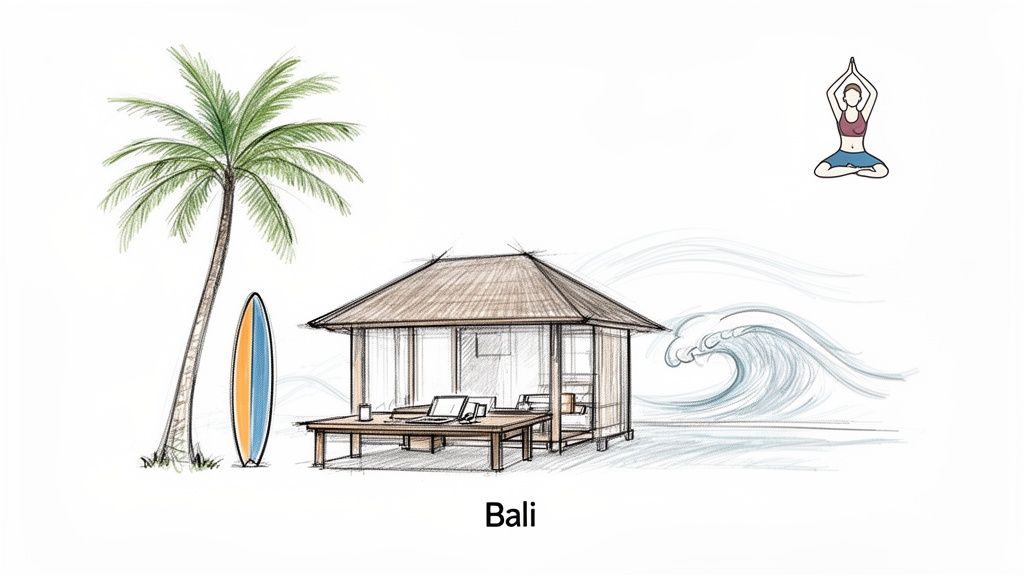
3. Bali, Indonesia - The Lifestyle + Remote Work Blend
Bali offers an unparalleled fusion of tropical paradise living and a surprisingly robust remote work infrastructure, solidifying its status as a top choice for digital nomads. The island provides an exceptional quality of life at a fraction of Western costs, combining stunning beaches, a rich spiritual culture, and an immense, welcoming community of like-minded professionals. This unique blend of lifestyle flexibility and career opportunity makes it one of the best cities for digital nomads globally.
The Indonesian government supports long-term stays through accessible options like the B211A visa, which allows for initial stays of up to 180 days and can be arranged before arrival. This, combined with a vast ecosystem of coliving spaces and a massive digital nomad community, creates a supportive environment where newcomers can quickly integrate and thrive both personally and professionally.
Key Details for Nomads
- Cost of Living: A single person can live very comfortably for approximately €1,000–€1,500 per month, covering accommodation, food, and activities.
- Internet: Fiber optic internet is increasingly common in hubs like Canggu and Ubud. Local SIM cards provide reliable mobile data, and coworking spaces offer high-speed connections as a standard.
- Coworking & Community: Bali boasts a world-class selection of coworking and coliving spaces like Outpost and Tropical Nomad, with monthly memberships ranging from €150–€300. The “Bali Digital Nomads” Facebook group is an essential resource for networking, finding housing, and local tips.
- Time Zone: Central Indonesia Time (UTC+8), ideal for collaborating with teams across Asia and Australia. It requires early morning or late evening calls for working with Europe and North America.
Actionable Tips for Your Move
To ensure a smooth transition, secure your B211A visa through an agent before you arrive, as it offers more stability than a standard visa on arrival. When choosing a place to live, prioritize neighborhoods like Canggu for its vibrant social scene and surf culture, or Ubud for its focus on yoga, wellness, and spirituality. Always test the internet speed at a prospective rental or coliving space before committing.
4. Mexico City, Mexico - The Latin American Tech & Creative Hub
Mexico City has rapidly emerged as Latin America’s premier destination for digital nomads, offering an unbeatable combination of urban energy, cultural depth, and affordability. The sprawling metropolis provides a dynamic backdrop for remote workers, blending a booming tech scene with world-class cuisine and history. Its appeal is magnified by a low cost of living, which allows for a high quality of life that is often unattainable in US or European cities.
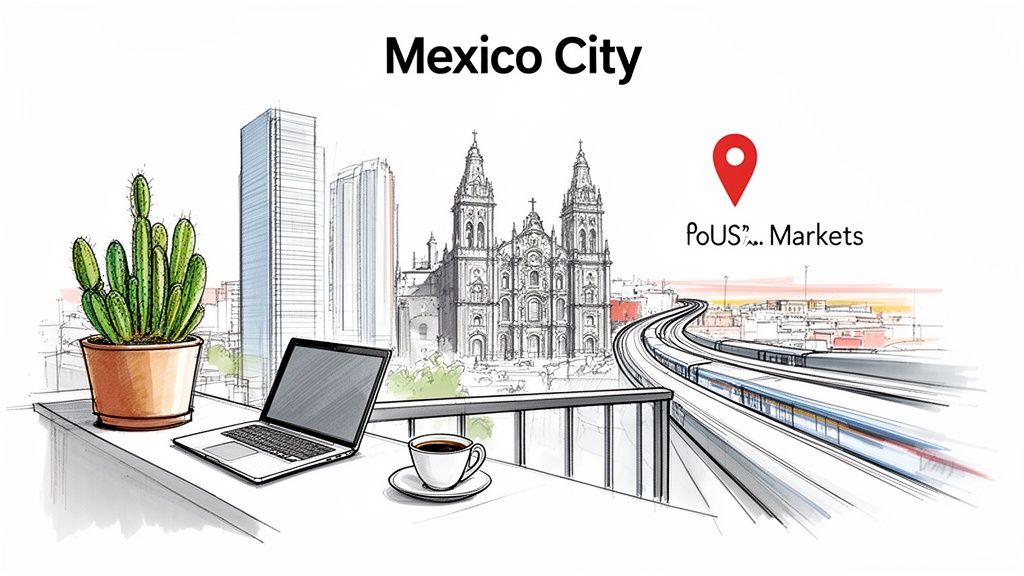
The Mexican government’s Temporary Resident Visa is a key enabler, offering a straightforward path for remote professionals to stay for up to four years. This welcoming policy, combined with the city’s proximity to US markets, has cultivated a massive and growing community of expats and remote workers, making it an easy place to build both a personal and professional network.
Key Details for Nomads
- Cost of Living: A single person can live comfortably for approximately €1,200–€1,800 per month.
- Internet: Fiber optic internet is widely available, especially in popular nomad neighborhoods, with reliable high-speed connections suitable for all work needs.
- Coworking & Community: The city is home to a robust network of coworking spaces, including WeWork and local hubs like Makers District. A monthly hot desk typically costs between €150–€280. Online groups are extremely active, providing daily opportunities for networking and events.
- Time Zone: Central Standard Time (UTC-6), which perfectly aligns with working hours across North America, making it one of the best cities for digital nomads collaborating with US-based teams.
Actionable Tips for Your Move
Streamline your relocation by applying for the Temporary Resident Visa at a Mexican consulate in your home country before you travel; this is much simpler than trying to change your status after arrival. For housing, focus your search on well-connected and safe neighborhoods like Roma Norte, Condesa, and Polanco. Always use an online fiber availability tool to check specific addresses before signing a lease, as coverage can vary block by block. For those looking to fully immerse themselves in the vibrant culture of Mexico City, mastering the local language can greatly enhance your experience. Discover the best way to learn Spanish and connect more deeply with the community.
Time zone alignment is a significant advantage in Mexico City. You can schedule US West Coast calls for 7–8 AM local time to catch their afternoon, while calls with the East Coast are optimal between 2–5 PM, leaving your mornings free for deep work. This strategic scheduling is a key benefit for professionals in roles with significant cross-time-zone collaboration.
5. Barcelona, Spain - The European Tech + Lifestyle Destination
Barcelona offers an electrifying mix of Mediterranean lifestyle, world-class urban amenities, and a booming technology ecosystem, making it a top contender among the best cities for digital nomads. It blends a laid-back beach culture with the dynamism of a major European hub, attracting mid-to-senior professionals who refuse to sacrifice career growth for quality of life. While slightly pricier than its Portuguese counterpart, Barcelona justifies the cost with superior networking opportunities and a vibrant, international community.
The Spanish government has embraced the remote work movement with its Digital Nomad Visa, which provides a clear legal pathway for non-EU citizens. This official support, combined with the city’s status as a host for major tech events like the Mobile World Congress, solidifies its reputation as a premier destination for location-independent professionals seeking both sun and success.
Key Details for Nomads
- Cost of Living: A single person can expect to live comfortably for around €1,600–€2,200 per month.
- Internet: Fiber optic internet is standard across the city, with major providers offering reliable, high-speed connections of up to 1Gbps, essential for seamless remote work.
- Coworking & Community: Barcelona has a dense network of high-quality coworking spaces, such as Aticco and Factory, with monthly memberships ranging from €180–€300. The “Barcelona Digital Nomads” Facebook group is a vital resource for housing, local tips, and social events.
- Time Zone: Central European Time (UTC+1), perfectly positioned for collaboration with teams across Europe and for managing morning calls with the US East Coast.
Actionable Tips for Your Move
To streamline your relocation, apply for Spain’s Digital Nomad Visa online through the official immigration portal, ensuring you can prove the required minimum monthly income of €2,160. When searching for accommodation, strategically choose your neighborhood: Gràcia for a local village feel, El Born for walkability, or Poblenou for its proximity to the tech scene. Opting for an unfurnished apartment (€800–€1,200 per month) can be significantly cheaper long-term.
For tech professionals aiming to land a role that fits this lifestyle, focusing your search on companies with a strong European presence is key. You can find fully remote jobs that support a digital nomad lifestyle at SaaS and fintech companies based in Barcelona or operating within a similar time zone.
6. Buenos Aires, Argentina - The South American Tech & Culture Capital
Buenos Aires offers a compelling proposition for digital nomads: a vibrant, European-esque city with a fraction of the cost. Known as the “Paris of South America,” it combines stunning architecture, world-class cuisine, and a passionate culture with a burgeoning tech scene. This unique blend makes it one of the best cities for digital nomads seeking deep cultural immersion alongside professional opportunities without the Western price tag.
The Argentine government has recognized its appeal to remote workers, introducing a digital nomad visa that allows for an initial 180-day stay, renewable for another 180 days. This, combined with an extremely low cost of living, makes the city accessible and financially attractive for an extended work-cation. The large expat community and friendly locals ensure newcomers feel welcome.
Key Details for Nomads
- Cost of Living: A single person can live very comfortably for approximately €1,000–€1,500 per month.
- Internet: Fiber optic internet is increasingly common in central neighborhoods like Palermo and Recoleta, offering reliable speeds suitable for demanding remote work.
- Coworking & Community: The city boasts a dynamic startup ecosystem with popular coworking spaces like La Maquinita and WeWork, typically costing €120–€200 per month. Online groups like “Buenos Aires Digital Nomads” are invaluable for real-time advice on everything from housing to navigating local economics.
- Time Zone: Argentina Standard Time (UTC-3), creating a convenient overlap with the North American workday and manageable hours for late European collaboration.
Actionable Tips for Your Move
Navigating Argentina’s unique economy is key. Due to high inflation, it’s wise to negotiate rent in a stable currency like USD and budget a 20-30% buffer for fluctuating monthly expenses. For transportation, get a SUBE card for incredibly cheap bus and metro rides, costing around €0.60 per trip. When applying for the visa, ensure you can prove a monthly income of at least €1,300 with official employment letters and bank statements.
The city’s favorable time zone and thriving tech scene make it a strategic base for remote professionals. You can find fully remote jobs that support a digital nomad lifestyle and align with North or South American time zones, making the transition to life in Buenos Aires seamless.
7. Medellín, Colombia - The Emerging Tech Hub & Affordable Alternative
Medellín has undergone a remarkable transformation, shedding its past to become Colombia’s premier tech hub and a hotspot for remote professionals. This city offers an exceptional value proposition, combining an incredibly low cost of living with a pleasant, “eternal spring” climate and a burgeoning innovation scene. Its appeal lies in the ability to maintain a high quality of life on a budget that is a fraction of that in North America or Europe, making it one of the best cities for digital nomads seeking an affordable alternative.
Colombia’s visa policies are welcoming to remote workers, with a straightforward 90-day tourist entry (renewable for another 90 days) and a new Digital Nomad Visa (V Visa) that supports stays up to two years. This welcoming stance, combined with a vibrant community of local entrepreneurs and international nomads, makes for an energetic and supportive environment.
Key Details for Nomads
- Cost of Living: A single person can live very comfortably for approximately €800–€1,200 per month.
- Internet: Fiber optic internet is increasingly common, especially in nomad-friendly neighborhoods. Providers like ETB and Claro offer reliable service, though having a mobile hotspot for backup is wise.
- Coworking & Community: The city is rich with coworking spaces like Selina and PilPilHub, which often integrate accommodation and cost between €100–€200 per month. The “Medellín Digital Nomads” Facebook group is a crucial resource for real-time housing, safety, and community information.
- Time Zone: Colombia Time (UTC-5), which aligns perfectly with US business hours, making it ideal for collaborating with teams across the Americas.
Actionable Tips for Your Move
To ensure a smooth experience, choose your neighborhood wisely. El Poblado is popular but tourist-heavy; consider Laureles for a more local vibe with a strong nomad community or Envigado for a quieter, safer residential feel. Before signing a lease, use a speed test to verify the internet quality at the property. For transportation, leverage the efficient and affordable Metro system, including the famous cable cars, with rides costing less than €1.
For professionals whose roles require alignment with US time zones, Medellín is a strategic choice. You can find fully remote jobs that support a digital nomad lifestyle and filter for companies operating on North or South American schedules, making your work-life integration seamless.
8. Tbilisi, Georgia - The Hidden Gem for Cost-Conscious Professionals
Tbilisi has rapidly emerged as a top contender among the best cities for digital nomads, particularly those seeking an adventurous, culturally rich base with an incredibly low cost of living. This hidden gem offers a unique blend of ancient history, striking Soviet-era architecture, and a burgeoning modern arts and tech scene. Its main appeal is the exceptional value, allowing a lifestyle comparable to other European hubs for a fraction of the price.
The Georgian government has embraced remote work with its “Remotely from Georgia” program, a long-stay visa designed specifically for high-income digital nomads. This initiative, combined with a 1-year visa-free policy for citizens of over 95 countries, makes establishing a temporary home base remarkably straightforward. The local community is famously hospitable, and a growing international presence ensures a welcoming environment.
Key Details for Nomads
- Cost of Living: A single person can live comfortably for approximately €600–€1,100 per month.
- Internet: Fiber optic internet is reliable and affordable, with speeds commonly reaching 100Mbps in central residential areas.
- Coworking & Community: A vibrant coworking scene is flourishing, with spaces like Terminal and LOKAL providing excellent facilities for €100–€180 per month. Active Facebook groups like “Tbilisi Digital Nomads” are central for networking and events.
- Time Zone: Georgia Standard Time (UTC+4), which can be challenging for real-time collaboration with North American teams but works well for European and Asian schedules.
Actionable Tips for Your Move
To ensure a smooth transition, apply for the “Remotely from Georgia” visa online well in advance if you plan to stay longer than your visa-free period allows; processing typically takes 2-4 weeks. When searching for accommodation, focus on Vake for a modern, upscale feel or Saburtalo for a more local experience. Download the Metabus app for incredibly cheap public transport.
The ultra-low cost of living in Tbilisi is a significant advantage for professionals building businesses or saving aggressively. You can find fully remote jobs that support a digital nomad lifestyle and leverage the favorable time zone for European collaboration, maximizing your earning and saving potential while living in one of the world’s most unique capitals.
9. Da Nang, Vietnam - The Emerging Beach Destination for Budget-Conscious Nomads
Da Nang is rapidly becoming one of the best cities for digital nomads, especially those seeking an ultra-affordable lifestyle without sacrificing natural beauty. This coastal city offers a compelling alternative to more saturated Southeast Asian hubs, blending pristine beaches, a low cost of living, and an authentic Vietnamese cultural experience. Its appeal is rooted in an unbeatable budget, where a comfortable life is possible for a fraction of the cost of living in Europe or North America.
Vietnam’s accessible e-visa system simplifies entry for many nationalities, and the growing community of expats and remote workers provides a supportive network for newcomers. While not as established as Chiang Mai or Bali, Da Nang offers the excitement of an emerging destination where your money goes further, allowing for a higher quality of life on a smaller budget.
Key Details for Nomads
- Cost of Living: A single person can live exceptionally well for approximately €700–€1,200 per month.
- Internet: Internet infrastructure is improving, though less consistent than in major Western cities. Coworking spaces offer the most reliable high-speed connections, with residential speeds varying by building and location.
- Coworking & Community: A growing number of affordable coworking spaces, such as Space Hub, are available for €50–€100 per month. The “Da Nang Digital Nomads” Facebook group is a vital resource for housing, visa advice, and community events.
- Time Zone: Indochina Time (UTC+7), which is ideal for collaborating with teams across Asia and Australia and manageable for early morning calls with European colleagues.
Actionable Tips for Your Move
To ensure a smooth arrival, apply for your 90-day e-visa online before you travel, as it is a straightforward and inexpensive process. Once in Da Nang, connect with a trusted local visa agent for extensions or border runs to prolong your stay legally. For reliable internet, prioritize securing a membership at a coworking space, especially if your work depends on stable, high-speed connectivity. When searching for an apartment, focus on the An Thuong area near My Khe beach, a popular hub for expats with modern amenities.
For nomads needing a role that supports this lifestyle, it’s essential to find a company with a flexible, timezone-agnostic policy. You can find fully remote jobs that support a digital nomad lifestyle and filter for positions that align with Asian time zones, making your move to Vietnam seamless.
10. Brno, Czech Republic - The Central European Tech Hub Alternative
While Prague often steals the spotlight, Brno has quietly emerged as an exceptional choice for digital nomads, particularly those in the tech industry. It offers the high-quality infrastructure of a major European city at a fraction of the cost, positioning itself as a smart alternative to more expensive Western hubs. Brno combines a rich academic and tech-focused atmosphere with an affordable, high-quality lifestyle, making it one of the best cities for digital nomads seeking value and community in Central Europe.
Brno’s appeal is rooted in its status as the Czech Republic’s IT and R&D capital, home to numerous universities and tech companies. This creates a vibrant, youthful energy and a professional ecosystem that remote workers can tap into. The city provides a stable and accessible European base, supported by straightforward long-stay visa options for non-EU citizens.
Key Details for Nomads
- Cost of Living: A single nomad can live comfortably on approximately €1,000–€1,400 per month.
- Internet: Excellent fiber optic connectivity is common and affordable, especially in central districts, with reliable high speeds crucial for remote work.
- Coworking & Community: A robust network of coworking spaces like Impact Hub and Soc.Market caters to a growing community of tech professionals, with monthly memberships typically costing €120–€200. Local tech and startup groups are highly active on platforms like LinkedIn.
- Time Zone: Central European Time (UTC+1), ideal for seamless collaboration with companies across Europe and manageable for morning meetings with the US East Coast.
Actionable Tips for Your Move
To establish your residency, prepare your application for the long-term residence visa (for the purpose of business or “Zivno”) ahead of time. You’ll need proof of funds and a minimum income of approximately €1,200 per month. Once in Brno, leverage the highly efficient public transport system with a monthly pass for around €30 to explore without a car.
When apartment hunting, focus on neighborhoods like Královo Pole, which is close to the tech park, or Staré Brno for its cultural vibrancy. Always use an internet availability checker before signing a lease to ensure your specific address has fiber access.
For tech professionals aiming to settle in Brno, securing a role with a company that understands the Central European work culture is key. You can find fully remote jobs that support a digital nomad lifestyle and filter for opportunities that align with the CET time zone, making your integration into the local tech scene even smoother.
Top 10 Digital Nomad Cities Comparison
| Location | 🔄 Relocation complexity | 💰 Resource requirements | ⭐️⚡ Expected outcomes & productivity | 📊 Key advantages | 💡 Ideal use cases / tips |
|---|---|---|---|---|---|
| Lisbon, Portugal | Moderate — D7 / Startup visas; SEF registration ~30+ days | €1,200–1,800/mo; coworking €150–250; rising rents | ⭐⭐⭐; ⚡ High — 100+ Mbps, strong English community, EU timezone overlap | EU residency pathways; established nomad ecosystem; strong transport & culture | Marketing, PMs, engineers, designers — negotiate annual rent; join local nomad groups |
| Chiang Mai, Thailand | Moderate — Thai Elite / digital nomad visas; rules evolving | €700–1,200/mo; coworking €40–150; very low daily costs | ⭐⭐; ⚡ Good — 100 Mbps fiber widely available but variable reliability | Lowest-cost quality option; large nomad community; excellent food & nature access | Devs, writers, analysts, VAs — test accommodation internet; expect evening US calls |
| Bali, Indonesia | Easy–moderate — B211A/renewals or extensions; tourist visa runs common | €1,000–1,500/mo; coliving & villas €300–600; coworking common | ⭐⭐; ⚡ Moderate — improving 100 Mbps fiber; occasional outages, lifestyle focus | Strong coliving/coworking scene; wellness & social networking; great lifestyle | Content creators, designers, entrepreneurs — base in Canggu/Ubud; verify speeds |
| Mexico City, Mexico | Moderate — Temporary resident visa (4 yrs) with income proof | €1,200–1,800/mo; 100+ coworking options; strong startup hiring | ⭐⭐⭐; ⚡ Very High — 300+ Mbps; excellent US timezone overlap | Large tech ecosystem; proximity to US markets; rich urban amenities | Engineers, sales, marketing — choose Roma/Condesa; prepare visa docs and neighborhood research |
| Barcelona, Spain | Moderate — digital nomad visa (income req ~€1,260/mo) | €1,600–2,200/mo; fiber 600+ Mbps; coworking 50+ | ⭐⭐⭐; ⚡ Very High — top-tier speeds, EU business hub | Mediterranean lifestyle with strong startup/tech networks | Senior roles, founders, product — apply for visa early; pick Poblenou/Gràcia |
| Buenos Aires, Argentina | Moderate — temporary resident visa (3 yrs) with income/job proof | €1,000–1,500/mo; fiber 300+ Mbps; good value but inflation risk | ⭐⭐; ⚡ High — solid speeds for price; UTC-3 suited for Americas | European-style infrastructure at lower cost; vibrant culture & startups | Developers, PMs, creators — negotiate rent in USD; budget inflation buffer |
| Medellín, Colombia | Easy–moderate — V visa (90 days) renewable; business visa for long-term | €800–1,200/mo; coworking 25+; very affordable | ⭐⭐; ⚡ Good — 100 Mbps central areas; excellent climate for productivity | Eternal spring weather; emerging tech hubs; low living costs | Software devs, freelancers, data scientists — base in Laureles/Envigado; verify internet |
| Tbilisi, Georgia | Easy — Remotely from Georgia visa (1 yr renewable, income req €2,000/mo) | €600–1,000/mo; fiber 100–300 Mbps; ultra-low costs | ⭐⭐; ⚡ Good — reliable central internet; smaller community | Cheapest European-adjacent option; visa tailored to nomads; strong value | Developers, freelancers, entrepreneurs — apply online (2–4 weeks); central neighborhoods recommended |
| Da Nang, Vietnam | Moderate — e-visa (90 days) with renewals or border runs; planning needed | €500–800/mo; coworking €50–100; very low costs | ⭐; ⚡ Moderate — 50–100 Mbps typical; coworking offers reliable links | Beaches, low cost, less saturated than Bali | Devs, content creators, freelancers — secure coworking for stable internet; plan visa cycles |
| Brno, Czech Republic | Moderate — long-term residence visa; EU-accessible for stability | €1,000–1,400/mo; fiber 300+ Mbps; strong infrastructure | ⭐⭐⭐; ⚡ Very High — excellent fiber speeds and reliable services | Central EU tech hub with strong startup community and lower costs than Western Europe | Engineers, data scientists, tech founders — ideal for stable European career; expect colder winters |
From Shortlist to Launchpad: Securing Your Remote Role for Your Ideal City
You’ve explored the sun-drenched streets of Lisbon, weighed the vibrant cost-of-living in Chiang Mai, and imagined coding with an ocean view in Bali. Our deep dive into the best cities for digital nomads has moved beyond surface-level suggestions, providing you with a strategic blueprint covering everything from visa nuances and internet reliability to local communities and sample monthly budgets. This isn’t just a travel wishlist; it’s a launchpad for a sustainable, global career.
The journey from dreaming about Mexico City’s creative energy or Tbilisi’s historic charm to actually living it hinges on one critical component: a flexible, high-quality remote role that empowers your lifestyle, not restricts it. The choice between these destinations is more than a matter of preference. It’s a strategic decision that directly impacts your finances, productivity, and overall well-being.
Synthesizing Your City Shortlist
Reflecting on our top-ten roundup, several key themes emerge that should guide your final decision. Let’s distill the most important takeaways to help you transition from analysis to action.
- Time Zone is Your True North: The single most important factor after securing a role is time zone alignment. A job requiring significant overlap with New York business hours is perfectly manageable from Medellín or Mexico City. Attempting the same from Da Nang, however, will lead to burnout from nocturnal meetings. Your city choice must be compatible with your professional obligations.
- Budget Beyond the Basics: Our sample budgets for cities like Brno and Buenos Aires showcase incredible affordability. However, a successful nomadic life requires planning beyond just rent and food. Factor in costs for visa runs, international health insurance, co-working space memberships, and return flights home. A low-cost city provides the buffer needed to handle these essential, often-overlooked expenses.
- Community Cures Loneliness: While solitude can be productive, isolation is the enemy of the digital nomad lifestyle. Cities with established communities, like Lisbon and Bali, offer an immediate network of peers. This built-in social infrastructure is invaluable for collaboration, networking, and simply having people to share a meal with, significantly accelerating your sense of belonging.
- Infrastructure is Non-Negotiable: Fast, reliable internet is the foundation of your career. A city’s ranking on our list is heavily influenced by this factor. Don’t compromise on connectivity. A beautiful, cheap location is worthless if you’re constantly dropping from client calls.
The Actionable Path Forward: From Ideal City to Ideal Career
Choosing your ideal city is the “where.” The next, most crucial step is securing the “how”: the remote job that makes it all possible. This is where a strategic job search becomes paramount. The traditional grind on massive job boards is inefficient and demoralizing, filled with “ghost jobs” and overwhelming competition. For a digital nomad, every application is an investment of precious time and energy.
Your goal isn’t just to find any remote job; it’s to find a role with a forward-thinking, “fully distributed” company that understands and supports your location-independent ambitions. These are the companies that won’t flinch when you log in from Barcelona one month and Medellín the next.
Key Insight: The most successful digital nomads don’t just find a job that lets them travel. They build a career that is enhanced by global perspective, and that requires finding an employer who values that flexibility. This means targeting companies built on a remote-first foundation.
Armed with the detailed city profiles from this guide, you now have the data to make an informed decision. You know the costs, the culture, and the logistical hurdles. The final piece of the puzzle is connecting with an opportunity that aligns with your chosen destination’s time zone and your financial needs. This strategic alignment is what transforms the dream of a nomadic life into a sustainable, long-term reality.
Ready to find the remote role that will fund your life in one of the world’s best cities for digital nomads? Stop wasting time on crowded job boards and get a competitive edge with Remote First Jobs. We scan over 21,000 company career pages directly, so you can find and apply for verified, high-quality remote roles before they’re even posted elsewhere. Filter by timezone, find your perfect match, and start building your global career today at Remote First Jobs.