The Myth of No Stress and the Reality of Low Stress
Most advice about non stressful jobs gets one thing wrong. It treats stress like a personality problem, as if better breathing, stricter boundaries, or a new morning routine will fix a role built on chaos.
Usually it won’t.
The jobs that feel calm over time tend to share structural traits. They have clear ownership, predictable workflows, reasonable response windows, solid documentation, and fewer surprise escalations. They don’t depend on constant interruption. They don’t tie your worth to a quota board. They don’t bury you under meetings that should’ve been a comment in Notion, Linear, or Asana.
That matters even more if you want to work from home. Remote work doesn’t automatically create calm. Bad remote jobs can be worse than office jobs because they combine isolation with nonstop Slack pressure. Good remote jobs do the opposite. They remove commute friction, support focused work, and let people solve problems without being “on” every minute. That aligns with how workers prefer to work. Hybrid is the top choice for many professionals, while a much smaller share prefers full in-office roles, according to Robert Half’s remote work statistics and trends.
The target isn’t zero stress. It’s low avoidable stress.
The roles below fit that standard. They’re calmer by design, and they’re often easier to find through direct company listings than through LinkedIn’s crowded feed.
1. Remote Customer Success Manager
Customer Success Manager can be a calm remote job, but only in companies that treat customer work like a system instead of a fire drill.
The title fools a lot of applicants. Some CSM roles are really frontline support with a renewal target attached. Others are steady account management jobs with clear handoffs, predictable meeting cadences, and enough product maturity that customers do not need constant rescue. That structural difference matters more than the title.
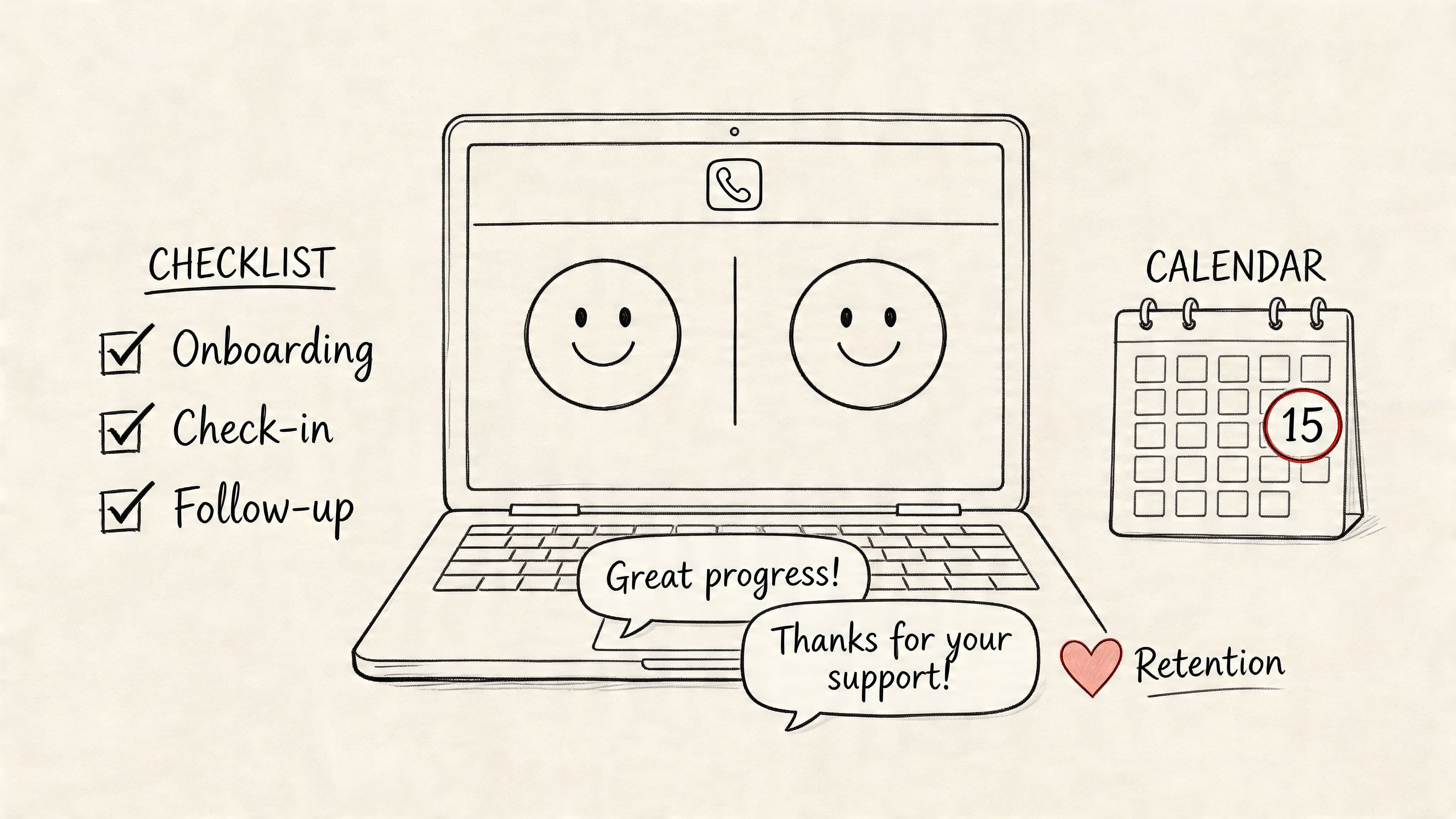
Companies like Zapier, Slack, HubSpot, and Calendly helped set the pattern for distributed customer teams. The useful takeaway is not brand prestige. It is how they run the work. Strong remote customer teams rely on playbooks, written communication, and clear ownership across onboarding, adoption, and renewal.
What makes this role low stress
A remote CSM role stays manageable when the company has already removed the common stress triggers.
Look for these signals:
- Defined account ownership: You know which accounts you own, what success looks like, and when reviews happen.
- Async account management: Customers can get updates through email, shared plans, recorded walkthroughs, and documented next steps instead of constant live calls.
- Limited escalation load: Product bugs, urgent support issues, and implementation problems have another team assigned to them.
- Stable renewal process: Renewals follow a schedule and a process, instead of turning into end-of-quarter panic.
- Healthy customer fit: The product solves a real problem, so the job is adoption and guidance, not apology management.
One interview question tells you a lot: ask what happens when a customer is unhappy, stops responding, or falls behind on onboarding. Good teams can describe the workflow in plain terms. Weak teams say everyone jumps in and figures it out.
That trade-off is easy to miss. Customer success looks low-stress from the outside because it is relationship-driven, but bad org design turns it into support, sales, and project cleanup in one seat. Good org design keeps the role narrow enough to do well.
If you want the calmer version, search for customer success roles on remote-first company job boards rather than broad job feeds where every posting with a familiar title gets mixed together. Filter for remote-first companies, then screen for terms like onboarding, lifecycle, adoption, account portfolio, and async communication. That approach cuts out a lot of the noisy listings that create stress before you even apply.
2. Technical Content Writer / Documentation Specialist
Technical writing stays calm for a simple reason. The work is usually tied to a product system, not a live queue.
A good documentation role runs on planned inputs. Product changes ship, APIs update, support spots recurring confusion, and someone turns that raw material into docs people can use. The pace is steadier than content marketing because the value comes from accuracy, maintenance, and clarity. Companies that understand this treat docs as part of the product, with review cycles, ownership, and enough time to verify what is true before publishing it.
Stripe, Vercel, MongoDB, and Datadog are useful reference points because their documentation sets a high bar. Writers in those environments still collaborate with engineers, product managers, and support, but the work itself is often async and evidence-based. You test the workflow, confirm the edge cases, revise in writing, and publish.
What to screen for
The title is unreliable here. “Content writer” can describe a documentation owner, or it can mean high-volume SEO production with constant deadline churn.
The lower-stress version usually has a few clear structural signals:
- Docs have an owner: The company expects someone to maintain accuracy over time, not publish and forget.
- Docs-as-code or version-controlled workflows: GitHub, Markdown, and pull requests create cleaner review cycles and fewer last-minute edits in scattered tools.
- Async reviews: Comments happen in docs, tickets, or pull requests instead of surprise meetings.
- No support queue coverage: Writers can interview support or use ticket data without becoming frontline support.
- Product teams that respect maintenance: Release notes, changelogs, migration guides, and help center updates are planned work, not afterthoughts.
That last point matters more than applicants realize. A docs job gets stressful when nobody owns the source material, engineers review late, and every request arrives as “quick copy help.” The role gets much better when documentation is part of release process, not cleanup after release.
Ask direct interview questions. Who requests docs work. How are updates prioritized. What happens when product and engineering disagree on wording. Whether writers are expected to join launches outside normal hours. Those answers tell you more than the title.
For the search itself, use a narrower board like Remote First Jobs for technical writer and documentation roles and filter with terms such as “technical writer,” “documentation specialist,” “developer education,” “docs-as-code,” and “knowledge base.” That cuts out a lot of generic content jobs that carry marketing quotas and always-on revision pressure.
3. Remote Data Analyst (Non-Real-Time)
Data analyst is one of the most misleading job titles in remote work. The calm version is built around scheduled reporting, trend analysis, experiment readouts, and dashboard upkeep. The stressful version sits too close to live operations, where every Slack message feels urgent and someone always wants an answer in five minutes.
If you want one of the better non stressful jobs, look for analytics roles where the company already separates decision support from incident response. That structural split matters more than the title. A business intelligence analyst who owns weekly reporting usually has a far steadier week than an analyst covering fraud spikes, logistics failures, or real-time service issues.
Here’s the workflow this role usually supports:
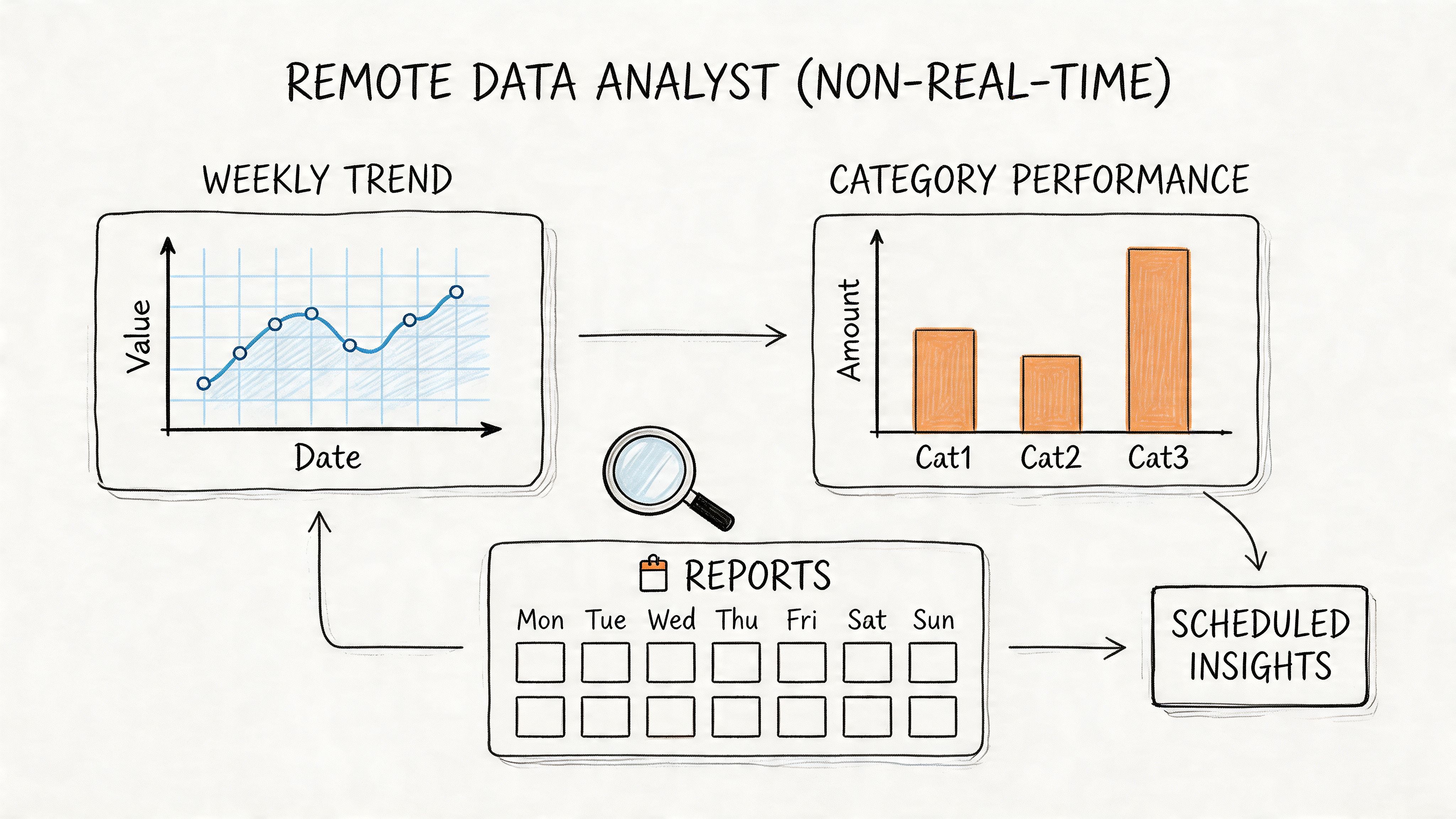
Companies like Figma, Zapier, Calendly, and Notion often use analytics to guide product, growth, and planning decisions. That tends to produce better working conditions because the analyst is supporting a review cycle, not acting as emergency staff.
What makes this version of analytics lower stress
The best roles have clear boundaries around time sensitivity.
Look for signals like these:
- Recurring reporting cadences: Weekly, monthly, or quarterly deliverables create a predictable workload.
- Asynchronous request intake: Stakeholder questions arrive through tickets, docs, or planned meetings instead of scattered Slack pings.
- No on-call duties: Ask this directly. If analytics is tied to alerts or incident coverage, stress rises fast.
- Stable BI stack: Looker, Mode, dbt, SQL-based reporting, and well-maintained dashboards reduce cleanup work and repeated fire drills.
- Defined stakeholders: Product, finance, or growth teams with named owners are easier to support than a company-wide free-for-all.
Role naming matters too. “Data analyst” on its own is too broad to trust. Better bets are business analyst, product analyst, customer insights analyst, or BI analyst. Those titles more often point to retrospective work, experimentation, reporting, and planning support.
I would also screen hard for request discipline. Ask who can submit analysis requests, how priorities are set, and what happens when an executive wants a same-day answer. Calm teams have a queue. Chaotic teams have a channel.
A lot of burned-out people from agency reporting, RevOps, or marketing operations do well here because the work rewards accuracy and judgment, not constant persuasion. You still deal with deadlines. You just know where they are coming from.
If you want a sense of the day-to-day, this walkthrough is useful before you start applying:
For the search itself, use the Remote First Jobs board for remote analyst roles and filter for “business analyst,” “product analyst,” “BI analyst,” and “customer insights.” Then read the job description for structural clues. Phrases like “weekly business review,” “self-service dashboards,” and “stakeholder planning” usually point to calmer work than “real-time monitoring,” “rapid response,” or “24⁄7 support coverage.”
4. Remote Project Manager (Non-Deadline-Heavy)
Project management only feels low-stress when the operating system is stable. The title alone tells you very little.
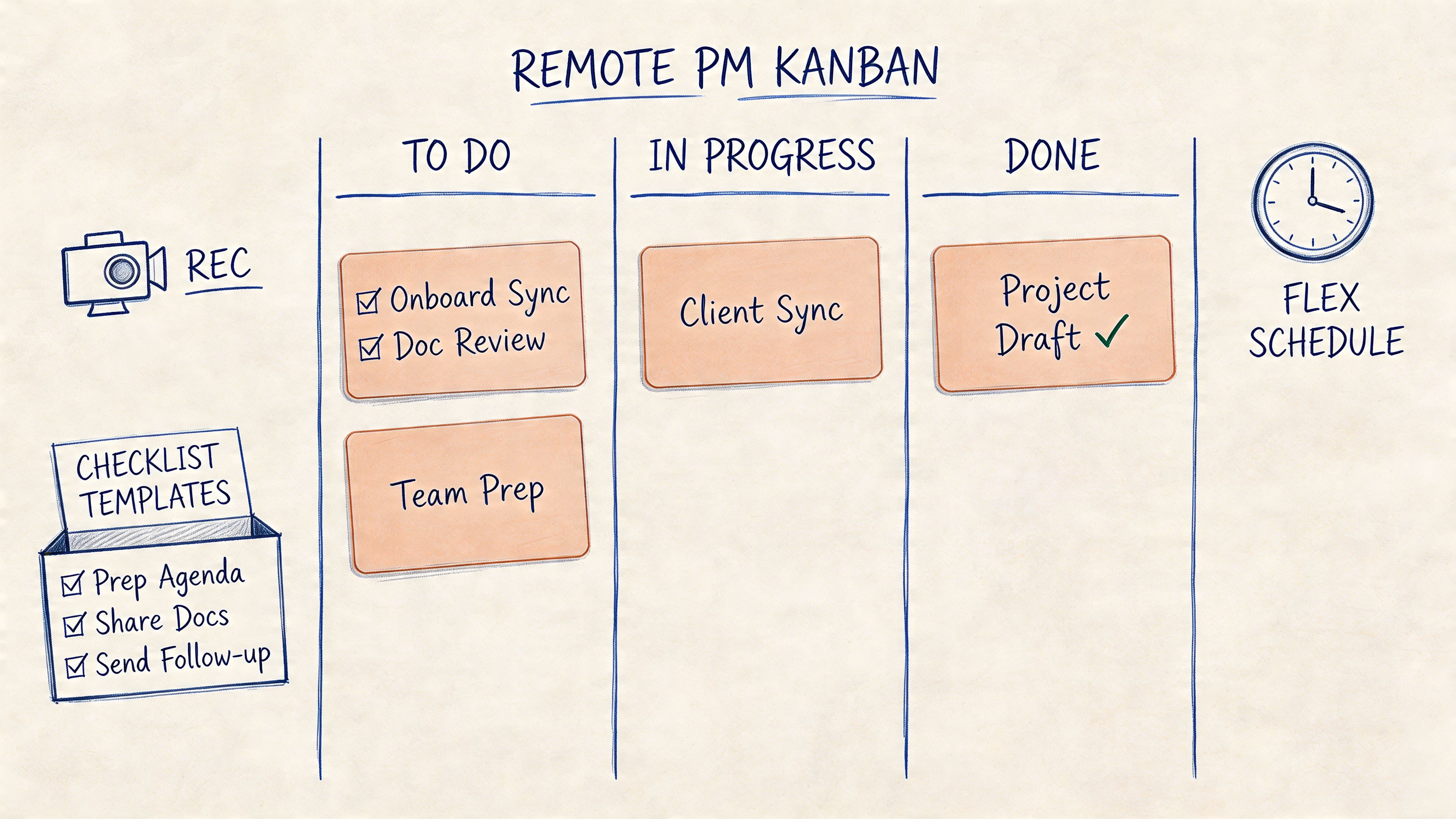
The best remote PM roles sit inside teams with clear owners, predictable planning cycles, and written updates that reduce interruption. In that setup, the job is less about chasing status and more about keeping work sequenced, risks visible, and handoffs clean. Stress drops for structural reasons. Fewer surprise requests. Fewer meetings held just to find out what is already late. Fewer deadline fights caused by vague scope.
GitLab, Automattic, Zapier, and Notion are useful reference points because they are known for documented processes and distributed coordination. That matters more than brand prestige. A company can be fully remote and still run on panic if priorities shift daily and nobody closes open decisions.
What actually makes this role calmer
The lower-stress version of project management usually has four traits:
- Deadlines tied to planning, not theater: The company can explain why a date exists, who set it, and what moves if scope changes.
- Async status reporting: Progress lives in tools and written updates, so the PM is not stuck running live status collection all day.
- Limited escalation duty: You are coordinating work, not serving as the 24⁄7 shock absorber for every missed handoff.
- Stable stakeholders: Teams with repeatable processes create far less stress than teams rebuilding priorities every week.
Tool choice helps, but behavior matters more. Asana, Linear, Jira, and Notion can support calm work. They can also hide chaos if nobody respects the workflow.
I would screen hard for planning cadence. Ask how often priorities change mid-sprint, who can add urgent work, and whether the PM owns delivery or only coordination. Those answers tell you whether the role is really project management or unofficial cleanup.
Title selection also matters here. Program manager, implementation manager, delivery manager, and operations manager often sit in steadier environments than a generic project manager posting. The safest bets usually involve recurring internal processes, client onboarding with defined stages, or cross-functional programs that follow a known calendar.
For the search itself, use the Remote First Jobs board for remote project and program roles and filter for titles that imply process ownership rather than constant rescue work. Then read for structural clues. Phrases like “quarterly planning,” “documented workflows,” “cross-functional coordination,” and “async updates” usually point to calmer jobs than “fast-paced environment,” “wear many hats,” or “manage shifting priorities in real time.”
5. Remote UX/Content Researcher
Research work tends to be calmer than execution-heavy product roles because the core task is understanding before reacting.
UX researchers and content researchers interview users, synthesize behavior, identify patterns, and turn those findings into product guidance. Done well, it’s deliberate work. You schedule sessions, review recordings, code insights, and present findings. That pace is much more sustainable than constant launch pressure.
Figma, Slack, Stripe, and Notion all show what mature product research can look like. In those kinds of teams, research isn’t an afterthought squeezed in between emergencies. It sits inside the roadmap.
Why the structure matters
Research becomes low stress when the company already values it. If not, the role can slide into rushed validation work and endless stakeholder debate.
Good signals include a dedicated repository for research, clear methods, and enough time for synthesis. The strongest roles let you spend most of your energy on actual research, not proving the function should exist.
The easiest way to spot a bad research job is this: the company wants “fast feedback” on everything but can’t explain how findings influence product decisions.
This role also works well for remote professionals who are strong listeners but tired of constant visibility contests. The work rewards judgment, note-taking discipline, pattern recognition, and communication. It doesn’t reward being the loudest person in the room.
I also like this path for former marketers, journalists, content strategists, and consultants. Many of the underlying skills transfer cleanly, especially if you can build a portfolio with interview plans, synthesis docs, research summaries, or usability findings.
6. Remote Grant Writer / Fundraising Coordinator
Grant writing is one of the few writing-heavy roles where pressure often comes in waves instead of every hour.
That rhythm matters. You research funders, collect program information, write proposals, revise against requirements, and submit. There are deadlines, but the work is usually deliberate rather than chaotic. For many people, that makes it one of the more practical non stressful jobs outside mainstream tech.
Mission-driven organizations like GiveDirectly, charity: water, and GiveWell show the kind of environment to target. The strongest roles sit inside organizations with organized programs, clear impact language, and realistic proposal planning.
Where the stress actually comes from
Grant writing itself isn’t usually the problem. Internal disorganization is.
A solid grant role tends to have:
- Reusable proposal materials: Past narratives, approved language, and budget templates.
- Program access: You can get answers from people running the work.
- Funding clarity: The organization isn’t treating every application as a last-minute rescue attempt.
- Calendar visibility: You know what’s due well before the week it’s due.
If you’re entering this field, build samples fast. A mock proposal summary, a case for support, or a foundation research brief can do more for you than generic “excellent writer” claims.
For foundational skills, grant writing for beginners is a useful starting point.
This is also a role where industry fit matters more than prestige. A well-run small nonprofit with clear programs can be calmer than a famous organization with constant internal churn.
7. Remote Community Manager (Mature Communities)
Community management can be peaceful or exhausting. The word “community” hides both realities.
The low-stress version lives inside mature communities where members already help each other, moderation rules are clear, and the company doesn’t treat the community team like overflow support. In those cases, the work is mostly facilitation. You guide discussion, highlight useful contributions, coordinate events, and keep the environment healthy.
That’s very different from acting as a live complaint sponge.
Zapier, Figma, Stripe, and Notion all offer useful examples of the mature model. Their communities have enough structure that the manager can focus on engagement rather than policing disorder all day.
Signs of a healthy community role
Look closely at the existing ecosystem before you apply.
You want to see:
- Member-to-member help: If users already answer each other, the load is lighter.
- Published guidelines: Clear rules reduce emotional labor.
- Moderation support: Shared ownership beats solo moderation.
- Program infrastructure: Ambassadors, featured members, and planned events create proactive work.
The title can also mislead. Some “community manager” jobs are support roles with branding layered on top. Read for clues like ticket handling, urgent escalation, or coverage requirements across nights and weekends.
Mature communities create calmer jobs because not every problem reaches the manager. The system absorbs part of the load.
If you enjoy writing, pattern recognition, diplomacy, and light programming of events or campaigns, this role can be surprisingly sustainable. It’s especially good for people who like people but hate hard selling.
8. Remote Learning & Development Specialist
Learning and Development is calm when the company treats training as infrastructure, not a scramble.
L&D specialists design courses, improve onboarding, document internal processes, and support employee growth. Because the work is internal, it usually avoids the emotional volatility that comes with external customer pressure. Most projects have a scope, a stakeholder group, and a delivery window. That alone lowers stress.
GitLab, Automattic, HubSpot Academy, and Coursera for enterprise learning are the kinds of organizations that make this work attractive. They understand distributed education, and they usually have systems for content review and rollout.
The version to target
Instructional design and async learning roles are usually calmer than live training-heavy jobs.
The best setups include:
- Recorded or self-serve learning: Asynchronous modules scale better than nonstop facilitation.
- Mature LMS tools: Clean systems reduce admin thrash.
- Documented competencies: Clear learning goals make stakeholder requests less vague.
- Longer project cycles: Curriculum design is steadier than emergency workshop requests.
This field is a strong fit for former teachers, enablement leads, onboarding specialists, and internal communications professionals. If you can turn messy information into clear learning experiences, you already have the core skill.
A portfolio matters. Course outlines, lesson samples, slide decks, knowledge checks, and process guides all help. You don’t need a huge body of work. You need evidence that you can design learning, not just deliver it live.
9. Remote Bookkeeper / Accountant (Small Businesses / Startups)
Bookkeeping stays low-stress for one simple reason. The work follows a calendar.
In a healthy small business, the rhythm is predictable. Transactions need categorizing, accounts need reconciling, receipts need matching, and month-end close follows a known sequence. That structure matters more than the job title. A remote bookkeeping role is calm when the company already has clean systems, clear approvals, and realistic close expectations.
Small startups can still be good employers here, but only if finance is treated as an operating function instead of a cleanup project. I would look closely at whether they already use cloud accounting software, whether bank feeds are reliable, and whether someone has defined who handles AP, payroll inputs, reimbursements, and tax coordination. If all of that is vague, the stress will land on the bookkeeper.
What actually makes this role manageable
The best remote bookkeeping jobs share a few structural traits:
- A defined close process: You know what happens weekly, monthly, and quarterly.
- Clean system ownership: The role is not absorbing payroll, HR admin, vendor disputes, and random operations work.
- Reasonable deadlines: Month-end is busy, but it should not feel like an emergency every cycle.
- Asynchronous communication: Finance work benefits from written requests, documented approvals, and fewer interruptions.
- Stable transaction patterns: Predictable volume is easier than constant exception handling.
That last point gets overlooked. A business with modest but consistent transaction volume is often easier to support than a higher-growth company with messy categorization rules, three payment tools, and no receipt discipline.
This role fits people who like precision, routine, and visible completion. It also works well for part-time, fractional, and contract arrangements. If you are searching direct-hire roles, use a filtered board built for distributed companies, such as remote accounting and bookkeeping roles on Remote First Jobs, instead of competing inside broad job feeds where finance titles get mixed with hybrid and mislabeled postings.
For contract comparisons and market-specific titles, contract accounting jobs remote is useful for seeing how employers frame bookkeeping, staff accounting, and fractional finance work.
10. Remote Technical Support Specialist (Tier 2 / Non-Emergency)
Support work only becomes low stress when the company has already invested in support systems.
Tier 2 or non-emergency technical support is different from frontline, high-volume support. You’re usually dealing with documented issues, reproducible problems, escalation paths, and a searchable knowledge base. That creates order. Instead of absorbing every incoming request, you solve the issues that need judgment.
Zapier, Stripe, Calendly, and Airtable illustrate the pattern. Their support environments are built around documentation, product education, and structured escalation, not pure speed.
What to avoid
Many support roles look fine until you read the details.
Be cautious if the posting emphasizes constant live chat coverage, aggressive first-response expectations, weekend rotations without clear boundaries, or vague “wear many hats” language.
Better signals include:
- Knowledge base ownership: The company wants support to improve the system, not just clear tickets.
- Escalation layers: Engineers or specialists handle what’s beyond your scope.
- Asynchronous support: Written troubleshooting is calmer than nonstop calls.
- Issue documentation: Repeated problems get captured and reduced over time.
This role can be a strong fit for people who enjoy troubleshooting but don’t want the unpredictability of incident response or the pressure of sales engineering. It’s also a good bridge into product operations, support engineering, or documentation.
If you’re screening for sanity, ask how often tickets arrive as known issues versus completely novel problems. Known issue environments are usually much calmer.
10 Low-Stress Remote Jobs Comparison
| Role | 🔄 Process complexity | ⚡ Resource requirements | 📊 Expected outcomes | ⭐ Ideal use cases | 💡 Key tips |
|---|---|---|---|---|---|
| Remote Customer Success Manager | Low, relationship-driven, predictable check-ins | Moderate, CRM & CSM tools, async comms | Improved retention and NPS; reduced churn | SaaS with subscription models and stable product | Target companies with NPS >50 and documented CSM playbooks |
| Technical Content Writer / Documentation Specialist | Low, deep-work writing cycles, async reviews | Low–Moderate, docs-as-code, Git, CMS | Clear documentation, higher adoption and search traffic | API-first or developer-focused products | Build a GitHub/docs portfolio; prefer docs-as-code stacks |
| Remote Data Analyst (Non-Real-Time) | Moderate, scheduled reporting and analysis sprints | High, SQL/Python, BI stack (dbt, Looker, Tableau) | Actionable insights and recurring dashboards | Companies with mature data culture and BI needs | Aim for business-analytics roles; confirm zero on-call expectations |
| Remote Project Manager (Non-Deadline-Heavy) | Low–Moderate, process-driven, async coordination | Moderate, PM tools (Notion, Linear, Asana) | Smoother workflows and predictable deliveries | Async-first product teams and steady-state projects | Seek firms with published async guidelines; ask about meeting cadence |
| Remote UX/Content Researcher | Moderate, study design, recruitment, synthesis | Moderate, research tools, prototyping (Figma, Miro) | Usable user insights that inform product direction | Product-led teams valuing user research | Target companies with research repos; maintain a studies portfolio |
| Remote Grant Writer / Fundraising Coordinator | Low–Moderate, research-heavy, deadline cycles | Low, grant databases and writing tools | Funding wins and measurable program support | Well-funded nonprofits and mission-driven orgs | Apply to well-funded orgs; quantify past proposal outcomes |
| Remote Community Manager (Mature Communities) | Low, async moderation, curation, governance | Low, community platforms (Discord, Slack, Circle) | Higher engagement, advocacy, and retention | Large, self-moderating communities (5k+ members) | Prefer roles with moderation team and automation in place |
| Remote Learning & Development Specialist | Moderate, curriculum projects and content creation | Moderate, LMS and authoring tools | Improved employee skills, completion metrics | Scaling remote companies with learning budgets | Seek mostly-asynchronous L&D roles; show course examples |
| Remote Bookkeeper / Accountant (Small Businesses / Startups) | Low, rule-based, repetitive accounting tasks | Low–Moderate, cloud accounting (QuickBooks, Xero) | Accurate financials and predictable reporting cadence | Well-organized small businesses and startups | Prefer clean financial processes; consider fractional roles |
| Remote Technical Support Specialist (Tier 2 / Non-Emergency) | Moderate, structured tickets and documented workflows | Moderate, product knowledge, KB & ticketing tools | Resolved complex tickets and improved support metrics | Mature SaaS with KBs and clear escalation paths | Aim for roles with manageable ticket loads and KB ownership |
Your First Mover Advantage in the Low-Stress Job Market
Job seekers often approach the hunt for non stressful jobs the wrong way. They search broad titles on LinkedIn, sort by “remote,” and then compete with everyone else who did the same thing a few hours earlier. That method creates stress before the job even starts.
A smarter approach is structural.
First, search for roles that are calm by design. Async communication. Clear written processes. No on-call rotation. Measured stakeholder expectations. Established documentation. Mature tooling. Steady-state teams. Those traits matter more than the employer’s brand name or a vague promise about work-life balance.
Second, target the company type, not just the title. Existing career content on low-stress work spends too much time on no-degree roles and misses the larger opportunity for mid-to-senior remote professionals in data, writing, operations, product support, and customer-facing work with structure. That gap is especially clear in coverage of remote low-stress roles for tech and marketing professionals, as noted in College Raptor’s discussion of low-stress jobs that pay well without a degree.
Third, stop assuming the hottest company is the safest place to build a calm career. AI adoption is still concentrated. About 18% of firms had adopted AI by year-end 2025, and almost 90% of AI-related job postings came from just 1% of companies, according to Indeed Hiring Lab’s analysis of concentrated AI adoption. For job seekers, that matters. Many attractive remote roles still sit inside companies operating in more stable, less disrupted workflows.
There’s also a straightforward search advantage available right now. Remote-first company growth has expanded the pool of distributed jobs dramatically, with over 21,000 firms being monitored and more than 200,000 new distributed jobs appearing monthly in the market described in the verified data above. If you’re early, you avoid the applicant pileup that happens once a role gets syndicated everywhere.
That’s the first-mover edge. You’re not trying to outclick the crowd. You’re trying to get upstream of it.
Build a shortlist from the role types in this guide. Search by function and by company maturity. Read job descriptions for workflow clues, not just perks. Then apply directly, fast, and before the listing turns into another public feeding frenzy.
Remote work feels better when the search does too. Remote First Jobs helps you find verified remote openings sourced directly from company career pages, not recycled job board spam. If you’re tired of ghost jobs, dead links, and applying after the crowd, it gives you a cleaner way to target calm, legitimate roles before they go viral.