An informational interview is a short conversation with someone who already works where you might want to work. You are not asking for a job. You are gathering information, building a relationship and hearing about openings before they are posted. For remote roles this matters even more, because so much of the job depends on how a distributed team communicates, works across time zones and makes decisions without an office.
Generic questions like “What’s it like to work here?” won’t tell you much. The difference between a good remote job and a frustrating one is usually in the details: how performance is measured across time zones, how the team stays connected without an office, and how the company keeps people from burning out. This guide gives you ten questions for an informational interview that are written for remote work.
For each question you’ll find:
- Why it matters when you are weighing a remote role.
- What to listen for in the answer.
- How to follow up so you get specifics, not slogans.
Whether you are a student, changing careers or looking for a better remote fit, these questions will help you decide on your next move with more confidence.
1. What does a typical day look like in this role, especially in a remote environment?
This question goes past the job description to the day-to-day reality of the position. Remote teams differ a lot in structure and communication habits, so the daily rhythm tells you whether you’ll fit. The answer shows the mix of live and asynchronous work, how many meetings there are and how much autonomy you’ll have.
The answer also shows the unwritten rules of the workplace. You might learn that the company promotes flexibility but the team you’d join has core meeting hours that clash with your schedule. Or you might find an asynchronous culture that suits your wish for long stretches of uninterrupted work.
Example Scenarios
- A software developer learns the team has a three-hour “core collaboration” window (10 am to 1 pm EST) for meetings, and the rest of the day is flexible.
- A marketer discovers the role involves a daily one-hour standup and two hours of live collaboration, with the remaining hours for independent projects.
- A product designer finds out they set their own project timelines, with asynchronous check-ins on Slack and one weekly team sync.
Follow-Up Questions
Dig deeper with targeted follow-ups.
- Meeting Density: “How many hours per week are typically spent in scheduled meetings?”
- Communication Style: “What are the team’s expectations for response times on Slack or email?”
- Work Flexibility: “How does the team handle personal appointments or unexpected needs during the workday?”
Asking about the daily workflow gives you a concrete picture of the role and helps you find jobs that match how you work best. If you want to compare how different employers set up remote work, Remote First Jobs collects listings from 21,000+ company career pages, so you can see what similar roles ask for before the call.
2. How does your company support professional development and career growth for remote employees?
Many remote workers worry about being “out of sight, out of mind” when promotions come around. This question gets past general promises of growth to the actual systems and resources a company offers its distributed team. It shows whether development is a real priority or an afterthought, which matters if you plan to stay for years.
The answer separates companies that simply allow remote work from those that are built for it. A strong answer names specific programs designed for a distributed team, not office programs moved onto Zoom. You might find a documented career ladder and a budget for online training, or you might find that growth depends on being seen in person.
Example Scenarios
- A project manager learns the company has an annual learning budget and encourages people to attend virtual conferences.
- A content writer finds out that GitLab publishes its company handbook online, so she can read how it approaches career development before the call.
- An HR specialist discovers the company runs a formal mentorship program that matches remote employees across teams.
Follow-Up Questions
Ask for specifics to see how the policies work in practice.
- Mentorship and Sponsorship: “Are there formal mentorship or sponsorship programs for remote employees? How are those relationships set up?”
- Budgets and Resources: “Is there a budget for professional development, and what does it usually cover (courses, certifications, conferences)?”
- Internal Mobility: “Can you share an example of a remote employee who was promoted or moved into a different role?”
- Learning Culture: “What asynchronous learning resources are there for people in different time zones?”
Asking about career support for remote staff shows you are thinking long term, and it helps you spot employers that invest in people wherever they live.
3. What tools and technology does the team use for collaboration and communication?
On a remote team, the software stack is the office. This question shows the tools you’ll use every day and how the team manages projects, shares knowledge and stays in touch. It also tells you how mature the company is at supporting a distributed team.
The answer goes beyond personal preference. It shows whether the company has picked tools that support asynchronous work or relies on a patchwork that suits an office better. A well-connected setup of Slack, Asana and Notion suggests a deliberate approach to remote operations, while project management by email chain suggests the team hasn’t adapted yet.
Example Scenarios
- A design studio might say it works in Figma for design, Slack for communication and Notion for documentation, all connected so work can move forward asynchronously.
- An engineering team could describe GitHub for version control, Jira for sprint planning and Loom for asynchronous code walkthroughs and video documentation.
- A marketing team may use Asana for project tracking, Google Workspace for shared documents and Slack channels for live campaign updates.
Follow-Up Questions
Use this question as a starting point to understand the team’s digital habits.
- Onboarding and Support: “What training or support do new team members get to learn these tools?”
- Tool Philosophy: “Are these tools required, or can people use other software they know well?”
- Async Setup: “How are these tools set up or used to support asynchronous work?”
- Backup Plans: “What happens if a main tool like Slack or Jira goes down?”
Knowing the tool stack helps you judge how productive and comfortable you’d be in the role. It shows how work actually gets done and whether the company has built a digital workplace you’d do well in.
4. How does your company handle time zone differences and ensure inclusivity for global team members?
For remote companies with global teams, time zones are more than a scheduling problem. How a company handles them shows how fair its culture is. This question tells you whether there are clear, equitable policies or whether some people are always at a disadvantage because of where they live. It also shows whether the company supports a global team or only allows remote work within one main time zone.
If you are an international candidate, this is one of the most important questions you can ask. The answer tells you whether you’d be expected to join late-night meetings regularly or whether everyone can contribute during their own working hours. Some companies rely on asynchronous communication so time zones matter less. In others, key decisions happen in live meetings that half the team can’t attend.
Example Scenarios
- A project manager in Asia learns the company rotates its weekly all-hands meeting time each quarter so people in APAC, EMEA and the Americas take turns with the inconvenient slot.
- An engineer in Europe discovers the team has a “no meetings before 9 am local time” rule and relies on detailed documentation for asynchronous decisions.
- A support specialist finds out the company has no time zone policy, and she would be expected to overlap with the US headquarters for several hours each day.
Follow-Up Questions
Dig deeper to see what the policies mean day to day.
- Core Hours: “Does the team have core hours for collaboration, and if so, what are they in my time zone?”
- Meeting Practices: “How are meetings recorded and shared? How are decisions passed on to people who couldn’t attend?”
- Inclusion Check: “How is async feedback from other time zones included in time-sensitive projects?”
How a company handles global collaboration affects your long-term success and well-being. Ask how the team finds meeting times that work across zones, and whether that burden is shared. The answer shows whether the company is built for a distributed team or only tolerates one.
5. What is the company’s approach to work-life balance and preventing burnout in a remote setting?
This question addresses one of the biggest problems with remote work: the line between work and home life gets blurry. Formal policies can look good on paper, so this question asks about the habits and actions that actually protect people’s well-being. It separates companies that simply allow remote work from those that have thought about making it sustainable.
The answer shows whether the company understands the burnout risk of an “always-on” digital workplace. It also tells you how much the company cares about its team’s mental health over the long run. A thoughtful answer points to a mature remote culture that values results over constant presence.
Example Scenarios
- A project manager learns the company expects people to stay offline on vacation and sets a minimum amount of time off each year.
- A customer support specialist discovers the company runs regular pulse surveys on team well-being and offers dedicated mental health days.
- A UX designer finds out the company defaults to asynchronous communication so nobody feels they have to be online all the time.
Follow-Up Questions
Specific follow-ups give you a clearer, more honest picture.
- Response Expectations: “What are the team’s expectations for answering Slack messages or emails after hours or on weekends?”
- Leadership Example: “How do managers show and encourage healthy boundaries for their teams?”
- Wellness Resources: “Does the company offer mental health support, such as subsidized therapy or a wellness stipend, for remote employees?”
Asking about burnout prevention helps you judge whether the culture will support you over years, not just push for short-term output. You want a remote role that is both rewarding and sustainable.
6. How is remote work performance measured and evaluated?
This question gets to the heart of a remote company’s culture: does it run on trust and results, or on micromanagement and monitoring? Hours at a desk mean nothing on a remote team, so you need to know how success is defined and measured. The answer shows whether managers know how to judge remote work fairly and what you’ll be held accountable for.
It also shows how mature the company’s remote operations are. You might find a team that judges outcomes rather than activity, or you might find invasive monitoring software that signals a lack of trust. Either way, you’ll learn whether the evaluation methods fit your work style and values.
Example Scenarios
- A project manager learns that success is measured by projects delivered, client satisfaction scores and team feedback, with no time tracking.
- A customer support agent discovers performance is based on ticket resolution times and customer satisfaction (CSAT) scores, and that async contributions to the knowledge base also count.
- A content writer finds out her evaluation is tied to shared Objectives and Key Results (OKRs), such as organic traffic growth and leads from her articles.
Follow-Up Questions
Follow up to understand the details of the review process.
- Tools and Metrics: “What tools or metrics are used to measure performance? Is there any activity monitoring, like keystroke tracking?”
- Feedback Cadence: “How often do people get formal and informal feedback? Is it ongoing or tied to an annual review?”
- Asynchronous Work: “How do asynchronous contributions, like detailed documentation or thoughtful comments on a project board, count in reviews?”
Asking how remote performance is measured tells you a lot about how the company manages people. It helps you avoid teams that reward looking busy online and find a role where your actual work is what counts.
7. What is the onboarding process like for remote employees, and how is company culture maintained?
This question covers two things that shape how happy you’ll be in a remote role: how you are brought in, and how you stay connected afterwards. A structured remote onboarding process is a sign of a mature remote company, and a clear plan for keeping the culture alive shows it cares about engagement. Unlike in an office, neither happens by accident. Both have to be designed.
The answer separates companies that tolerate remote work from those that have embraced it. A vague answer may mean new hires are left to figure things out alone, which is a red flag. A detailed answer about buddy systems, structured learning paths and virtual social events points to a supportive, well-organized team.
Example Scenarios
- A project manager learns the company assigns every new hire an onboarding buddy and runs a structured first week of short video sessions.
- A content strategist discovers the company’s culture is written down in a detailed public handbook, as at GitLab, so new people can learn at their own pace.
- A customer support specialist finds out the company runs a remote training program with set learning paths and regular check-ins during the first weeks.
Follow-Up Questions
Ask for specifics about both the first weeks and the longer-term culture.
- Onboarding Structure: “Can you give me examples of onboarding activities in the first 30 days?”
- Mentorship: “Is there a buddy system or mentorship program for new hires?”
- Ramp-Up: “How long does it usually take a new person to become fully productive in this role?”
- Culture and Connection: “What virtual events or rituals does the team have to build relationships?”
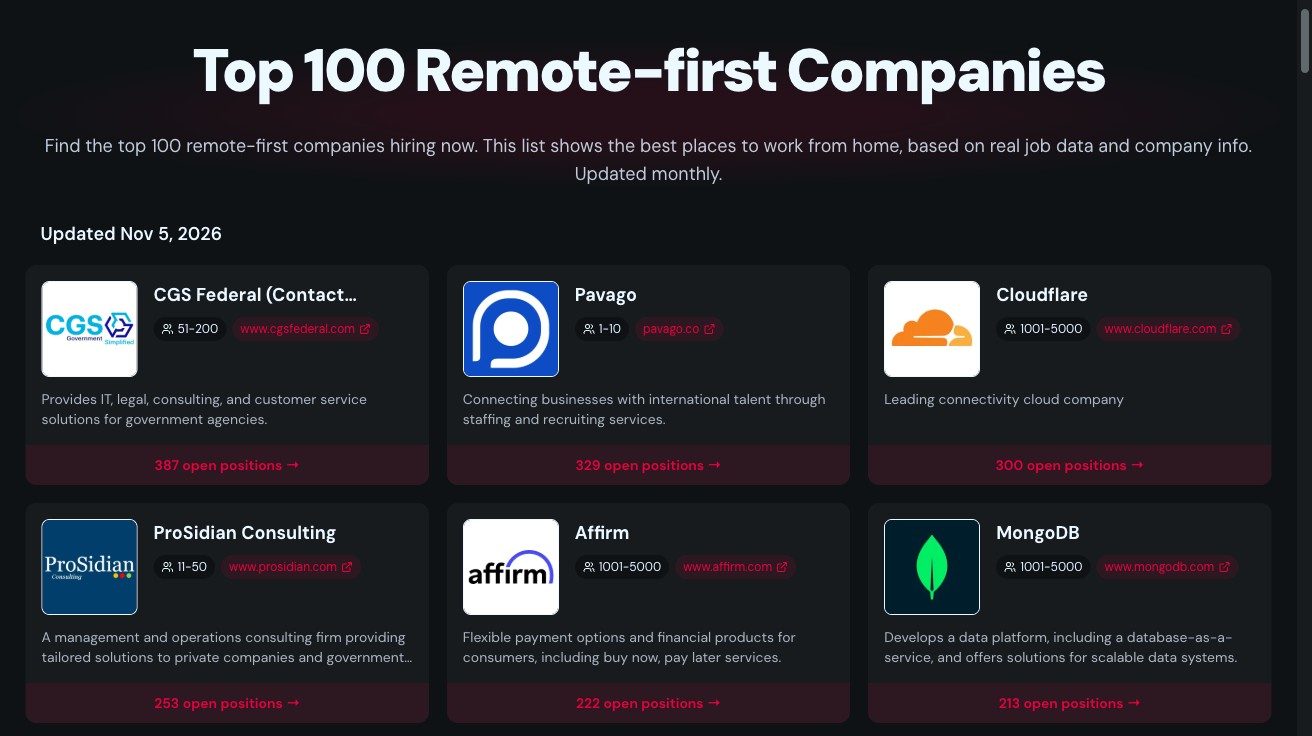
Understanding how a company welcomes and supports its remote staff helps you judge whether you’ll do well there. To find people to talk to, start with employers that already run remote teams, such as the top remote companies list, which shows how many open positions each company has and is updated monthly.
8. What is the company’s hiring philosophy and how does it approach diversity in a remote setting?
Remote hiring can widen a company’s talent pool a great deal, or it can repeat old biases. This question shows whether a company is deliberate about diversity, equity and inclusion (DEI) or only talks about it. It helps you understand whether they recruit from underrepresented groups, remove location barriers and keep the hiring process fair for every remote candidate.
The answer shows whether the company uses its remote setup to hire from a global talent pool or falls back on familiar networks. A real commitment to inclusion usually comes with better support systems, fairer policies and a healthier workplace.
Example Scenarios
- A project manager learns the company partners with organizations that support professionals from underrepresented backgrounds and has dropped degree requirements for many roles.
- A data analyst discovers the company publishes an annual diversity report and funds Employee Resource Groups (ERGs) for several communities.
- A customer support specialist finds out the company has a “work from anywhere” policy, so it can hire people regardless of location or time zone.
Follow-Up Questions
Dig deeper to see how the philosophy works in practice.
- Metrics and Transparency: “Does the company track and share diversity metrics, publicly or internally?”
- Inclusion Programs: “What programs or ERGs support employees from different backgrounds?”
- Hiring Practices: “How does the hiring process reduce unconscious bias, especially when interviewing candidates from other cultures?”
A company’s approach to diversity tells you whether you’ll find a supportive and fair workplace. If this matters to you, browse companies hiring remotely and note which ones hire across many countries, then ask about their approach in your conversations.
9. How does the company support employees in different countries regarding legal and tax compliance?
When you work remotely across borders, your job comes with legal and tax questions that don’t exist in an office. This question shows how a company manages its global team, from employment status and tax paperwork to benefits and local labor law. If you’d be working from another country, you need to understand this before you go further.
The answer affects your legal standing and your finances. A company that has this sorted out is mature in its remote operations, while vague answers can mean paperwork trouble later. You need to know whether you’d be a contractor or an employee and what support you’d get to stay compliant.
Example Scenarios
- A software engineer in Portugal learns the company uses an employer of record (EOR) service such as Deel or Remote to handle the local contract, payroll and benefits under Portuguese labor law.
- A content strategist in Argentina discovers she would be hired as a contractor, but the company pays a stipend for private health insurance and accounting.
- A UI/UX designer in Canada finds out the company has a Canadian legal entity, so he would be a full-time employee with standard provincial benefits and tax deductions handled by the company.
Follow-Up Questions
Use these follow-ups to understand the company’s global employment setup.
- Employment Status: “For someone in my country, would I be a full-time employee or an independent contractor?”
- Compliance Responsibility: “Who handles tax documents and local labor rules, me or the company?”
- Benefits Availability: “Are benefits like health insurance and retirement plans available to people in my location?”
- Hiring Experience: “Has the company hired in my country before? Is there an established process?”
10. What salary, benefits, and compensation transparency does the company provide, especially for remote roles?
This question covers one of the hardest parts of remote work: fair and transparent pay. It may feel forward, but in an informational interview you are asking about the company’s approach, not negotiating an offer. The answer shows how it handles pay equity, cost-of-living adjustments and benefits across countries.
It also shows how mature a remote company is in money matters. Some companies, like Buffer, publish their salary formula and the full list of salaries. In others, pay is set case by case, which can lead to unfair gaps. Knowing which kind of company you’re talking to helps you judge the full package.
Example Scenarios
- A project manager learns the company pays the same for a role no matter where the employee lives.
- A data analyst discovers the company uses a published pay formula with a location factor, similar to Buffer.
- A customer support specialist finds out that salary is adjusted for her region, but the benefits package is the same worldwide, including a health and wellness stipend.
Follow-Up Questions
Frame your questions around the company’s approach rather than your own expectations.
- Salary Range: “How does the company approach salary transparency? Are ranges shared internally or in job posts?”
- Location Impact: “How does pay account for people in different locations or cost-of-living areas?”
- Total Compensation: “Beyond salary, what do benefits and equity usually look like at this level?”
- Pay Equity: “Is there a formal process to check pay equity across demographics and locations?”
A company’s stance on pay tells you a lot about how fair and open its culture is. Before the call, look at the company’s current listings on the remote jobs board and note whether they show a salary range. If they do, you can ask how the range was set.
The 10 Questions at a Glance
| Question | What it shows | Most useful for |
|---|---|---|
| What does a typical day look like in this role, especially in a remote environment? | Meeting load and the balance of live and async work | Checking daily workflow and schedule fit |
| How does your company support professional development and career growth for remote employees? | Training budgets, mentorship and promotion paths | People who care most about growth and promotions |
| What tools and technology does the team use for collaboration and communication? | The tool stack, how it connects and how it supports async work | Judging technical fit and the learning curve |
| How does your company handle time zone differences and ensure inclusivity for global team members? | Core hours, meeting rotation and async habits | Global teams and work across time zones |
| What is the company’s approach to work-life balance and preventing burnout in a remote setting? | Off-hours expectations, time-off norms and support | People who value boundaries and mental health |
| How is remote work performance measured and evaluated? | Whether reviews look at outcomes or at monitoring | Roles that need clear accountability |
| What is the onboarding process like for remote employees, and how is company culture maintained? | Handbook quality, buddy systems and team rituals | New hires joining a distributed team |
| What is the company’s hiring philosophy and how does it approach diversity in a remote setting? | Bias reduction, transparency and diversity goals | Underrepresented candidates and global hiring |
| How does the company support employees in different countries regarding legal and tax compliance? | Contractor or employee status and benefits by country | International hires and cross-border contractors |
| What salary, benefits, and compensation transparency does the company provide, especially for remote roles? | Salary ranges, location adjustments, equity and benefits | Comparing total pay across locations |
From Questions to Connection: Your Next Steps
You now have ten questions for an informational interview and several dozen follow-ups, each meant to show how a remote company really works. Instead of generic questions about daily tasks, you can ask about the culture, communication habits, performance reviews and how the company includes people around the world. The point is not to sound clever. It is to collect enough information to be sure your next move is the right one.
The value comes less from asking the questions than from what you do with the answers. Adapt your approach to your situation, whether you are a student or changing careers, and turn the call into a real conversation about how remote work happens at that company.
Comparing What You Heard
After each conversation, compare what you heard. Did one person’s description of “asynchronous communication” clash with another’s story about late-night Slack messages? Did the official policy on professional development match what employees told you about their own experience?
Look for patterns and contradictions. They help you build a much fuller picture of a company than any job description or “About Us” page can give you.
Key takeaway: an informational interview is not a one-off event. Talk to more than one person, and put their answers together to see how the company really works remotely.
Turning a Conversation Into an Opportunity
With what you’ve learned, you can plan your next steps.
- Follow up quickly: within 24 hours, send a personal thank-you email. Skip the generic template and mention something specific from the conversation, for example: “I appreciated hearing how the team uses Notion to record project decisions.” It shows you were listening and that you value their time.
- Keep in touch: connect on LinkedIn with a personal note. The goal is a lasting professional relationship, not a one-off favor. From time to time, share a relevant article or congratulate them on a work milestone.
- Refine your search criteria: update your personal “must-haves” and “deal-breakers” for a remote role. You might realize that flexible hours matter more to you than the tool stack. Let each conversation sharpen your focus.
Asking good questions is a skill you’ll use for your whole career. Good open-ended questions start with “how” or “what”, invite a story rather than a yes or no, and leave room for follow-ups. Better questions for an informational interview lead to better choices, and over time to a career that fits your values, your work style and your long-term plans.
Ready to put these questions to work? Start with the employers that hire remotely. Remote First Jobs collects listings straight from company career pages and the applicant tracking systems behind them, as explained on our methodology page. Browse remote jobs on Remote First Jobs.