The discussion around remote work has evolved far beyond simply ditching the daily commute. In 2026, choosing to work from home is a strategic career decision that impacts everything from your financial health and mental well-being to your long-term career trajectory. While traditional offices have their place, the data-backed benefits of remote work offer a compelling case for professionals seeking greater autonomy, productivity, and life satisfaction. The core argument is simple: a well-structured remote role can unlock significant professional and personal advantages.
This guide moves past the generic perks and dives deep into the tangible, evidence-based advantages that are reshaping the modern workforce. We will explore ten powerful reasons to work from home, complete with actionable tips to make it a success and insights on how to find companies that truly embrace a remote-first culture. From quantifiable cost savings to enhanced focus, we will examine the specific ways How Working From Home Benefits Employees beyond the obvious. Get ready to see why the future of high-impact work is happening right from your home office. Ready to skip the noise and find a role that fits? Platforms like Remote First Jobs connect you directly to verified, remote-first companies, eliminating the spam and ‘ghost jobs’ common on larger boards.
1. Increased Productivity and Focus
A primary reason to work from home is the significant boost in productivity it offers. By removing common office distractions like impromptu meetings, chatty colleagues, and the general clamor of an open-plan environment, remote work allows for deep, uninterrupted concentration. This environment is ideal for tasks requiring sustained mental effort, enabling professionals to enter a state of “flow” and complete complex work more efficiently.
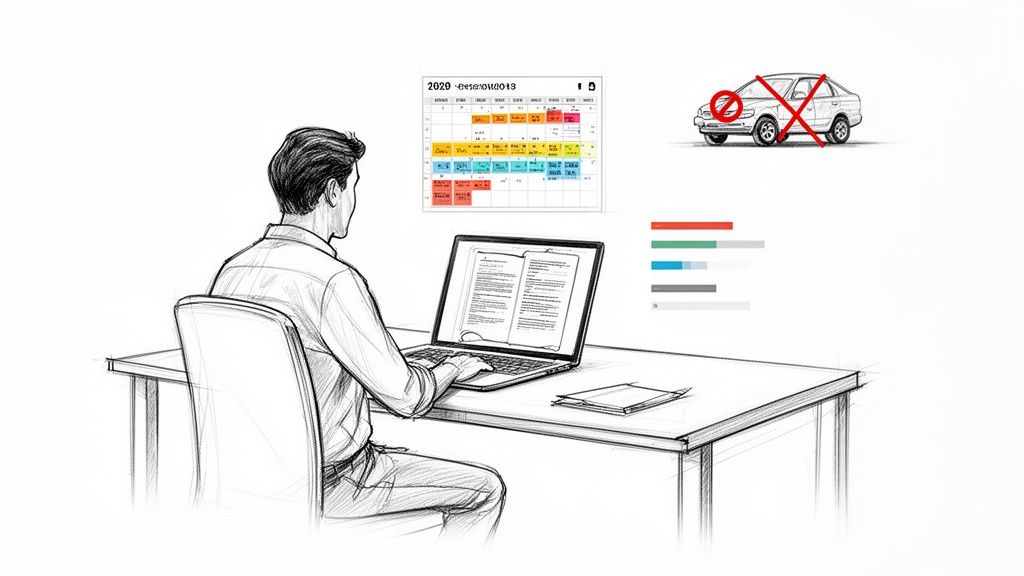
This isn’t just a feeling; it’s backed by results. For example, a two-year study from Stanford University found that remote employees were 13% more productive than their in-office counterparts. Companies like Zapier build their entire culture around asynchronous communication, allowing developers to focus on high-impact coding without constant interruptions. This model is especially beneficial for tech, product development, and strategic roles where concentration directly impacts output quality.
How to Maximize Your Focus
- Create a Dedicated Workspace: Designate a specific area for work only. This mentally separates your professional life from your personal life, even if it’s just a corner in a room.
- Implement Time-Blocking: Use tools like Toggl or RescueTime to schedule and protect specific blocks of time for deep work.
- Set Communication Boundaries: Establish “do not disturb” hours with your team. Let them know you will be unavailable on Slack or email to focus on critical tasks.
- Develop Start/End Rituals: A short walk before logging on or closing all work tabs at 5 PM can create a psychological boundary, preventing work from bleeding into personal time.
This structured autonomy is a powerful reason to work from home, allowing you to produce higher-quality work in less time. Ready to find a role that values deep work? Explore hundreds of verified, fully remote jobs at Remote First Jobs.
2. Cost Savings and Financial Benefits
A significant reason to work from home is the direct financial relief it provides. Eliminating the daily commute alone saves thousands annually on fuel, public transport, and vehicle maintenance. Additional savings come from a reduced need for a professional wardrobe, fewer expensive lunches out, and lower childcare costs for working parents who gain scheduling flexibility.

The numbers are compelling. A FlexJobs analysis found that remote workers save an average of $6,574 per year. For working parents, the ability to adopt a hybrid schedule can reduce childcare expenses by $8,000 to $15,000 annually. This financial freedom empowers professionals to pay down debt, build an emergency fund, or invest in side projects, as many employees at companies like Buffer have reported. This makes remote work a powerful tool for achieving long-term financial stability.
How to Maximize Your Savings
- Track Home Office Expenses: Diligently categorize all work-from-home costs, such as internet, supplies, and a portion of utilities, for potential tax deductions.
- Negotiate a Stipend: Inquire about an allowance for internet or home office equipment. This is a standard perk at many remote-first companies.
- Budget for Food and Clothing: Use meal planning apps like Mealime to cut down on spontaneous and expensive food purchases. Set a small, specific budget for any necessary professional clothing.
- Reallocate and Invest: Create a plan to purposefully invest the money saved from commuting and other office-related costs into a savings or investment account.
These tangible financial benefits are a key reason to work from home. Find a company that supports your financial goals by browsing verified remote roles at Remote First Jobs.
3. Superior Work-Life Balance and Flexibility
A powerful reason to work from home is the ability to achieve a healthier work-life balance through greater flexibility. Remote work allows professionals to integrate personal commitments with their professional responsibilities, such as attending a child’s school event, managing a midday health appointment, or pursuing a personal hobby. This autonomy reduces the stress and burnout often associated with rigid, in-office schedules and is a primary motivator for working parents and caregivers.
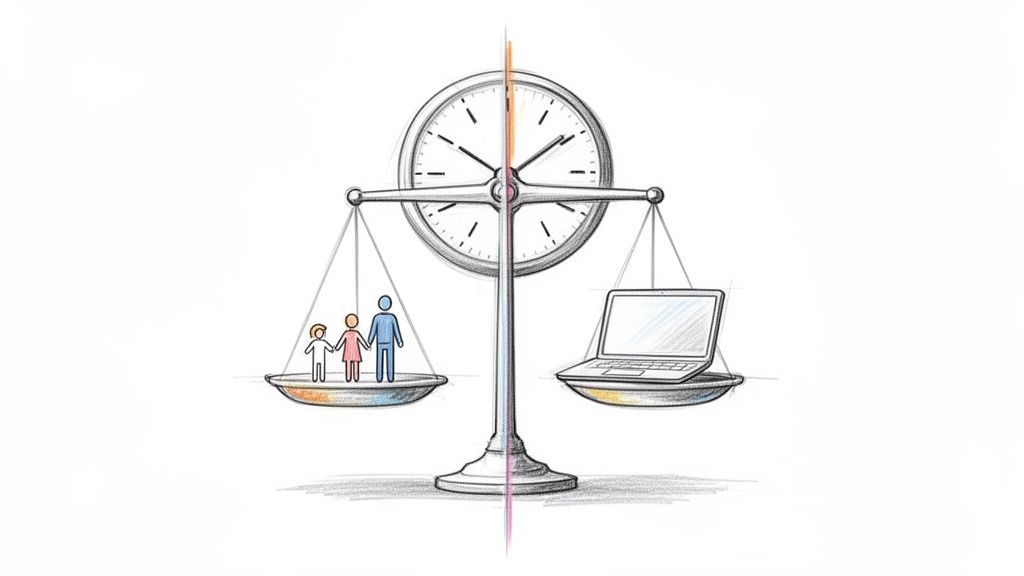
The benefits are tangible. Companies like Basecamp champion a 32-hour, four-day work week, reporting an impressive 98% employee retention rate as a result. Similarly, Shopify’s flexible work policy empowers parents to adjust their hours for family events, and digital nomads leverage this model to maintain productive careers while traveling. This approach shifts the focus from hours logged to actual output, fostering a culture of trust and respect for employees’ lives outside of work.
How to Maximize Your Flexibility
- Establish Clear Boundaries: Define your core working hours and communicate them to your team and household members to protect your personal time.
- Use Calendar Blocking: Schedule personal appointments and breaks as non-negotiable events on your work calendar to ensure they are respected.
- Set Explicit Expectations: Have open conversations with your manager about your flexibility needs and how you will meet your productivity goals.
- Create Physical Signals: Use a sign on your office door or another visual cue to indicate when you are in “work mode” versus “personal mode.”
By intentionally managing your schedule, you can enjoy a fulfilling personal life without sacrificing professional success. Ready to find a role that trusts you to manage your own time? Explore hundreds of verified, flexible remote jobs at Remote First Jobs.
4. Access to Global Job Opportunities and Geographic Freedom
A powerful reason to work from home is the complete removal of geographic barriers, expanding your job market by an order of magnitude. Professionals are no longer restricted to local opportunities, allowing them to work for top companies worldwide without the need to relocate. This geographic freedom grants access to higher salaries, better roles, and more innovative companies than what may be available in one’s immediate vicinity.
This model allows a software engineer in Eastern Europe to earn a Silicon Valley salary or a marketing professional in Southeast Asia to work for a leading US tech firm. Companies benefit by hiring the best talent, regardless of location, while employees gain unparalleled lifestyle flexibility. Digital nomads leverage this to work from inspiring locations like Bali or Medellín, and European tech talent can access thousands of US-based roles without a complex visa process.
How to Maximize Your Geographic Freedom
- Research Tax and Visa Implications: Before applying, understand the legal and financial requirements of working for a foreign company. Use guides from platforms like Wise to navigate international tax laws.
- Target Location-Agnostic Job Boards: Use platforms that clearly state location requirements and payment currencies to find genuine “work from anywhere” roles.
- Negotiate Based on Global Rates: Use tools like Levels.fyi and Glassdoor to research global salary benchmarks for your role, not just local ones, to strengthen your negotiation position.
- Develop Cross-Cultural Competence: As remote work expands your reach to international companies, developing new language skills can be a significant advantage.
This expanded access is a game-changer, enabling you to build a career on your terms, not limited by your zip code. To start exploring thousands of verified global roles, check out the latest listings at Remote First Jobs.
5. Reduced Workplace Stress and Improved Mental Health
A crucial reason to work from home is the profound positive impact on mental well-being. By removing daily stressors like commute anxiety, office politics, and the pressure of constant social performance, remote work creates a more psychologically safe environment. This autonomy allows professionals to manage their energy and focus on their tasks, leading to significantly lower cortisol levels and reduced anxiety.

The data supports this benefit. An American Psychological Association (APA) study found that remote workers report 27% lower stress levels than their in-office counterparts. This is especially true for neurodivergent employees at companies like Specialisterne, who report higher job satisfaction and less burnout. Similarly, introverted tech professionals often find remote work dramatically improves their mental health by allowing them to engage on their own terms.
How to Nurture Your Mental Health
- Replace Your Commute: Use the time you would have spent commuting for a wellness activity like exercise, meditation, or reading.
- Set Communication Hours: Establish “office hours” for non-urgent check-ins to create space for informal connection without constant real-time pressure.
- Build Deliberate Connections: Schedule regular 1:1s with your manager and join online communities (like team Slack channels for hobbies) to foster connection.
- Protect Your Downtime: Block time on your calendar for mental health breaks and treat that time as non-negotiable.
This reduction in daily friction is a powerful reason to work from home, fostering a more sustainable and healthy career. Find a company that prioritizes employee well-being on Remote First Jobs.
6. Customizable Work Environment and Ergonomic Control
A powerful reason to work from home is the ability to design a workspace optimized for your personal comfort and well-being. Unlike a one-size-fits-all office cubicle, a home office allows for complete control over ergonomics, lighting, and temperature. This customization directly reduces physical strain and creates an environment perfectly suited to your individual working style, fostering both health and productivity.
This level of control has a measurable impact on employee well-being. Forward-thinking companies recognize this benefit and actively support their teams. GitLab, for instance, provides a generous annual budget for equipment, while Zapier reimburses employees for professional ergonomic assessments. This investment pays off, with some tech companies reporting up to a 40% reduction in strain-related injuries by offering stipends for quality monitors and keyboards.
How to Build an Ergonomic Workspace
- Prioritize Key Furniture: Invest in a high-quality ergonomic chair ($300-$600+) and an adjustable standing desk ($400-$800) as your foundation. These are the most critical components for long-term comfort.
- Optimize Your Monitor Setup: Position your monitor at eye level, approximately 20-26 inches away, to prevent neck strain. Use monitor arms to achieve the perfect height and angle without needing a large desk.
- Alternate Your Posture: Make a habit of switching between sitting and standing every 30 to 60 minutes. A standing desk converter ($200-$400) is a great alternative if you cannot replace your entire desk.
- Negotiate an Equipment Stipend: Many remote-first companies expect to cover home office costs. Don’t hesitate to ask about a budget for essential ergonomic equipment during your negotiations.
Taking control of your physical environment is a fundamental advantage of remote work. Ready to join a company that invests in your well-being? Find your next role on Remote First Jobs.
7. Elimination of ‘Ghost Jobs’ and Scam Risk Through Verified Direct Sourcing
A less-discussed but crucial reason to work from home is finding legitimate opportunities in a sea of online noise. The remote job market is saturated with “ghost jobs,” fake listings, and multi-level marketing (MLM) schemes. By using platforms that directly source listings from company career pages, you bypass the significant risks and time-wasting associated with massive job boards.
This direct-sourcing approach tackles the frustrating reality of the modern job search. For instance, studies suggest that 40-50% of jobs posted on major platforms like LinkedIn are “ghost jobs” that are not actively being filled. This means you can apply to dozens of roles that don’t actually exist. Direct sourcing ensures every listing is a real, active opening, which users report can lead to 3-5x higher response rates compared to applying through traditional job boards.
How to Find Verified Remote Jobs
- Prioritize Direct Sourcing: Use job databases that pull listings directly from company websites rather than allowing anonymous or third-party posting.
- Verify Company Legitimacy: Before applying, cross-reference the company on professional networks like LinkedIn or financial data platforms like Crunchbase to confirm they are a real business.
- Check Company Domains: Ensure the application email address matches the official company domain (e.g.,
[email protected], not a generic Gmail address). - Be Skeptical of Vague Postings: Be wary of listings with “urgent hiring,” “instant offers,” or overly generic job descriptions, as these are common red flags for scams or MLM traps.
This method is a powerful reason to work from home because it filters out the noise, allowing you to focus your energy on genuine, high-quality opportunities. Start your safe and efficient job search with thousands of verified roles at Remote First Jobs.
8. Enhanced Autonomy and Self-Direction
A compelling reason to work from home is the heightened autonomy and self-direction it fosters. Remote work shifts the focus from time spent at a desk to the actual results delivered, empowering professionals to take ownership of their tasks and schedules. This environment cultivates a sense of mastery and responsibility, appealing to high-performers who thrive without micromanagement and prefer to have control over their work processes.
This model of trust and ownership is a cornerstone of many successful remote-first companies. For instance, GitLab’s handbook-first approach enables employees to make informed decisions independently, while Automattic encourages its team members to autonomously shape their roles and projects. This level of agency is not just motivating; it leads to better outcomes, with distributed teams often reporting higher feelings of ownership and lower turnover rates.
How to Cultivate Your Autonomy
- Establish Clear OKRs: Work with your manager to define clear Objectives and Key Results. This provides a framework for success while giving you the freedom to decide how to achieve those goals.
- Document Your Decisions: Keep a record of your decisions and their rationale. This practice builds trust with your team and demonstrates accountability for your work.
- Use Asynchronous Updates: Keep stakeholders informed with regular, asynchronous updates instead of scheduling meetings. This respects everyone’s focus time while maintaining transparency.
- Propose Improvements: Actively suggest new approaches or process enhancements. Taking initiative reinforces your role as a proactive, self-directed team member.
By demonstrating reliability and a commitment to results, you can build a career based on trust and performance. Discover companies that champion professional autonomy by browsing verified listings at Remote First Jobs.
9. Reduced Commute Time and Environmental Impact
A powerful reason to work from home is the complete elimination of the daily commute, which directly benefits both your personal time and the planet. By staying home, you reclaim the one to two hours the average person spends traveling to and from the office each day. This not only reduces personal stress and expense but also significantly lowers your carbon footprint, contributing to less traffic congestion and cleaner air.
The environmental data is compelling. In the U.S. alone, the EPA estimates that remote work can eliminate 54 million tons of CO2 emissions annually. Furthermore, a UK-based study revealed that remote workers slash their carbon emissions by an impressive 54% compared to their office-based colleagues. This aligns with findings that companies embracing remote work can see a 20-30% reduction in their office’s environmental impact, making it a key strategy for corporate sustainability.
How to Maximize Your Commute-Free Advantage
- Reinvest Your Time: Intentionally use the 250+ hours you save annually on activities that boost well-being, like exercise, learning a new skill, or spending quality time with family.
- Track Your Impact: Use an online carbon footprint calculator to quantify and celebrate your personal reduction in emissions. This makes the environmental benefit tangible.
- Choose Green Employers: Prioritize applying to companies with strong, publicly stated environmental commitments and sustainability programs you can join remotely.
- Practice Sustainable Habits: Use your reclaimed time for eco-friendly activities. A short walk or bike ride can replace a drive, even for local errands.
This dual benefit of time savings and environmental stewardship is a major reason to work from home. Find a company that values both your time and the planet by browsing jobs at Remote First Jobs.
10. Career Advancement Without Geographic Relocation Requirements
A powerful, yet often overlooked, reason to work from home is the ability to advance your career without being forced to relocate. Remote work decouples professional growth from geographical location, dismantling the traditional “up or out” culture where senior roles are clustered in expensive tech hubs like Silicon Valley or New York City. This allows you to pursue leadership positions and specialized roles from anywhere in the world.
This model is especially liberating for professionals with deep community ties, family responsibilities, or those who simply prefer living in a lower-cost-of-living area. For example, an experienced software engineer in the Midwest can climb the ladder to a principal or architect role at a top-tier San Francisco-based company without uprooting their family. Similarly, marketing directors can build executive careers while enjoying the financial benefits of their current location, a significant advantage for long-term wealth building.
How to Climb the Ladder Remotely
- Target Companies with Remote Leaders: Prioritize companies that have a documented history of promoting remote employees into executive positions. This demonstrates a true commitment to location-agnostic advancement.
- Build Asynchronous Visibility: Proactively document your impact in shared channels, lead cross-functional projects, and contribute thoughtful insights in written communications. This makes your contributions visible to distributed leadership.
- Seek Explicit Mentorship: Actively connect with senior leaders in the organization for mentorship. Schedule virtual coffee chats and skip-level meetings to build relationships that transcend office-based visibility.
- Negotiate Clear Advancement Criteria: During performance reviews, work with your manager to define specific, measurable goals for your next promotion. Don’t rely on being “seen” in an office to get ahead.
This freedom to grow professionally without personal life disruption is a key reason to work from home. Ready to find a company that invests in your remote career path? Explore leadership roles at verified, remote-first companies on Remote First Jobs.
Comparative Guide: 10 Work-From-Home Benefits
| Feature | 🔄 Implementation Complexity | ⚡ Resource & Effort | ⭐ Expected Outcomes | 📊 Ideal Use Cases | 💡 Key Advantages / Tips |
|---|---|---|---|---|---|
| Increased Productivity and Focus | Medium — requires routines, boundary setting | Low–Med (dedicated workspace, time-blocking tools) | High ⭐⭐⭐⭐ — faster completion, higher quality | Engineering, product, design, research roles | Create a distraction-free space; time-block; set “deep work” hours |
| Cost Savings and Financial Benefits | Low — mainly behavioral and budgeting changes | Low–Med (initial home-office spend; possible stipends) | Significant savings ($5K–$12K+/yr) ⭐⭐⭐ | Mid-career professionals, parents, budget-focused workers | Track expenses, negotiate stipends, invest savings |
| Superior Work-Life Balance and Flexibility | Medium — needs clear boundaries & communication | Low (calendar management, norms) | Improved wellbeing & retention ⭐⭐⭐⭐ | Working parents, caregivers, anyone needing schedule flexibility | Define work hours, calendar block personal time, set household signals |
| Access to Global Job Opportunities & Geographic Freedom | Medium–High — legal, tax, timezone considerations | Medium (visa/tax prep, reliable internet) | Expanded market & potential salary premium ⭐⭐⭐⭐ | Digital nomads, talent seeking higher-paying markets | Research visas/taxes, use global salary data, verify employer location policies |
| Reduced Workplace Stress & Improved Mental Health | Low–Med — requires routines and social strategies | Low (wellness routines, regular check-ins) | Lower anxiety/stress; better sleep ⭐⭐⭐ | Introverts, neurodivergent, high-stress industries | Schedule 1:1s, join online colleague groups, block mental-health time |
| Customizable Work Environment & Ergonomic Control | Low–Med — setup and equipment decisions | Med–High (ergonomic furniture, monitors) | Reduced physical strain; better comfort/productivity ⭐⭐⭐ | Long-hours workers, those with ergonomic needs | Invest in chair/desk first; follow ergonomic positioning; negotiate stipend |
| Elimination of “Ghost Jobs” & Scam Risk (Verified Direct Sourcing) | Low for users — platform-managed verification | Low (saves applicant time; platform maintenance behind scenes) | Higher application success; zero ghost listings ⭐⭐⭐⭐ | Scam-wary applicants, first-mover job seekers | Apply direct-to-company, verify domains, use vetted job databases |
| Enhanced Autonomy and Self-Direction | Medium — needs clear goals and accountability | Low (requires OKRs, documentation, async updates) | Increased ownership, faster decisions ⭐⭐⭐ | Senior contributors, self-starters, high-performers | Set OKRs, document decisions, provide outcome-focused updates |
| Reduced Commute Time & Environmental Impact | Low — behavioral and location change | Low (time reclaimed; minor cost shifts) | Large time savings (250+ hrs/yr); lower emissions ⭐⭐⭐ | Time-pressed parents, environmentally conscious professionals | Reinvest commute time in wellness, track carbon reduction, offset if needed |
| Career Advancement Without Geographic Relocation | Medium — requires advocacy and visibility | Medium (networking, visible impact documentation) | Progression without moving; cost avoidance ⭐⭐⭐ | Mid-to-senior professionals tied to location | Seek mentorship, document impact, negotiate explicit advancement criteria |
Your Next Career Move Is Remote: Take Control of Your Search
We’ve explored a comprehensive landscape of benefits, moving far beyond the simple convenience of skipping a commute. Each reason to work from home represents a significant shift in how we can structure our professional and personal lives for the better. The evidence is overwhelming: remote work is not a temporary trend but a fundamental redefinition of the modern career, one that prioritizes results over presence and well-being over burnout.
From the tangible financial gains of eliminating commuting costs and office expenses to the profound improvements in mental health and work-life balance, the advantages are interconnected. Gaining control over your work environment directly boosts your focus and productivity. Having the autonomy to manage your schedule fosters a sense of ownership and reduces stress. Together, these elements create a powerful synergy that allows you to perform at your best while also living a fuller, more intentional life.
The True Promise of Remote Work Awaits
The journey from office-centric work to a thriving remote career is about more than just changing your location; it’s about changing your expectations. It’s about seeking opportunities that offer not just a paycheck, but also:
- Geographic Freedom: The ability to pursue career advancement without being forced to relocate, opening up a global talent market.
- Authentic Flexibility: True control over your schedule, enabling you to be present for family, personal appointments, and life’s important moments.
- Results-Oriented Culture: An environment where your contributions are measured by the quality of your work, not the hours you spend at a desk.
However, capitalizing on these benefits hinges on one critical factor: finding a genuinely remote-first company. The challenge is that traditional job boards are saturated with outdated listings, recruiter spam, and frustrating ‘ghost jobs’. This noise makes it nearly impossible to connect directly with the high-quality, verified opportunities you deserve. Your time is too valuable to waste on a search that leads nowhere. The key is to bypass the clutter and gain direct access to companies committed to making remote work successful for their teams.
Don’t let a frustrating job search stand between you and a better career. Remote First Jobs gives you a competitive edge by scanning thousands of company career pages directly, providing you with verified, fresh listings before they hit the crowded job boards. Start your targeted search on Remote First Jobs today and find the role that delivers on every reason to work from home.