The question ‘what jobs you can work from home?’ has shifted from a niche query to a mainstream career goal. The pandemic accelerated a trend that was already underway, proving that high-impact, high-paying work does not require a physical office. Today, thousands of companies are actively hiring for roles across every discipline, from engineering to marketing.
However, the biggest challenge isn’t finding a remote job; it’s cutting through the noise. Popular job boards are saturated with ghost jobs, recruiter spam, and thousands of applicants per listing, leading to burnout for even the most qualified professionals. This guide is designed for those who want a strategic advantage. It bypasses generic advice and provides a direct path to vetted, high-quality remote opportunities.
We will explore 12 specific, high-demand remote job families, detailing the skills, salaries, and responsibilities for each. You will learn about concrete roles like Software Engineer, Content Strategist, and Operations Manager. More importantly, we’ll show you exactly how to find these roles before they go viral on major platforms, using direct sourcing tools and specialized filters to apply smarter, not harder. This article provides a clear roadmap to help you secure a legitimate, fulfilling remote career without getting lost in the overwhelming competition.
1. Software Engineer / Full-Stack Developer
Among the most common answers to “what jobs you can work from home,” software engineering stands out for its high demand and established remote-first culture. Engineers design, build, and maintain the digital products and infrastructure that power modern companies. This field covers various specializations, including front-end (user interface), back-end (server-side logic), and full-stack (a combination of both).

Pioneering companies like GitLab and Automattic have proven that world-class software can be built by fully distributed teams, setting a standard for asynchronous communication and robust documentation. Because the work is project-based and measurable through code commits and performance metrics, it translates well to a remote environment. Senior engineers often command salaries of $120,000 to $200,000+ and can find roles directly with companies, bypassing third-party recruiters.
How to Stand Out as a Remote Engineer
- Build a Public Portfolio: Your GitHub profile is your resume. Showcase well-documented personal projects that demonstrate your skills in a high-demand tech stack like React, Python, or Go.
- Demonstrate Asynchronous Skills: In your application or cover letter, provide specific examples of how you have successfully used tools like Slack, Jira, and Confluence to collaborate on complex projects without real-time meetings.
- Apply Directly: Many remote-first companies prioritize candidates who apply directly through their career pages. Searching for direct-to-company roles on curated platforms can help you find fresh listings with lower competition. For more opportunities, you can explore low-competition listings on platforms such as Remote First Jobs.
- Target Remote-First Cultures: Focus your search on companies with a public commitment to remote work, such as those with a remote handbook (like GitLab) or a history of distributed teams (like Zapier).
2. Product Manager (Remote)
Another key answer to “what jobs you can work from home” is the Product Manager. Remote product managers own the vision, strategy, and execution of digital products, acting as the central hub between engineering, design, marketing, and leadership within a distributed company. The role is perfectly suited for remote work because it relies on clear documentation, data-driven decisions, and asynchronous collaboration to align teams across different time zones.
Companies like Notion and Figma have built globally recognized products with remote product teams, proving that physical proximity is not required to ship world-class software. Because the work is measured by product outcomes, user metrics, and roadmap progress, performance is highly visible and quantifiable in a remote setting. Experienced remote product managers can earn salaries from $130,000 to $220,000+, often finding positions directly with product-led companies. For those specifically targeting these roles, a detailed resource like Aakash Gupta’s Your Guide to Landing Remote Product Manager Jobs can offer a significant advantage.
How to Stand Out as a Remote Product Manager
- Create a Decision-Focused Portfolio: Go beyond just listing features. Document the “why” behind your product decisions, including the initial problem, the data you used, the trade-offs you made, and the final outcomes or metrics.
- Master Asynchronous Communication Tools: Demonstrate deep proficiency with tools essential for remote product work. Showcase how you use Loom for async presentations, Figma for collaborative design reviews, and Amplitude for analyzing user behavior.
- Highlight Your Data Literacy: In your resume and interviews, provide concrete examples of how you used quantitative and qualitative data to influence a product roadmap, prioritize features, or validate a hypothesis.
- Apply to Product-First Companies Directly: Target companies with a public-facing product strategy or a strong, transparent product culture. You can find many direct-to-company listings for these roles on platforms like Remote First Jobs, which helps you bypass gatekeepers and apply to teams that truly value product thinking.
3. UX/UI Designer
For those asking “what jobs you can work from home” with a creative and analytical mindset, UX/UI design offers a perfect fit. Designers are responsible for creating the user experience (UX) and user interface (UI) for websites, apps, and digital products. The rise of collaborative tools like Figma has made remote design work seamless, allowing designers to work asynchronously with engineers and product managers from anywhere.
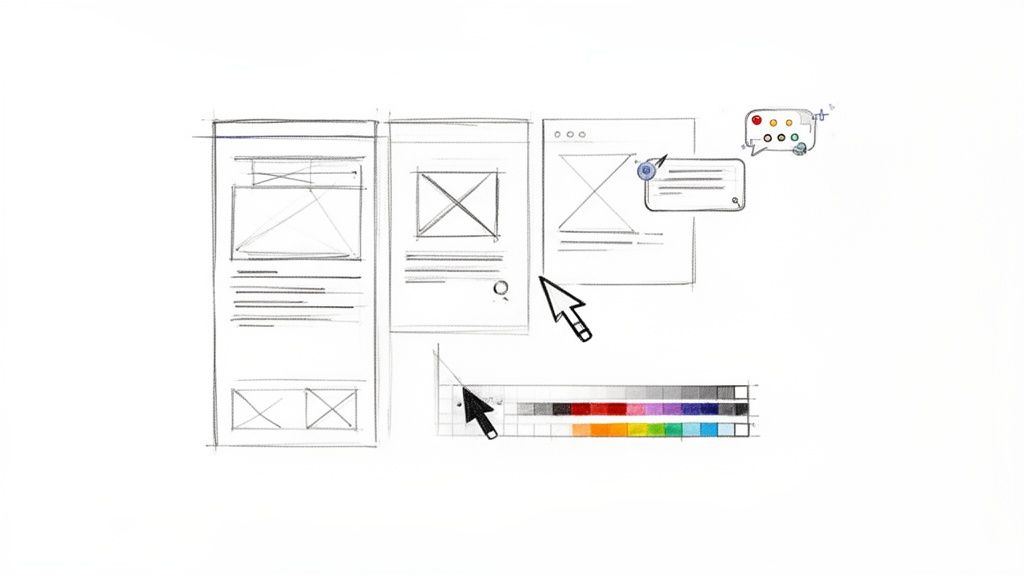
Design-centric companies like Stripe and Airbnb have built strong remote teams that create world-class products, proving that high standards can be maintained in a distributed setting. Because the work is centered on digital artifacts and clear documentation, it is well-suited for a remote environment. Senior Product Designers can command salaries ranging from $110,000 to $180,000+, often finding positions directly with companies that value design as a core part of their culture.
How to Stand Out as a Remote Designer
- Build a Process-Oriented Portfolio: Go beyond polished Dribbble shots. Use a tool like Figma or Notion to create a portfolio that details your design process, including research, wireframes, and the rationale behind your decisions.
- Document Your Design Decisions: Remote teams rely on clear communication. Demonstrate your ability to document why you made specific choices, linking them to user needs and business goals.
- Showcase Async Collaboration Skills: Mention your experience using async feedback frameworks or your proficiency with tools like Loom for video walkthroughs. This shows you can contribute effectively without constant meetings.
- Highlight Accessibility Experience: Emphasize your knowledge of WCAG guidelines and inclusive design principles. This is a critical skill for companies building products for a global audience.
- Target Design-First Companies: Focus your search on companies where design is integral, not an afterthought. Finding direct-to-company roles on curated boards can lead to opportunities with strong design cultures. For fresh listings, you can discover more on platforms such as Remote First Jobs.
4. Content Strategist / Technical Writer
Another excellent answer to “what jobs you can work from home,” content strategy and technical writing are roles where clear, written communication is the primary skill. Professionals in this field create, plan, and manage content for SaaS products, developer platforms, and marketing initiatives. The work ranges from detailed API documentation and in-app guides to high-level blog strategy and developer education.
This role is perfectly suited for a remote setting because the work is inherently asynchronous and documentation-centric. Companies like Stripe and Twilio have set the standard, employing distributed teams to produce world-class developer documentation and educational content for a global audience. The focus is on producing clear, accurate, and helpful written materials, which can be measured and managed effectively without constant in-person oversight.
How to Stand Out as a Remote Content Strategist or Writer
- Build a Tangible Writing Portfolio: Create a dedicated portfolio on a personal blog, Medium, or even a GitHub repository. Showcase a variety of work, from technical guides to strategic content plans, demonstrating your range.
- Specialize in Developer Documentation: Technical writing for developers is in high demand and often commands higher pay. Focus on learning how to document APIs and complex software products clearly.
- Learn the Tools of the Trade: Familiarize yourself with documentation-as-code tools like MkDocs and Docusaurus, as well as standards like Markdown and OpenAPI/Swagger. This shows you can integrate into a modern engineering workflow.
- Target Companies with Strong Written Cultures: Prioritize companies with a public commitment to documentation, such as those with extensive developer portals or active communities like Write the Docs. You can find direct-to-company roles on curated platforms to bypass the noise of traditional job boards. For more low-competition listings, check out a site like Remote First Jobs.
5. Data Analyst / Business Intelligence Engineer
Another prime example of what jobs you can work from home, data and business intelligence roles are essential for companies that want to make informed decisions. Analysts and BI engineers extract, clean, and interpret data to answer critical business questions, monitor key metrics, and identify trends. They use tools like SQL, Python, and dashboarding software such as Tableau or Looker to turn raw numbers into actionable insights.
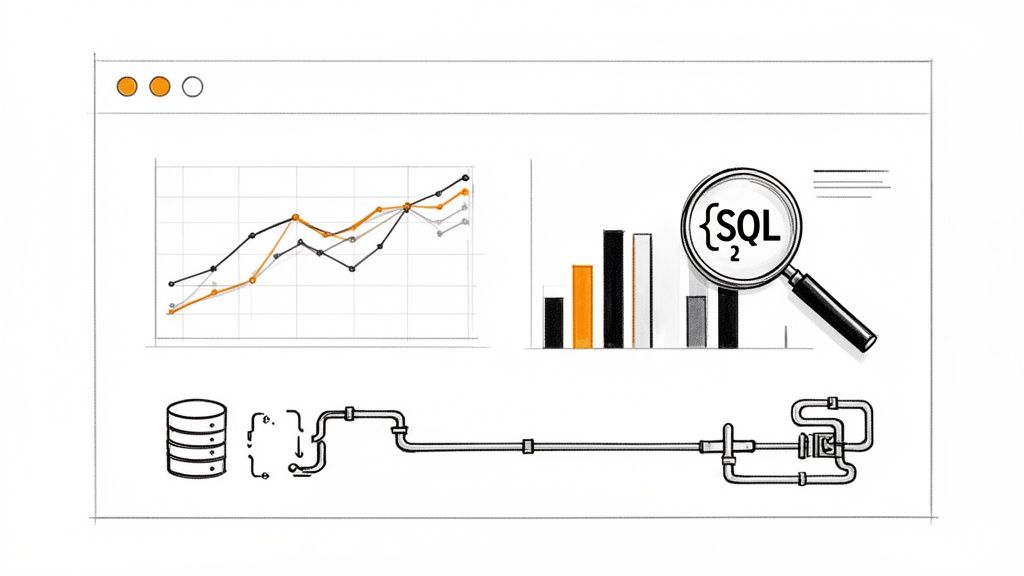
Because the work is centered around queries, reports, and dashboards, it’s a natural fit for a remote setup. Companies like Zapier and Plaid rely on distributed data teams to drive product strategy and operational efficiency. The output-driven nature of the role allows for asynchronous collaboration, where an analyst’s report can inform decisions across different time zones. Senior analysts can earn salaries ranging from $90,000 to $150,000+, with BI engineering roles often commanding higher pay.
How to Stand Out as a Remote Data Analyst
- Showcase Your SQL Mastery: SQL is the most versatile and fundamental skill in data analytics. Build a portfolio that demonstrates your ability to write complex queries, joins, and window functions using real-world datasets from sources like Kaggle.
- Specialize in One Visualization Tool: Become an expert in one major dashboarding tool like Tableau, Looker, or Metabase. Create a public dashboard that tells a compelling story with data, proving you can communicate insights visually.
- Document Business Impact: In your resume or portfolio, don’t just list your tasks. Explain how your analysis led to a specific business outcome, such as “identified a $50k revenue opportunity by analyzing customer churn patterns.”
- Target Data-Driven Cultures: Focus your search on companies that explicitly mention a “data culture” or have data-centric products. You can find direct-to-company data analyst positions on platforms like Remote First Jobs, where listings often come from businesses that value data-backed decision-making.
6. Marketing Manager / Content Marketing Manager
As companies realize marketing success depends on strategy and execution rather than physical presence, marketing manager roles have become a staple in lists of what jobs you can work from home. Remote marketing managers develop and execute the strategies that drive growth for SaaS, fintech, and B2B companies. They oversee campaigns, content calendars, product launches, and cross-functional projects with distributed teams.
Companies like HubSpot and ConvertKit have built their brands with globally distributed marketing teams, demonstrating that impactful campaigns can be managed asynchronously across time zones. Because the role is centered on measurable outcomes like lead generation, conversion rates, and ROI, performance is easily tracked in a remote setting. Experienced marketing managers can earn salaries from $90,000 to $160,000+ and often find roles with companies that value deep product and customer storytelling.
How to Stand Out as a Remote Marketing Manager
- Showcase Campaign ROI: Build a portfolio of case studies with hard data. Detail the campaigns you managed, the strategies you implemented, and the specific results you achieved, such as a 30% increase in qualified leads or a 15% decrease in customer acquisition cost.
- Master the Marketing Tech Stack: Demonstrate proficiency in key automation and analytics tools. Experience with platforms like HubSpot, Marketo, or Segment is often a prerequisite, as they are central to managing remote marketing operations.
- Specialize in a High-Impact Domain: Focus on a specific area like demand generation, product marketing, or content strategy. Specialization makes you a more valuable candidate than a generalist, especially for companies seeking expertise to solve a particular business problem.
- Document Your Collaboration Process: In your resume or cover letter, explain how you use tools like Asana, Notion, or Slack to manage projects and align with sales, product, and design teams. Provide a concrete example of a successful cross-functional launch you led remotely.
7. Sales Representative / Account Executive
As companies increasingly sell to a global market, the sales representative role is a prime example of what jobs you can work from home. Remote account executives prospect for new clients, conduct product demonstrations, and close deals for B2B and SaaS companies entirely through video calls, email, and specialized sales software. This eliminates geographic barriers, allowing reps to manage pipelines across different regions from a single location.
Tech giants like Salesforce and Stripe have successfully scaled their remote enterprise sales teams, proving that high-value deals can be closed without in-person meetings. Because performance is measured by clear metrics like quota attainment and pipeline value, it’s a role well-suited for a remote setting. Top-performing account executives often earn six-figure salaries, with a significant portion coming from commission-based compensation.
How to Stand Out as a Remote Sales Rep
- Build a Sales Portfolio: Create a document (or a section in your resume) that quantifies your success. Include metrics like deals closed (total contract value), quota attainment percentages, and sales cycle length.
- Master the Tech Stack: Gain deep expertise in essential sales tools. Demonstrate your proficiency with CRM software like Salesforce, sales engagement platforms like Outreach, and conversation intelligence tools like Gong.
- Practice Your Video Presence: Your ability to build rapport and demonstrate a product over a video call is critical. Record yourself conducting a mock demo and practice conveying energy and confidence through the camera.
- Target High-Growth Companies: Focus your job search on high-growth SaaS companies with aggressive sales targets. These firms are often hiring for their remote sales teams and offer substantial opportunities for career progression and earnings. You can find these roles on curated platforms like Remote First Jobs by filtering for “Sales” positions.
8. Customer Success Manager / Support Specialist
As companies increasingly rely on subscription models, the roles of customer success and support have become essential answers to “what jobs you can work from home.” These professionals ensure customers get maximum value from a product, handling everything from onboarding and training to issue resolution and retention. The goal is to build long-term relationships that prevent churn and identify opportunities for growth.
This field is a strong fit for remote work because it often requires teams to be available across multiple time zones. Companies like Zendesk, Intercom, and Zapier have built massive, effective support and success teams that operate entirely remotely. The work is measurable through metrics like response time, customer satisfaction scores (CSAT), and net promoter scores (NPS), making performance clear even without direct supervision. Salaries can range from $50,000 for specialist roles to over $130,000 for senior or enterprise-level managers.
How to Stand Out as a Remote Customer Success Professional
- Document Your Impact: Don’t just say you provide good service. Create a portfolio of achievements, including specific examples of how you reduced churn, increased user adoption, or turned a difficult customer situation into a positive case study.
- Master the Tools: Gain hands-on experience with core industry software. Most companies use helpdesk platforms like Zendesk or Intercom, and CRM tools like Salesforce. Highlighting your proficiency with these tools in your resume makes you a more attractive candidate.
- Show Empathy and Communication: Your application is your first support ticket. Write a clear, concise, and empathetic cover letter that directly addresses the company’s product and customer base. Demonstrate your ability to communicate complex ideas simply.
- Target High-Growth SaaS: The highest demand for customer success roles is in growing Software-as-a-Service (SaaS) companies. Focus your job search on businesses that have recently secured funding or are expanding their product offerings, as they will be scaling their customer-facing teams.
9. Virtual Assistant / Executive Assistant
Among the most flexible answers to “what jobs you can work from home,” the virtual assistant (VA) and executive assistant (EA) roles are ideal for highly organized professionals. These assistants manage calendars, emails, administrative tasks, and special projects for executives, entrepreneurs, and entire teams. Unlike traditional office-based roles, remote assistants use cloud-based tools like Asana, Slack, and Google Workspace to support leaders asynchronously across different time zones.

The rise of distributed companies and the popularity of outsourcing, championed by figures like Tim Ferriss, have made remote executive support a standard practice. Companies like Belay and Fancy Hands built business models around connecting skilled assistants with clients needing remote support. Because the work is based on task completion and organizational efficiency, it is perfectly suited for a remote setup, offering significant flexibility. Pay can range from an hourly rate of $20-$50+ to full-time salaries of $50,000 to $90,000+, depending on experience and specialization.
How to Stand Out as a Remote Assistant
- Document Your Systems: Create a portfolio that shows how you organize workflows. Include examples of documented processes, project management board templates, or intake forms you’ve designed.
- Master Productivity Tools: Demonstrate deep knowledge of tools beyond basic scheduling. Highlight your expertise in Asana, Notion, or Trello for project management and your ability to automate tasks.
- Specialize Your Support: Market yourself as an expert assistant for a specific role, such as supporting a Head of Product, a startup founder, or a marketing team. This niche focus makes you more valuable.
- Join Reputable VA Networks: Platforms like Belay, Time Etc, and Fancy Hands are excellent sources for finding vetted opportunities, especially when you are starting out and building a client base.
10. Recruiter / Talent Acquisition Specialist
As companies increasingly hire distributed talent, the role of the recruiter has become one of the most essential remote positions. Answering “what jobs you can work from home,” talent acquisition specialists source, screen, and place candidates for organizations that operate without a central office. This job is perfect for a remote setting because the core tasks-sourcing on LinkedIn, managing applicant tracking systems (ATS), and conducting video interviews-are all digital.
Leading remote companies like GitLab, Zapier, and Automattic operate with fully distributed recruiting teams. They prove that successful hiring depends on strong documentation and asynchronous communication, not physical presence. Recruiters in these environments are valued for their ability to find qualified candidates globally and manage a structured, transparent hiring process. The role is measurable through metrics like time-to-hire and quality-of-hire, making performance easy to track from anywhere.
How to Stand Out as a Remote Recruiter
- Build a Portfolio of Impact: Document your successes by showcasing metrics. For example, detail how you reduced time-to-hire by 15% or sourced a key engineering team for a high-growth startup. This demonstrates tangible value.
- Master Key Recruiting Tech: Proficiency with tools like LinkedIn Recruiter and modern ATS platforms (like Greenhouse or Lever) is non-negotiable. Mention your expertise with specific software used for sourcing, screening, and managing candidate pipelines.
- Specialize in a Niche: Become the go-to recruiter for a specific domain, such as software engineering, product management, or sales. Specialization allows you to build a deeper network and understand the specific needs of hiring managers, making you more effective.
- Focus on High-Growth Companies: Target your search toward fast-growing remote-first companies, as they consistently have the highest hiring volume and the greatest need for skilled talent acquisition professionals.
11. Operations Manager / Project Manager
As companies grow their distributed teams, the need for skilled professionals to coordinate workflows and manage projects becomes critical, making operations and project management a key answer to “what jobs you can work from home.” These roles are the backbone of a remote organization, ensuring that projects stay on track, processes are efficient, and teams remain aligned across different time zones and departments. Their work is centered on async tools like Asana, Monday.com, and Notion, which are built for this purpose.
Companies like Zapier and GitLab have built their entire operational frameworks around remote principles, proving that complex, multi-departmental projects can be managed without a central office. Remote operations managers act as the glue holding distributed teams together, optimizing everything from onboarding new hires to launching new products. Because their impact is measured by meeting deadlines, improving efficiency, and reducing friction, the role translates perfectly to a remote setting where results matter more than physical presence.
How to Stand Out as a Remote Operations/Project Manager
- Master Asynchronous Project Management Tools: Demonstrate deep expertise in platforms like Asana, Monday.com, or Notion. In your portfolio or resume, show how you’ve used these tools to manage project timelines, allocate resources, and communicate status updates without relying on meetings.
- Document Your Impact with Metrics: Don’t just say you improved a process; quantify it. For example, “Redesigned the content production workflow in Notion, reducing the average time-to-publish by 30% and eliminating 5 hours of weekly status meetings.”
- Specialize in a Function: Tailor your experience to a specific department’s needs, such as marketing operations, sales operations, or product operations. This specialized knowledge makes you a more valuable candidate for teams looking for an expert, not a generalist.
- Target Companies in Their Growth Stage: Focus your search on companies scaling from 50 to 200 employees. This is often when operational chaos peaks and the need for a dedicated manager to create structure becomes a top priority.
12. Email Marketer / Growth Marketing Specialist
For companies seeking measurable results, the role of an email marketer or growth marketing specialist is a critical part of the answer to “what jobs you can work from home.” These professionals design and execute strategies that drive customer acquisition, engagement, and retention through channels like email and SMS. Their work involves segmenting audiences, writing compelling copy, running A/B tests, and analyzing data to optimize every stage of the marketing funnel.
The performance-based nature of this job makes it a perfect fit for remote work. Success is measured by clear metrics like open rates, click-through rates, and conversion numbers, not by time spent in an office. Companies such as Mailchimp, ConvertKit, and Klaviyo are built on the power of email marketing and operate with distributed teams that prove its effectiveness from anywhere. This role blends creativity with data analysis and technical proficiency.
How to Stand Out as a Remote Email Marketer
- Build a Results-Driven Portfolio: Don’t just show what you created; show what it achieved. Document specific campaign results, such as a 15% increase in click-through rates or a 10% lift in conversions from a new automation flow. Use real numbers.
- Master the Tools of the Trade: Gain deep expertise in leading email service providers (ESPs) like Klaviyo, Mailchimp, or Drip. Certifications from these platforms can immediately signal your competence to employers.
- Showcase Your Analytical Skills: Explain how you use data to make decisions. Provide examples of how you have segmented an audience based on behavior or used A/B testing results to inform future campaigns.
- Target Email-Reliant Businesses: Focus your job search on companies where email is a core revenue driver, such as e-commerce brands and B2B SaaS companies. These businesses understand and value the direct impact of your work.
12 Work-From-Home Jobs: Side-by-Side Comparison
| Role | 🔄 Complexity | ⚡ Resources / Setup | ⭐ Expected outcomes | 📊 Ideal use cases | 💡 Key advantages / Tips |
|---|---|---|---|---|---|
| Software Engineer / Full-Stack Developer | High — deep technical skills; continuous learning | High — dev machine, cloud accounts, local infra | ⭐⭐⭐⭐⭐ High product & revenue impact | Building/scaling apps, infra, core features | High pay; build GitHub portfolio; target remote-first firms |
| Product Manager (Remote) | High — cross-functional strategy; async coordination | Moderate — analytics & collaboration tools | ⭐⭐⭐⭐ High strategic impact; product direction | Owning roadmaps; aligning distributed teams | Document decisions & metrics; master async tools |
| UX/UI Designer | Moderate — design craft + async critiques | Moderate — Figma, tablet/monitors, prototyping tools | ⭐⭐⭐⭐ High UX/visual impact; user satisfaction | Interface design, prototypes, design systems | Figma portfolio; document rationale and accessibility |
| Content Strategist / Technical Writer | Low–Moderate — writing discipline; domain knowledge | Low — docs platforms, Markdown, publishing tools | ⭐⭐⭐ Clear documentation impact; enables async work | API docs, guides, developer education | Publish samples; learn MkDocs/OpenAPI; target developer docs |
| Data Analyst / BI Engineer | Moderate–High — analysis, data modeling | Moderate — data warehouse, SQL, BI tools | ⭐⭐⭐⭐ High data-driven decisions; measurable ROI | Dashboards, metrics, product analytics | Master SQL; show analyses that influenced decisions |
| Marketing Manager / Content Marketing Manager | Moderate — campaign planning & cross-functional work | Moderate — marketing stack, analytics platforms | ⭐⭐⭐⭐ Campaign ROI; brand & growth impact | Product launches, content marketing, demand gen | Build case studies; specialize (demand gen, product) |
| Sales Representative / Account Executive | Moderate — sales skills, pipeline management | Moderate — CRM, outreach, demo/video tools | ⭐⭐⭐⭐⭐ Direct revenue impact; high earning potential | Closing deals, enterprise sales, quota attainment | Track quota; master demos, CRM, and video selling |
| Customer Success Manager / Support Specialist | Low–Moderate — product knowledge & communication | Low — support tools (Zendesk, Intercom), product access | ⭐⭐⭐⭐ High retention & upsell impact | Onboarding, retention, issue resolution | Emphasize empathy; document success stories; learn support tools |
| Virtual Assistant / Executive Assistant | Low — organizational & multitasking skills | Low — calendar, task, and comms tools | ⭐⭐⭐ Operational efficiency; exec support | Calendar management, admin workflows, multi-exec support | Build systems; master Notion/Asana/Google Workspace |
| Recruiter / Talent Acquisition Specialist | Moderate — sourcing, screening, relationship work | Moderate — LinkedIn, ATS, outreach tools | ⭐⭐⭐⭐ Direct hiring impact; team scaling | Sourcing hires, global talent pipelines | Build hiring portfolio; specialize by function; master ATS |
| Operations Manager / Project Manager | Moderate — process design & coordination | Moderate — PM tools, documentation systems | ⭐⭐⭐⭐ Efficiency gains; measurable KPI improvements | Cross-functional projects; scaling organizations | Document process wins; show deadline/adoption impact |
| Email Marketer / Growth Marketing Specialist | Moderate — technical tagging, segmentation & analysis | Moderate — email/SMS platforms, analytics, testing tools | ⭐⭐⭐⭐ High revenue & retention impact | Lifecycle campaigns, A/B testing, retention funnels | Show campaign metrics; master Klaviyo/Mailchimp and segmentation |
Your Next Move: How to Land a High-Quality Remote Job
The journey to a fulfilling remote career begins with understanding the possibilities. As this guide has shown, the question of what jobs you can work from home has an expansive answer, covering everything from technical giants like Software Engineering and Data Analysis to creative and people-focused roles in Marketing, Sales, and Customer Success. The common thread is that remote work is no longer a niche perk; it’s a structural component of modern, high-performing companies.
The roles we’ve detailed, such as Product Manager, UX/UI Designer, and Operations Manager, are not just “jobs you can do from home.” They are high-impact, career-defining positions that now offer the flexibility to build a life you love without sacrificing professional growth. The key takeaway is that your skills, whether in writing, coding, or managing client relationships, are in high demand within the remote ecosystem.
Beyond the “What”: Mastering the “How”
Knowing which jobs are available is the starting point. The real challenge, and where most job seekers stumble, is navigating the search itself. The sheer volume of applicants on mainstream job boards creates a digital bottleneck, where even the most qualified candidates can get lost in the noise. Your application might be one of thousands, screened by algorithms before a human ever sees it.
To succeed, you must shift your strategy from broad and reactive to narrow and proactive. This means:
Focusing on Direct Applications: Apply directly on a company’s career page. This signals genuine interest and ensures your resume lands in their internal system, not a third-party aggregator. It bypasses the initial chaos of mass-application platforms.
Gaining a Time Advantage: The first 24-48 hours after a job is posted are critical. Being one of the first applicants dramatically increases your chances of getting noticed by a recruiter. This requires a system for finding new listings the moment they go live.
Tailoring Your Approach: A generic resume sent to 100 listings is less effective than five highly-tailored applications. Customize your resume and cover letter to mirror the language in the job description, highlighting the specific skills and outcomes they’re looking for. For roles like UX/UI Designer or Content Strategist, a portfolio showcasing tangible results is non-negotiable.
Building Your Remote-First Toolkit
Your strategy needs the right tools. Instead of relying solely on massive job boards where competition is at its peak, consider specialized resources designed for remote-first work. To kickstart your search, explore the best platforms to find jobs for digital nomads, which often curate listings from companies that truly embrace a distributed culture.
**Key Insight:** The most successful remote job seekers don't just search for jobs; they hunt for opportunities. They treat the job search as a project, using targeted tools and a proactive mindset to get ahead of the competition.
Moving from an office-based role to a remote one requires more than just a good internet connection. It demands a new approach to demonstrating your value. You must prove you are a self-starter, an excellent communicator, and a reliable team member through your application materials. Highlight projects where you worked autonomously, managed your own deadlines, and collaborated effectively using digital tools. This is what remote-first hiring managers are looking for.
The opportunities are out there, and they are more varied and accessible than ever. By combining the knowledge of what jobs you can work from home with a smart, direct, and timely application strategy, you position yourself not just as another applicant, but as the ideal candidate.
Stop getting lost in the sea of applicants on crowded job boards. Remote First Jobs gives you a critical advantage by sourcing jobs directly from company career pages, so you can apply first. Find your next high-quality remote role and get ahead of the competition by signing up for Remote First Jobs today.