You’re probably doing what most strong candidates do at first. You open LinkedIn, search “product marketing remote,” find a role that looks perfect, spend an hour tailoring your resume, hit apply, and then notice the posting already looks crowded. A day later, you see the same job on two more boards, plus a recruiter repost, plus a “promoted” duplicate that may or may not still be open.
That’s the wrong battlefield.
Remote product marketing is still a real category with meaningful demand and strong compensation, but the path to winning these roles has changed. Hiring teams still want PMMs who can launch products, sharpen positioning, support sales, and drive adoption across distributed teams. What they don’t want is another generic applicant whose experience looks interchangeable with fifty others.
The candidates who stand out usually do five things better than everyone else. They find openings early. They translate their work into remote-ready proof. They build relationships before they ask for favors. They treat remote interviews like a communication test, not just a Q&A. And when they get an offer, they negotiate like an operator who understands market value.
Find Openings Before the Competition Arrives
The anti-LinkedIn strategy starts with one simple assumption. If you’re seeing the role late, you’re competing late.
That matters more in remote hiring than in almost any other category. FlexJobs’ remote work economy index notes that remote and hybrid roles account for 20% of job postings but attract 60% of all applications. For product marketers, that means you’re stepping into a funnel with roughly 3x the application volume per opening compared with on-site roles.
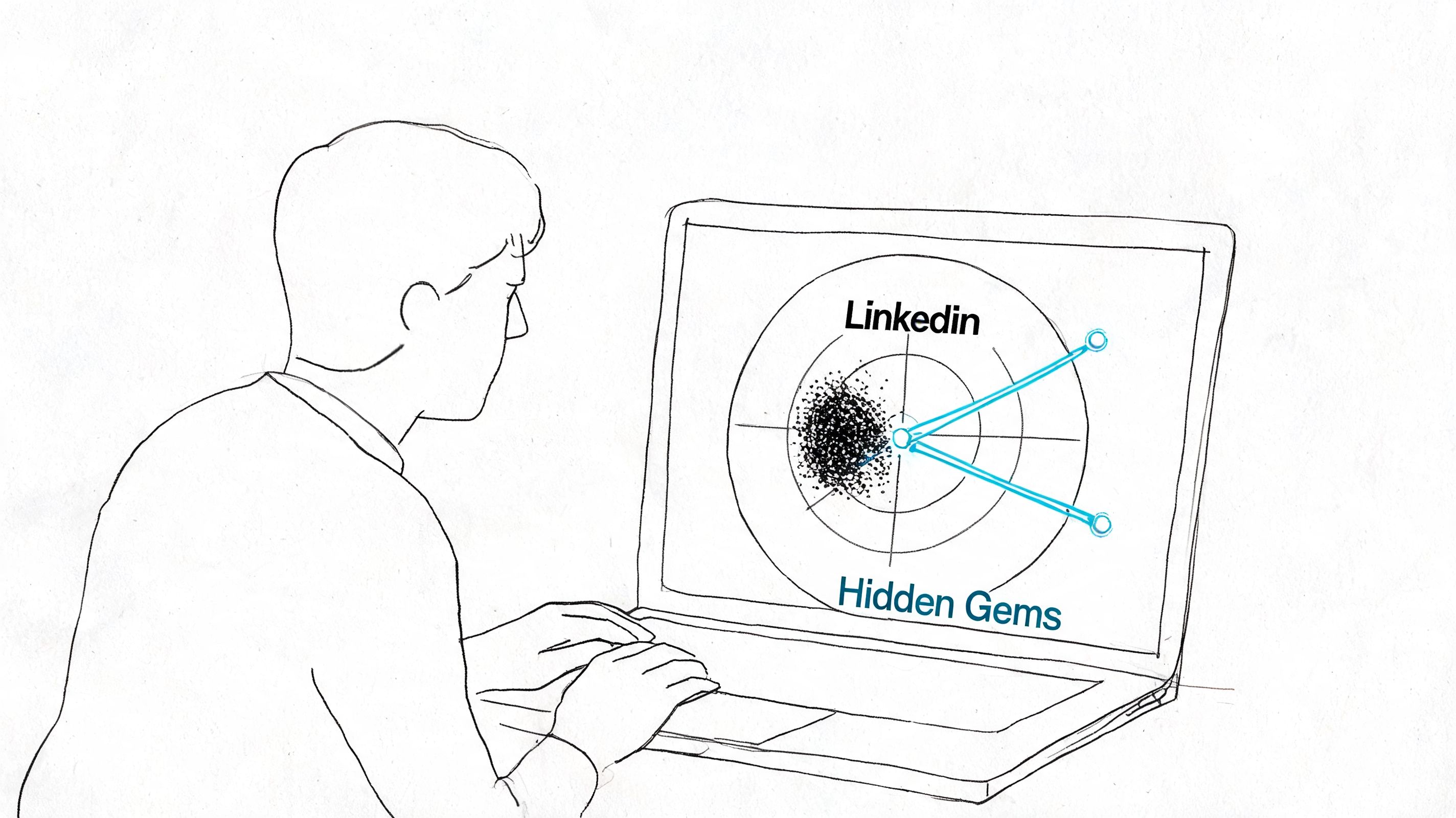
The practical takeaway isn’t “write a better LinkedIn application.” It’s “stop relying on platforms that expose the role after the crowd arrives.”
Why big job boards produce weak odds
LinkedIn and similar boards are useful for market mapping. They’re bad as your primary acquisition channel for remote PMM roles. By the time a role trends there, several things have usually happened already:
- The hiring team has early applicants from direct traffic, referrals, and their own careers page.
- The role has spread across aggregators, which creates duplicate listings and stale links.
- Your application gets compared at scale, which pushes recruiters toward quick filtering instead of nuanced review.
That last point is where good PMMs get flattened. A strong background in positioning, launch planning, enablement, and customer insight can look ordinary if the resume opens with generic language.
Practical rule: The best remote product marketing roles rarely feel easy to find. They show up quietly, sit on a company careers page first, and only later spill into crowded channels.
Search for signal, not volume
A better approach is direct sourcing. Instead of searching where applicants gather, search where companies publish first. That means company ATS pages, remote-first company career pages, and curated remote search engines that pull directly from employers.
Use a workflow like this:
- Build a target list: Pick companies whose product complexity fits your background. If you’re strongest in PLG SaaS, don’t spray applications across hardware, fintech, and biotech at the same time.
- Track career pages directly: Save target companies in a spreadsheet or Notion board and review openings on a fixed cadence.
- Use remote-first search tools: Search engines such as Remote First Jobs help surface direct-hire listings from remote-first companies before they become noisy.
- Separate fresh roles from reposts: If the same opening appears across multiple boards but the company page is gone, move on.
- Apply where the company wants applications: Always prefer the employer’s own application flow over an aggregator’s one-click form.
What to do right after you find a role
Speed matters, but random speed hurts. Once you spot a match, move in this order:
- Read the job description for business context. Is the company selling enterprise, self-serve, or a hybrid motion?
- Mirror the language accurately. If the role leans heavily on sales enablement, don’t lead with broad brand messaging.
- Identify one likely hiring stakeholder. Usually Head of Product Marketing, VP Marketing, or Product leader at smaller firms.
- Send a tight follow-up note. If you need help writing one that doesn’t sound canned, this guide to contacting recruiters on LinkedIn is useful because it keeps the message short, specific, and job-relevant.
The strongest candidates treat discovery like pipeline generation. They don’t wait for opportunity to become public consensus.
Tailor Your PMM Story for Remote Work
A lot of candidates misunderstand what remote hiring managers are screening for. They aren’t just asking, “Can this person do product marketing?” They’re asking, “Can this person do product marketing without hallway syncs, rescue meetings, or constant supervision?”
That changes how your experience needs to read.
The baseline PMM resume says things like “led cross-functional launches” or “partnered with product and sales.” That isn’t wrong. It’s just too vague for distributed teams. A remote hiring manager wants evidence that you can create clarity asynchronously, drive momentum across functions, and make decisions without waiting for live alignment every time.
Product Marketing Alliance’s guidance on landing a remote product marketing job gets at the shift well. In a digital-first hiring market shaped by AI, it’s not enough to list skills. Candidates need to show expertise in sales-led growth, self-serve funnels, and AI-adjacent capabilities in the way they position their work.
Reframing your experience for remote roles
Here’s the difference between a competent resume and one that tells a hiring manager, “This PMM already works like a remote operator.”
| Original On-Site Achievement | Optimized Remote-First Version |
|---|---|
| Led cross-functional product launch with product, sales, and customer success | Drove launch planning across distributed product, sales, and customer success stakeholders using async briefs, recorded updates, and shared launch docs that kept decisions visible |
| Partnered with sales on enablement materials | Built enablement assets, FAQ docs, and objection handling content that sales reps could use without live walkthroughs |
| Managed messaging and positioning for new features | Created messaging frameworks and rollout documentation that aligned product, demand gen, and customer teams across time zones |
| Worked closely with product managers to bring features to market | Turned product inputs into clear launch narratives, release notes, and internal communication packs that reduced ad hoc clarification requests |
| Conducted customer research and market analysis | Synthesized customer feedback into concise insight memos and recommendation docs that teams could act on asynchronously |
What hiring managers actually look for
When I review PMM applications for remote roles, I look for proof in four areas:
- Async communication: Docs, decision memos, recorded walkthroughs, written launch plans.
- Autonomy: Clear examples where the candidate owned a workstream end to end.
- Commercial sharpness: Evidence they understand pipeline, adoption, expansion, or sales friction.
- Tool fluency: Not tool-dropping for show, but credible usage of systems like Slack, Notion, Asana, Loom, Gong, HubSpot, or Salesforce in the way work gets done.
If your resume still reads like your best work only happened in meetings, you’re making remote experience look weaker than it is.
Fix the language before you apply
Don’t rewrite your entire career history for every role. Rewrite the top layer. Your summary, your most recent role, and the bullets tied closest to launch ownership should do most of the work.
A good pattern is:
- Start with the business problem
- Show your PMM action
- Show how you aligned teams remotely
- Close with the business outcome, if you can describe it without inventing numbers
Example:
- Weak: Responsible for product launch strategy and cross-functional collaboration.
- Strong: Owned launch strategy for new product releases, translating product inputs into positioning, enablement, and rollout docs used by distributed sales and customer teams.
If you want help tightening language to match a job description without making your resume sound robotic, CV Anywhere’s AI-enhanced application strategy is a useful reference for adapting wording while keeping the substance intact.
Your portfolio matters more in remote hiring
For product marketing remote roles, a lightweight portfolio often beats a polished personal website. A simple folder or PDF set can be enough if it shows how you think and communicate.
Include artifacts such as:
- Launch briefs
- Positioning frameworks
- Sales enablement one-pagers
- Competitive battlecards
- Customer insight summaries
- Recorded walkthroughs of your thinking
A hiring manager doesn’t need a design showcase. They need evidence that you can create an advantage for a distributed team.
Build Connections Without Leaving Your Desk
A remote PMM I once advised kept getting ignored after solid applications. Good background. Relevant category. Strong writing. No traction. The problem wasn’t her experience. It was that every touchpoint started with a request.
She changed one habit. Instead of sending “I applied and would love to connect,” she started showing up with something useful.
For one target company, she saw a product announcement and wrote a short post breaking down why the positioning angle was smart but where the differentiation might get challenged. She tagged no one. A few days later, she sent the hiring manager a concise note: she’d applied, she’d been following the launch, and she shared two observations on the category narrative. That started a conversation. Not because it was clever outreach, but because it felt like how a PMM already on the team would think.
Lead with relevance
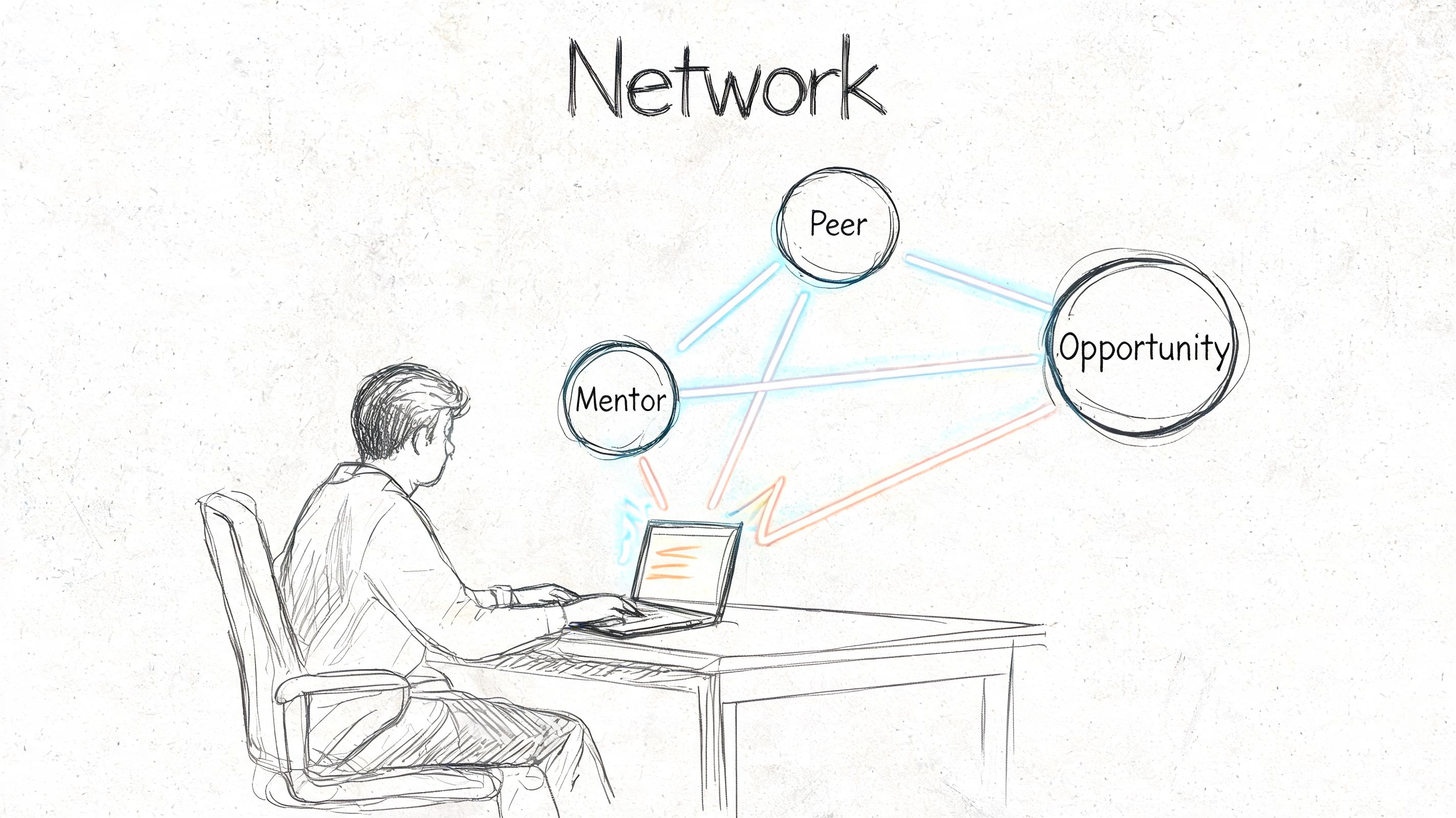
Remote networking works best when it’s asynchronous and low-friction. You don’t need coffee chats with everyone in your target list. You need a small number of thoughtful interactions that signal judgment.
Good entry points include:
- Commenting on a launch or funding announcement with a real observation, not praise-only fluff
- Sharing a category insight that connects to the company’s market
- Responding to a hiring manager’s post with a point that demonstrates operator-level thinking
- Joining niche Slack or community spaces where PMMs, founders, and marketers discuss launches, pricing, and enablement
What useful outreach sounds like
Most bad outreach fails because it asks the recipient to do work. Good outreach reduces work.
Try language like this:
I applied for the PMM role and spent some time reviewing your recent launch messaging. One thing that stood out was how clearly you tied the feature to buyer workflow, not just functionality. I also think competitors will likely challenge you on implementation speed, so I’d be curious how the team is handling that in enablement.
That message works because it proves three things at once. You did the homework. You think commercially. You know how product marketing shows up in the field.
Avoid common networking mistakes
A few patterns consistently hurt otherwise strong candidates:
- Generic praise: “Love what your company is doing” says nothing.
- Immediate referral asks: If the first note asks for a referral, you’ve skipped trust.
- Long autobiography messages: Nobody wants your full career story in a first outreach.
- Forced personal branding: If your posts sound like performance instead of insight, hiring managers notice.
The best remote networking feels less like networking and more like being a thoughtful industry peer.
Done well, connection-building creates familiarity before your application reaches the screen. That matters in remote hiring, where a manager is often choosing between several candidates who all look qualified on paper.
Master the Remote Interview Stack
Remote interviews test more than your answers. They test whether a team can trust you to communicate clearly without physical presence doing any of the work for you.
That’s why remote PMM interviews often feel deceptively simple. A video call, maybe a panel, maybe an async assignment. But underneath that format, the team is evaluating how you structure ideas, how you listen, whether you can drive clarity in writing, and whether you come across like someone customers and internal teams will trust.
Indeed’s remote product marketing listings show thousands of active openings as of May 2026, which confirms companies are still hiring PMMs in distributed setups. The demand is there. Execution during interviews is what separates finalists.
Get the technical layer right
You don’t need a studio. You need a setup that removes distractions.
Check these before every call:
- Audio first: Clear sound matters more than premium video. Use headphones or a dedicated mic if you have one.
- Clean frame: Neutral background, stable camera angle, and enough front lighting so your face is easy to read.
- Interview materials nearby: Role description, your questions, launch examples, and portfolio links in one document.
- Backup plan: Keep your phone, charger, and hotspot option ready in case your connection drops.
A sloppy setup creates doubt. A calm setup creates confidence before you say a word.
Handle the live conversation like a PMM
Remote PMMs need to answer with structure. Not because canned frameworks are impressive, but because distributed teams depend on people who can make complex things easy to follow.
Use a simple pattern in interviews:
- Name the context
- Clarify the challenge
- Explain your decision process
- Show how you aligned stakeholders
- Close with the result or lesson
This works especially well for launch stories, repositioning work, pricing projects, and enablement examples.
A strong remote interview answer sounds like a launch memo spoken out loud. Clear setup, clear decision, clear takeaway.
Prepare for async evaluation
Many remote companies add written exercises, recorded answers, or follow-up docs because they want to see how you communicate without live rescue. Treat those steps as first-class interview moments.
A few habits help:
- Answer the exact prompt: Don’t overproduce if the question asks for a short response.
- Show synthesis: PMMs win by distilling, not by flooding.
- Write in a skimmable format: Short paragraphs, bullets, headings.
- Be decisive: Hiring teams notice when a candidate hides behind options instead of making a call.
If you want a solid general framework for getting your prep organized without overcomplicating it, this guide to interview prep for professionals is a practical reference.
Deliver a Standout Take-Home Assignment
The take-home assignment is often the closest simulation of the actual job. For remote PMM hiring, it carries even more weight because it shows how you think when nobody is in the room prompting you.
That changes how you should approach it. The deck itself isn’t the whole assignment. Your evaluation includes your assumptions, your communication habits, your judgment about scope, and the way you package your work for busy stakeholders.
Don’t just submit answers
Average candidates complete the prompt. Strong candidates make their reasoning visible.
If the assignment asks for a launch plan, messaging recommendation, or market analysis, include a short opening section that states:
- Your assumptions
- What information was missing
- What trade-offs you made
- How you’d validate the recommendation with the team
That instantly changes the quality of the submission. It shows maturity. It also protects you from the common trap of being judged for not knowing internal context you were never given.
Make the deliverable easy to consume
Remote teams are overloaded with information. If your assignment is hard to skim, it signals that working with you may be hard to skim too.
A good take-home usually has three layers:
- An executive summary with the recommendation and why it matters
- A working section with supporting analysis, audience framing, positioning logic, and launch or enablement ideas
- A concise walkthrough so reviewers can absorb your thinking quickly
One of the best ways to do that is to pair a deck or doc with a brief recorded explanation. A Loom-style walkthrough lets you show prioritization, tone, and judgment in a way slides alone often can’t.
This quick video is a useful reminder that strong delivery is partly about how you present the work, not just what’s on the page.
Ask smart clarifying questions
Most candidates are afraid to ask questions because they think it makes them look less capable. In remote work, the opposite is usually true. Good async operators clarify ambiguity early.
Ask only what materially improves the output. For example:
- Which buyer segment should I prioritize?
- Should this recommendation optimize for launch speed or long-term positioning durability?
- Is the audience internal sales teams, end customers, or leadership?
The assignment isn’t only testing your answer. It’s testing whether working with you would feel clean, proactive, and low-drama.
Show restraint
A common PMM mistake is overbuilding. Thirty slides when ten would do. A massive competitor matrix nobody asked for. Messaging frameworks nested inside broader messaging frameworks.
Hiring managers don’t reward bloat. They reward judgment.
A standout submission feels like something a senior PMM would send to a cross-functional team. Focused. Legible. Commercially relevant. Ready for discussion.
Negotiate and Secure Your Remote Offer
By the time an offer arrives, many candidates get cautious. They worry that asking questions will make them look difficult or that negotiating will put the role at risk. In product marketing, that instinct usually costs you.
If a company wants you, they’re not just buying task execution. They’re buying judgment, prioritization, communication quality, and your ability to make product value legible across the business. You should negotiate from that level.
Salary benchmarks help anchor the conversation. DailyRemote’s product marketing salary data shows the average salary for remote product marketing roles is $115,000, based on 654 recent job openings as of May 2026. The same data shows senior-level professionals averaging $155,000 and lead-level professionals averaging $205,000, with overall ranges spanning $60,000 to $230,000.
Read the whole offer, not just base salary
Remote offers often look simpler than they are. Break them into components:
- Base salary: Start here, but don’t stop here.
- Equity: Ask how the company explains value, vesting, and refresh expectations.
- Benefits: Healthcare, retirement support, and leave policies matter more than candidates sometimes admit.
- Home office support: Clarify whether the company covers equipment or setup costs.
- Location policy: Ask whether compensation is location-based, band-based, or role-based.
- Work expectations: Time zone overlap, travel expectations, and async norms should be explicit.
A “remote” offer can still hide a very narrow working model. If the role expects heavy overlap with one geography, frequent travel, or constant on-call responsiveness, you need to know before signing.
Negotiate like a business partner
The strongest negotiation tone is calm and specific. Not aggressive. Not apologetic.
Try language like this:
I’m excited about the role and confident I can add value across positioning, launches, and enablement. Based on the scope of the work and current remote product marketing benchmarks, I’d like to discuss the compensation package in a way that reflects the level of ownership this role requires.
If you’re senior, tie your ask to business impact. Product marketing isn’t support theater. It shapes launch quality, sales readiness, market clarity, and adoption. Say that plainly.
Clarify how the team actually works
Before you accept, ask questions that affect your day-to-day success:
- How are launch decisions documented?
- What does good async communication look like on this team?
- How much of the role is strategic versus execution-heavy?
- Who owns pricing, competitive intel, and sales enablement today?
- What happens when product, sales, and marketing disagree?
Those questions do two things. They protect you from walking into chaos, and they signal that you think like an operator, not just an applicant.
A good remote offer should feel clear, fair, and workable. If it doesn’t, the problem usually won’t disappear after you join.
If you’re tired of late applications, ghost jobs, and crowded boards, Remote First Jobs is worth using as part of your search. It focuses on verified remote roles sourced directly from company career pages, which gives you a cleaner shot at strong opportunities before they get flooded with applicants.