
Think of your personal brand as your professional reputation, carefully shaped and shared online. It’s the story you tell about your expertise, the value you offer, and what makes you unique—communicated consistently across every platform you use. It’s how you build trust and authority with the people who matter most to your career.
Your Personal Brand Is Your Greatest Career Asset
Before we get into the nuts and bolts, let’s be clear about one thing: building a personal brand isn’t a vanity project anymore. It’s a core professional strategy. It’s the invisible force working for you around the clock, shaping how people see your value long before you ever shake their hand or join a video call.
It’s really the difference between a resume and a reputation. A resume just lists what you’ve done. Your personal brand, on the other hand, tells people who you are, what you stand for, and the unique spark you bring to the table. In a crowded job market—especially for remote roles—that difference is everything.
The Tangible Impact of a Digital Footprint
Let’s imagine two software developers with identical skills. The first one has a bare-bones LinkedIn profile that hasn’t been touched in years. The second developer keeps their profile fresh, shares thoughtful posts about new coding frameworks, and runs a simple website showcasing a few key projects.
When a recruiter starts looking for candidates, who do you think stands out? It’s the second developer, every time. Their brand tells a compelling story of passion, expertise, and genuine engagement. The first developer is just a name on a list, a ghost with no context. This digital footprint directly leads to more interviews, better offers, and access to far more interesting work.
“Your personal brand is what people say about you when you are not in the room.” - Jeff Bezos, Founder of Amazon
This isn’t just a nice idea; it’s the reality of modern hiring. The numbers don’t lie. Recent data shows that a staggering 80% of recruiters believe personal branding is important when vetting candidates. What’s more, 47% of employers admit they’re less likely to even interview someone they can’t find online. A visible, authentic digital presence is now the baseline.
Unlocking Unseen Opportunities
A strong personal brand does more than just get you noticed by recruiters. It opens doors to opportunities you didn’t even know were out there. This is a game-changer for remote professionals who can’t rely on being seen around the office.
When you consistently share what you know, you become a magnet for:
- Consulting and freelance gigs: People see your value and reach out directly.
- Speaking invitations: Your authority makes you a go-to voice for conferences and webinars.
- Strategic partnerships: Like-minded professionals seek you out for exciting collaborations.
- Community influence: You become a trusted, go-to resource in your field.
These kinds of opportunities almost always live in the hidden job market—the one where roles get filled through referrals and reputation, not public job boards. By building your brand, you put yourself in the perfect position to be discovered for these unlisted, high-value roles. If you want to dive deeper, our guide on how to tap into the hidden job market has more strategies.
Ultimately, your personal brand is your career insurance policy. It’s the one asset you truly own, completely independent of any company you work for. It moves with you, grows with you, and builds constant momentum in your professional life. Investing in it is the single best investment you can make in your long-term success.
Finding Your Unique Position in a Crowded Field
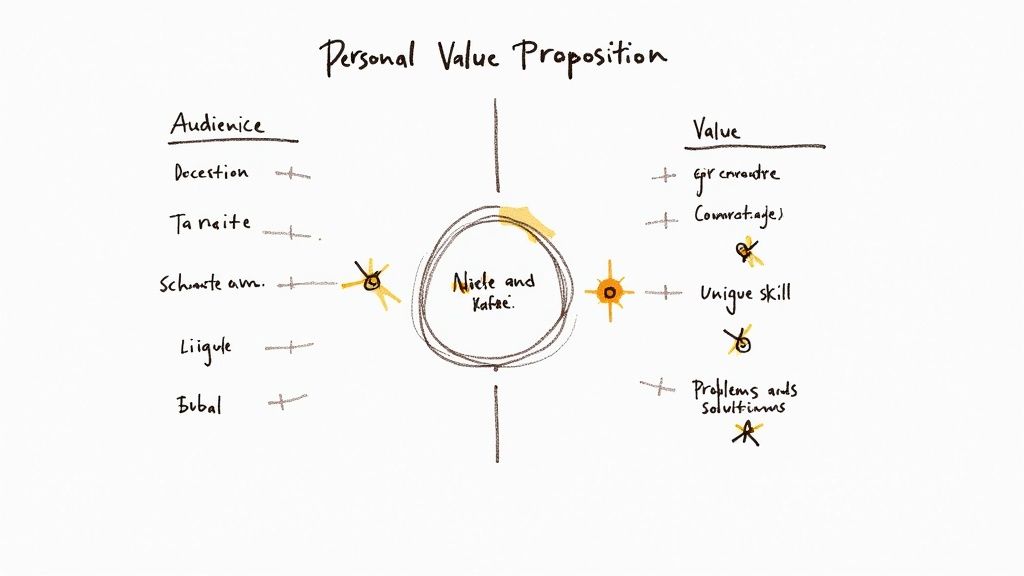
Alright, you’ve figured out your ‘why.’ Now it’s time to nail down the ‘what.’ A powerful personal brand isn’t built on flimsy promises or trying to be known for everything. It’s built on a foundation of sharp focus. You need to know exactly what you stand for, who you’re talking to, and the specific value you bring to the table.
Let’s be honest, standing out in a sea of talented people is tough. It requires you to carve out a specific space that you can truly own. This isn’t about inventing a new persona; it’s about discovering the intersection of what you love, what you’re great at, and what the market actually needs. Forget the generic mission statements. We’re defining a position that feels authentic to you and looks compelling to everyone else.
Pinpoint Your Core Expertise
Your expertise is the bedrock of your personal brand. It’s not just about your job title—it’s about how you do what you do. To get beyond a simple title, you have to dissect your skills and experiences to find your unique angle.
Take a UX designer, for example. Instead of just saying, “I design user-friendly apps,” a much stronger position is, “I specialize in creating intuitive mobile banking apps for fintech startups.” See the difference? The second statement immediately clarifies expertise, audience, and value. It’s far more memorable and instantly attractive to a specific kind of company.
To find your own angle, start by asking yourself a few questions:
- What problems do I actually enjoy solving? Think about the challenges that genuinely get you excited, even the really tough ones.
- Where have I gotten the best results in the past? Look for patterns in your successes and the positive feedback you’ve received.
- What skills feel almost effortless to me? This often points to your natural strengths, where you can deliver the most value without burning out.
This self-reflection is absolutely critical. The goal is to land on a niche that feels less like a chore and more like a natural extension of who you are. That authenticity is the fuel for long-term consistency, which is everything when you’re learning how to build a personal brand that lasts.
Define Your Ideal Audience
You can’t be everything to everyone. Seriously. Trying to appeal to a broad, fuzzy audience is the fastest way to get lost in the noise. The most successful personal brands speak directly to a specific group of people by understanding their unique challenges, goals, and even the language they use.
Think about who you really want to help. Are you a project manager who thrives on helping early-stage SaaS companies build their very first product roadmap? Or maybe you’re a content marketer who excels at turning complex B2B tech features into stories that actually sell.
Your brand isn’t for you; it’s for them. The more you focus on serving a specific audience’s needs, the stronger your personal brand will become.
Once you’ve identified your target audience, your next job is to get inside their heads and understand their pain points. What keeps them up at night? What obstacles are standing between them and their goals? Your brand’s real value is born from your ability to solve these specific problems.
Craft a Compelling Value Proposition
Your personal value proposition is a clear, punchy statement that spells out the tangible benefits you offer your target audience. It’s the answer to the all-important question: “Why should I care?” It’s what connects your expertise directly to their needs.
A simple framework to get you started is:
I help [Your Target Audience] to [Achieve a Specific Outcome] by [Your Unique Method or Skill].
Let’s go back to our UX designer example:
- Weak Proposition: “I am a UX designer who creates great user experiences.”
- Strong Proposition: “I help early-stage fintech startups increase user adoption by designing intuitive, data-driven mobile onboarding flows.”
The second version is so much more powerful because it’s specific, outcome-focused, and highlights a unique skill. It proves you understand the audience’s real goal (user adoption) and that you have a clear method for getting them there. For designers who want to showcase this kind of value, a portfolio that screams this focus is non-negotiable. To learn more, check out our guide on building a good UX portfolio that proves your expertise. This is how you turn a general skill into a highly sought-after specialty.
Developing an Authentic Voice That Builds Trust
Once you’ve nailed down your value proposition, it’s time to think about your voice. This isn’t about inventing some slick online persona. It’s about figuring out how to translate your actual personality into a professional communication style that genuinely builds trust.
You’ve probably heard the advice to “just be yourself,” which sounds great but isn’t very helpful. Let’s get more practical. Your voice is the consistent flavor that shows up in everything you do online, from a deep-dive article to a quick comment on LinkedIn. It’s what makes your content instantly recognizable as yours. It’s a mix of your tone, your word choice, and the stories you tell.
From Personality to Professional Messaging
Start by thinking about how you communicate in real life. Are you the analytical one who always leads with data? Or are you a natural storyteller, using analogies to break down complex topics? Maybe your style is more direct and no-nonsense, getting straight to the point. None of these is better than the others—the secret is consistency.
Your goal is to find that sweet spot where your natural communication style clicks with what your professional audience expects. For instance, a software engineer with a famously dry wit can absolutely inject that humor into their technical blog posts. It makes complicated subjects more engaging and human, helping their content stand out from the sea of purely technical writing.
To start pinning down your voice, ask yourself:
- What’s my perspective? Do I challenge common assumptions in my field or offer a contrarian take?
- What’s my vocabulary? Do I lean toward simple, direct language or more descriptive, nuanced terms?
- What’s my tone? Am I generally encouraging, authoritative, humorous, or inquisitive?
Answering these questions lays the groundwork for how you’ll communicate. A core part of this is creating strong brand messaging that clearly defines how you talk about your value and builds that crucial layer of trust.
The Power of Authentic Storytelling
Stories are, without a doubt, your most powerful tool for making a real connection. I’m not talking about some epic hero’s journey, either. Often, the most effective stories are the small, relatable ones.
Think about the project that went completely sideways and what you learned from it. Or the unexpected career pivot that led to a breakthrough. Even a simple behind-the-scenes look at your process can be incredibly powerful.
Sharing your challenges and lessons learned—not just your highlight reel—is what truly builds trust. People don’t connect with perfection; they connect with authenticity. Showing a bit of vulnerability signals that there’s a real person behind the professional profile, and that’s a game-changer.
Authenticity isn’t just a buzzword anymore; it’s the gold standard. When you share genuine stories, you stop being just another service provider and become a trusted guide for your audience.
And the data backs this up. One study found that 86% of shoppers prefer an authentic and honest brand personality. On top of that, a whopping 69% of consumers now distrust traditional advertising. For anyone building a personal brand, the message is loud and clear: being real is far more effective than being polished.
When you weave your consistent tone and your honest stories together, you create a communication style that is uniquely yours. This authentic voice is what will attract the right opportunities and build a loyal audience that trusts your expertise and values what you have to say.
Building Your Online Home Base
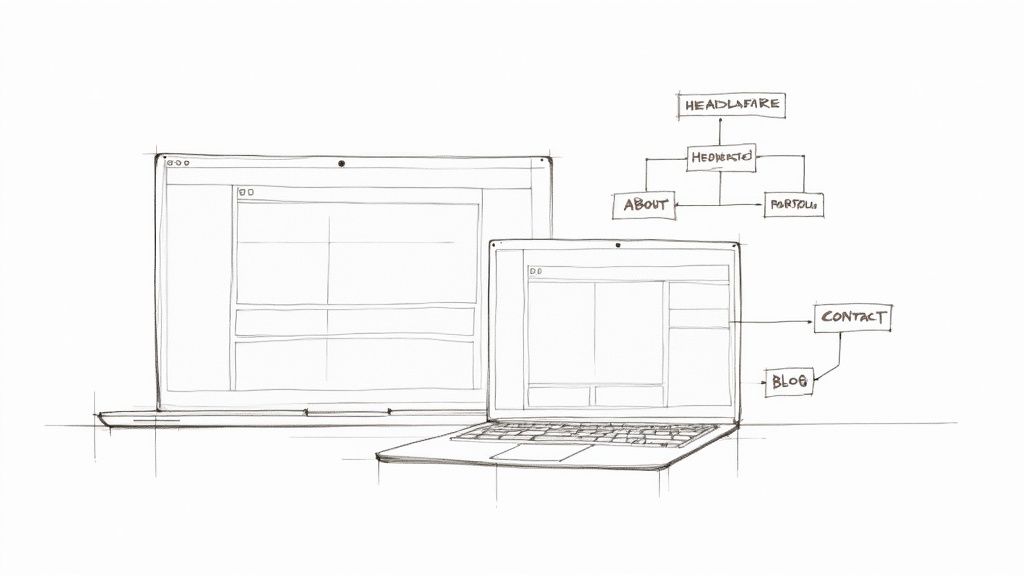
Think of your online presence as the storefront for your brand. It’s the collection of digital spaces where your ideal audience—be it recruiters, clients, or collaborators—can find you, grasp your value, and decide to connect. These aren’t just static digital resumes; they’re a living, breathing ecosystem where each part supports the others.
A strong personal brand needs a central hub where your expertise lives, supported by professional outposts that drive traffic and build connections. For most of us, especially in the remote world, this boils down to two key assets: a killer LinkedIn profile and a dedicated personal website. Let’s break down how to build them.
Optimize Your LinkedIn Profile for Discovery
Let’s be real: LinkedIn isn’t optional anymore. It’s the default professional directory for the entire working world. It’s almost always the first place someone will look you up. A half-baked profile can signal a lack of care, but a fully optimized one? That’s a powerful magnet for opportunity.
The goal isn’t just to list your past jobs. It’s about transforming your profile into a compelling landing page that speaks directly to the people you want to attract. This starts with your headline and summary—the two most visible sections.
- Your Headline: This is your digital billboard. Don’t just put your job title. Use this space to spell out your unique value. A generic “Software Engineer” becomes a much more potent “Software Engineer specializing in building scalable FinTech platforms for startups.” See the difference?
- Your Summary: This is your chance to tell a story. Hook the reader in the first few sentences by speaking to their needs or problems. From there, weave in your top skills and accomplishments, always tying them back to the tangible results you deliver.
A well-crafted profile helps you show up in searches and makes a fantastic first impression. For a more detailed walkthrough, check out our guide on how to optimize your LinkedIn profile for actionable steps that will make you stand out.
Your LinkedIn profile is your digital handshake. It should be firm, confident, and immediately convey who you are and what value you bring to the conversation.
When you treat your profile like a strategic asset instead of a static resume, you turn it into a powerful engine for inbound opportunities.
Your Personal Website: The Ultimate Brand Hub
While LinkedIn is non-negotiable for networking, your personal website is the one piece of online real estate you completely own and control. It’s where you can express your brand without being confined by a platform’s rules. Think of it as your brand’s central library, housing your best work, deepest insights, and unique personality.
A professional website doesn’t need to be complicated, but it absolutely must be effective. It needs to quickly communicate who you are, what you do, and how you help people. To really nail this, it’s worth digging into expert author website design strategies that are built to attract visitors and turn them into loyal followers.
A few pages are non-negotiable for any personal brand site:
- A Compelling About Page: This is often the most visited page on a personal site. Don’t just rehash your resume. Share your story, your “why,” and what drives you. It’s your best shot at building a genuine human connection.
- A Curated Portfolio/Projects Section: This is where you back up your claims. Showcase 3-5 of your best projects with detailed case studies. Walk people through the problem, your process for solving it, and the tangible results you achieved.
- A Blog or Insights Section: This is your authority-building machine. Regularly sharing your expertise through articles proves you know your stuff and gives immense value to your audience, building trust over time.
- A Clear Call-to-Action: Don’t make people guess what to do next. Make it dead simple for them to get in touch with a simple contact form or prominent links to your key social profiles.
To help you decide where to focus your energy first, here’s a quick breakdown of what each platform is best for.
Platform Focus: LinkedIn vs. Personal Website
Here’s a quick comparison to help you prioritize where to invest your time and energy based on your career goals and industry demands.
| Feature | LinkedIn Profile | Personal Website |
|---|---|---|
| Primary Goal | Networking, discovery, social proof, and professional credibility. | Authority building, showcasing work in-depth, and owning your audience. |
| Control & Ownership | Limited. You’re renting space on LinkedIn’s platform and must follow their rules. | 100% control. You own the domain, design, content, and user data. |
| Best For | Making first impressions, connecting with recruiters, and engaging with industry. | Housing a detailed portfolio, long-form content (blog), and direct lead generation. |
| Content Format | Short-form posts, articles, carousels, and professional updates. | Case studies, blog posts, white papers, videos, and downloadable resources. |
| Audience | Broad professional network, recruiters, potential clients, and colleagues. | A more dedicated, niche audience actively seeking your specific expertise. |
Ultimately, your website and LinkedIn profile should work in harmony. Use LinkedIn to drive traffic to your in-depth articles and portfolio, and use your website to feature testimonials or embed your latest LinkedIn posts. Together, they create a cohesive and professional ecosystem that reinforces your brand message at every single touchpoint.
Creating Content and Engaging Your Community
A personal brand isn’t some static resume you polish once and forget. It’s a living, breathing thing that grows through the value you consistently share with others. Your online profiles are the foundation, sure, but your content and community involvement are the engines that actually drive your growth. This is how you go from having a profile to building a real presence.
It’s all about showing your expertise in action, not just listing it on a page. The trick is finding a sustainable rhythm that won’t burn you out. You don’t have to create a masterpiece from scratch every single day to make a real impact.
Adopt the Pillar Content Model
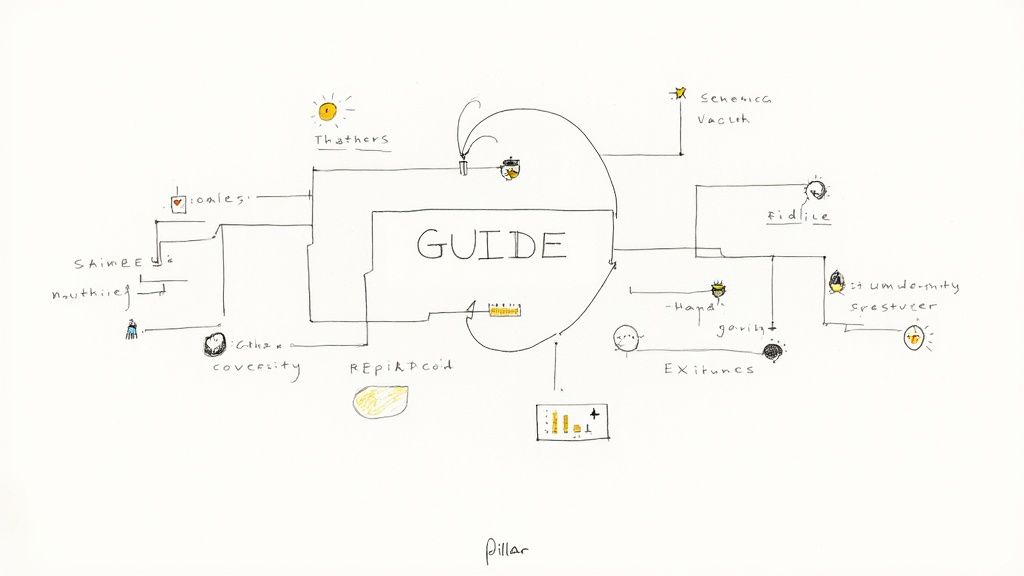
The secret to a steady stream of high-quality content isn’t working harder—it’s working smarter. This is exactly where the Pillar Content model comes into play. The idea is brilliant in its simplicity: create one massive, in-depth piece of content (your “pillar”), then slice it and dice it into dozens of smaller pieces for all your different platforms.
Think of it like a filmmaker shooting a documentary. They capture hours and hours of footage (the research phase) to produce a single feature film (the pillar content). From that one film, they can pull out short clips for trailers, behind-the-scenes photos for Instagram, and powerful quotes for articles.
Your pillar content could be:
- An ultimate guide or a deep-dive tutorial on a specific topic.
- A detailed case study walking through a successful project.
- An insightful webinar or presentation you recently gave.
- A comprehensive research report or white paper.
Once you have this core asset, you can spin it into a ton of platform-native formats. For example, a single in-depth case study on your website can become a 10-part LinkedIn carousel, several text posts sharing key insights, a short video summary for YouTube Shorts, and even a slick infographic. This strategy keeps you constantly providing value without constantly reinventing the wheel.
Give Value Before You Ask for Anything
The most powerful way to build your personal brand is to stop thinking about self-promotion and start thinking about genuine service. Your goal shouldn’t be to shout about your skills; it should be to generously share what you know. This is the mindset shift that takes you from being another passive profile to an active, respected voice in your field.
Community engagement isn’t about dropping links to your latest blog post and running. It’s about becoming a fixture in the online spaces where your ideal audience actually hangs out. Find the right LinkedIn Groups, Slack communities, or even specific hashtags on X (formerly Twitter) and just start contributing.
The currency of community is generosity. Answer questions, offer feedback, celebrate others’ wins, and share helpful resources. When you consistently show up to help, people naturally begin to see you as an expert and a trusted resource.
This approach builds relational equity. Over time, people will recognize your name and associate it with helpful, insightful contributions. So when they eventually need an expert in your field, you’ll be the first person they think of. It’s a long-term play that builds a foundation of trust that no amount of self-promotion ever could.
Build Relationships, Not Just Follower Counts
True influence isn’t measured by the number of followers you have; it’s measured by the strength of your relationships. Instead of just broadcasting to a faceless crowd, focus on building real, one-on-one connections. This is especially vital for remote professionals who don’t get those natural in-person interactions.
Make a point to engage thoughtfully. When someone shares an interesting article, don’t just hit “like.” Leave a comment that adds to the conversation or asks a smart question. When you connect with someone new, send a personalized message that references a shared interest or a piece of their work you genuinely admired. These small, authentic interactions are what turn passive followers into true advocates for your brand.
This relationship-first mindset extends to every form of communication. For instance, knowing how to write effective emails for networking can make all the difference between getting a reply and getting ignored. By focusing on giving value and building authentic connections, you create a powerful, self-sustaining ecosystem around your personal brand.
Tracking Your Growth and Evolving Your Brand
Building a personal brand isn’t a “set it and forget it” kind of deal. It’s a living thing that needs attention and fine-tuning. To make sure all your hard work is actually paying off, you need a straightforward way to track your progress and make smart adjustments along the way.
This isn’t about chasing vanity metrics. It’s about measuring what really signals that your brand is healthy and creating opportunities for you.
Let’s start with the numbers. Focusing on a handful of key performance indicators (KPIs) gives you a clear, data-driven picture of your brand’s reach and impact.
- LinkedIn Profile Views: Seeing this number climb is a good sign. It often means your content is hitting the right notes and you’re showing up in more searches.
- Content Engagement: Keep an eye on the likes, comments, and shares on your posts. This tells you exactly what topics are sparking real conversations with your audience.
- Website Traffic: Are people actually clicking through from your social profiles to your personal website? Monitoring unique visitors and page views will give you the answer.
- Inbound Messages: This one is huge. A noticeable increase in relevant messages from recruiters, potential clients, or peers is a powerful sign that your brand is doing its job.
Beyond the Numbers
Data is crucial, but it doesn’t tell the whole story. The qualitative feedback—the kind of attention you’re getting—provides the context that raw numbers can’t. The real power of your brand is reflected in the quality of opportunities that start coming your way.
Are you getting invited to speak on industry podcasts? Are senior leaders in your field—people you look up to—engaging with your content? These are the real indicators of growing authority.
A strong personal brand doesn’t just get you more attention; it gets you the right attention. The goal is to evolve from being just another applicant to becoming a sought-after expert.
To keep your strategy sharp and pointed toward your career goals, get into the habit of doing a quarterly brand audit. Think of it as a simple check-in with yourself. You’ll review your metrics, take stock of the quality of inbound opportunities, and even ask for some honest feedback.
For some great pointers on that last part, our article on how to ask for feedback at work has practical scripts you can easily adapt. This regular review cycle is what keeps your brand relevant and ensures it continues to open the right doors for you.
Got Questions? Let’s Talk Personal Branding.
Even with the best blueprint, you’re going to have questions as you start building your personal brand. That’s totally normal. Let’s tackle some of the most common ones I hear so you can keep the momentum going.
How Long Does This Actually Take?
Look, building a brand is a marathon, not a sprint. You can get the foundational pieces in place—sorting out your niche, polishing up your profiles—in a few weeks. But to see the real magic happen, like people reaching out to you with opportunities, you should plan on 6 to 12 months of consistent effort.
The key here is consistency, not intensity. Think of it like a professional habit you’re building, not a project you just check off a list. A little bit every week goes a long, long way.
What If I Don’t Have a Niche?
That’s okay! Seriously, most people don’t when they start. If you’re feeling stuck, just start sharing your journey. Talk about what you’re learning right now, the problems you’re solving, and the projects you’re working on.
This “build in public” approach is incredibly powerful. You’ll attract an audience that wants to grow alongside you. Your niche often finds you based on what you genuinely enjoy creating and what people respond to. Don’t let the hunt for the “perfect” niche stop you from getting started.
Your personal brand isn’t about being perfect; it’s about being authentic and consistent. Start where you are, with what you know, and let it evolve naturally as you grow.
Do I Really Need a Personal Website?
A top-notch LinkedIn profile is absolutely non-negotiable. But a personal website? That’s your own little corner of the internet. It’s the one place where you have total control over your story and can showcase your work in ways a social media platform just can’t match.
Here’s how I think about it:
- LinkedIn is for making connections and getting discovered.
- Your website is for building deep authority and housing your best work.
For any professional who’s serious about their remote career, a simple, clean website isn’t just a nice-to-have; it’s a powerful asset that makes you stand out from the crowd.
Ready to put your brand in front of the right companies? Remote First Jobs connects talented professionals like you with verified remote-first roles. Browse thousands of curated job listings and find your next great opportunity today. Explore remote jobs now.