You’re probably doing one of two things right now. You’re either scrolling through remote listings that all look suspiciously similar, or you’ve found a few promising remote 1099 jobs and you’re trying to figure out whether any of them are worth your time.
This is the main problem with this market. Finding listings isn’t hard. Finding good listings, pricing yourself properly, and avoiding clients who treat contractors like disposable labor is the hard part.
Remote contractor work sits inside a much bigger remote labor market that’s become normal, not fringe. In 2025, 32.6 million Americans, or 22% of the U.S. workforce, were working remotely according to Neat’s remote work statistics roundup. That matters because companies already know how to work across time zones, manage async communication, and hire people they won’t see in person. Remote 1099 jobs benefit from that same infrastructure.
The mistake I see most often is treating a 1099 search like a normal job search. It isn’t. You’re not just looking for a role. You’re choosing clients, payment terms, legal risk, and income stability. The strongest contractors think like operators first and applicants second.
Sourcing High-Quality 1099 Opportunities
The biggest edge in remote 1099 jobs isn’t writing a better cover letter. It’s seeing the right opportunities before everybody else does.
Broad job boards are useful for pattern recognition. They show which titles are circulating, which companies hire contractors repeatedly, and which verticals are active. But they’re low-signal channels for serious sourcing because they’re full of recycled posts, recruiter reposts, and listings that have already absorbed a flood of applicants.
By contrast, the most reliable approach is to go straight to employer career pages. Remote postings can be detected within hours when a search engine scans company sites continuously, while major platforms often lag, as noted in StrongDM’s remote work analysis. For contractor searches, that speed matters more than volume.
High-signal channels
Build a target list first. Don’t search the whole internet every day. Create a focused list of companies that already operate remotely and regularly use contractors.
That list should include:
- Remote-first companies: Teams that already work in distributed environments usually have cleaner async processes and fewer “we say remote but mean local” surprises.
- Companies with repeat contractor patterns: If a company repeatedly hires for contract marketing, RevOps, design, sales support, or implementation work, that’s a buying habit, not a one-off.
- End clients, not middle layers: The closer you are to the budget holder, the better your odds of clear scope and rational negotiation.
A practical workflow looks like this:
- Track company career pages directly.
- Filter for terms like contractor, 1099, independent contractor, consultant, fractional, or project-based.
- Confirm the posting comes from the actual company, not an agency.
- Apply fast while the listing is still fresh.
That’s why tools that surface direct employer listings are useful. A platform like Remote First Jobs fits this workflow because it focuses on direct company openings rather than the usual aggregator clutter.

Practical rule: Don’t compete in the noisiest room if you can knock on the client’s actual door.
Low-signal channels
Mass aggregators still have a place, but mostly as research tools. Use them to spot trends, not as your primary funnel.
Low-signal sources usually have one or more of these problems:
- Stale listings: The job is technically still up, but hiring already moved forward.
- Duplicate posts: The same role appears on several platforms and looks like broader demand than it really is.
- Agency masking: A recruiter post hides the actual client, which makes it harder to assess budget, scope, and authority.
- Spam-heavy categories: Some “remote 1099” searches are crowded with commission-only offers and low-trust outreach.
What actually works
A good remote 1099 pipeline is narrow and deliberate. Keep a spreadsheet or simple Notion board with target companies, hiring pages, last-seen contractor openings, and notes on who buys outside help.
Then spend more time in niche communities than in giant job feeds. Industry Slack groups, specialist Discord servers, association forums, founder communities, and operator circles often surface work before it becomes a public posting. Those channels won’t always hand you a formal listing. They’ll often hand you something better, which is context.
If you want better remote 1099 jobs, act less like a job applicant and more like a business development lead.
How to Vet Contracts and Spot Red Flags
Not every remote 1099 opportunity is the same market wearing a different title. Some are solid consulting-style engagements. Some are administrative support contracts. Some are pure commission sales. Some are churn-and-burn lead generation setups with very little income stability.
That distinction matters. Available listings show remote 1099 work spans customer support, healthcare, admin, and commission-based sales, and the fastest-growing segments may not be the tech roles many people expect, according to this job market overview. If you don’t separate these categories, you’ll compare unlike with unlike and make bad decisions.
Read the opportunity like an investigator
The first screen is simple. Ask: What exactly is being purchased here?
If the answer is fuzzy, that’s a problem. A serious client can describe the work, the business problem, and how success will be judged.
Look for coherence between the title, responsibilities, and compensation model. If a role sounds like account management but pays only on commission, that’s not account management in the usual sense. If it sounds like full-time operations support but requires fixed hours, constant supervision, and manager approval for daily tasks, that may be a contractor label pasted onto employee-style control.
If the client can’t explain the work clearly before you sign, they won’t manage the engagement clearly after you sign.
Opportunity Vetting Checklist
| Red Flag (Proceed with Caution) | Green Flag (Positive Signal) |
|---|---|
| Vague description with buzzwords but no clear deliverables | Specific scope with outputs, timeline, and owner on the client side |
| Personal email address instead of a company domain | Professional email tied to an established business domain |
| Pressure to pay for training, software, onboarding, or “certification” | Client handles onboarding as part of normal engagement setup |
| Heavy emphasis on unlimited earnings with little detail on actual work | Straight explanation of how you get paid and what triggers payment |
| No visible company footprint, thin website, or no team information | Real website, leadership page, product or service detail, and visible operations |
| Refuses a written contract or sends a one-page payment promise | Uses a formal contractor agreement and is open to clause questions |
| Wants immediate start but avoids discussion of scope | Willing to define milestones before kickoff |
| Interview process feels like a script | Conversation includes real business context and practical questions |
| Expects you to be available like staff but calls it “flexible” | Respects independent scheduling and focuses on outcomes |
Red flags people ignore too often
Some warning signs don’t look dramatic. They look merely inconvenient. Those are often the dangerous ones.
Watch for these:
- Unclear buyer authority: You’re talking to someone enthusiastic, but they can’t approve budget, scope, or final terms.
- Scope inflation before signature: They keep adding “small” tasks while the rate discussion stays fixed.
- Too much urgency: Real clients move quickly sometimes. Scammy or chaotic clients use speed to prevent scrutiny.
- No operating cadence: They can’t tell you who approves work, when invoices are reviewed, or how communication happens.
Green flags worth paying attention to
A strong client often sounds boring in the best way. They know what they need, who owns the project, and how they’ll evaluate the work.
Positive signals include:
- Defined deliverables: Not “help us grow,” but “audit funnel, rebuild lifecycle emails, and hand off reporting.”
- Professional process: Briefing call, written scope, contract review, invoice workflow.
- Respect for contractor status: They care about outcomes more than whether your Slack dot is green all day.
- Healthy skepticism: Good clients ask sharp questions because they’re buying a business service, not filling a seat.
The strongest filter is this. If you can’t explain to a colleague exactly what the client is buying, how payment works, and who owns the engagement, don’t move forward yet.
Crafting Proposals That Win Contracts
A remote 1099 application shouldn’t read like a job application. It should read like a commercial proposal.
That shift changes everything. You stop listing duties you’ve performed and start showing how you’ll solve the client’s immediate problem. Most contractors lose work because they take the posting at face value. Good proposals answer the business need underneath it.
Lead with diagnosis, not biography
Clients don’t need your life story in the opening paragraph. They need evidence that you understand what’s wrong, what’s expensive, or what’s stuck.
Start with a short read on the problem:
- What bottleneck are they probably dealing with?
- What outcome are they trying to buy?
- What risk are they trying to reduce?
For example, if the role mentions CRM cleanup, reporting inconsistencies, and handoff issues between sales and customer success, don’t open with “I’m a detail-oriented professional with seven years of experience.” Open with the operational issue: revenue teams can’t trust handoff data when ownership rules and lifecycle definitions aren’t stable.
That tells the client you think in cause and effect.
Build the proposal around deliverables
Most weak proposals are feature lists. Most winning proposals are scope previews.
A clean structure looks like this:
Problem framing
Show that you understand the business issue in plain language.Proposed work
List the deliverables. Audit, build, migration, research, sales process cleanup, copy system, dashboard rebuild, SOP package.Timeline
Give a realistic sequence. Don’t promise speed you can’t sustain.Price and payment structure
Present your rate clearly. If the work is project-based, package it that way.Assumptions and boundaries
State what’s included and what isn’t.
Clients hire the contractor who makes the work feel manageable.
What to include and what to leave out
Include specificity. Leave out fluff.
Good inclusions:
- Relevant proof of work: One or two tight examples, preferably tied to similar problems
- Named deliverables: Not just “support” or “assist”
- Decision points: What feedback or approval you’ll need from the client
- Working style: Async updates, weekly check-ins, Loom walkthroughs, shared docs
Leave out:
- Generic self-praise
- Long resumes pasted into the email
- Eight portfolio links with no explanation
- Rates without context
A practical proposal habit
Before sending any proposal, ask one question: could this be copied and pasted to ten other clients?
If yes, it’s too generic.
A proposal that wins remote 1099 jobs usually feels specifically customized in three places: the diagnosis, the deliverables, and the pricing structure. It doesn’t have to be long. It has to feel commercially literate.
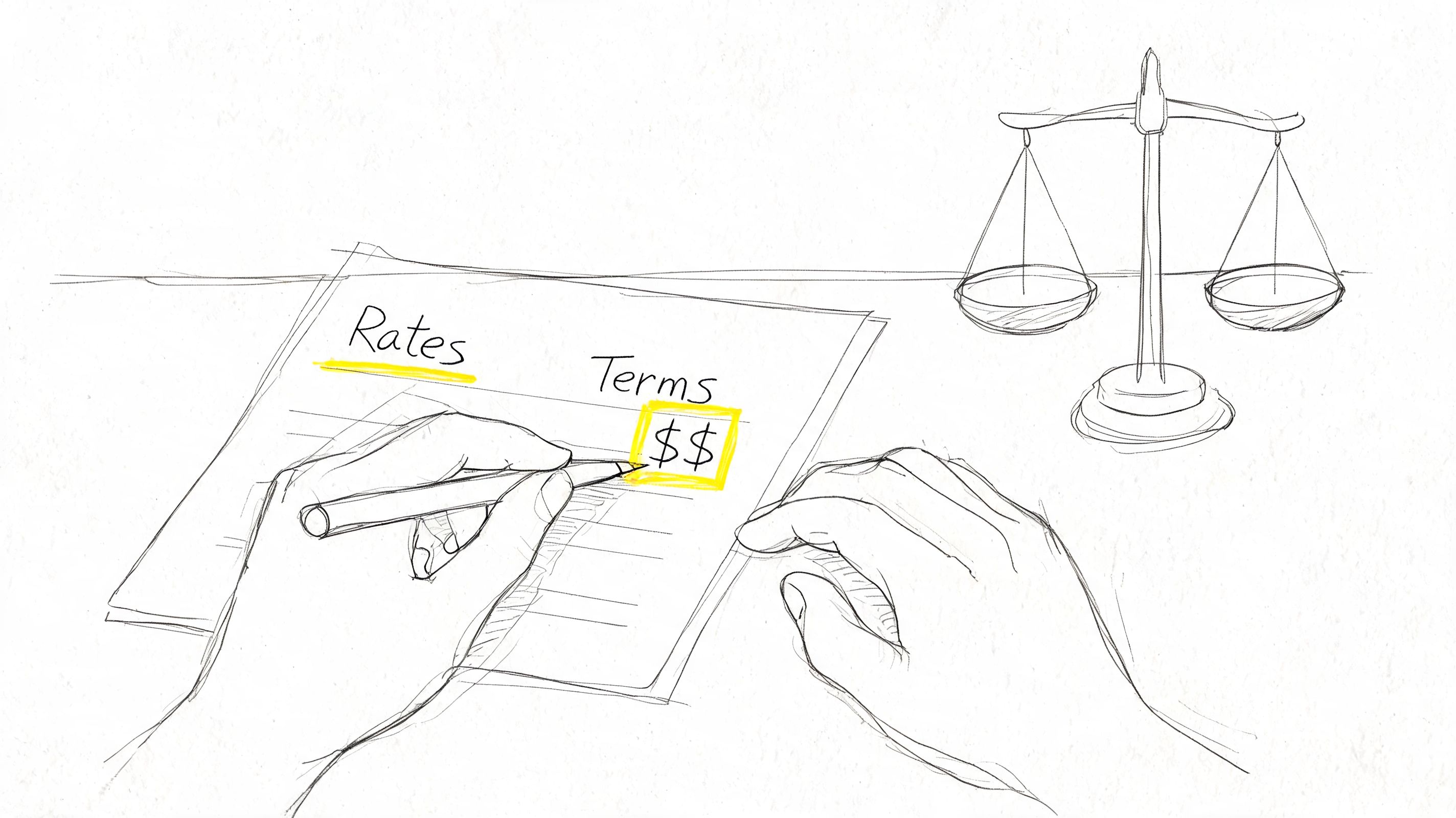
Negotiating Your Rates and Key Contract Clauses
Most contractors spend too much energy negotiating the number and not enough energy negotiating the deal. That’s backwards.
A high rate on a bad contract can still leave you underpaid. Slow payment terms, sloppy scope, broad IP language, and a one-sided termination clause can wreck the economics of an otherwise attractive project.
Price as a business owner
Remote 1099 jobs don’t pay for your downtime, benefits, admin work, missed leads, software stack, or tax overhead. Your rate has to.
That’s why hourly comparisons with employee roles often mislead people. A contractor rate isn’t just labor. It includes operating margin, unpaid business time, and risk transfer from the client to you.
A better way to frame rates in negotiation:
- Project fee when the scope is clear
- Monthly retainer when the work is ongoing but bounded
- Hourly rate only when variability is high and tracking is unavoidable
If the client asks for your hourly rate first, answer if you need to, but anchor the conversation in outcomes. Explain what the rate covers, what the expected scope is, and where additional work would sit.
The contract clauses that matter most
Most independent contractor agreements bury the important risks in ordinary-looking language. Slow down and read for consequences.
Payment terms
This is the first clause I check.
Look for:
- When invoices are due
- What triggers payment
- Whether approvals are required before invoicing
- Late fee language, if any
- Whether expenses are reimbursable
If a client says “payment upon completion” for a long project, that’s financing their business with your cash flow. Break the work into milestones or monthly billing.
Scope definition
A vague scope is an invitation to unpaid labor.
The agreement should describe:
- Deliverables
- Revision limits
- Communication cadence
- What counts as out-of-scope work
A sentence like “Contractor will provide marketing support as needed” is terrible. It gives the client room to keep expanding requests while claiming it’s all included.
Termination and kill fee
Contracts end early. Good contracts plan for that.
You want language that answers two questions:
- What notice is required to end the agreement?
- What gets paid if the client stops the project after work has already been reserved or started?
If you block time, do discovery, or turn down other work to make room for a client, an immediate walk-away clause hurts you. A reasonable kill fee or payment for work completed protects against that.
Here’s a useful explainer if you want a visual reset before reviewing agreements more closely:
Intellectual property and reuse rights
Clients usually need ownership of final paid deliverables. That part is normal.
The issue is overreach. Watch for contracts that claim ownership over pre-existing templates, methods, frameworks, or general know-how you brought into the project. Your background IP should stay yours unless you knowingly sell it.
A fair contract gives the client rights to what they bought, not to everything you know.
Location and legal reality
One more issue gets missed all the time. “Remote” doesn’t automatically mean you can legally take the work from anywhere.
Some companies explicitly limit contractor eligibility to locations such as the United States, Canada, or Jamaica, as shown on Working Solutions’ contractor eligibility information. That matters because tax treatment, compliance obligations, and practical onboarding all depend on where you live. A role that looks lucrative on paper can feel much thinner once location-specific tax and administrative burdens show up.
Before you sign, confirm jurisdiction, invoicing setup, currency, and whether the client can legally engage contractors where you are.
Managing Your Finances as a 1099 Contractor
A contract can look great on paper and still leave you broke for three months if the client pays late, your tax set-aside is too small, and your pricing never covered health insurance or unpaid time off in the first place.
That is the part many new contractors miss. They focus on winning the work, then run the money side like a personal checking account. 1099 income punishes that fast. No withholding. No employer benefits. No predictable payroll rhythm. If you want remote contract work to stay profitable, build a financial system that assumes uneven income and full responsibility.
Separate your money on day one
Mixing business and personal spending creates two problems. You lose visibility, and tax prep turns into forensic work.
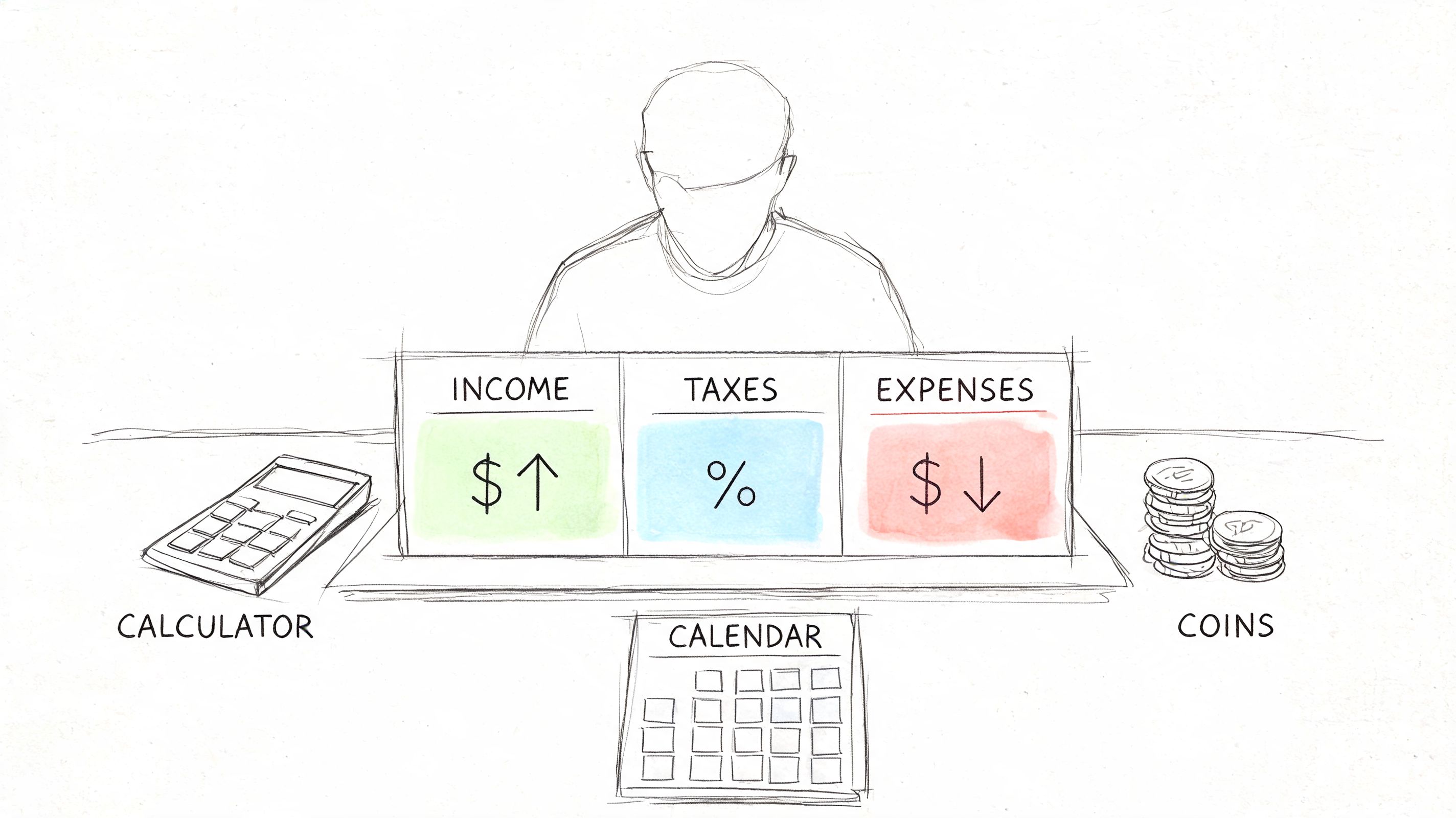
Open a dedicated business checking account. Then decide where each dollar goes before you spend it. A simple four-bucket setup works well for many solo contractors:
- Income account: Client payments land here
- Tax reserve: Money set aside for estimated taxes
- Operating expenses: Software, subcontractors, equipment, insurance, admin
- Owner pay: Your personal draw
The bank matters less than the routine. I have seen contractors with advanced software lose control of cash because they never moved money on schedule. I have also seen contractors run a clean business from one checking account and one spreadsheet because they reviewed it every week without fail.
Make taxes part of your monthly workflow
A strong revenue month can create a tax problem if you treat the full deposit like usable income.
Set a rule and follow it. Log each payment. Move your tax portion immediately. Track deductible expenses as they happen, not six months later. Review your numbers before each estimated tax deadline and adjust if your income changes.
Use tools you will consistently maintain. A spreadsheet is fine. QuickBooks is fine. Xero is fine. A major mistake is waiting until filing season to reconstruct a year of payments, software charges, mileage, and contractor invoices from memory.
Stable contractors usually are not the ones with perfectly even income. They are the ones with tighter cash habits.
Price for benefits, gaps, and downtime
Employee compensation hides a lot of cost. Contractors have to fund those costs themselves.
Health insurance is the obvious one, and many independent contractors delay it because the options are messy and the premiums sting. If you are trying to sort out deductions and understand how coverage affects your tax picture, this guide on health insurance for self-employed professionals is a useful starting point.
Retirement, sick days, slow months, chargebacks, software renewals, and replacement equipment belong in your math too. If your rate only works when you bill every available hour and never take a day off, the rate is too low. That is one of the unwritten rules of 1099 work. Margin is not greed. Margin is what keeps one canceled contract from becoming a financial emergency.
Keep records like you may need to defend them
Good records help with taxes, client disputes, and basic decision-making.
Keep these organized and easy to retrieve:
- Signed contracts
- Invoices sent
- Proof of payment
- Receipts for business purchases
- Notes showing the business purpose of each expense
- A simple monthly profit snapshot
Do a monthly close. Reconcile deposits. Categorize expenses. Check which invoices are still unpaid. Confirm your tax reserve balance. Look at actual profit, not just revenue.
That last point matters. Plenty of remote 1099 jobs produce decent top-line income and weak take-home pay because the contractor never tracked software creep, unpaid admin time, or underbilled revisions. Run the numbers like an owner. That is how contract work turns into a durable business instead of a stressful string of gigs.
Common Questions About Remote 1099 Work
Is a 1099 role automatically better than a W-2 remote role
A 1099 role is better only when the economics and working terms are better.
I have seen contractors chase the word freedom and ignore the math. A client offers remote work, a flexible schedule, and fast start dates, but the rate has to cover self-employment tax, unpaid admin time, time off, insurance, and the risk of sudden scope changes. If it does not, you are not buying freedom. You are accepting more risk for flat or worse pay.
The market still gives contractors options. FlexJobs reported a 20% quarter-over-quarter increase in remote job postings in late 2025 and early 2026, and broader hiring patterns cited in data from Virtual Vocations’ annual report on remote work suggest remote demand remains widespread. That helps, but volume is not the same as quality. The fundamental question is whether the client is buying a defined service at a profitable rate.
How do I know whether I’m really a contractor or being treated like an employee
Start with control.
If a company sets fixed hours, requires constant availability, dictates exactly how the work gets done, and folds you into internal management like staff, the 1099 label may not match reality. That matters for taxes, liability, and your bargaining position if the relationship goes sideways. For a plain-English breakdown, this Kons Law analysis on employment law is a useful reference.
One practical test helps. Ask whether you are being hired for an outcome or for obedience. Contractors own delivery. Employees are managed through process.
Should I form an LLC before taking remote 1099 jobs
Usually, no.
A sole proprietorship is enough for many people at the start, especially if revenue is still uneven and your client list is small. An LLC can help with liability separation and can look cleaner in contracts and banking, but it also adds filings, fees, and state-specific rules. Form it when the business case is there, not because a YouTube video made it sound like step one.
If a larger client requires an entity before signing, that can change the timing. Otherwise, keep the setup simple and get paid first.
How should I handle health insurance and retirement
Price them in from day one.
Contractors get into trouble when they treat health coverage, retirement contributions, and unpaid time off as future problems. Those costs belong in your rate now. If you cannot fund them with your current pricing, your rate is below sustainable business level.
What’s the smartest first move if I’m new
Sell one clear service to one clear type of client.
Generalists can do well later. Early on, specificity wins more work. It is easier to pitch, easier to price, and easier for a buyer to approve. A proposal for “email lifecycle setup for B2B SaaS teams” is easier to buy than “I can help with marketing.”
One more rule that saves beginners a lot of pain. Do not confuse fast replies with good clients. Good clients answer direct questions, respect boundaries, and can explain what success looks like without turning the project into guesswork.
If you’re tired of stale listings, ghost jobs, and agency noise, Remote First Jobs is worth a look. It focuses on direct employer remote roles, which gives you a better shot at seeing real opportunities early and applying before the crowd piles in.