You’re probably doing one of two things right now. You’re either sending applications into LinkedIn and hearing nothing back, or you’re seeing “remote social media manager” roles that look promising until the listing turns out to be stale, vague, or posted by an agency collecting resumes.
That’s the wrong search pattern for this market.
A good remote social media manager role is rarely won by the person who applies to the most jobs. It’s won by the person who shows up early, looks credible fast, and makes a hiring manager feel safe handing them a brand account, a content engine, and a reporting workflow without constant supervision. Speed matters. Safety matters. If you ignore either one, the search gets slow, noisy, and expensive in time.
I hire remote marketing talent with those two filters in mind. The best candidates don’t just look creative. They look operational. They understand platform behavior, reporting, brand risk, async communication, and the difference between posting content and driving a business outcome.
The Evolving Role of a Remote Social Media Manager
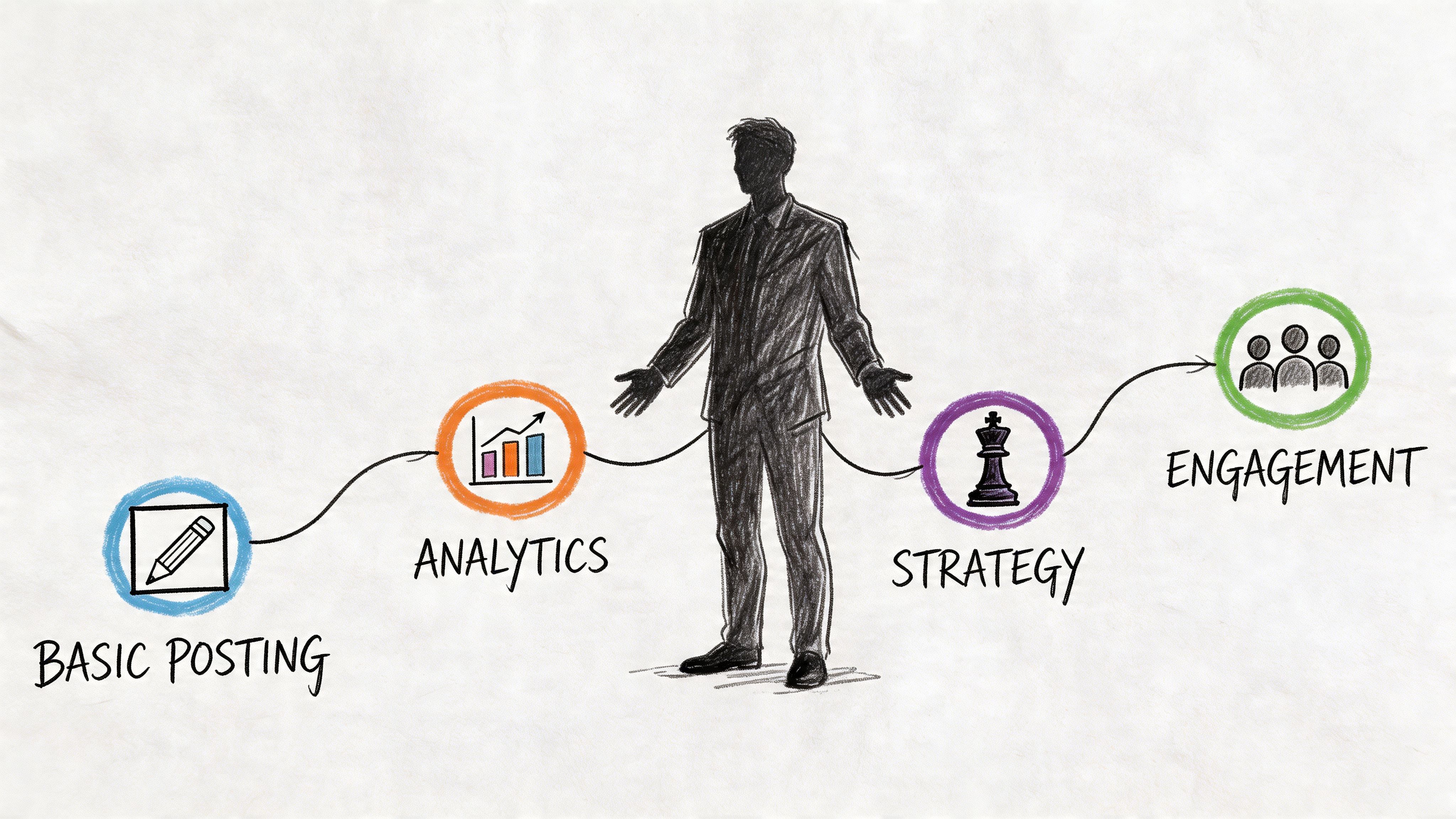
The old version of the job was simple. Make posts. Reply to comments. Keep the calendar full.
That version still exists in low-trust companies and under-scoped freelance gigs. It’s not what strong remote-first teams are hiring for.
Top companies want a remote social media manager who can translate business goals into platform strategy. That means knowing when social should support brand awareness, when it should support pipeline, when it should surface customer language for product and sales, and when it should protect consistency across channels. The role has become more valuable because social is now part of a larger operating system, not a side task owned by “the creative person.”
The market supports that shift. The social media management market reached USD 29.93 billion in 2025 and is projected to grow to USD 171.62 billion by 2033, with a 24.8% CAGR according to Grand View Research’s social media management market report. That kind of growth doesn’t reward people who only know how to schedule posts. It rewards people who can manage channels with judgment.
What hiring managers actually want
When I review candidates, I’m not asking whether they can use Instagram or LinkedIn. I assume they can. I’m looking for signals that they can own outcomes without creating drag for the rest of the team.
That usually shows up in five areas:
- Strategic judgment. Can they explain why a channel matters for this business, not just why the platform is popular?
- Editorial discipline. Can they plan themes, messaging, launches, and reactive content without turning the calendar into chaos?
- Analytical confidence. Can they read results, spot weak points, and adjust without waiting for someone else to interpret the data?
- Cross-functional awareness. Do they know how to work with design, product marketing, paid media, and sales?
- Async communication. Can they move work forward in writing, with clean updates, clear briefs, and documented decisions?
A weak candidate talks in platform features. A strong one talks in trade-offs.
For example, a weak answer sounds like this: “I managed Instagram, TikTok, and LinkedIn content.” A strong answer sounds like this: “I used LinkedIn for authority and customer education, while shorter-form content supported reach and repurposing. I adjusted cadence and reporting by channel because the audience intent wasn’t the same.”
Practical rule: If your description of the role could apply to any intern, it won’t win a serious remote job.
The mindset that separates remote operators from content executors
Remote work changes the threshold for trust. In an office, a manager can fill in gaps with live feedback and hallway conversations. In a distributed team, gaps become delays.
That’s why the best remote social media managers are unusually strong in habits that don’t look glamorous on a portfolio. They document decisions. They leave context in Notion, Trello, or a project thread. They raise risks early. They don’t wait until content is late to mention that approvals are stuck. They know how to work independently without becoming invisible.
A lot of people still present themselves as “creative and passionate about social media.” That’s too thin. Hiring managers want someone who can protect brand voice while handling operational reality. That includes managing stakeholder feedback, organizing assets, handling campaign deadlines, and keeping reporting clean enough that a marketing lead can use it in a broader performance review.
If you need a practical outside reference on sharpening your craft, these social media manager tips from Postiz are useful because they focus on how the work gets done, not just on surface-level content ideas.
What works and what doesn’t
Here’s the blunt version.
| Approach | What happens |
|---|---|
| Posting-first mindset | You stay busy, but your work looks tactical and replaceable |
| Business-first mindset | Your work becomes easier to defend, measure, and expand |
| Reactive communication | Managers worry they’ll have to chase you for updates |
| Proactive async communication | Managers trust you with more scope |
| Platform fluency without reporting | You look creative but not accountable |
| Reporting tied to goals | You look like someone who can own part of the funnel |
The remote social media manager who gets hired fastest is usually not the loudest self-promoter. It’s the one who reduces uncertainty. That’s the frame to use for everything that follows.
Building a Portfolio That Proves Your Value
Most portfolios fail for one reason. They show output, not thinking.
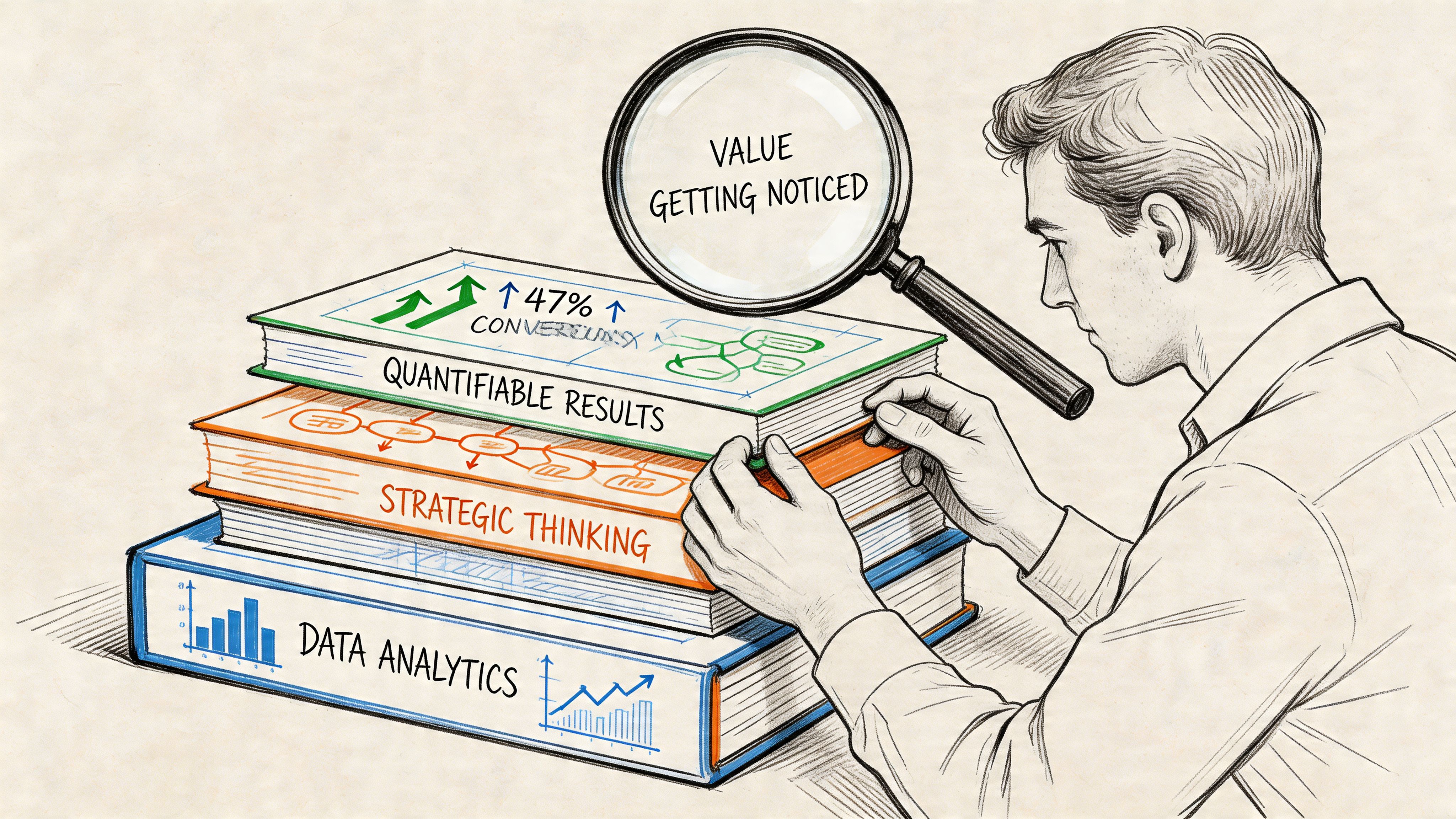
A grid of polished posts tells me you can make things. It doesn’t tell me whether you can diagnose a weak channel, support a launch, or make sense of performance data. If you want to stand out, your portfolio should answer the question every hiring manager is already asking: can this person help us make better decisions?
To demonstrate value, tie your work to measurable KPIs. Benchmarks such as a 1 to 5% engagement rate, 10 to 20% monthly audience growth, and ROI tied to business goals like lead generation are outlined in Waymore’s guide to measuring social media success. You don’t need to inflate results. You need to show that you know what should be measured and why.
Portfolio piece one: the mini strategy deck
Pick a brand you respect. Not a giant consumer brand everyone audits. Choose a company with a clear product, a visible audience, and room for sharper social execution.
Build a short deck that answers these questions:
What is the business trying to do?
Don’t guess wildly. Use the homepage, product pages, hiring pages, founder content, and press language to infer whether the company cares most about awareness, category education, demand capture, recruiting, or customer retention.What is the current social approach? Review their recent content by channel. Look at consistency, message themes, format mix, audience interaction, and whether the content feels designed for the platform or reposted everywhere.
What would you change first?
Keep this practical. Maybe the company needs stronger series-based content on LinkedIn, clearer CTAs, better launch sequencing, or less generic community management.How would you measure improvement? Demonstrate your maturity. Name the KPI, explain why it matters, and connect it to the business goal.
A good strategy deck reads like something a marketing lead could circulate internally. A weak one reads like a student assignment full of buzzwords.
Portfolio piece two: the performance analysis report
This is the artifact that separates you from candidates who only know creative presentation.
Use anonymized client data if you have it. If you don’t, use a historical account you managed, remove identifying details, and focus on process. Show a baseline, what you observed, what changed, and how you evaluated the change.
Include:
- A starting snapshot with channel mix, posting cadence, and the main KPI being tracked
- A diagnosis of what looked weak, inconsistent, or misleading
- A recommendation tied to content, format, timing, or reporting structure
- A simple readout of what improved, what stayed unclear, and what you’d test next
The key is honesty. Hiring managers can spot fake certainty quickly. It’s stronger to say, “Reach improved but conversion quality remained mixed, so I’d validate audience fit before increasing spend,” than to force a heroic story.
Strong portfolios don’t pretend every experiment worked. They show that you know how to learn.
Portfolio piece three: the sample content system
Not just a content calendar. A content system.
A single month of posts is useful, but only if it shows how you think about campaign structure. Your sample should show recurring themes, platform differences, and how content supports both the audience and the company.
A simple format works well:
| Asset | What to show |
|---|---|
| Monthly calendar | Themes, launch moments, recurring series, and channel cadence |
| Sample posts | Copy examples tailored to different platforms |
| Creative direction notes | Visual references, hooks, format ideas, and tone guidance |
| Measurement note | Which posts support awareness, engagement, or conversion intent |
Many candidates tend to over-design and under-explain. Don’t bury the strategy under pretty slides. Label the logic clearly.
If you want inspiration on structure, these PostOnce portfolio examples for managers are useful because they show different ways to package your work without defaulting to a generic Behance-style gallery.
What hiring managers notice immediately
They notice whether your portfolio is easy to skim.
They notice whether you can write clearly.
They notice whether you understand business context.
Use plain file names. Add a short intro line to each project. Explain the situation, your role, your decision, and the outcome or intended KPI. Don’t make someone work to understand your value. A remote social media manager is being hired to reduce friction, not create more of it.
Optimize Your Digital Footprint for Remote Hiring
Most candidates treat their resume and LinkedIn like a storage unit. They pile in tasks, tools, and old titles, then hope recruiters will connect the dots.
They won’t.
A remote hiring manager is scanning for evidence that you solve a specific kind of problem inside a distributed team. If your profile reads like a list of responsibilities, you look interchangeable. If it reads like a pattern of business impact, you look hireable.
Senior candidates run into a separate issue. The role can hit a title ceiling. To break through, they need to emphasize business impact over engagement metrics and position themselves toward titles like “Head of Social,” according to the guidance captured in Indeed’s remote social media manager job listings context, as many applicant tracking systems and hiring teams still sort social roles into mid-level buckets unless the narrative clearly says otherwise.
Stop listing skills. Start framing outcomes.
“Managed content calendar across platforms” is a task.
“Built and ran a cross-channel editorial system that supported launches, customer education, and brand consistency across a distributed team” is a capability.
The second version tells me more. It suggests planning, coordination, and ownership. It also sounds closer to how real remote teams operate.
A strong digital footprint usually does three things well:
- It translates tasks into outcomes. Show what changed because of your work.
- It reflects remote operating habits. Mention distributed collaboration, async updates, stakeholder coordination, and documentation where relevant.
- It signals level. Your title, summary, and experience bullets should all point in the same direction.
Rewriting your headline and summary
Your LinkedIn headline should not just be your current job title.
If you’re aiming for better roles, use a headline that combines function, scope, and strategic angle. A stronger line might position you around social strategy, content systems, brand growth, community insight, or cross-functional execution. Keep it credible. Don’t jump from coordinator to VP language overnight.
Your summary should answer three questions fast:
- What kind of company do you help?
- What kind of business problems do you solve?
- How do you operate in a remote environment?
That last part matters more than people think. Remote employers aren’t only hiring for skill. They’re hiring for low-maintenance collaboration. If you’ve worked across time zones, handled approvals asynchronously, or coordinated with design and paid teams without hand-holding, say so clearly.
For ideas on tightening your profile presentation, these strategies for a powerful digital brand are helpful because they focus on how people read your presence before they ever reply to you.
Your LinkedIn profile is not a biography. It’s a positioning document.
Fix the title ceiling before it blocks you
Here’s a mistake I see often. Someone has years of real ownership, but their profile still leads with “Social Media Manager” in a way that makes them look narrower than they are.
If your work includes strategy, messaging, reporting, cross-functional planning, launch support, or executive visibility, your positioning should reflect that. That doesn’t mean inventing a title you never held. It means describing your role at the level you performed.
Try this instead of defaulting to platform management language:
Old framing
Managed social channels and created content across LinkedIn, Instagram, and X.Better framing
Owned social strategy and editorial execution for a distributed brand team, aligning campaign messaging with product launches, community insights, and performance reporting.
The second version gives a hiring manager room to imagine you at a higher level.
A simple audit for your resume and profile
Use this checklist before you apply anywhere:
| Question | What a strong answer looks like |
|---|---|
| Does the top of the page show your level? | Clear strategic scope, not just execution |
| Do your bullets describe outcomes? | Business context plus your action |
| Do you mention remote working habits? | Async communication, documentation, distributed collaboration |
| Does your title positioning match your real scope? | No inflation, no underselling |
| Would a hiring manager know what you own? | Yes, within seconds |
This isn’t cosmetic. It changes which roles you get considered for. The best remote social media manager candidates don’t wait for employers to interpret potential. They package it in a way that’s hard to miss.
How to Find Verified Remote Jobs and Avoid Scams
The traditional remote job search is built for volume. That’s the problem.
Large job boards reward broad distribution, not clean signal. A role gets syndicated, reposted, copied, and sometimes left live after the team has already moved on. Job seekers respond by applying everywhere. The result is a slow-motion mess. You waste time, employers get flooded, and legitimate openings are buried next to agency bait, fake remote offers, and listings that were never good to begin with.
A better approach uses two filters from the start: speed and safety.
Speed means getting to fresh roles before they become crowded. Safety means focusing on verified jobs with enough detail to assess whether the employer is real, the role is direct, and the workflow sounds credible. If either filter is missing, you’re back in the spam pile.
Why noisy boards slow good candidates down
When candidates rely on giant boards alone, they tend to make three mistakes.
First, they confuse visibility with quality. A role with huge applicant volume looks desirable, but that often means you’re late.
Second, they spend too much time reading recycled listings. The same job can appear in multiple places with slight edits, which creates false momentum and duplicate effort.
Third, they stop evaluating employer quality because the search itself becomes exhausting. That’s when people miss warning signs.
For a cleaner search process, use a direct-sourced remote jobs engine that monitors employer career pages instead of depending on scraped reposts. Remote First Jobs is built for that kind of search, which is why it’s useful when you want fresh direct-hire roles instead of the usual noise.
What credible remote roles tend to include
A strong remote social media manager listing usually sounds operational. It doesn’t just ask for someone “obsessed with trends.” It explains scope, tools, reporting lines, and how the team works.
One useful hiring signal is workflow maturity. A professional setup often includes a clear tool stack. Successful managers commonly use Hootsuite Pro for scheduling, Canva Pro for creative work, and Buffer for analytics, as noted in this remote workflow toolkit overview. Employers don’t have to name every tool, but serious teams usually describe how work gets done.
Look for signs like these:
- Defined ownership. The post explains whether you own strategy, execution, community, reporting, or some mix.
- Real collaboration detail. It names who you work with, such as design, product marketing, or paid media.
- Process clarity. It mentions planning cadence, approvals, or performance expectations.
- Tool specificity. It references actual systems instead of saying “must be tech savvy.”
- Direct hiring language. It feels like a company hiring for its own team, not a broker collecting leads.
If the company can’t explain the role clearly, they probably can’t manage it clearly either.
Job Posting Red Flag Detector
| Red Flag | What It Looks Like | Why It’s a Problem |
|---|---|---|
| Vague compensation promises | “Unlimited earning potential” or language that sounds more like sales than employment | It often signals commission-heavy work, bait-and-switch offers, or unclear scope |
| No real company footprint | Minimal site content, no team visibility, no product clarity, generic email communication | You can’t verify who’s hiring or what business actually exists |
| Suspicious urgency | Pressure to interview instantly, buy software, or move off-platform too quickly | Scammers use urgency to stop you from checking details |
| Task list with no strategy | Endless execution asks but no mention of goals, reporting, or collaboration | It usually means the company doesn’t understand the role and will overload it |
| Agency-style vagueness | “Hiring for multiple clients” with little detail about the end employer | You may never know who the job is really for |
| Unclear remote policy | “Remote” in the title but office expectations appear later | It wastes time and often hides hybrid requirements |
| Requests for personal documents too early | Sensitive information before a real interview process | That’s a data risk, not normal hiring |
| No mention of tools or workflow | Generic claims about growth with no operational detail | Serious teams usually reveal at least some process maturity |
The speed and safety framework
When I advise candidates, I tell them to evaluate every opportunity through this lens:
Move fast when the job is fresh, direct, and clearly scoped. Slow down when the listing is vague, overhyped, or inconsistent.
That sounds obvious, but many job seekers do the opposite. They spend days polishing an application for a dubious role, then send a rushed version to a legitimate one because they found it too late.
A cleaner workflow looks like this:
Check source quality first
Is this clearly coming from the employer or a verified listing source?Scan for operational detail
Does the job describe tools, team structure, or outcomes?Assess role logic
Does the scope sound like one coherent job, or three jobs stapled together?Apply while the listing is still fresh
Good roles get crowded quickly once they circulate.Keep your personal data guarded
Share sensitive information only inside a normal hiring process.
The point isn’t paranoia. It’s selectivity. A remote social media manager search gets easier when you stop treating every listing as equally worthy of your time.
Nailing the Remote Application and Interview
Once you’ve found a real opportunity, don’t waste it with a generic application.
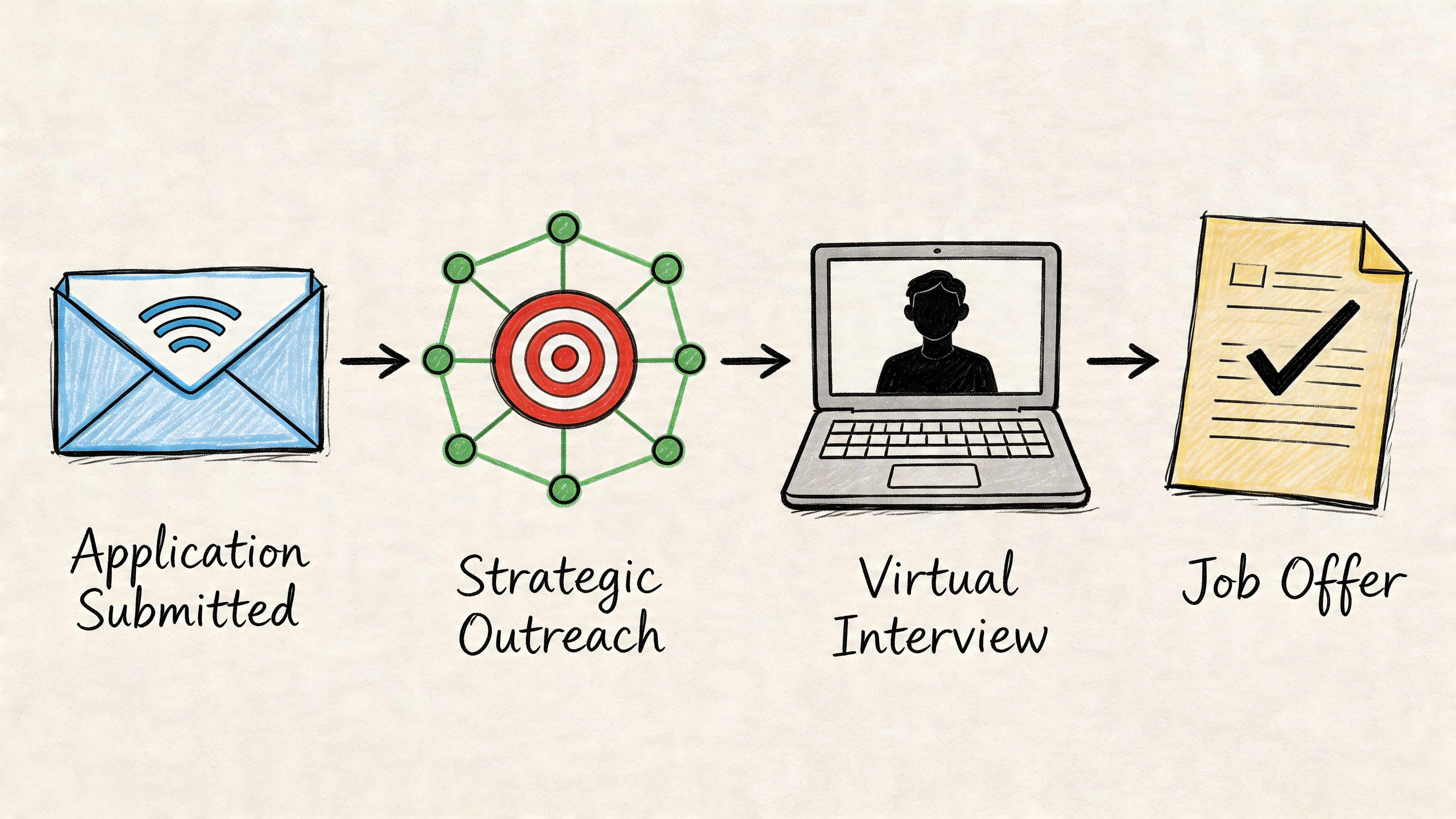
The remote marketing job sector has grown by 156% over the past three years, and remote pay now matches or exceeds office-based positions in many cases. Median pay for a Social Media Manager is around $85,000, while directors average $147,086, according to Milkkarten’s 2025 social media salary data. That means serious employers are hiring carefully. They’re not just buying output. They’re buying judgment, reliability, and communication.
Build an application that feels specific
Your resume and portfolio should already be ready. The application itself should prove you’ve read the role.
Tailor three things every time:
- The opening summary. Match your positioning to the company’s actual needs.
- Your selected experience bullets. Pull forward the work that aligns with their channel mix, audience, or business model.
- Your portfolio link context. Don’t just drop a URL. Add a short note explaining which project is most relevant.
If the company asks for a cover letter, keep it tight. A good one usually says: here’s the kind of business I help, here’s the part of your role I’m best suited for, and here’s how I operate remotely.
A short outreach message that works
If you can identify the hiring manager or team lead, a short follow-up can help. Don’t write a mini autobiography. Don’t “just check in” without substance.
Use something like this:
Hi [Name], I applied for the remote social media manager role and wanted to introduce myself directly. My background is strongest in [relevant area], and I’ve included a portfolio example focused on [relevant business need]. Your team’s focus on [specific detail from the company or role] stood out. Happy to share more context if helpful.
That works because it’s brief, relevant, and respectful. It doesn’t ask for a favor. It makes it easier for the right person to place you.
Treat the interview like a working session
Many candidates answer questions well enough. Fewer show that they understand how remote teams operate.
A hiring manager is trying to answer two concerns during the interview:
- Can this person do the work?
- Will this person be easy to work with remotely?
You should answer both.
Talk through your process in a way that shows structure. Explain how you approach planning, approvals, reporting, and cross-functional communication. If you’ve handled messy feedback loops, competing stakeholder requests, or shifting campaign priorities, that’s worth discussing. Remote teams value people who can create clarity when things get blurry.
A useful prep resource is below. Watch it, then adapt the advice to your own style.
Questions you should ask them
A remote interview is not only about impressing the company. It’s also about checking whether their version of remote work is healthy.
Ask questions like these:
- How does the team handle collaboration across time zones?
- What does success look like in the first 90 days?
- Who gives feedback on content and how is approval handled?
- What channels matter most for the business right now?
- How do you evaluate performance for this role?
- What tools does the team use to plan, communicate, and report?
Good employers answer directly. Weak employers get vague, especially around ownership, feedback, and priorities.
A remote interview gets easier when you stop trying to sound impressive and start trying to sound dependable.
Negotiation without awkwardness
If the process goes well, don’t get timid at the offer stage.
Negotiation lands better when it refers back to the value you’ve already demonstrated. You don’t need a speech. You need a grounded case. Focus on scope, strategic ownership, and the fit between your experience and their needs.
A simple version sounds like this: based on the scope we discussed and the level of ownership expected across strategy, execution, and reporting, I’d like to discuss compensation closer to [your target range]. Keep the tone calm. The best negotiation posture is clarity, not confrontation.
Your Path to a Fulfilling Remote Career
A strong remote social media manager job search isn’t a numbers game. It’s a filtering game.
The slow version is familiar. You apply everywhere, chase crowded listings, rewrite the same answers, and spend hours trying to figure out which jobs are even real. The faster version is more selective. You build proof before you need it, position yourself around business value, and focus your effort on direct, credible opportunities.
That’s the speed and safety framework in practice.
Speed means your materials are ready, your positioning is clear, and you’re looking in places where fresh roles appear before they’re saturated. Safety means you know how to spot a messy employer, a weak process, or a listing that doesn’t deserve your time. Together, those two filters change the entire search. You stop reacting to noise and start making deliberate moves.
Remote-first companies don’t need another candidate who says they love social media. They need someone who can own a channel, protect a brand, communicate clearly, and make smart decisions without constant supervision.
Build for that standard and the search gets simpler.
If you want a cleaner way to find direct-hire remote roles before they get buried under reposts and spam, try Remote First Jobs. It’s built for people who want verified remote opportunities from real company career pages, without the usual noise from giant job boards.