Trying to find a legitimate work from home career can feel like you’re just endlessly scrolling through job boards. You start to wonder if the right opportunity is even out there. But the truth is, the world of remote work has changed for good, bringing with it both intense competition and incredible new ways to build a meaningful career—no commute required.
The New Reality of Remote Work
If you’ve been firing off applications only to be met with silence, you’re definitely not alone. The modern job hunt is a frustrating game, often packed with “ghost jobs” and a staggering number of applicants for every single role.
This isn’t a sign that remote work is dying out. It’s actually proof that working from home has become the gold standard for professionals everywhere. This isn’t just some passing trend; it’s a fundamental shift in how companies operate and how we shape our careers.
The secret is learning how to navigate this new environment. It’s no longer just about having the right resume—it’s about having the right strategy to cut through all that noise.
A Permanent Shift in the Workforce
Let’s be clear: the old-school, five-days-in-the-office model is quickly becoming a thing of the past for a lot of industries. The global work-from-home movement is here to stay.
Globally, jobs that can be remote have settled at an average of 1.27 work-from-home days per week for 2024–2025. While that’s a slight dip from the peak, it’s still four to five times higher than it was before the pandemic. This isn’t a blip; it’s a structural change. It’s especially true in skilled fields like tech and marketing, where nearly 80% of eligible U.S. employees now work either hybrid or fully remote. You can explore more remote work statistics to get the full picture of just how massive this transformation is.
This new standard means a much larger talent pool is competing for every single opening, which explains the tough competition you’re up against.
The challenge isn’t a lack of opportunities, but a surplus of outdated methods for finding them. Success in today’s remote job market means adopting a smarter, more direct approach to your search.
Your Roadmap to a Successful Remote Career
Think of this guide as your new map. We’re going to skip the generic advice and give you a clear, actionable plan to get past the common frustrations of the modern job search.
Here’s what you’ll learn:
- Which industries and roles offer the most stable, long-term remote careers.
- How to figure out which skills remote employers really want and how to develop them.
- Proven strategies to find verified job openings before they get buried under thousands of applications.
Where to Find the Best Work From Home Careers
Knowing that remote work is here to stay is one thing; knowing where to find your place in it is a completely different ballgame. Instead of doom-scrolling through endless, generic job boards, the smart move is to focus on industries where work from home careers aren’t just a perk, but the standard way of doing business.
Think of it like this: you wouldn’t go looking for tuna in a freshwater lake. You need to cast your net where the best remote opportunities are swimming. The good news is that certain high-growth sectors were practically built for this, with digital tools and distributed teams baked right into their DNA.
Let’s dive into these industries and the specific roles they’re hungry for.
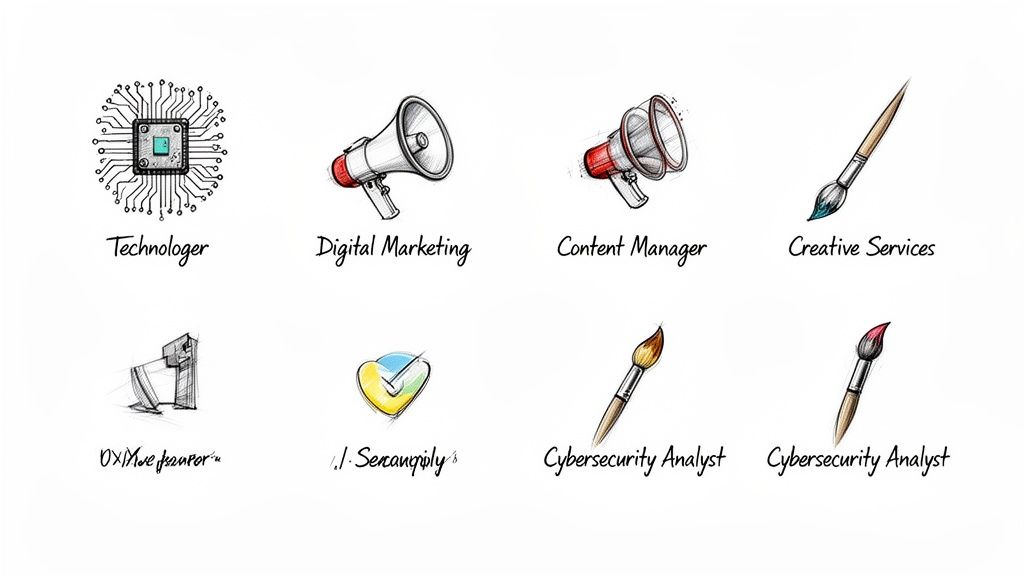
The Technology Sector
Tech is the undisputed champion of remote work. The entire industry revolves around building digital products and services, which means physical location is often an afterthought. If you have a solid internet connection, you can contribute from just about anywhere.
This has created a massive demand for skilled professionals who can jump into projects from anywhere in the world.
Some of the hottest remote roles in tech include:
- Software Developer: These are the architects of our digital world, writing the code that powers the apps and websites we use every day. Their work is often done in focused sprints with asynchronous collaboration, a perfect recipe for a remote setup.
- Cybersecurity Analyst: As businesses move online, protecting their data has become a top priority. Cybersecurity analysts are the digital guardians who monitor for threats—a job that requires deep focus and can easily be done from a secure home office.
- Product Manager: A product manager essentially acts as the CEO of a product, guiding it from a raw idea to a market-ready launch. They spend their days coordinating between engineering, marketing, and design teams, using powerful project management tools to keep everyone aligned across different time zones. For a deeper look, check out this excellent Your Guide to Landing Remote Product Manager Jobs for some expert tips.
Digital Marketing and Sales
If the tech folks build the products, the digital marketing and sales teams are the ones who get them into the hands of customers. This entire field lives and breathes online, making it a natural home for remote work.
Success here isn’t measured by hours clocked in an office chair; it’s all about clear metrics like website traffic, leads, and revenue. This results-driven culture creates a ton of flexibility and autonomy for remote workers.
Here’s a quick snapshot of the high-demand remote careers and what you can expect to earn.
High-Demand Remote Careers and Salary Expectations
This table gives you a glimpse into some of the most sought-after remote roles today, along with the core skills you’ll need and typical salary ranges in the US market.
| Job Title | Key Skills | Average Salary Range (USD) |
|---|---|---|
| Software Developer | Programming languages (e.g., Python, JavaScript), problem-solving, Git | $90,000 - $160,000+ |
| Cybersecurity Analyst | Network security, threat analysis, ethical hacking, compliance | $85,000 - $140,000 |
| Product Manager | Roadmapping, user research, agile methodologies, communication | $110,000 - $180,000+ |
| Content Marketing Manager | SEO, content strategy, writing/editing, analytics | $75,000 - $125,000 |
| UX/UI Designer | Wireframing, prototyping (e.g., Figma), user research, visual design | $80,000 - $135,000 |
| Sales Development Rep | Lead generation, CRM software, communication, persistence | $55,000 - $85,000 (OTE) |
Keep in mind that these numbers can vary based on your experience, the company’s size, and your location. But it’s clear the opportunities are out there for skilled professionals.
Top remote roles in this space include:
- Content Marketing Manager: This role is all about creating a strategy to attract customers through valuable content—think blog posts, videos, and ebooks. It’s a perfect blend of creativity and analytics that thrives on independent work.
- SEO Specialist: Search Engine Optimization (SEO) experts work their magic to get websites to the top of Google. Their work is technical and data-heavy, involving research and strategy that can be done from anywhere with a laptop.
- Sales Development Representative (SDR): SDRs are on the front lines, finding and qualifying potential customers. They use CRM software, email, and video calls to build relationships and fill the sales pipeline, proving you don’t need a handshake to close a deal.
Creative and Design Services
The creative world has always been a haven for freelancers and independent thinkers, so the jump to fully remote roles was pretty seamless. Whether you’re a writer, designer, or video editor, your value is in your output, not your physical presence.
This setup allows for a level of deep, focused work that’s nearly impossible to find in a buzzing open-plan office. Being able to control your own environment is a huge plus for anyone whose job relies on sustained creative thought.
Here are a few popular creative careers that have gone remote:
- UX/UI Designer: User Experience (UX) and User Interface (UI) designers are tasked with making digital products feel intuitive and look great. They use collaborative tools like Figma to work with teams scattered across the globe.
- Graphic Designer: From logos to social media graphics, these designers create a company’s entire visual identity. With powerful software and cloud storage, they can deliver amazing work to clients and teams anywhere.
- Video Editor: The demand for video is absolutely soaring. Editors take raw footage and transform it into compelling stories. Thanks to high-speed internet and file-transfer services, this once location-bound job is now a thriving remote career.
Finding your ideal remote job starts with looking in the right places. Instead of getting lost on generic job boards, target companies in these remote-first industries. For an even smarter search, use a platform that sources jobs directly from company career pages—this gives you a massive edge.
A great place to start is https://remotefirstjobs.com/, which focuses only on verified opportunities, often before they hit the major job boards. By focusing your energy on these high-potential fields, you’re not just looking for a job; you’re building a sustainable and successful work from home career.
Developing Your Remote Work Skillset
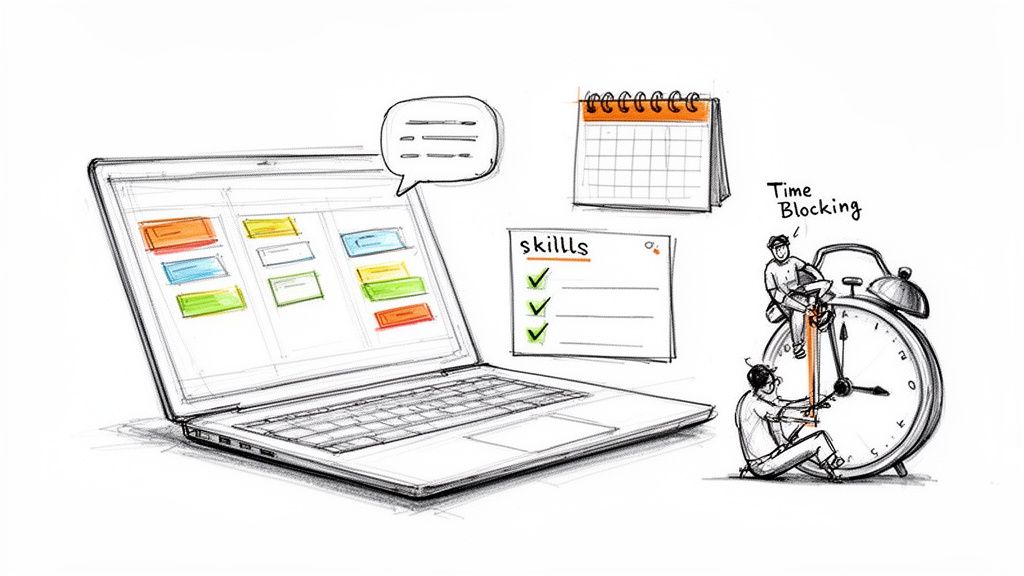
Landing one of the best work from home careers takes more than just the right technical qualifications. To truly succeed, you need a different mindset and a specific set of habits that prove you can thrive without a manager hovering nearby.
Think of it like being a “business of one.” The buck stops with you. Your productivity, your communication, your success—it’s all on your shoulders. Remote employers are laser-focused on finding people who are self-sufficient and dependable from the get-go.
Honing this skillset is what gets your resume moved to the top of the pile.
Mastering the Tools of the Trade
First, let’s talk tech. Modern remote work is powered by a whole ecosystem of digital tools that keep teams connected and moving forward. Being familiar with these isn’t just a nice-to-have; it’s a baseline expectation.
You have to be comfortable in the digital office. This goes way beyond just knowing how to unmute yourself on a video call. It’s about understanding the unwritten rules and workflows that make remote collaboration feel effortless.
Here are the key tool categories you need to know your way around:
- Communication Hubs: Think of platforms like Slack or Microsoft Teams as the virtual office. They’re where the quick chats and project updates happen. You need to show you can use them to keep everyone in the loop without creating unnecessary noise.
- Project Management Software: Tools like Asana, Trello, or Jira are the command center for remote teams. They answer the “who, what, and when” so nobody has to waste time in status meetings.
- Cloud Collaboration Suites: Getting comfortable with Google Workspace or Microsoft 365 is non-negotiable. Co-editing documents, juggling shared calendars, and keeping files organized in a shared drive are fundamental skills.
The Soft Skills Remote Employers Crave
Beyond the software, hiring managers are really looking for personal traits that signal you can flourish without direct supervision. These soft skills are often what make or break a remote career—sometimes even more than your technical abilities.
In a remote setting, trust is the ultimate currency. Companies hire individuals who demonstrate ownership and reliability, proving they can deliver excellent work without constant oversight.
This trust isn’t given; it’s earned by consistently showing up with a few key habits. These are the skills that will make you an absolute magnet for remote opportunities.
Here’s what you need to focus on:
- Proactive Communication: This is the big one. In an office, people can see you’re typing away. Remotely, you have to show them. That means sending regular updates without being prompted, flagging potential roadblocks early, and never leaving your team guessing. It’s all about intentional over-communication.
- Disciplined Time Management: When you work from home, you’re your own boss. You have to be a master at prioritizing tasks, blocking out your time, and shutting out the million distractions that can derail your day. Proving you can manage your own time is everything.
- Autonomous Problem-Solving: You can’t just lean over the cubicle wall and ask a question. Remote employers love people who try to find answers themselves first. It shows initiative and an ability to work independently without holding up the rest of the team.
When you can confidently showcase both your tool proficiency and these critical soft skills, you stop being just another applicant. You become the exact person remote-first companies are fighting to hire.
How to Find Verified Jobs Before Anyone Else
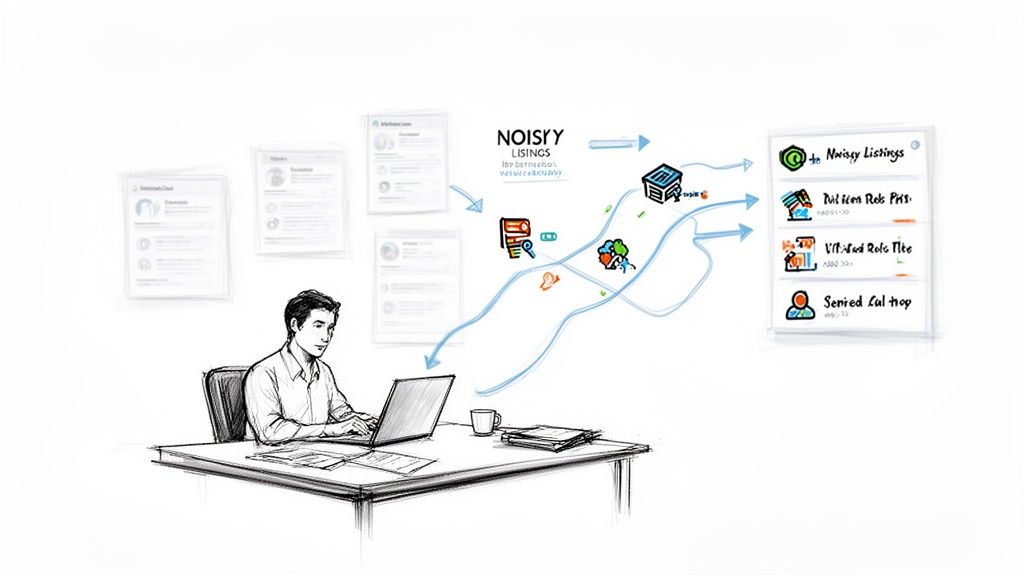
Let’s be honest. The biggest problem in the remote job search isn’t a lack of jobs—it’s the overwhelming noise. If you’ve ever lost a few hours scrolling through a massive job board, you know exactly what I’m talking about. You’re trying to swim through a sea of outdated listings, sketchy recruiter posts, and “ghost jobs” that seem to exist only to harvest your resume.
It’s a frustrating loop. By the time you spot a genuinely good remote role, it feels like it already has a thousand applicants. You’re at a huge disadvantage before you even click “apply.”
Here’s the thing: those traditional platforms are often the very last place a job posting shows up, not the first. They’re the end of the line, where great opportunities get buried. If you want a real edge in your search for work from home careers, you have to stop showing up late to the party.
What’s Wrong with Traditional Job Boards?
Picture a traditional job board as a crowded public bulletin board. Anyone can pin up a flyer. Old ones get left behind, yellowing under layers of newer, shinier ones. You spend most of your time just trying to peel back the layers to find something that’s actually real.
This digital clutter creates some serious headaches for anyone trying to find a great job:
- Application Overload: Good remote jobs attract talent from all over the world. Once a role hits a major platform, the application count can explode in just a few hours. It becomes almost impossible for a real human to ever see your resume.
- Recruiter Spam: A lot of those listings aren’t even for a specific job. They’re just bait from third-party recruiters trying to build up their contact database, which leads to a storm of emails about roles you have zero interest in.
- Outdated “Ghost Jobs”: Companies are notorious for forgetting to take down filled positions. You end up wasting precious time and energy applying for jobs that don’t even exist anymore. It’s a dead end that just kills your motivation.
This whole reactive approach—just waiting for jobs to pop up on giant aggregators—is exactly why so many people get completely burned out. But there’s a much smarter way to do this.
The First-Mover Advantage in Job Searching
The secret to getting ahead is surprisingly simple: find the job at its source. Every single legitimate job opening begins its life in one place and one place only—the company’s own careers page, which is powered by their Applicant Tracking System (ATS).
This is where the job is born. It’s the ground truth. By finding opportunities directly on these company sites, you can discover and apply for roles hours, sometimes even days, before they get blasted out to the rest of the internet.
The best job search strategy isn’t about applying to more jobs. It’s about applying to the right jobs at the right time—before the competition even knows they exist.
This “first-mover” advantage is a total game-changer. Just imagine being one of the first 10 people to apply instead of the 1,010th. Your application gets immediate attention from hiring managers who are actively looking at new candidates. You’re no longer just another number in a giant, faceless pile.
Sourcing Jobs Directly from the Source
So, how do you actually do this? You could try to manually check the career pages of hundreds of companies every single day, but that’s not a realistic plan for anyone. A much better way is to use a tool built specifically for this purpose.
Platforms like Remote First Jobs are designed around this exact direct-sourcing model. Instead of just scraping other job boards, they constantly monitor the career pages of thousands of remote-first companies. The moment a new job goes live, it gets detected almost instantly.
This method cuts through all the noise, leaving you with a clean, verified list of active jobs you can actually trust. Right now, 36% of all job openings globally offer hybrid or fully remote options, which is a massive pool of opportunity. Smart platforms can detect over 44,000+ active, verified remote jobs straight from 21,135+ remote-first companies, surfacing over 200,000+ new roles every month, often hours before they go viral. If you want to dive deeper into this trend, you can discover more insights about the global remote workforce.
By shifting your strategy from just reactively scrolling to proactively sourcing, you completely change the dynamic of your job search. You stop chasing stale listings and start engaging with fresh, real opportunities. This is the tactical edge you need to go from endlessly applying to actually landing interviews for the best work from home careers out there.
Mastering the Remote Interview and Onboarding
A remote interview is more than just a conversation about your skills; it’s a live audition of how you’ll operate in a work-from-home setting. Hiring managers aren’t just listening to what you say—they’re watching how you handle yourself virtually. Proving you can communicate clearly and professionally through a screen is half the battle.
This is your moment to show you’ve got the self-discipline and technical instincts to be a valuable part of a distributed team right from the start. A clean, professional virtual presence telegraphs reliability and builds instant trust, making you a much stronger candidate in the competitive world of work from home careers.
Creating a Professional Virtual Setup
Your interview environment sends a message long before you say a single word. A chaotic background or crackly audio can make you seem unprepared or just not that serious. You don’t need a Hollywood studio, but a few simple tweaks can make a world of difference.
Think of it as setting the stage. The goal is to get rid of any and all distractions so the spotlight stays right where it belongs: on you and your expertise.
Here’s a quick checklist to nail that first impression:
- Lighting is Key: Face a window or another soft light source. Whatever you do, don’t sit with a bright window behind you—it will turn you into a mysterious silhouette.
- Check Your Audio: Use headphones, especially ones with a built-in mic. This one small step is a game-changer for cutting out echo and background noise, ensuring your answers come through crystal clear.
- Frame Your Shot: Prop your camera up so it’s at eye level. Looking down into a laptop camera isn’t the most flattering angle and can make you look disengaged. A stack of books works perfectly.
- Curate Your Background: Go for something simple and uncluttered. A tidy bookshelf or a clean wall is infinitely better than a view of your unmade bed or last night’s dinner dishes.
- Test Everything: Do a dry run with a friend. Give your internet connection, video software, audio, and lighting a full test at least 30 minutes before showtime.
A seamless virtual setup demonstrates foresight and attention to detail—two of the most valued traits in a remote employee. It shows you’re not just ready for the interview; you’re ready for the job.
Answering Remote-Specific Questions
You can expect the usual interview questions, but be ready for a few designed specifically to see if you have what it takes to thrive remotely. Hiring managers need to know how you manage the unique challenges of working on your own and collaborating with a team you don’t see in person.
Prepare some concise, confident answers that show you’re self-aware and have solid work habits. Vague responses aren’t going to impress anyone, so use concrete examples from your past experience to back up your claims.
Be ready to tackle questions like these:
- “How do you stay motivated and manage your time without direct supervision?”
- “Describe your experience with asynchronous communication.”
- “How do you handle collaboration with team members in different time zones?”
Excelling in Your First Remote Weeks
Congrats, you landed the job! Now the real test begins. Onboarding remotely means you have to be proactive about building relationships and fitting into the company culture. You won’t be bumping into colleagues at the coffee machine, after all.
You have to be intentional about making those connections. Set up short virtual coffee chats with your new teammates. Ask smart questions in meetings and make your presence felt on communication tools like Slack. Your mission is to become a visible, trusted part of the team, even if you’ve never shaken their hands in person.
Staying Productive and Healthy While Working From Home
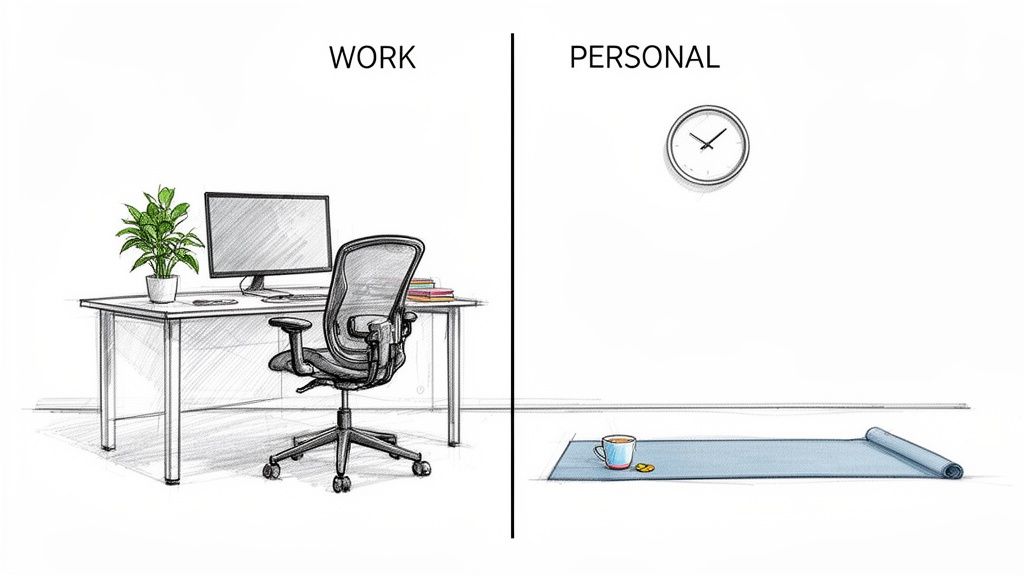
The freedom that comes with high-paying work from home careers is incredible, but it’s a double-edged sword. When your office is just a few steps from your living room, the lines between professional and personal life get blurry. Fast.
This can easily lead to burnout and that dreaded “always-on” feeling you just can’t shake.
Building a sustainable remote career isn’t just about getting the job—it’s about creating a system that protects your sanity for the long haul. That means getting intentional about your space, your schedule, and your mental well-being.
Engineer Your Ideal Workspace
Your environment has a huge impact on your focus. Sure, the couch sounds comfy, but it sends a signal to your brain that it’s time to chill, not crush your to-do list. The simple act of creating a dedicated workspace is a powerful psychological trick that tells your brain when it’s time to get down to business.
This doesn’t mean you need a separate room with a door. A specific corner with a desk and a good chair is more than enough to create that mental boundary. The goal is to make it a spot you associate only with work. For some great, practical advice on creating a productive workspace and tuning out the noise, it’s worth seeing what the experts recommend.
Set Firm Boundaries
In a remote world, you are the gatekeeper of your own time. Without the built-in end-of-day ritual of packing up and leaving the office, work can bleed into every corner of your life. This is where setting firm, non-negotiable boundaries is critical.
A few simple but game-changing strategies can make all the difference:
- Define Your Work Hours: Set a consistent start and end time. When the clock hits 5 PM (or whatever you decide), shut down the laptop and walk away.
- Schedule Your Breaks: Actually block out time on your calendar for lunch and a couple of short breaks. This is your defense against a day jam-packed with back-to-back meetings.
- Turn Off Notifications: After hours, silence your work apps. That Slack ping or email notification can almost always wait until the morning.
Protecting your personal time isn’t a luxury; it’s a core component of long-term productivity and career satisfaction. Burnout is the enemy of high performance.
This kind of disciplined approach is exactly why productivity soars for so many remote workers. In fact, 83% of employees feel they get more done in a remote or hybrid setup. It’s not just a feeling, either—27% of employers have seen firm-wide productivity bumps, mostly because their teams can finally escape the endless distractions of a busy office.
Ultimately, thriving in a remote career is all about mastering the art of self-management. By designing a focused workspace and fiercely defending your personal time, you’re building the foundation for a healthy, productive, and truly fulfilling professional life—no commute required.
A Few Common Questions About Remote Careers
Jumping into the world of work-from-home careers can feel like learning a new language. You’re bound to have questions, and getting straight answers is the best way to walk into your job search feeling confident and ready.
Let’s clear up some of the most common things people wonder about when they’re thinking about going remote. Knowing the lay of the land is the first step to finding a role that actually fits your life.
Is Remote Work Lower Paying?
This is one of the biggest myths out there. While you might see some lower pay scales for entry-level remote gigs, most mid-to-senior roles in fields like tech, marketing, and finance pay just as well—if not better—than their in-office counterparts.
Think about it from the company’s perspective. They’re saving a ton of money on things like office rent and utilities. A lot of smart companies turn around and reinvest those savings into salaries to attract the best people, no matter where they happen to live. At the end of the day, what you earn is tied to your skills and experience, not your zip code.
How Can I Land a Remote Job With No Experience?
This is where you have to shift your thinking. Instead of worrying about not having a “remote” job title on your resume, focus on showing you have “remote-ready” skills. Your resume, cover letter, and interviews are your chance to prove you’re a self-starter who can manage their own time and communicate well online.
Talk about past projects where you had to be disciplined and results-driven without a manager looking over your shoulder. You could even pick up a few freelance projects or take an online course in remote collaboration tools. Building a small portfolio shows you have what it takes to get things done without being in a traditional office.
It’s not about a previous remote job title; it’s about proving you’re a reliable professional who doesn’t need constant hand-holding. That’s what companies are really looking for.
What’s a “Remote-First” Company?
This is a really important distinction. A “remote-first” company is built from the ground up to support remote work. Everything—from company-wide announcements to team meetings—happens digitally, so everyone is on a level playing field.
On the flip side, a “remote-friendly” company might let people work from home, but the real center of gravity is still the physical office. This can sometimes leave remote employees feeling a bit out of the loop. For the best experience, you’ll want to look for companies that are either fully distributed or truly remote-first in their culture.
Stop scrolling through stale job boards full of jobs that have already been filled. Remote First Jobs gives you a head start by finding real roles directly from company career pages, often before they hit the big platforms. Find your next remote job today at Remote First Jobs.