You’re probably doing this right now.
Refreshing LinkedIn. Opening the same role on three different job boards. Rewriting a resume bullet for the fifth time. Sending an application into a posting that already looks buried. Then getting silence, or worse, a rejection that lands so fast you know nobody read a thing.
That’s the modern white-collar job hunt. It feels busy, but most of that activity is fake progress. You’re competing in crowded feeds, dealing with recycled listings, and trying to stand out in systems designed to filter you out long before a hiring manager sees your name.
That’s why more professionals have started looking at headhunters for job seekers. Not because headhunters are magical, but because the normal path feels broken. The catch is that most advice about recruiters is naive. It tells you how to get noticed. It doesn’t tell you who recruiters really serve, where the conflicts are, or how to stop waiting for permission and build a better pipeline yourself.
Here’s the unvarnished version.
The Modern Job Hunt Is Broken Here’s Why
You apply to a role that looks perfect. The company is remote-first. The title fits. The salary band seems plausible. You spend an hour tailoring your resume, click submit, and move on.
Then nothing happens.
A week later, you see the same job again. Maybe it’s reposted. Maybe it was scraped somewhere else. Maybe the company paused hiring. Maybe the role was real and already flooded. You don’t know, because the big platforms don’t give you useful signal. They give you volume.
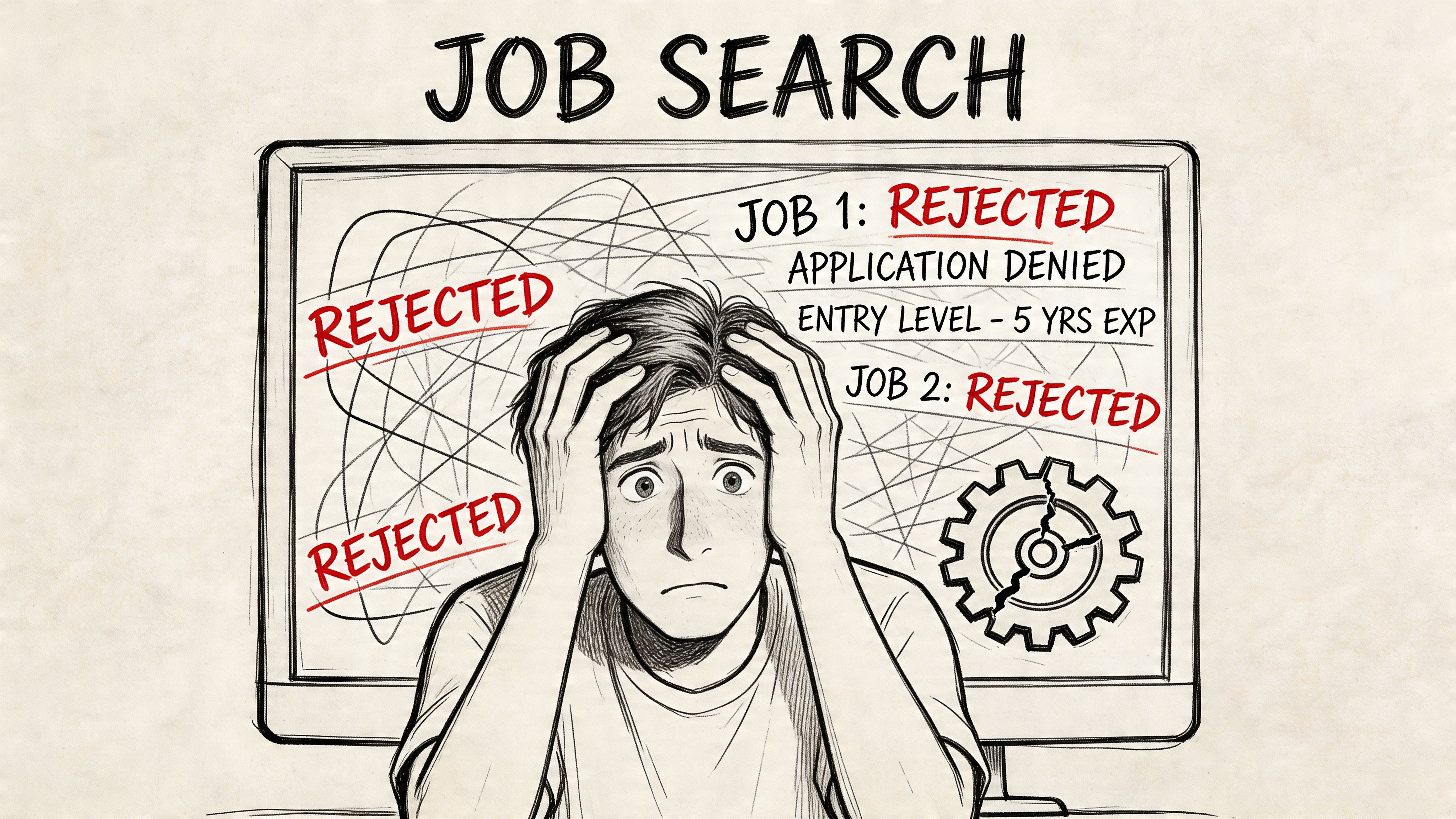
That’s the part people hate admitting. Most job seekers aren’t losing because they’re unqualified. They’re losing because they’re entering the race late, through noisy channels, with almost no advantage.
Why desperate professionals are paying for help
The pressure has gotten bad enough that many professionals now pay someone else to run the search. According to Fortune’s reporting on reverse recruiting, average job searches now last six months, and that pressure has fueled a surge in reverse recruiting, where professionals pay agencies over $1,000 a month to find jobs on their behalf.
That trend says two things.
First, job seekers are exhausted. Second, the standard application process has lost credibility.
The rise of paid job-search help isn’t proof that recruiters are better. It’s proof that the normal process has become painfully inefficient.
The real problem isn’t effort
Most serious candidates are already doing plenty. They update resumes, message contacts, polish LinkedIn, and apply consistently. The issue is that effort alone doesn’t beat a clogged market.
What breaks people is the mismatch between input and signal:
- You do real work: tailor documents, fill out forms, write thoughtful answers.
- Platforms reward speed and saturation: early applicants and insider channels often win.
- Bad listings waste attention: some jobs are stale, duplicated, or poorly scoped.
- Recruiter outreach feels tempting: because it looks like a shortcut around the pile.
That last point matters. When a headhunter calls, it feels like validation. Finally, someone sees your value. Sometimes that lead is useful. Sometimes it’s a dead end in nicer packaging.
If you understand that distinction, you stop treating recruiters like saviors and start treating them like one channel in a larger strategy.
What Is a Headhunter and Who Do They Really Work For
A headhunter is not your career agent. That’s the first illusion to kill.
The cleanest analogy is real estate. A headhunter is like an agent representing the seller. You might be the product they present, but you are not the client. The employer is the client. The employer pays the bill. The employer sets the rules.
According to Robert Half’s explanation of how headhunters work, headhunters work exclusively for companies, not candidates. Their primary function is to weed through applicants and present the best talent to their paying clients. That creates an inherent conflict of interest for job seekers.
Why this matters more than people admit
A lot of candidates hear from a recruiter and instantly assume, “Great, someone is advocating for me.”
Maybe. But only as long as your candidacy helps them close their search.
If another candidate is easier to place, cheaper, faster to sell internally, or a better match for the hiring manager’s biases, the recruiter’s loyalty goes there. That isn’t personal. It’s the business model.
Practical rule: If you talk to a headhunter, assume they are evaluating you for a company’s needs, not managing your career in your best interest.
That mindset changes your behavior. You ask sharper questions. You stop oversharing. You stop mistaking enthusiasm for commitment.
Contingent versus retained searches
A little insider knowledge is beneficial here.
Contingent recruiters
A contingent recruiter usually gets paid only if they make the placement. That creates urgency, but it can also create sloppy behavior. They may send multiple candidates quickly, push hard for movement, and steer you toward roles that are easier to close.
You’ll often feel this as pressure. Fast calls. Vague role descriptions. Push to submit immediately.
Retained recruiters
A retained recruiter is engaged by the company to run a search, often for harder-to-fill or more senior roles. They usually have more direct access to the client and a better grasp of what the company wants.
That doesn’t make them your advocate either. It just means the search may be more structured and the recruiter may be less chaotic.
Where job seekers get confused
People confuse access with alignment.
A recruiter may have access to a role you want. They may know the hiring manager. They may get your resume in front of someone faster than a general application would. All of that can be true.
But alignment is different. Alignment means your incentives and their incentives match. With headhunters, they often don’t.
Here’s what that looks like in practice:
- You want fit: team quality, manager quality, growth, flexibility, sane expectations.
- They want placement: a hire that gets approved and pays out.
- You want the broad market: all strong options.
- They want their slice of the market: the jobs they’re hired to fill.
That’s why smart candidates don’t “trust the process” with recruiters. They use recruiters tactically.
The best way to think about headhunters
Use this framing instead:
| Lens | What it means |
|---|---|
| Not a coach | They won’t build your long-term strategy. |
| Not an agent | They don’t represent your interests first. |
| Not a market map | They only show you roles inside their client network. |
| A broker | They can create useful introductions when incentives happen to overlap. |
That’s what headhunters for job seekers are. They are not career guardians. They are middlemen with selective access. Sometimes useful. Never neutral.
The Benefits and Drawbacks of Working with Headhunters
Recruiters matter. Anyone telling you otherwise is pretending.
According to Career Group Companies’ survey insights, staffing firms and recruiters facilitate 40% of all job placements, outperforming direct applications and personal connections combined. That tells you they’re not a side channel. They’re a major part of how hiring happens.
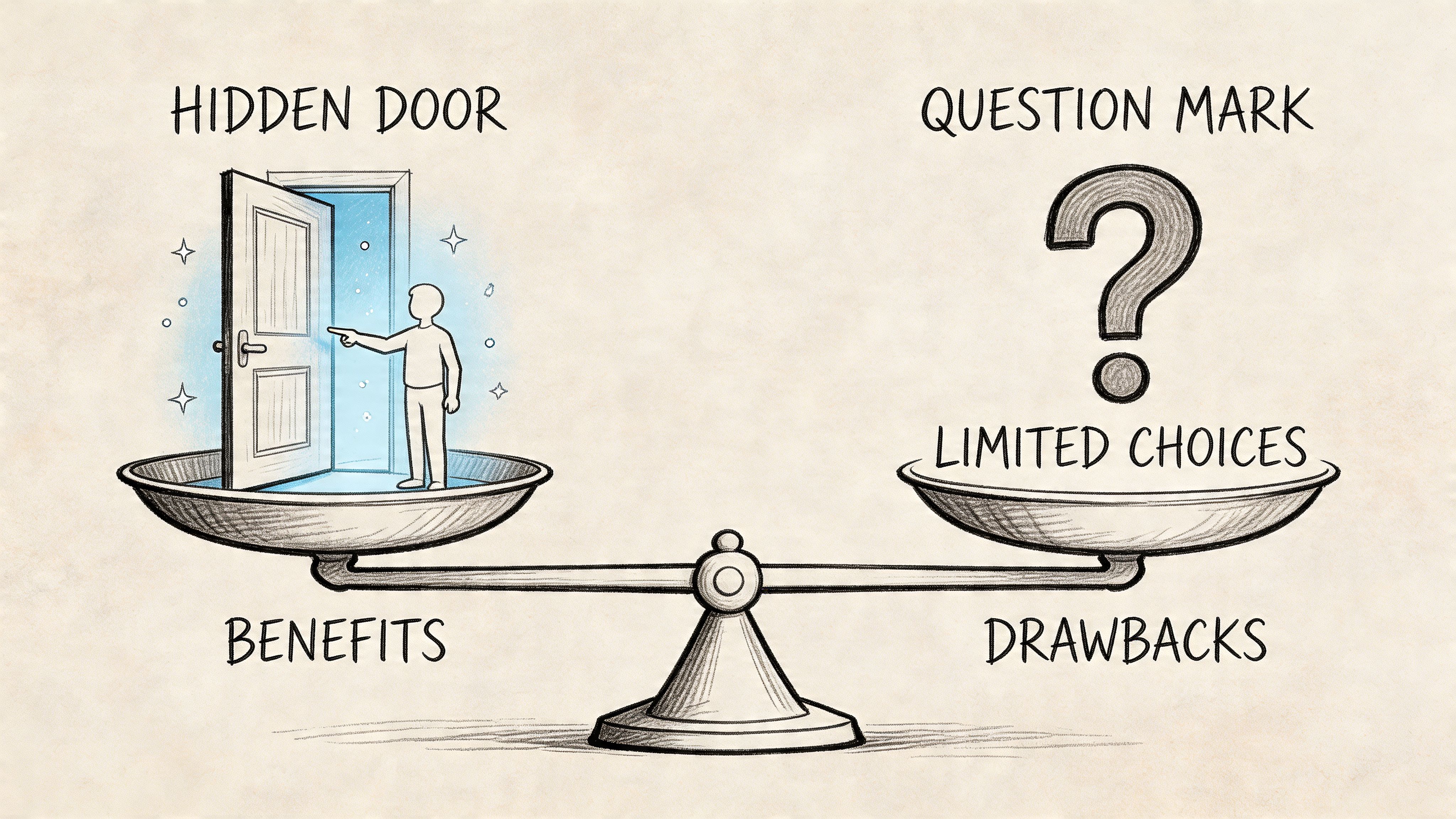
Still, influence isn’t the same as trustworthiness. You need both halves of the picture.
What recruiters can do well
They can open doors you won’t see yourself
Some companies don’t rely heavily on public postings for certain roles. Others conduct searches discreetly, especially when they’re replacing someone, building a leadership bench, or moving fast.
A recruiter can bring you into those conversations earlier.
They can package your candidacy
A strong recruiter doesn’t just forward your resume. They frame it. They explain why your background fits, where your edge is, and how to position any rough spots.
That can help if your story is strong but not obvious at first glance.
They can help during offer stage
This is one area where a recruiter can be helpful. Employers often say more to recruiters than they say directly to candidates. That can help you understand timing, flexibility, and negotiation room.
If you need a practical refresher before that conversation, this short guide on how to negotiate salary on a job offer is worth reviewing.
What recruiters do badly
They narrow your field of vision
A recruiter only shows you jobs inside their world. That sounds obvious, but candidates forget it fast.
If you rely too heavily on one or two recruiters, your search shrinks to whatever those people happen to be filling. You stop searching the market. You start waiting.
They can push poor-fit roles
Some recruiters listen well. Others pattern-match lazily.
If your resume says “product marketing,” they’ll send every adjacent role they can justify. If your background spans multiple functions, they may flatten it into the easiest story to pitch. That can trap you in roles that look acceptable on paper but move you away from the work you desire.
A recruiter can help you get hired faster. They can also help you get hired wrong.
They don’t have to tell you everything
Candidates assume the recruiter is giving them the full picture. Usually, they’re giving the picture that helps move the search forward.
Maybe the hiring manager is indecisive. Maybe the team just lost two people. Maybe the role has unclear scope. Maybe internal alignment is shaky. You might hear some of that. You probably won’t hear all of it.
Watch this with a skeptical eye
This video gives a useful outside view of how recruiters approach the process:
The honest tradeoff
Here’s the simplest way to decide whether to engage.
Work with recruiters when
- The recruiter is specialized: They understand your function, level, and industry.
- The role is concrete: You know the scope, reporting line, and hiring process.
- The recruiter communicates cleanly: No vagueness, no rushing, no weird pressure.
- You’re staying in control: You keep running your own search in parallel.
Be cautious when
- They pitch too broadly: Everything on your resume somehow fits their opening.
- They avoid specifics: No client details, no hiring context, no clarity.
- They pressure submission: Speed matters, but blind urgency is usually a bad sign.
- They act possessive: Good recruiters coordinate. Weak ones try to control.
My recommendation
Use headhunters, but don’t build your search around them.
Talk to good ones. Let them bring you signal. Let them earn your trust by being precise. But never hand over your whole strategy. The moment you wait for a recruiter to rescue your search, you’ve put your future in the hands of someone else’s commission structure.
How to Find and Vet Reputable Recruiters
Most recruiters aren’t worth your time. That sounds harsh, but it’s efficient.
The right recruiter can create access. The wrong one burns weeks, muddles your positioning, and fills your inbox with roles that make no sense. So don’t “network with recruiters” as a vague activity. Target them.
According to online recruitment statistics summarized by Scoop Market, 73% of job seekers are passive candidates, which helps explain why recruiters spend so much energy on targeted outreach. That also tells you how to position yourself. Good recruiters aren’t hunting random people. They’re looking for candidates who appear credible, placeable, and easy to pitch.
Where to find recruiters who might actually help
Don’t start with generic searches for “best recruiters.” Start with specificity.
Search by niche, not by brand
Look for recruiters tied to your function and level. “B2B SaaS product recruiter,” “remote lifecycle marketing recruiter,” or “enterprise sales executive search” is more useful than “tech recruiter.”
Specialization beats scale.
Track who repeatedly appears around real roles
When the same recruiter shows up around credible openings in your field, that’s signal. If they consistently work on roles that match your level, they may be worth a conversation.
If they post everything from junior support to VP finance, they’re probably operating too broadly to help you well.
Use your own network for recruiter references
Ask peers a blunt question: “Has any recruiter gotten you to a strong final-round process?”
That cuts through vanity. Plenty of recruiters look active online. Far fewer produce good outcomes.
The questions that expose whether a recruiter is solid
You don’t need to interrogate them. You do need to qualify them.
Ask questions like these:
- Who is the client? If they can’t name the company, ask what they can share about stage, team, and reporting line.
- Is this a retained or contingent search? Their answer tells you how the search is likely being run.
- How long has the role been open? A messy answer usually points to a messy process.
- What does success look like in the first stretch of the role? Good recruiters know what the company wants fixed or built.
- Why is this role open? Growth and replacement are very different stories.
- Who have you placed in similar roles? You want evidence that they know your lane.
- What concerns do hiring managers raise about candidates like me? This is one of the best questions in the whole process.
If a recruiter can’t explain the role beyond the job description, they’re not giving you access. They’re forwarding traffic.
Red flags that should end the conversation
Some warning signs are immediate.
Asking you for money
That’s the cleanest disqualifier in normal recruiting relationships. Companies pay recruiters in traditional search arrangements. If a recruiter asks you for payment to submit you, be extremely careful.
Yes, reverse recruiting exists, but that is a separate paid service model and should be treated as such, not confused with standard headhunting.
Vague role details
A recruiter may keep the client confidential early on. Fine. But they should still know the market, the scope, and the hiring context.
If everything sounds fuzzy, move on.
Pressure before clarity
A recruiter who wants your resume right now, before you understand the role, is optimizing for volume.
You want someone who can answer hard questions before they ask for commitment.
Identity weirdness
If their online presence feels thin, inconsistent, or oddly generic, pause. A real recruiter should have a coherent professional footprint and a believable connection to the market they claim to serve.
How to make recruiters take you seriously
This part is simple.
Be easy to sell.
That means your LinkedIn profile, resume, and positioning all point to the same story. Don’t make recruiters solve your narrative for you. If you want remote B2B product marketing roles, say that clearly. Show relevant wins. Cut clutter.
The best recruiter relationships are not built by “being open to anything.” They’re built by being specific enough that a recruiter instantly knows where to place you.
The Direct-Sourcing Advantage A Smarter Alternative
If you’ve read this far, you already know the core problem with headhunters. They can be useful, but they sit between you and the employer. That middle layer introduces delay, distortion, and misaligned incentives.
There’s a stronger option for many remote professionals. Go straight to company hiring channels and become your own recruiter.
That approach matters even more now because the hiring market is shifting toward skills-based evaluation. According to TestGorilla’s discussion of accessing talent in underserved communities, the emerging trend of skills-based hiring reduces reliance on traditional headhunter networks that often favor pedigree. The same source notes that job seekers can apply directly to 200,000+ new remote jobs sourced from company sites monthly, which is exactly why direct sourcing has become such a powerful move.
Why direct sourcing beats waiting to be discovered
Headhunters are selective by design. They don’t cover the full market. They cover the parts of the market they’re paid to serve.
Direct sourcing flips that.
Instead of hoping a recruiter notices you, you identify target companies, monitor their career pages, and apply directly when fresh openings appear. You remove the broker. You remove the gatekeeper. You shorten the path.
That gives you three advantages.
Better alignment
When you apply directly, nobody is filtering your candidacy through a commission lens. Your application rises or falls on your fit.
That’s cleaner.
Better market coverage
A recruiter’s market is their client list. Your market can be much bigger if you build it deliberately.
This matters for remote roles, where good jobs often move fast and don’t need agency help to attract attention.
Better positioning for nontraditional candidates
If your background is strong but not pedigree-perfect, direct sourcing can be a major advantage. Skills-based hiring helps candidates who can prove capability without matching the most conventional template.
That’s hard to capitalize on when an intermediary is trying to pitch the safest profile.
The more your value depends on actual skill, not resume prestige, the less you should rely on old-school gatekeepers.
Headhunter Path vs. Direct Sourcing Path
| Aspect | The Headhunter Path | The Direct Sourcing Path (with Remote First Jobs) |
|---|---|---|
| Who the process serves | The recruiter’s paying client comes first | You decide where to apply and why |
| Access to roles | Limited to recruiter client accounts | Verified openings sourced directly from employer career pages |
| Speed | Depends on recruiter timing and priorities | Faster access to fresh listings discovered from company sites |
| Market visibility | Narrow slice of the market | Broader view across remote-first employers |
| Bias risk | Recruiter may favor safer or more conventional profiles | You can present your skills directly to employers |
| Control | Shared and sometimes opaque | High control over targets, timing, and messaging |
| Noise level | Mixed quality, agency filtering, occasional role mismatch | Cleaner direct-hire path with fewer middlemen |
The practical version of becoming your own headhunter
This isn’t complicated. It just requires discipline.
Build a target list of remote-first employers. Follow their hiring pages. Watch for new roles. Apply early. Tailor your materials to the exact job. Keep a simple tracking system.
That process is less glamorous than “getting discovered,” but it’s usually more effective.
A lot of professionals cling to the fantasy that the right recruiter will provide access to everything. The better move is to create your own pipeline and let recruiters become a supplement, not the centerpiece.
Who should lean hardest into direct sourcing
This path is especially strong if you fit any of these:
- You work in tech, product, marketing, design, or sales
- You want direct-hire remote roles, not recruiter-managed churn
- You’ve got solid skills but not the usual pedigree markers
- You’re tired of broad job boards and stale listings
- You want more control over timing and company selection
That’s the smarter alternative. Not anti-recruiter. Just no longer dependent on one.
Take Control of Your Remote Job Search in 2026
The old fantasy is that the market will find you. A recruiter will call, a perfect role will appear, and your only job will be saying yes at the right moment.
That’s not how strong searches work anymore.
Headhunters can help, but they are not built to protect your interests. They work for employers, they show only a slice of the market, and they can easily pull you into roles that are convenient to fill rather than wise to take. If you understand that, you stop romanticizing them.
The better mindset is simple. Be the person who sources, filters, and acts faster than everyone else.
That means treating your job search like a pipeline, not a wish. It means going directly to company career pages, focusing on verified remote opportunities, and applying before a role gets buried under mass attention. It also means using recruiters tactically when they add signal, not emotionally because you want rescue.
If you want a cleaner way to do that, start with a platform built for direct-hire remote search rather than recycled listings and agency clutter. Browse fresh opportunities at Remote First Jobs and build your search around real company openings instead of waiting for a middleman to decide you’re worth presenting.
Frequently Asked Questions About Headhunters
Should a headhunter ever ask me for money
In a traditional recruiting relationship, no. The employer pays the recruiter.
The exception is the newer reverse-recruiting model, where job seekers knowingly hire a service to run parts of the search for them. That’s not the same thing as a normal headhunter contacting you about a company role. Don’t confuse the two.
What’s the difference between a headhunter and a career coach
A headhunter fills roles for companies. A career coach helps you improve your strategy, positioning, materials, and decision-making.
One is trying to close a search. The other should be helping you manage your career more broadly. If you need help clarifying your story or targeting remote roles, a coach may be more aligned than a recruiter.
Are headhunters useful for junior candidates
Usually less so.
Recruiters tend to be most helpful when roles are specialized, harder to fill, or tied to mid-senior hiring needs. Junior candidates often get better results by applying directly, building skills proof, and staying focused on high-fit openings rather than waiting for recruiter outreach.
How do I get recruiters to notice me
Make your profile easy to understand quickly.
Your LinkedIn headline, summary, recent experience, and resume should all tell the same story. Pick a lane. Show relevant achievements. Use clear role language. Don’t look “open to anything.”
Recruiters notice candidates who are easy to categorize and easy to pitch.
Should I trust a recruiter who won’t tell me the company name
Not automatically, but not always a deal-breaker either.
Confidential searches are real. What matters is whether the recruiter can still explain the role clearly, answer intelligent questions, and sound grounded in the market. If they’re vague about everything, walk away.
Can headhunters help me negotiate
Sometimes, yes.
A good recruiter can carry market context back to the employer and help smooth offer-stage discussions. But remember the alignment problem. They want the deal to close. You want the right deal. Listen to their advice, then make your own decision.
Are headhunters good for remote product roles
They can be, especially for specialized product leadership searches. But many product candidates do better with direct applications plus targeted networking, because broad recruiter outreach often blurs product, growth, ops, and marketing into one messy category.
If product is your lane, this guide to landing remote product manager jobs is a practical companion to a direct-search approach.
What’s the smartest way to use headhunters for job seekers
Use them as one input, not the engine.
Take the meeting. Qualify the recruiter. Learn what you can. Pursue good-fit roles. But keep your own direct search running the entire time. That’s how you avoid becoming dependent on someone else’s incentives.
Stop waiting for a recruiter to decide your search is worth attention. Remote First Jobs gives you direct access to verified remote roles sourced from company career pages, so you can apply earlier, skip agency noise, and focus on real opportunities that haven’t already gone viral. Start your search at Remote First Jobs.