A professional reference is a trusted contact from your career who has worked closely with you for at least six months within the past seven years and can speak to your skills, work ethic, and performance. In major markets like the US and Europe, 85-90% of employers request professional references for full-time positions, so this isn’t a minor admin task.
If you’re job hunting right now, you might be in the most frustrating stage of the process. You’ve updated your resume, survived too many interviews, and tried to stay sane while sorting through noisy job platforms, stale listings, and roles that may not even be real. Then an employer asks for references.
A lot of candidates freeze here. Not because they don’t know anyone, but because they aren’t sure who counts, who to choose, or how to make those references help them instead of just filling a checkbox.
That matters even more in remote hiring. When a company can’t watch how you work in an office, your references often become the closest thing they have to proof. They help confirm that you can communicate clearly, stay accountable, collaborate across tools, and do strong work without constant supervision.
Your Guide to Professional References
When an employer asks for references, applicants often treat it like paperwork. That’s a mistake.
A strong reference list is social proof for your professional reputation. It tells a hiring manager, “Someone who worked with me directly is willing to back up what I said in my resume and interviews.” In a crowded market, that can separate you from candidates who look similar on paper.
For remote job seekers, references do even more. They reduce uncertainty. A hiring team may never meet you in person. They may care less about polish and more about whether you can manage your workday, communicate in writing, and keep momentum without someone checking in every hour.
Why references matter more than people think
References usually show up near the end of hiring. That timing tricks people into thinking they’re a formality.
They aren’t. A weak reference can create doubt late in the process. A strong one can confirm that you’re the safe, credible hire.
Three practical reasons references matter:
- They verify your story: They help confirm your responsibilities, working style, and reliability.
- They show how you operate with other people: That’s hard to prove with a resume alone.
- They give context to your growth: A manager or colleague can explain how you handled feedback, deadlines, and changing priorities.
Your reference list shouldn’t be an afterthought. It should be prepared as carefully as your resume.
What job seekers usually get wrong
Waiting until the last minute to send rushed messages to former coworkers they haven’t spoken to in years creates two problems. First, the references may be slow to respond. Second, they may give generic answers because they aren’t prepared.
A better approach is to build references into your career planning. If you’re already thinking intentionally about your next role, a solid professional growth plan can help you identify which managers, peers, and clients are most likely to become strong advocates later.
That’s the main advantage. Not just having names on a list, but having people ready to speak clearly about the kind of work you do best.
What Exactly Is a Professional Reference
Think of a professional reference as a trusted witness for your career.
They’re not there to say you’re nice, friendly, or pleasant to be around. They’re there to confirm what it’s like to work with you. That includes your habits, your follow-through, your judgment, and the quality of your work in a real job setting.
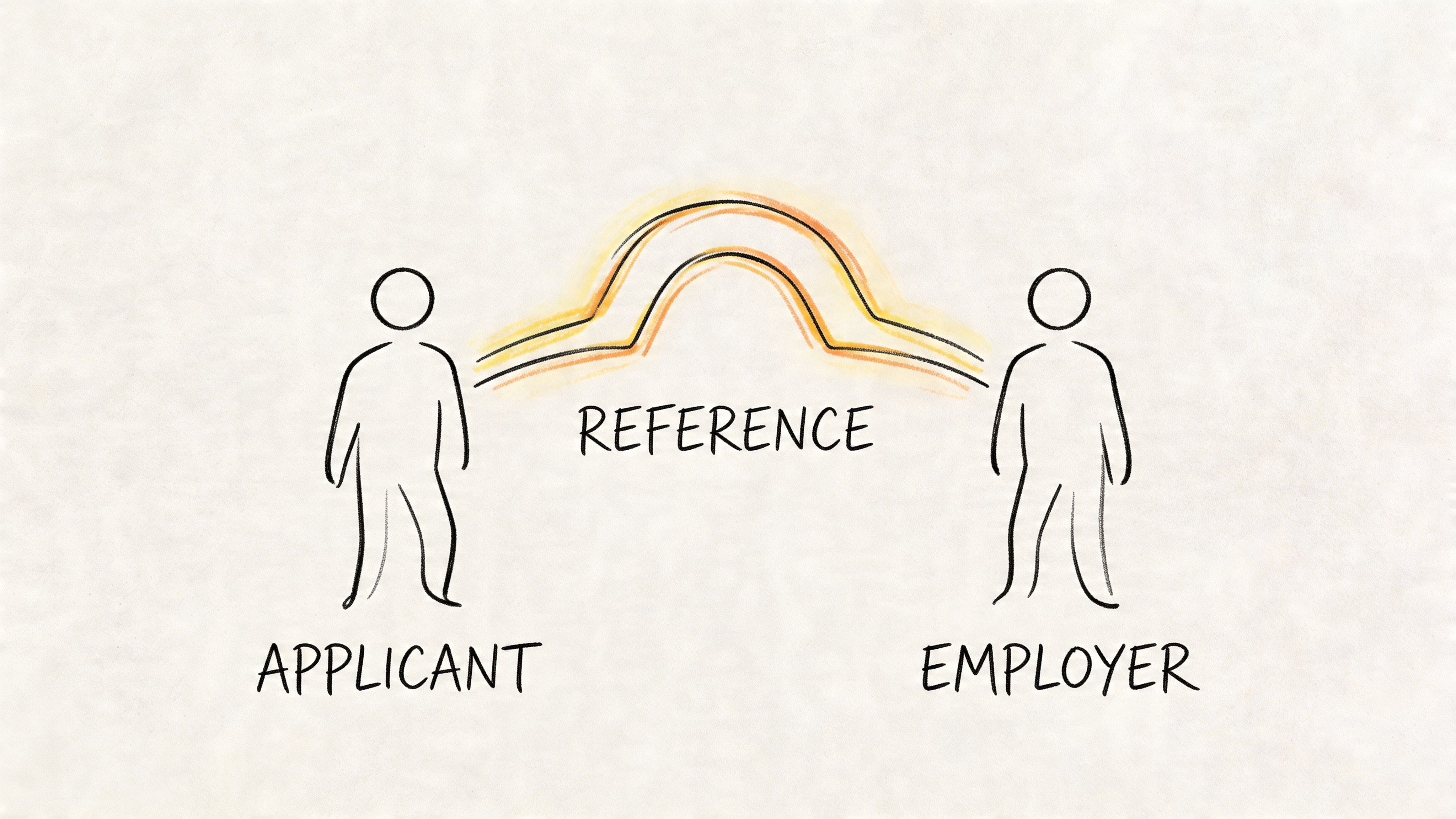
According to Indeed’s guide to professional vs personal references, a professional reference is someone who has worked closely with you for at least six months within the past seven years. That person is typically a coworker, immediate supervisor, department head, higher-level manager, or client with regular interaction. The same source notes that 85-90% of employers in major markets like the US and Europe request professional references for full-time roles.
What makes someone a real professional reference
Two things matter most: closeness and recency.
If someone worked with you directly, they can talk about your actual behavior. If that work happened recently enough, their comments feel current and credible to an employer.
A solid professional reference can usually speak about:
- Your daily work habits: Were you dependable, organized, and prepared?
- Your performance: Did you deliver strong work and meet expectations?
- Your work ethic: Did you follow through without being chased?
- Your impact on the team environment: Were you collaborative, steady, and constructive?
That’s why “someone important” isn’t automatically your best choice. A senior executive with a big title isn’t useful if they barely know your work. A direct manager with firsthand experience is often much stronger.
Professional reference vs personal reference
Here, people often get confused.
A professional reference talks about how you function at work. A personal reference talks about your character outside work. Personal references may be useful in specific situations, but they don’t carry the same weight for most full-time roles.
Here’s the easiest way to separate them:
| Type | What they speak to | Good example |
|---|---|---|
| Professional reference | Work performance, habits, teamwork, results | Former manager, client, teammate |
| Personal reference | Character, integrity, personality outside work | Family friend, coach, neighbor |
If the person mainly knows you outside a workplace, they’re probably not the reference an employer wants.
That’s the core answer to “what’s a professional reference.” It’s a person with direct, meaningful experience working with you who can back up your professional value in concrete terms.
Choosing Your Best Advocates
Not all references do the same job.
A good list isn’t just a stack of names. It’s a small group of people who each cover a different part of your professional story. One person may speak to results. Another may show how you collaborate. A third may confirm leadership or client trust.
According to Pipedrive’s overview of professional references, 92% of hiring managers value supervisor references highest, and those references correlate with 25-30% better retention predictions in new hires. The same source says 70% of remote hires cite references as the deal-closer.
Start with the strongest category
If you have access to a former manager who respects your work, start there.
Managers usually carry the most weight because they saw your performance over time. They can talk about goals, accountability, feedback, and whether you were someone they could trust.
That said, your best list usually mixes perspectives.
Reference type comparison
| Reference Type | Who They Are | Best For Proving… | Example Quote Focus |
|---|---|---|---|
| Former manager | Someone who directly supervised your work | Results, growth, accountability, reliability | How you handled goals, deadlines, and feedback |
| Peer or colleague | Teammate who worked closely with you | Collaboration, communication, problem-solving | How you worked across functions and supported the team |
| Direct report | Someone you managed | Leadership, coaching, trust | How you delegated, developed others, and made decisions |
| Client | External partner or customer you served regularly | Relationship management, service quality, ownership | How you communicated, solved problems, and earned confidence |
How to choose strategically
Don’t ask only, “Who likes me?” Ask, “Who can describe my work clearly?”
Use this filter:
- Pick direct observers: Choose people who saw your work firsthand, not people who only know your title.
- Choose recent relationships when possible: Fresh examples are easier for references to recall.
- Match the reference to the job: For a management role, include someone who can speak to leadership. For an individual contributor role, include someone who saw your execution up close.
- Avoid vague supporters: “She was great” won’t help you much. Specific stories will.
- Balance your list: One supervisor, one peer, and one client or cross-functional partner often creates a fuller picture than three nearly identical references.
A simple remote hiring example
If you’re applying for a remote product marketing role, your best trio might look like this:
- A former marketing director who can speak to strategy, deadlines, and ownership.
- A product manager who can speak to async collaboration and cross-functional communication.
- A sales enablement partner or client who can confirm the quality and usefulness of your work.
That combination tells a richer story than three senior names who all know you only slightly.
The Art of Asking for a Reference
Asking for a reference feels awkward when you treat it like asking for a favor out of nowhere. It gets easier when you treat it like professional coordination.
You’re not just asking someone to say nice things. You’re asking them to represent your work accurately. That means they need context.
According to BetterUp’s article on professional references, recruiters and hiring managers use reference feedback to assess three specific competency areas: daily work habits, professional goal alignment, and work environment contribution. That’s why generic praise isn’t enough. Your references need enough detail to speak to the actual role.
What to send with the request
The easiest way to help someone give a strong reference is to send a small reference packet.
Include:
- Your updated resume: So they can see your recent experience and positioning.
- The job description: So they know what the employer cares about.
- A short reminder of shared work: Mention projects, outcomes, or responsibilities you handled together.
- A few points to highlight: Focus on skills relevant to the target role, especially tools, workflows, or leadership traits the employer is likely to ask about.
Practical rule: Never assume your reference remembers your best work in the exact language your target employer uses.
Email script for a former manager
You can copy this and adjust it:
Subject: Reference request
Hi [Name],
I hope you’ve been well. I’m applying for a [role title] position and wanted to ask whether you’d feel comfortable serving as a professional reference for me.
We worked closely together on [team or project], and I think you could speak to my work in areas like [relevant strengths]. If you’re open to it, I can send my current resume, the job description, and a few points for context so it’s easy to prepare.
No pressure at all if the timing isn’t right or if you’d prefer not to. Either way, I appreciate your consideration.
Thank you, [Your Name]
Short message for a peer
This works well by Slack, LinkedIn, or email:
Hi [Name], I’m in process for a new role and wanted to ask if you’d be comfortable being a reference. We worked together closely on [project], and I thought you might be able to speak to how I collaborate and communicate. If that works for you, I’ll send over the job description and a few details to make it easy.
How to know if someone is the wrong choice
Pay attention to hesitation.
If someone sounds unsure, slow, or politely distant, don’t force it. A lukewarm reference is riskier than having one fewer name. You want people who can advocate with energy and specificity.
And once someone agrees, give them a heads-up before the employer calls. That simple courtesy often makes the difference between a vague conversation and a sharp, useful endorsement.
How to Format and Present Your Reference List
Don’t put references directly on your resume.
That wastes space, exposes other people’s contact details too early, and makes it harder to tailor your list for a specific role. Keep references on a separate document and send it only when an employer asks.
What to include on a reference sheet
Keep it clean and plain. No design tricks needed.
Include these details for each person:
- Full name
- Current job title
- Company
- Relationship to you
- Email address
- Phone number
You can also add a short line explaining the context, especially if the relationship won’t be obvious from the title alone.
A simple template you can copy
Professional References
Jordan Lee
Senior Product Director, Northline Software
Former Manager
[email protected]
555-555-5555
Worked with me directly on product launches and cross-functional planning.Maya Patel
Lifecycle Marketing Manager, BrightPath
Former Colleague
[email protected]
555-555-5555
Collaborated closely with me on campaign execution and async team workflows.Daniel Cruz
Head of Revenue Operations, ClientCo
Former Client
[email protected]
555-555-5555
Worked with me on implementation, reporting, and stakeholder communication.
Presentation rules that help
A few simple choices make your list feel polished:
- Match your resume formatting: Use the same font, spacing, and header style.
- Use a clear file name: Something like “FirstName_LastName_References.”
- Double-check contact details: Wrong email addresses create avoidable delays.
- Tailor the order: Put your most relevant reference near the top for that role.
A reference sheet should feel boring in the best possible way. Easy to scan, easy to trust, and easy to use.
Professional References in the Remote-First World
Most advice on what’s a professional reference assumes an office job. It tells you to ask a former boss or coworker, then stops there.
Remote hiring needs more than that. Employers want proof that you can work well without physical proximity. They need confidence that you can manage time, communicate clearly in writing, and keep projects moving across tools and time zones.
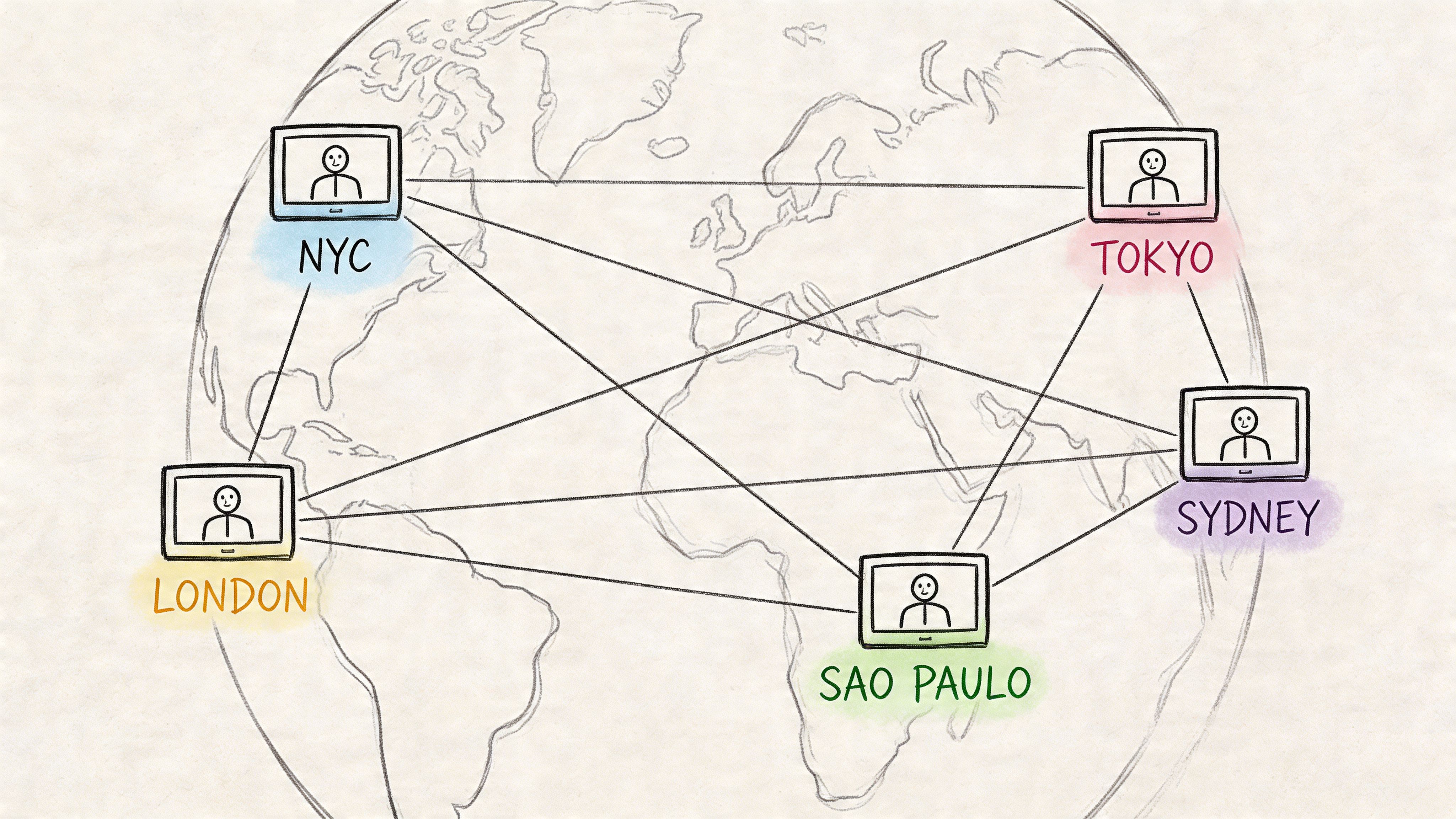
According to BAU’s discussion of professional references in remote hiring, recent trends for 2025-2026 show 200,000+ new remote opportunities monthly, and remote-specific references boost hire rates by 25% when they highlight autonomy and collaboration tools. That’s a major opening for candidates because most career advice still doesn’t teach people how to prepare references for distributed work.
Who counts as a strong remote-specific reference
For remote roles, the best reference isn’t always your most senior past boss.
It may be:
- A project lead from a distributed team who saw how you worked in Slack, Notion, Asana, Jira, or Linear.
- A client you met only through Zoom but partnered with over a long project.
- A cross-functional collaborator in another time zone who can describe your async habits.
- A remote manager who can speak to your independence and follow-through without direct supervision.
The strongest remote reference can usually answer questions like these: Did you communicate clearly in writing? Did you unblock yourself? Did you update people without being chased? Did you work calmly across time zones?
What you want them to say
Remote references are most useful when they describe behavior, not personality.
Ask them to focus on things like:
- Async communication: Did you leave clear updates in Slack or Notion? Were handoffs easy to follow?
- Self-motivation: Did you manage your work without constant check-ins?
- Tool fluency: Were you effective in systems like Asana, Jira, ClickUp, Trello, Google Docs, or Loom?
- Time zone reliability: Did you keep momentum moving even when teammates were offline?
- Remote collaboration: Did people trust you to keep others aligned?
In remote hiring, a great reference doesn’t just confirm you were good at your job. They confirm you were good at your job without needing someone to stand over your shoulder.
A better framing for remote candidates
If you’re targeting distributed roles, tell your references exactly what kind of evidence matters.
For example, instead of asking someone to “say I’m organized,” ask them to talk about how you documented decisions in Notion, sent useful status updates, or kept launch work moving across countries and schedules.
If you’re applying through curated remote job platforms, it’s worth preparing these references before you start applying so you can move quickly when a strong role appears. That kind of preparation matters when you’re trying to apply early through Remote First Jobs.
Common Mistakes That Can Cost You the Job
Reference mistakes are often small on the surface. In practice, they create doubt right when an employer is close to making a decision.
Here are the ones I see most often.
The avoidable errors
- Using someone who barely knows your work: A recognizable title won’t save a weak reference.
- Skipping the permission step: Never list someone without asking first. Surprise calls lead to poor answers.
- Sending outdated contact details: If the employer can’t reach your reference, you look disorganized.
- Choosing someone you had tension with: “We ended on okay terms” is not the standard. You want clear advocates.
- Relying on personal references for a professional role: Family friends and relatives won’t help in most full-time hiring processes.
- Giving no context to your references: If they don’t know the role, they can’t tailor what they say.
- Ignoring remote-specific proof: For distributed jobs, generic praise leaves too much unanswered.
- Forgetting to thank people afterward: References spend real time helping you. Follow up.
A quick gut check
Before you submit a name, ask yourself:
- Would this person sound confident talking about my work?
- Could they give examples, not just compliments?
- Do they understand the kind of role I’m pursuing now?
- Would I feel good if the hiring manager called them today?
If you can’t answer yes, keep looking.
A reference list should reduce risk for the employer, not introduce new questions.
Frequently Asked Questions About Professional References
Can I use a reference who left the company?
Yes. What matters is that they worked with you directly and can speak credibly about your work. If they’ve moved to another company, list their current title and company, then note your relationship clearly, such as “Former Manager at [Previous Company].”
Is a short-term contract reference okay?
It can be, if the person worked closely enough with you to speak in detail about your performance. For remote roles, contract references can be especially useful when they saw your execution in real workflows, tools, and deadlines.
I’m early in my career. Can I use a professor?
Sometimes, yes. A professor is most useful when they supervised work that looked like professional work, such as a capstone project, lab, research collaboration, or client-facing academic project. If you have any work-based reference, that usually comes first.
How many references should I have ready?
Have a small bench ready rather than scrambling. In practice, 3-5 references is a strong range for most searches, especially if they cover different angles of your work history. That range aligns with the guidance summarized in the verified data above.
Should I include references in every application?
No. Send them when the employer asks. Keep the document ready so you can move fast, but don’t volunteer contact details too early.
What if my current employer doesn’t know I’m job searching?
That’s common. Use former managers, former peers, former clients, or other past professional contacts. You don’t need to risk your current position just to complete a reference request.
What’s the simplest answer to what’s a professional reference?
It’s someone from your work history who knows your performance well enough to vouch for it with real examples.
If you’re tired of sorting through noisy job boards and want a faster path to legitimate remote roles, Remote First Jobs is built for that exact problem. It pulls openings directly from remote-first company career pages, helping you find verified opportunities early so your resume, interviews, and reference prep can pay off.