What separates legitimate data entry jobs from the scams that clog search results? The hiring process.
Fraudulent listings sell speed, easy money, and zero scrutiny. Real data entry work usually looks ordinary. Applications go through a company careers page, a staffing firm, or a task platform with published rules, payment terms, and account checks. The trade-off is simple. Legit roles ask more from you upfront, but they waste less of your time later.
That difference matters because data entry is a broad label. Some roles are true employee jobs with schedules, training, and performance standards. Others are contract assignments or small paid tasks. None of those formats are automatically bad. Problems start when a posting hides who pays you, how you get paid, what software you use, or what happens after you apply.
Use this article as a verification toolkit, not just a list of names. The companies below are useful examples, but the bigger goal is learning how to check any home data entry opportunity before you hand over personal details. Start with four questions. Is there a real company behind the listing? Does the job live on an official portal or established platform? Are pay terms and work type explained in plain language? Are you being asked to pay for access, training, or equipment before you earn anything?
That last point filters out a lot of junk fast.
Legitimate data entry jobs at home tend to come with boring details. Location limits, background checks, shift requirements, accuracy targets, or slower onboarding. Scam posts avoid those specifics because specifics can be verified. If a listing promises high earnings for simple typing but stays vague about the employer, treat that as a warning sign.
The sections that follow use seven platforms and employers as live examples so you can judge the difference for yourself and apply the same checks elsewhere.
1. Conduent
Want a quick way to tell whether a home data entry job is real? Start with an employer like Conduent, then compare every new listing against that standard.
Conduent gives you a useful baseline because it operates like a real employer. Jobs run through an official careers portal. Listings usually spell out the business unit, schedule, location limits, and hiring steps. That level of detail is what scam posts usually avoid.
Conduent also helps illustrate an important distinction in this article. A legitimate data entry opportunity is not always the most flexible one. In many cases, the safer option comes with more rules. Conduent often supports healthcare, government, and large enterprise processes, so accuracy, documentation, and compliance matter as much as typing speed.
Why Conduent is a strong verification example
If you want payroll-based work instead of piecing together task income, Conduent is worth checking first. It suits job seekers who prefer a formal application process and clearer expectations.
A few signs stand out:
- Official application channel: Roles are posted through the Conduent careers portal, which is one of the first legitimacy checks to run on any employer.
- Specific job details: Listings often include shift expectations, state eligibility, equipment requirements, and the type of work involved.
- Transferable experience: Recognizable employers carry more weight when you apply later for operations, records, compliance, customer support, or administrative roles.
Use that as your filter elsewhere. If someone says they recruit for Conduent but pushes you to a random form, text thread, or chat app, treat it as a scam warning.
Trade-offs to watch
Conduent is usually a better fit for people who want structure. It is less attractive for someone who wants to log in at any hour and pick up work casually. Some roles have fixed schedules. Some may require evenings, weekends, or location-specific eligibility.
Competition is part of the trade-off too. Established remote employers draw more applicants because the company is known, the process is formal, and the work feels closer to a standard job than a gig platform. Openings can move fast.
That does not make Conduent hard to evaluate. It makes it easier. Look for a full job description, standard screening steps, and communication that stays inside official company systems. Real employers handling sensitive data do not skip identity checks, and they do not hire through Telegram.
Conduent makes the verification process concrete. If a posting has a named employer, an official portal, clear pay and scheduling terms, and a normal hiring workflow, you are on firmer ground. If those pieces are missing, keep looking.
2. Axion Data Services

How do you tell the difference between a real data entry company and a site that only looks convincing?
Axion Data Services is useful because it gives you a clean test case. It is a specialist business focused on data entry and verification work, not a general job board stuffed with copied listings. That narrower focus does not guarantee an opening, but it does make the vetting process clearer.
A company like this tends to be selective. That matters. Scam offers usually try to feel unlimited and urgent. A legitimate operator often has fewer openings, clearer requirements, and a slower intake process because accuracy affects client trust.
Where Axion fits
Axion suits applicants who prefer applying directly through a company page instead of chasing posts across ad-heavy platforms. It also fits people who are comfortable being screened for precision, consistency, and reliability.
Here are the signs worth checking:
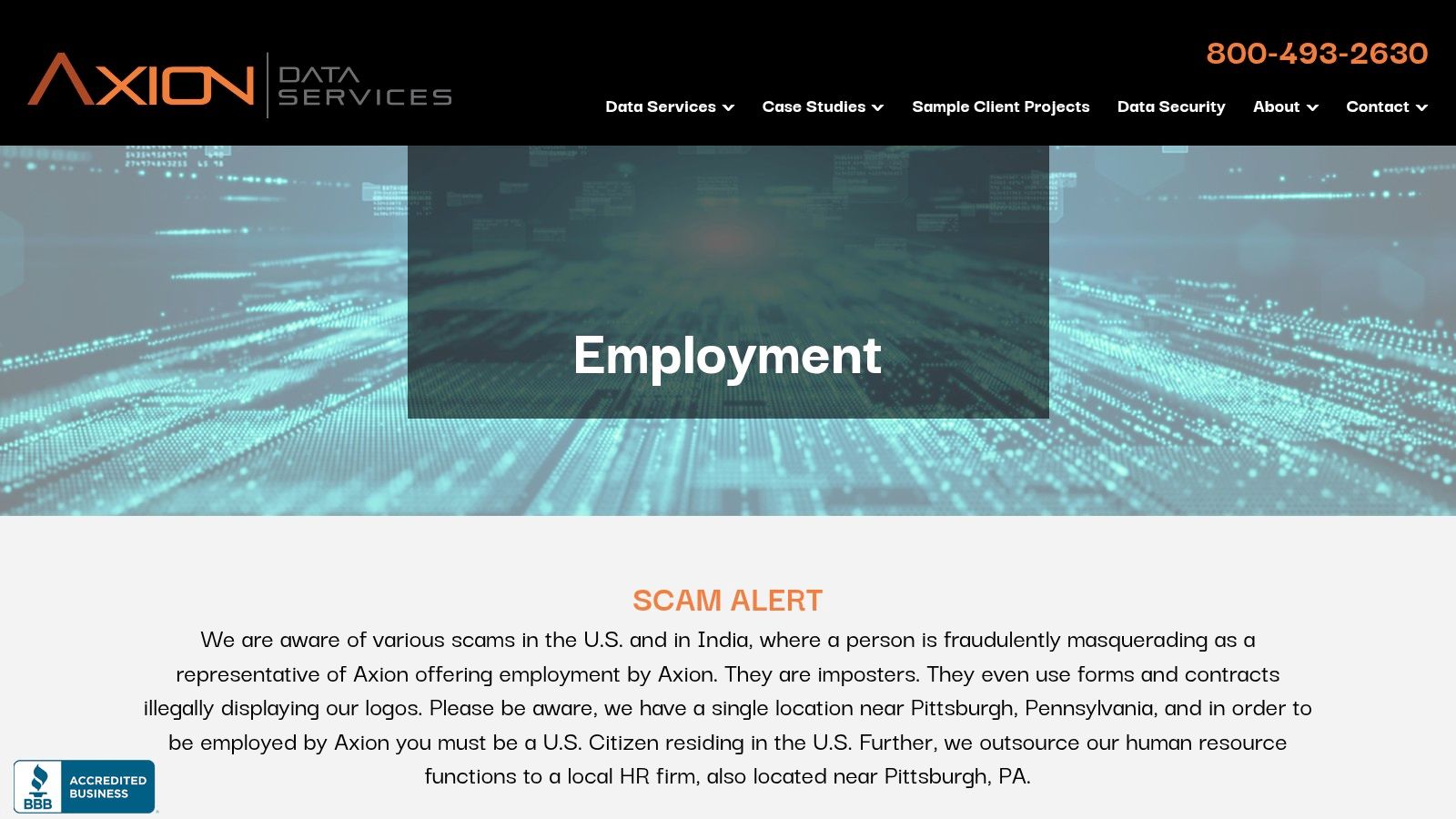
- Direct company application: Axion routes hiring information through its Axion employment page, which is what you want to see from a real business handling client data.
- Clear screening steps: Skills tests, experience requirements, and background checks are common in legitimate data handling roles because clients care about error rates and confidentiality.
- Specialist positioning: A firm built around data processing usually explains the work more clearly than vague “work from home data entry” ads.
That said, the trade-off is availability. You may find little or no hiring activity at the moment you check. That can be frustrating, but it is more credible than a site that claims to hire everyone immediately.
What to verify before applying
Use Axion as a verification drill, not just a name on a list.
Start with the basics. Does the company identify the work arrangement clearly? Does it explain who it hires, what experience it expects, and how applicants are screened? Does the application stay on an official company domain from start to finish?
Then check for scam patterns. Be careful with listings that copy the company name but send you to a different URL, ask for payment, promise unusually high earnings for simple typing, or move the conversation to text messages and chat apps right away.
Hiring friction can be a good sign here. Real data entry work often includes screening because clients want people who can follow instructions, protect sensitive information, and maintain accuracy over time.
Credentials can help with that, especially in detail-heavy niches such as medical or legal records, but they are not the main point. The stronger signal is whether the company acts like a real employer or contractor platform. Axion helps illustrate that difference because the business is specific, the hiring page is identifiable, and the expectations are more grounded than the usual scam copy.
If you use this section as a checklist, you can evaluate more than Axion. You can apply the same test to any company offering legitimate data entry jobs home and rule out weak or risky listings faster.
3. Clickworker
Want flexible data work without committing to a full remote role? Clickworker is one of the cleaner examples of a legitimate task platform, but it makes more sense once you stop treating it like a traditional data entry job.
Clickworker offers short assignments that often overlap with data entry, including categorization, data verification, research, and basic content or form-based tasks. The key distinction is the work model. You are joining a marketplace for on-demand tasks, not applying for a fixed employee position with guaranteed hours.
That difference helps you vet other opportunities too. Scam listings often blur the line on purpose. They call themselves a “remote job” but describe piece-rate microtasks, or they promise steady weekly income without explaining how work is assigned. Clickworker is more transparent about what it is, and that transparency is one of the strongest trust signals to look for.
What works well on Clickworker
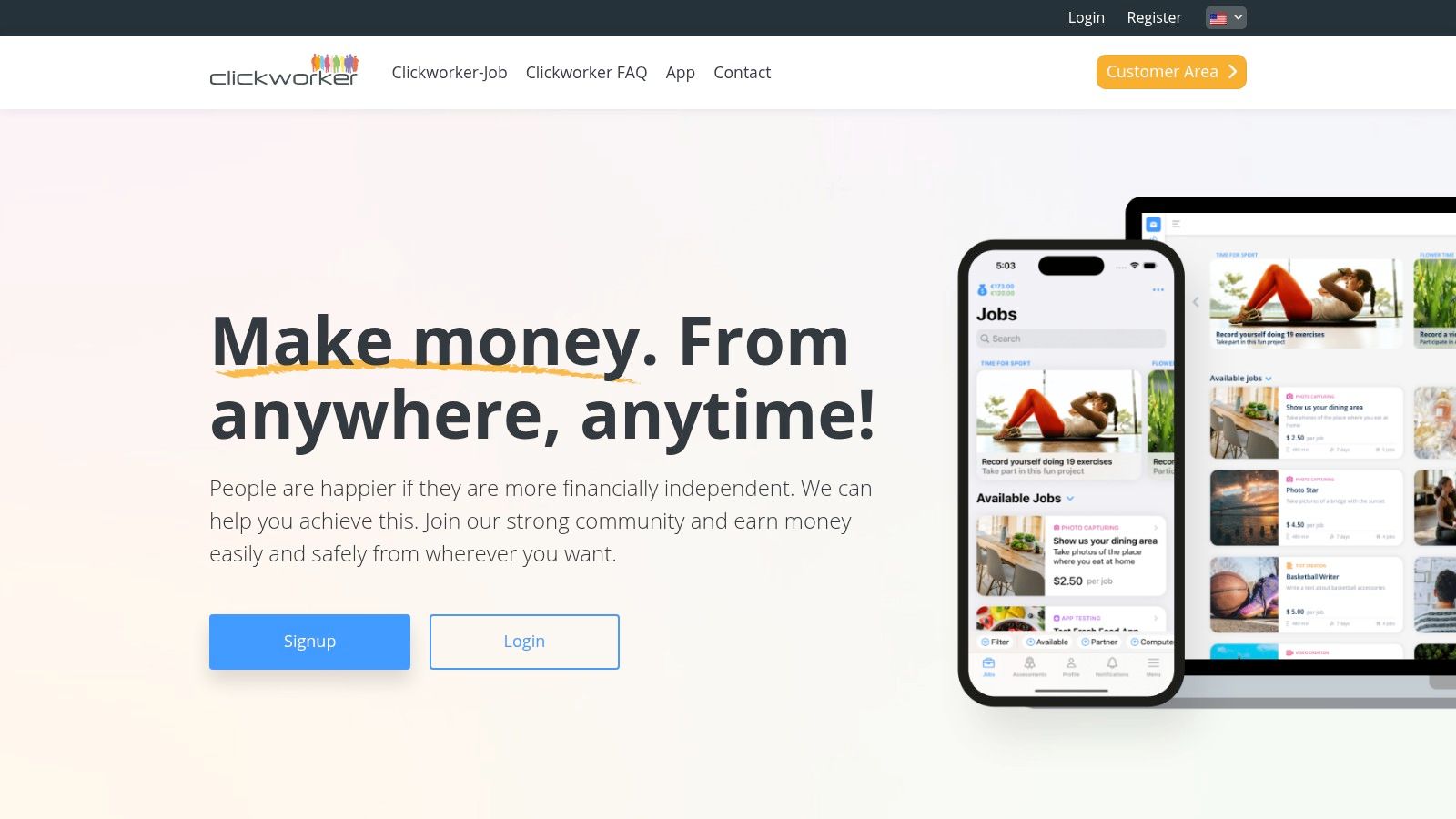
The main advantage is low friction. You can create an account, complete assessments where needed, and start seeing what kinds of tasks are available through the Clickworker platform.
It tends to suit people who want to test their speed, accuracy, and tolerance for repetitive digital work before chasing stricter direct-hire roles.
A few practical benefits stand out:
- Clear task structure: You can usually see the assignment type, basic instructions, and payout terms before committing.
- Flexible access: Work is available in smaller chunks, which is useful if you need side income or want experience without fixed scheduling.
- Mobile support: App access and notifications make it easier to check for work throughout the day instead of sitting at a computer waiting.
The trade-off is simple. Task volume can change fast, and earnings depend heavily on what is available in your region, how well you qualify, and how quickly you learn which assignments are worth your time.
How to verify a platform like this
Clickworker is useful as a screening model because it shows what a real platform usually gets right. The company explains the type of work, the sign-up flow stays on the official domain, and the earning model is based on completed tasks rather than vague salary promises.
Use that as your checklist.
If a site claims to offer home data entry jobs but hides the pay structure, skips any explanation of task quality standards, or pushes you into Telegram, WhatsApp, or upfront “training fees,” treat it as a risk. Real platforms may be imperfect, but they usually explain the workflow in plain language.
Best use case
Clickworker works best as a practice ground and income supplement. It can help you build work habits that matter in real data entry roles, such as following exact instructions, checking fields before submission, and working accurately even when the task feels repetitive.
It also reveals your weak spots fast. If you struggle with attention to detail, consistency, or basic platform tools, a task marketplace will expose that long before a formal employer does.
Use it with a strict filter. Track which task types pay fairly, which ones lead to rejections, and how much time each assignment takes. That turns Clickworker from “just another link” into a live test case for judging whether any so-called legitimate data entry job from home is transparent, realistic, and worth your time.
4. Amazon Mechanical Turk MTurk
Need a platform that is clearly real, but still worth testing carefully before you give it hours of your week? MTurk fits that description.
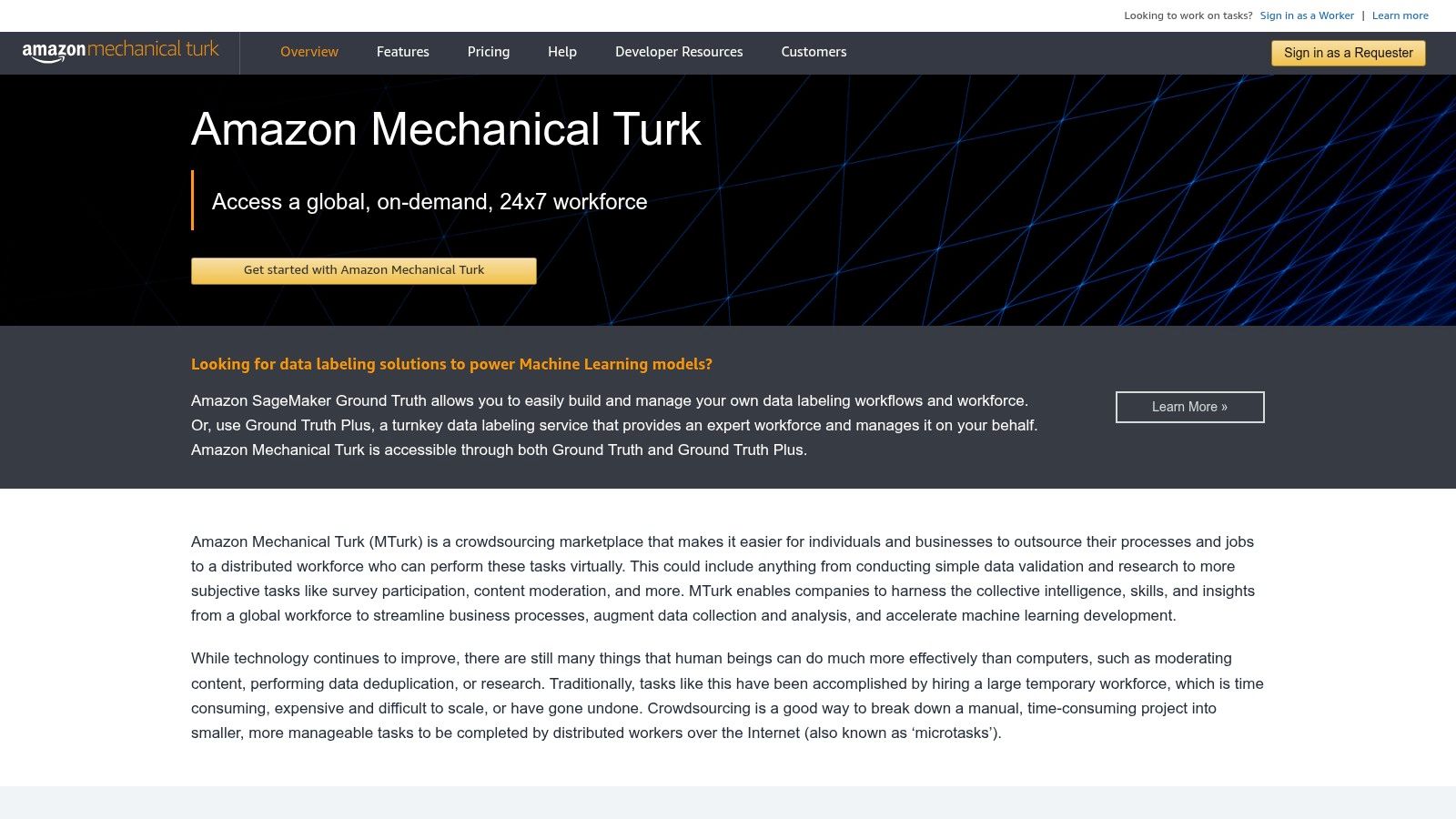
Amazon Mechanical Turk has been around for years, and that history matters. You are not dealing with a fake recruiter, a mystery checkout page, or a site asking for a training fee before you can start. You are dealing with a real task marketplace where requesters post HITs that can include categorization, validation, list cleanup, de-duplication, and other small jobs that overlap with data entry.
That does not make every HIT a good opportunity.
MTurk is one of the better examples for learning the difference between a legitimate platform and a worthwhile assignment. The platform itself is established. Actual screening work happens at the task level. That is the habit readers need to build if they want to find legitimate data entry jobs from home without getting burned by bad offers or wasting time on poor-paying work.
How to verify a platform like this
Start with the basics on Amazon Mechanical Turk. Check that the signup and worker information stay on the official Amazon-owned domain. Review how work is submitted, how approvals are handled, and whether the platform explains requester policies in plain language. Legitimate systems usually show you the workflow, payment process, and account rules before you start.
Then go one level deeper. On MTurk, the bigger risk is not fake employment. It is poor task economics.
Use this filter before accepting a HIT:
- Read the instructions first: Vague instructions usually lead to rejected work or unpaid time.
- Check the requester: A real platform can still host requesters with weak approval habits.
- Estimate time accurately: A task that pays a small amount can be reasonable in two minutes and terrible in fifteen.
- Watch for unnecessary complexity: If a simple entry task requires multiple external signups, extra downloads, or odd off-platform communication, skip it.
That screening process matters beyond MTurk. If a so-called home data entry job skips pay details, avoids explaining quality standards, or pushes you into Telegram or WhatsApp, it fails basic verification.
Where MTurk fits best
MTurk works well for workers who want flexibility, short bursts of task work, or a low-commitment way to test their accuracy and focus. It can also help you see how quickly you follow instructions, catch formatting errors, and decide whether repetitive digital work suits you.
I would not treat it as a stable replacement for a regular remote operations job. Earnings can be uneven, task quality varies, and beginners often spend too much time sorting through weak listings before they find a good rhythm.
That trade-off is the point. MTurk is legitimate, but legitimacy alone is not enough.
Use it as a live verification exercise. If you can learn to spot which HITs are clear, fair, and efficient, you will be much better prepared to judge any other data entry opportunity you find online.
5. Microworkers
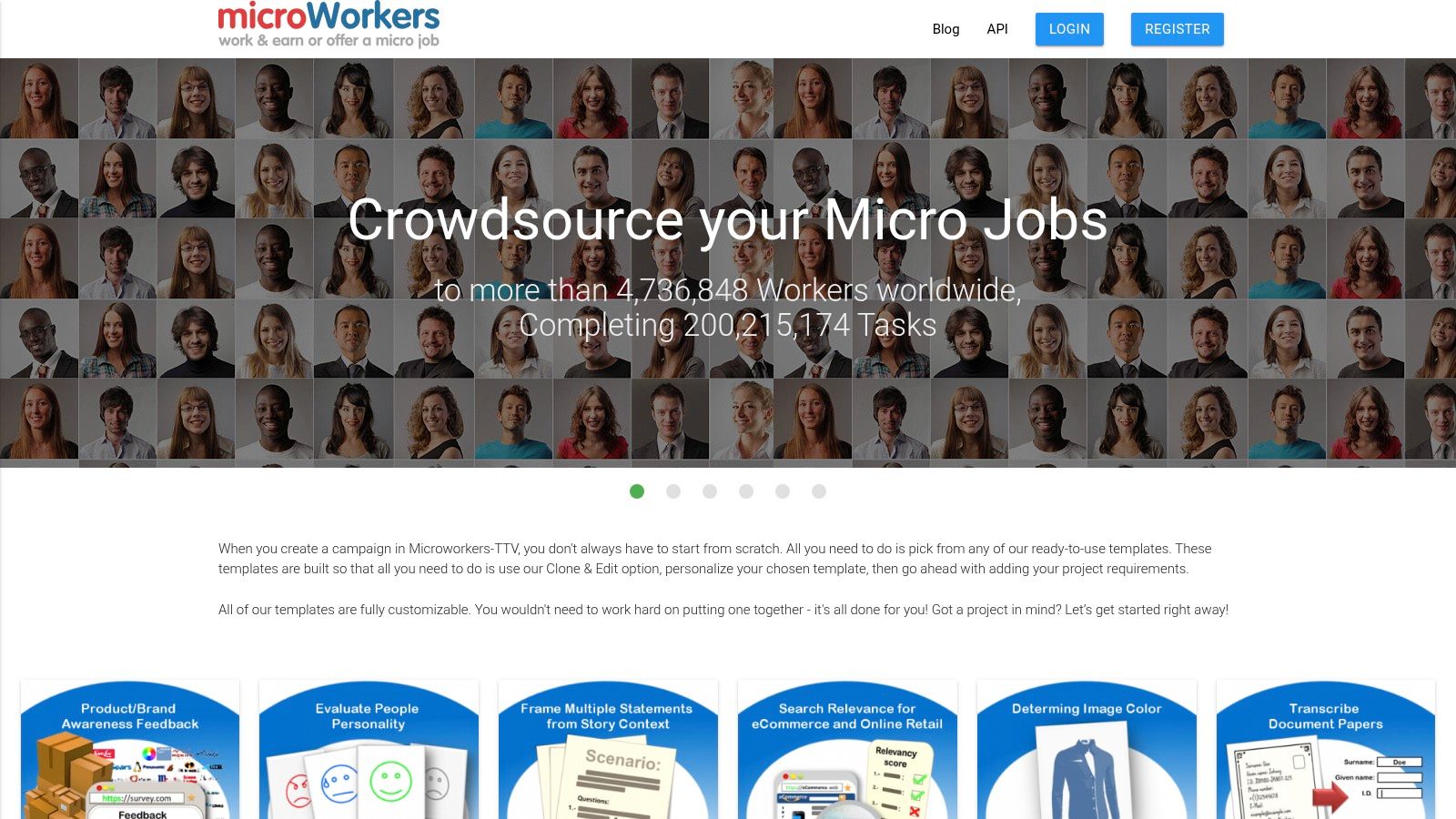
Microworkers sits in the same general universe as MTurk, but it feels more stripped down. That’s not automatically bad. For some people, the simpler workflow is the point. You pick up small jobs, submit proof, and move on.
Most of the work isn’t glamorous. Think contact extraction, categorization, short transcription, and spreadsheet-style data collection. If you want deep career progression, this won’t scratch that itch. If you want lightweight, at-home task work with a basic reputation system, it can.
What Microworkers does well
Some platforms drown users in complexity. Microworkers usually doesn’t. The interface and proof-of-work flow are straightforward enough that you can learn the rhythm quickly.
That simplicity helps in three ways:
- Fast orientation: You can review Microworkers and understand the basic task model without much ramp time.
- Reputation matters: Worker success metrics can improve access to better tasks.
- Useful for routine work: If you like checking boxes, following instructions, and moving through simple queues, this style of platform can suit you.
Limits you shouldn’t ignore
The obvious downside is earnings consistency. Availability can change by region, timing, and requester demand. Public pages also don’t always make every payout detail as visible as I’d like before sign-up, which means you should read platform terms carefully.
That caution matters because legitimate hiring channels increasingly push workers toward vetted platforms and direct company listings. For example, work-from-home roundups note that vetted boards such as FlexJobs report over 15 companies actively hiring for remote data entry roles across industries, while niche operators like SigTrack require at least 98% accuracy for certain processing work, as summarized in this overview of remote data entry companies and platform standards. The lesson isn’t that Microworkers is bad. It’s that low-friction platforms should be one lane in your search, not the whole road.
Microworkers is decent for straightforward task work and weak as a standalone career strategy. Use it when you want simple, proof-based assignments. Don’t use it as an excuse to stop applying to stronger opportunities.
6. Remotasks
Remotasks is where the definition of data entry starts to blur. A lot of the work overlaps with typing, labeling, verification, and structured input, but much of it leans toward AI data annotation rather than traditional database entry. That doesn’t make it less legitimate. It just means you should know what you’re signing up for.
If you’re open to adjacent work, Remotasks can be useful. If you only want classic “enter records into a system” tasks, it may feel off-target.
Why some people prefer it
The best part of Remotasks is the training path. Instead of dropping you into a giant marketplace and letting you guess, it tends to use a learn, qualify, then access model.
That works especially well for beginners.
- Built-in onboarding: The Remotasks platform leads users through qualification before assigning certain projects.
- Task variety: Text, image, audio, and structured entry work can give you more options than a pure typing site.
- Weekly payout model: Public roundups describing the platform highlight regular payout cycles after quality review, which is a practical legitimacy signal.
The trade-off with AI-adjacent work
The downside is consistency and role purity. You may join expecting standard data entry and discover that many tasks look more like annotation, rating, or content review. Some people like that variety. Others don’t.
This shift is bigger than one platform. Existing content about remote data entry often underserves mid-level professionals because much of today’s work is really data processing, CRM upkeep, ATS updating, and AI-assisted validation rather than simple raw typing. That gap is one reason many people searching for legitimate data entry jobs home feel like every result is either too junior or too scammy.
One more practical point. Most legitimate at-home data entry employers still ask for ordinary baseline qualifications rather than advanced degrees. Industry guidance also points job seekers toward reputable boards and direct company pages because scam-heavy sites muddy the search, as noted in Indeed’s career advice on work-from-home data entry jobs.
Remotasks works well when you’re flexible about task type and willing to qualify for projects. It works poorly if you want a traditional employee role with predictable hours and a narrow job definition.
7. Remote First Jobs

Most lists about legitimate data entry jobs home stop too early. They hand you a few entry-level names, maybe a gig platform, then send you back into the same noisy search cycle that caused the problem in the first place. That doesn’t help if you’re trying to avoid ghost jobs, recruiter spam, and dead listings.
Remote First Jobs solves a different part of the problem. It isn’t a data entry employer or a microtask platform. It’s a search engine built to surface verified remote roles directly from employer career pages. That’s a major distinction if you care about legitimacy.
Why it belongs on this list
A lot of “data entry” work now shows up under different titles. Operations coordinator. CRM specialist. Data quality analyst. Revenue operations assistant. Content operations associate. If you only search exact-match titles on giant job boards, you’ll miss a huge chunk of real remote work.
That’s where Remote First Jobs is strong. It monitors remote-first company sites directly, so you’re seeing direct-source listings instead of recycled aggregator copies. For job seekers burned out by big boards, that changes the game.
The strongest benefits are practical:
- Direct sourcing: Listings come from employer ATS and career pages, not from scraping other boards.
- Faster timing: The system scans continuously, so roles can show up before they become saturated on bigger platforms.
- Cleaner quality: It filters out scams, MLMs, and third-party agency clutter.
- Better fit for career growth: You can spot data-entry-adjacent roles that pay more and use broader operations skills.
How to use it like a verification tool
This is the unique value most readers need. Don’t use Remote First Jobs only as a place to click “apply.” Use it to train your eye.
Start by comparing a listing found there against the company’s own career page language. Check whether the title, requirements, location restrictions, and reporting line match. Because the source is direct, mismatches are easier to detect. That’s much harder on bloated boards full of reposts.
Then look at the role framing. Mid-level remote data work often isn’t called data entry anymore. It’s often data processing, database maintenance, CRM hygiene, inventory systems support, or customer records operations. If you know that, you stop missing legitimate opportunities just because the title changed.
Search by workflow, not just by title. “Salesforce updates,” “records management,” “CRM cleanup,” and “data validation” often reveal better roles than “data entry clerk.”
This matters even more for experienced candidates. Existing search results often fail mid-to-senior professionals who want direct-hire remote roles instead of endless low-pay task work. Verified market notes also point out that many higher-quality opportunities are missed on spam-heavy boards, while direct-sourced engines scanning employer systems can give applicants a first-mover edge. That’s the opening Remote First Jobs targets.
Real trade-offs
It isn’t a catch-all. If you want hybrid roles, local in-office jobs, or pure freelance gigs, you may find broader boards surface more of them. It’s also focused on remote-first employers, which is a strength and a limitation depending on your search.
Pricing details also aren’t published publicly in the background material provided here, so you may need to sign up or contact the team to understand access and features.
Still, for serious job seekers, the core advantage is obvious. You’re reducing noise at the source. And when the broader market still includes scammy ads, ghost posts, and stale listings, that filtering isn’t a luxury. It’s part of the job search itself.
Legitimate Home Data Entry: 7-Platform Comparison
| Title | Implementation complexity 🔄 | Resource requirements ⚡ | Expected outcomes ⭐📊 | Ideal use cases 💡 | Key advantages |
|---|---|---|---|---|---|
| Conduent | 🔄🔄, formal onboarding, scheduled shifts | ⚡⚡, W‑2 paperwork, training, secure workspace | ⭐⭐⭐📊, steady payroll, predictable hours | Stable payroll data‑entry roles for healthcare/government | Recognizable employer, formal training, enterprise security |
| Axion Data Services | 🔄, contractor application + skills testing | ⚡, basic home setup, US residency & background check | ⭐⭐📊, piece‑rate income, high‑accuracy work when available | Piece‑rate, accuracy‑focused at‑home data entry (US only) | Long‑running firm, direct company contracts, quality focus |
| Clickworker | 🔄, low; microtask workflow and occasional tests | ⚡⚡, smartphone/PC, internet, optional qualifications | ⭐⭐📊, regular small payouts; earnings vary | Flexible microtasks (data verification, classification) | Frequent tasks, weekly payouts, mobile alerts |
| Amazon Mechanical Turk (MTurk) | 🔄🔄, platform navigation + task selection learning curve | ⚡⚡, device, time to find good HITs, ID verification | ⭐⭐📊, highly variable pay; very flexible scheduling | On‑demand microtasks for flexible supplemental income | Large task pool, extensive documentation, established platform |
| Microworkers | 🔄, low; simple proof‑of‑work flows | ⚡, basic device/internet; region affects availability | ⭐⭐📊, small, variable payouts; task frequency fluctuates | Lightweight transcription, data mining, annotation tasks | Straightforward interface and verification workflow |
| Remotasks | 🔄🔄, built‑in training and project unlocks | ⚡⚡, training time, PayPal/AirTM account, quality checks | ⭐⭐📊, weekly payouts; task mix leans toward annotation | AI labeling/annotation and structured typing for beginners | Clear learn→qualify→work flow, supportive for newcomers |
| Remote First Jobs | 🔄, low for users; search/apply workflow (may require signup) | ⚡, resume, application prep; possible paid plans | ⭐⭐⭐📊, higher‑quality, faster access to direct remote roles | Mid‑to‑senior remote professional job searches (tech/marketing/etc.) | Direct ATS sourcing, curated listings, rapid new‑job discovery |
Get Ahead of the Competition and Find a Verified Role
The safest way to find legitimate data entry jobs home isn’t to memorize a short company list. It’s to build a repeatable filter. Once you understand what real hiring looks like, scam posts become easier to spot, and stronger opportunities stand out faster.
Start with the basics. Real employers use company domains, formal interviews, and clear job descriptions. They don’t promise absurd earnings for simple typing. They don’t ask for upfront fees. They don’t move everything to WhatsApp or Telegram. If the process feels rushed, vague, or oddly secretive, treat that as the warning sign it is.
Then look at the work model. Conduent shows what structured payroll employment looks like. Axion shows what a specialized direct-to-company operator model looks like. Clickworker, MTurk, Microworkers, and Remotasks show the task-platform side of the market. None of those are interchangeable. A lot of frustration comes from expecting one category to behave like another.
That distinction also helps you apply smarter. If you want stable scheduling and cleaner resume value, target direct employers. If you want flexibility or a short-term bridge, use task platforms selectively. If you want to move beyond entry-level labels, broaden your search terms to include data validation, CRM maintenance, operations support, and records management.
There’s also a practical speed issue. Good remote roles don’t stay hidden for long. Once a listing spreads across large boards, you’re competing with a pile of applicants, including people who apply to everything with one generic resume. That’s why direct sourcing matters. Finding jobs closer to the original posting gives you a better shot at applying before the flood starts.
Remote First Jobs was built around that exact problem. It scans over 21,000 company career pages directly and monitors a large flow of new remote opportunities, giving users access to verified listings without the usual noise of ghost jobs, agency spam, or stale reposts. That makes it useful well beyond classic data entry. It helps you find the adjacent operations and data-handling roles that many job seekers miss entirely.
If you’ve been stuck bouncing between scammy “work from home” ads and overcrowded job boards, change the method. Use curated companies as benchmarks. Compare every listing against an official career page. Prioritize employers with transparent hiring steps. Search for the work itself, not just the old job title.
That’s how you stop guessing and start filtering.
And that’s how you stop chasing bad leads while stronger candidates apply first.
If you’re done wasting time on ghost jobs and recycled listings, try Remote First Jobs. It pulls roles directly from employer career pages, cuts out recruiter spam, and helps you find verified remote opportunities before the crowd gets there.