The creative world has changed. Remote graphic design jobs are no longer a niche perk but the new standard for designers who want more flexibility, better pay, and a shot at a global talent market. This guide is your complete roadmap for landing a role that actually fits your life.
The New Standard for Creative Careers
The whole work landscape for graphic designers has been completely reshaped. What used to be a slow crawl toward remote work suddenly hit the accelerator, thanks to better collaboration tech and a collective realization that work-life balance isn’t just a buzzword.
And honestly? This isn’t just about convenience. It’s a massive career advantage.
For designers, it means you’re no longer shackled to the job market in your immediate area. You can now work with that cool startup three time zones away or jump on a major campaign for a global brand—all from your own creative space. Companies are winning, too, by getting access to a massive pool of talent without worrying about geography. It’s created a dynamic where skilled designers are more valuable than ever.
A Data-Driven Shift
The numbers don’t lie. Today, a whopping 62% of graphic designers are working in either remote or hybrid setups.
That preference is so strong that 76% of employees say they’d start looking for a new gig if their company yanked its remote work options. It’s a clear signal of what creative pros now expect from their careers. You can get a deeper look at this whole workforce transformation in our breakdown of current remote work trends.
This isn’t a temporary fad. Companies embracing remote work aren’t just offering a perk—they’re building more resilient, creative, and globally competitive teams.
This guide is built to give you the practical, real-world strategies you need to thrive. We’re going to skip the fluff and get right into actionable steps: finding the best opportunities, building a portfolio that screams “remote-ready,” and negotiating an offer that reflects your true value in a market that’s hungry for top talent.
Finding High-Quality Remote Design Opportunities
Tired of scrolling through endless, irrelevant job listings? The real secret to finding great remote graphic design jobs isn’t about blasting your resume everywhere—it’s about knowing exactly where to look and how to cut through the noise. Let’s get strategic and focus your search on the platforms that actually deliver.
Big-name job boards like LinkedIn and Indeed are a common first stop. They cast a massive net, which can be both a blessing and a curse. You’ll find a huge volume of roles, but you’ll also have to sift through a lot of junk that isn’t a good fit. Mastering their search filters is your best defense here.
Think beyond just “graphic designer.” Experiment with terms like “remote visual designer,” “UI designer remote,” or “freelance brand designer” to refine your results. Always, always filter by “remote” and don’t be afraid to specify time zones if that’s a factor for you.
Niche Platforms vs. Broad Job Boards
While the big sites have their place, you’ll often find higher-quality leads on platforms built for creatives. Sites like Dribbble and Behance aren’t just for showing off your portfolio; their job boards are where companies go when they’re specifically looking for top-tier design talent. Yes, the competition can be fierce, but the roles are often more exciting and better paid.
Then there are the freelance marketplaces like Upwork and Fiverr. These can be fantastic for getting your foot in the door, building experience, and landing your first few remote clients. Just be aware that many gigs are project-based, and it can sometimes feel like a race to the bottom on pricing.
Your job search should be diversified. I recommend spending 70% of your time on dedicated remote and niche design boards, and the other 30% on larger platforms to make sure you don’t miss major company postings.
This balanced approach keeps you dialed into high-quality, design-specific roles while still keeping an eye on opportunities from large corporations. For a handpicked list, our guide to the best remote jobs for designers breaks down current openings by specialty.
Comparing Job Platforms for Remote Designers
Choosing where to focus your energy can be tough. Each platform has its own vibe and serves a slightly different purpose. Here’s a quick rundown to help you decide where to invest your time.
| Platform Type | Best For | Pros | Cons |
|---|---|---|---|
| Dedicated Remote Job Boards | Serious remote job seekers looking for long-term, vetted roles from remote-first companies. | Listings are curated and high-quality; advanced filters for remote-specific perks; less spam. | Smaller volume of jobs compared to massive boards; can be more competitive. |
| Niche Design Platforms | Designers who want to leverage their portfolio to find roles where creative skill is the top priority. | High-quality, design-focused roles; direct access to hiring managers and creative teams. | Can be highly competitive; requires a strong, up-to-date portfolio to stand out. |
| Mainstream Job Boards | Casting a wide net and finding roles at large, well-known corporations that might not post elsewhere. | Massive volume of listings; good for finding corporate jobs; familiar interface. | Lots of irrelevant listings to filter through; less focus on remote culture or creative quality. |
| Freelance Marketplaces | New remote designers building a portfolio or experienced freelancers seeking project-based work. | Great for finding short-term gigs and building a client base; flexible work arrangements. | Can be a “race to the bottom” on price; platform fees can cut into earnings. |
Ultimately, a mix of these platforms will give you the best shot. Start with the dedicated and niche boards, then supplement your search with the bigger players.
Mastering Your Search on Dedicated Remote Job Boards
If you’re serious about building a long-term remote career, dedicated remote job boards are the gold standard. These sites aren’t just tacking a “remote” filter onto a traditional job board; they are built from the ground up to serve a remote workforce. This means the listings are more detailed, and you know the companies are already committed to a remote-first culture.
Here’s what sets them apart:
- Vetted Listings: Many of these boards verify their listings, so you run into far less spam and more legitimate remote graphic design jobs.
- Advanced Filters: Go beyond basic keywords. You can often filter by company culture, benefits (like a home office stipend), or specific tools you specialize in.
- Company Insights: They usually provide deep dives into company profiles, giving you a feel for their values, team structure, and remote policies before you even apply.
Think of it this way: general job boards are like a massive department store, while dedicated remote boards are like a curated boutique. One offers overwhelming choice, while the other provides a high-quality selection tailored specifically to your needs as a remote creative. This focused approach saves you a ton of time and connects you with employers who truly get it.
Crafting a Remote-Ready Portfolio and Resume
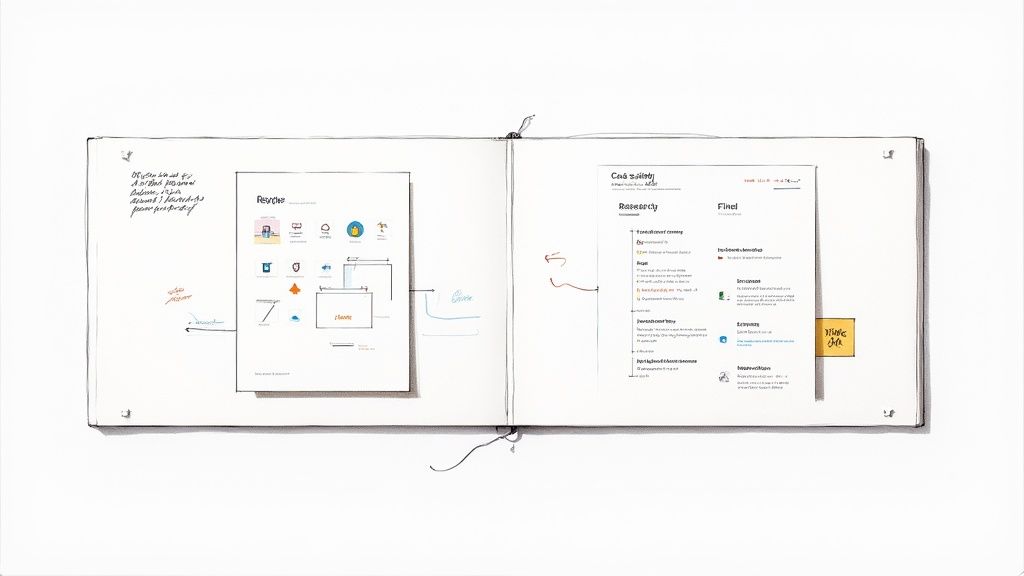
When you’re hunting for remote graphic design jobs, your portfolio and resume have to work overtime. They aren’t just a gallery of your greatest hits; they’re your stand-in, your handshake, your proof that you can deliver amazing work without ever setting foot in an office.
A stunning visual just isn’t enough anymore. Hiring managers are digging deeper, looking for clear evidence of your entire creative process.
Your portfolio needs to tell a story. Forget the simple grid of finished projects. Instead, think in terms of detailed case studies that walk a potential employer through the entire journey—from the initial problem to the final, brilliant outcome. This is how you show you’re a strategic thinker, a quality every remote team needs.
Showcasing Your Process Through Case Studies
Building a killer case study is about more than just a “before and after” shot. Your real goal is to pull back the curtain and reveal how you think and work with a team, especially one scattered across different time zones.
Every solid case study should hit these key points:
- The Challenge: Kick things off by explaining the client’s problem or the project’s main goal. What business objective was your design supposed to solve?
- Your Role and Process: Get specific about your contributions. Were you the project lead or part of a bigger crew? Walk them through your steps, from initial research and wireframing to prototyping and final execution.
- Collaboration and Communication: This is your chance to prove you’re built for remote work. Name the tools you used—like Figma for real-time design or Slack for async feedback—and explain how you handled challenges like conflicting opinions or time zone gaps.
- The Solution and Impact: Show off the final design, but don’t stop there. Explain why it was the right solution. If you can, drop in some metrics or a client testimonial to prove the project was a success.
Of course, you’ll need a great platform to present all this. If you’re looking for the right fit, you can find a solid list of the best website builders for graphic designers to help you find one that supports rich case studies and lets your style shine.
Tailoring Your Resume for Remote Roles
Your resume should be the perfect companion to your portfolio, translating your design chops into qualifications that scream “remote-ready.” A lot of designers just send out a generic resume, but a few smart tweaks can make all the difference.
Always lead with accomplishments, not just a list of duties. Instead of saying you “designed marketing materials,” quantify your impact. Try something like this: “Designed a new ad campaign creative that drove a 15% increase in click-through rates.” See the difference?
Key Takeaway: Frame your experience through the lens of remote work. Use bullet points that explicitly mention remote collaboration tools and asynchronous workflows. This shows you understand the unique demands of a distributed team.
For example, you could write a bullet point that says: “Managed a complete brand identity redesign for a distributed team, coordinating asynchronous feedback across three time zones using Figma, Asana, and Loom.”
That one sentence packs a punch. It shows off your design skills, project management abilities, and fluency with the tools that make remote work… work. It directly answers the hiring manager’s biggest question: can you crush it without someone looking over your shoulder?
To really nail this, check out our complete guide on how to write a resume for remote jobs, which is loaded with more examples and templates. By making sure your portfolio and resume tell the same powerful story, you’re not just showing you’re a great designer—you’re proving you’re a great remote designer.
Your Essential Toolkit for Remote Design Success
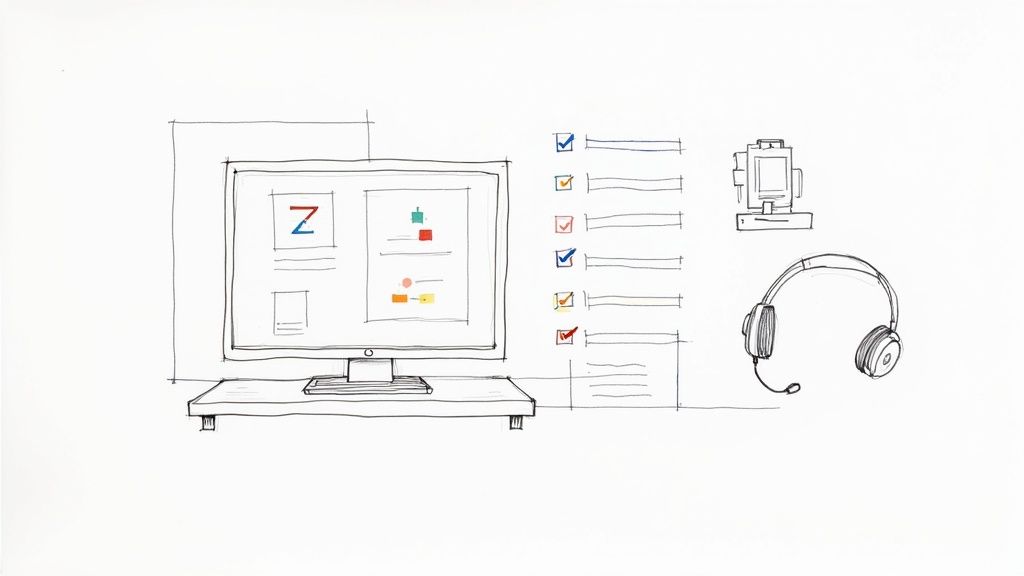
Crushing it as a remote graphic designer takes more than just raw creative talent. It really comes down to how well you can stay connected, organized, and productive when you’re not in a shared physical office. This means getting a handle on a specific set of tools and—just as important—developing the soft skills that make remote collaboration feel totally natural.
Your tech stack is basically your virtual studio. The right setup gets rid of friction and makes sure everyone’s on the same page, no matter what time zone they’re in. Without it, even the most brilliant ideas can get swallowed up by messy email threads and outdated file versions.
The Core Software for Remote Designers
For any modern remote design team, a few platforms are simply non-negotiable. Think of these less as nice-to-haves and more as the foundation for efficient, asynchronous work.
- Collaborative Design Platforms: There’s a good reason tools like Figma and Sketch are the industry standard. Their magic is in real-time collaboration, letting multiple designers and stakeholders jump into the same file at once. Features like live comments, shared component libraries, and version history are absolute lifelines for remote workflows.
- Project Management Hubs: A project can go off the rails fast without one central source of truth. This is where platforms like Asana, Trello, or Monday.com come in. They’re critical for keeping tabs on tasks, deadlines, and dependencies, giving everyone clarity on who’s doing what and when. No more dreaded “I thought you were handling that” moments.
These systems are the backbone of any high-functioning remote team. If you want to go deeper, our guide on essential tools for remote teams explores more specialized software that can seriously level up your workflow.
Soft Skills That Set You Apart
While the software is a huge piece of the puzzle, your soft skills are what truly make you a star player on a remote team. The tech makes collaboration possible, but your personal habits make it effective—and enjoyable for everyone else.
The most successful remote designers aren’t just great at their craft; they’re masters of communication and self-management. They get that over-communication is always better than ambiguity and that their autonomy is built on a foundation of discipline.
Let’s play out a real-world scenario. A project manager across the country is waiting on a logo concept for a client meeting that’s happening in a different time zone. A proactive designer doesn’t wait to be chased down. Instead, they pop a quick, clear update into Slack: “Hey team, final logo variations are 90% done. You can see the progress in the Figma link. Expect final files by 3 PM EST.”
That simple message prevents anxiety, clears a potential bottleneck, and builds a ton of trust. It’s that kind of proactive communication, paired with solid time management and the focus to deliver without someone looking over your shoulder, that separates a good remote designer from a truly great one. These skills prove you can be counted on, no matter where in the world you’re logging in from.
How to Nail the Remote Interview and Negotiation
You’ve landed the interview—congratulations! Now comes the part where your personality and professionalism have to shine through a screen. Acing a remote interview is a different beast altogether. It’s less about having perfect answers and more about creating an experience that makes the hiring manager forget you aren’t in the same room.
Think of the video call as an in-person meeting. First thing’s first: your environment. Find a quiet spot with a clean, professional background. A simple wall or a tidy bookshelf works way better than a cluttered room. Make sure your lighting is bright and in front of you (no spooky shadows!), and always, always test your camera and mic beforehand. Since nearly every remote interview is virtual, you have to nail your video interviews to make a strong impression.
Answering Remote-Specific Questions
Beyond the usual design questions, get ready for questions about your ability to work on your own. Hiring managers need to know you’re a self-starter who can get things done without someone looking over your shoulder.
Be prepared for questions like:
- “How do you stay motivated and manage your time when you’re on your own?”
- “Can you tell me about a time you worked with a team across different time zones?”
- “What’s your process for giving and receiving feedback when you can’t talk face-to-face?”
Generic answers won’t cut it. Use the STAR method (Situation, Task, Action, Result) to frame your responses with real stories from past projects. Talk about the specific tools you used and the communication habits you relied on. For a deeper dive, our guide on acing remote interview tips has even more advice.
Proving you’re ready for remote work comes down to demonstrating reliability. Show them you’ve already mastered clear communication, proactive updates, and independent problem-solving. It’s all about building the trust that’s essential for any remote role.
Negotiating Your Compensation with Confidence
Once the offer comes through, the conversation turns to money. This is where doing your homework becomes your biggest advantage. Never walk into a salary negotiation blind; you need data to back up your request.
The earning potential for remote graphic designers is solid. Freelancers typically pull in an average of $32 per hour, while full-time roles in the U.S. average around $61,300 annually. But those numbers can go much higher depending on your skills and the company’s location. For example, designers in Phoenix can earn 10% more than the national average, with top earners hitting $87,450.
When you start negotiating, anchor your request to the value you bring—point to your portfolio and the market data you’ve gathered. And don’t forget, compensation is more than just the base salary. It’s a good idea to ask for other perks common in remote jobs.
Consider asking for things like:
- A home office stipend to help cover equipment and internet.
- Professional development funds for courses or conferences.
- Flexible work hours that fit your time zone or lifestyle.
When you walk into the interview with technical polish and approach the negotiation with data-driven confidence, you’re not just landing a job. You’re securing a compensation package that truly reflects what you’re worth in the competitive market for remote graphic design jobs.
Have Lingering Questions About Remote Design?
Jumping into the world of remote graphic design is exciting, but let’s be real—it’s totally normal to have some nagging questions about how it all actually works. It’s one thing to dream about the freedom, another to navigate the practical side of things.
Let’s clear the air on some of the most common concerns I hear from designers making the switch.
A big one is always about stability. Is this whole remote design thing just a trend, or is it a viable long-term career? The numbers tell a pretty compelling story. The global graphic design market was recently valued at $55.1 billion and is on track to hit $81.3 billion by 2030. Plus, with freelance designers making up nearly 50% of the creative workforce, the demand for skilled, independent talent is absolutely booming. For a deeper dive, check out this graphic designer job market outlook.
That strong market is great news, but it’s not a golden ticket. It all comes down to positioning yourself to catch those opportunities.
How Do I Get Promoted When I’m Not in the Office?
This is a classic—the fear of being “out of sight, out of mind.” When you can’t rely on hallway conversations or popping by your manager’s desk, you have to get intentional about your visibility. It’s not about being loud; it’s about being effective.
- Track Your Impact: Get into the habit of documenting your wins. Don’t just say you designed a new landing page; note that your design boosted conversions by 15%. Keep a running “brag sheet” for yourself.
- Be a Voice, Not Just an Avatar: Don’t be a ghost outside of scheduled meetings. Jump into relevant Slack channels to offer solutions, share an insightful article, or give constructive feedback on a teammate’s work.
- Drive Your Own Career Conversations: Use your one-on-ones to talk about your ambitions. Don’t wait for your manager to bring it up. Ask directly: “What skills or experiences do I need to get to the next level here?”
You have to make your contributions impossible to ignore. That’s how you stay on the radar for new projects and promotions.
So many remote designers fall into the trap of thinking their great work will just speak for itself. In a distributed company, you have to be your own advocate. Visibility isn’t something you’re given; it’s something you create.
How Do I Unplug When My Office is My Living Room?
And finally, the million-dollar question: how do you actually stop working? When your laptop is always right there, the line between work and life can get incredibly blurry, fast.
For your own sanity and long-term success in remote graphic design jobs, setting firm boundaries is completely non-negotiable.
This means having a clear start and stop time each day—and actually sticking to it. Let your team know your hours. Mute those Slack notifications when you clock out. If you can, try to have a dedicated workspace, even if it’s just a corner of a room. This helps your brain create a mental separation: this space is for work, and the rest of your home is for living. It’s that discipline that helps you dodge burnout and keep your creative spark alive.
Ready to find a role that fits your life, not the other way around? Remote First Jobs is packed with thousands of verified remote graphic design jobs from companies that truly get remote work. Stop sifting through spam and find your next great opportunity at https://remotefirstjobs.com.