
The modern software engineer job hunt is broken. Generic platforms like LinkedIn and Indeed are flooded with thousands of applicants per role, recruiter spam, and frustrating ‘ghost jobs’ that waste your time. This endless cycle of applying into a black hole leaves even the most qualified candidates feeling burnt out and ignored. To land a great role in today’s competitive market, you need a strategic advantage. This means targeting high-signal, specialized platforms where you can apply early and connect directly with hiring managers.
This guide cuts through the noise. We’ll analyze the 12 best job sites for software engineers, breaking down their strengths, weaknesses, and ideal use cases. Each entry includes screenshots and direct links to help you get started immediately. While it’s still important to master how to use LinkedIn to find a job as part of a balanced strategy, the real opportunities often lie elsewhere.
From exclusive startup networks like Wellfound and Y Combinator to platforms like Remote First Jobs that give you a critical speed advantage, you’ll learn exactly where to focus your search. We provide a complete breakdown for each site, covering:
- Common role types and seniority levels.
- Remote vs. on-site coverage.
- Honest pros and cons.
- Concrete tips for applying effectively.
Our goal is simple: to help you avoid the masses, bypass the third-party recruiters, and find opportunities that truly fit your skills and career goals. Let’s explore the platforms that will actually get you hired.
1. Remote First Jobs
Remote First Jobs establishes itself as an indispensable tool for senior and mid-level software engineers who are tired of the noise on mass-market job boards. Its core function is to bypass the crowded, often-stale listings on platforms like LinkedIn and Indeed by sourcing jobs directly from company career pages. This direct-sourcing model is its primary differentiator, offering a significant advantage for serious job seekers.
Instead of scraping and re-posting from other job boards, its system continuously scans the applicant tracking systems (ATS) of over 21,000 remote-first companies. When a new role is posted on a company’s own site, Remote First Jobs detects and lists it within hours. This gives you a genuine “first-mover” advantage, allowing you to apply before the position is syndicated to wider, more saturated platforms. For engineers looking to get ahead of the application flood, this speed is a critical asset. The platform’s strict quality control also filters out third-party recruiter spam and MLM schemes, ensuring every listing is a direct-hire opportunity.
Strengths and Ideal Use Cases
Core Strengths:
- Direct-Sourced Roles: 100% of listings are pulled from employer career pages, eliminating ghost jobs, broken links, and recruiter spam.
- Speed Advantage: New roles appear within hours of being posted, providing a critical window to apply before the competition arrives.
- High-Signal Environment: The focus on verified, direct-hire roles makes it one of the best job sites for software engineers who value efficiency and quality over quantity.
Who It’s For:
- Experienced Engineers & Tech Leads: Professionals who want to connect directly with hiring managers at vetted, remote-first companies.
- “Power Searchers”: Active job seekers who need real-time, low-competition leads to maximize their application effectiveness.
- Scam-Wary Professionals: Anyone frustrated with the dubious quality and high noise levels on larger, more generalized job platforms.
For those committed to a remote career, understanding the nuances of the search process is key. A separate, detailed guide on how to find remote jobs offers a great framework for identifying legitimate opportunities securely.
Limitations and Considerations
While powerful, the platform’s focused approach has its trade-offs. Its emphasis on remote-first companies means it may not capture every remote role, especially those from traditionally on-site companies that are just starting to offer remote flexibility. Furthermore, pricing and premium plan details are not publicly displayed, requiring users to sign up or inquire for more information on paid features.
Website: Explore direct-hire remote roles on Remote First Jobs
2. Wellfound (formerly AngelList Talent)
If your career goals are centered on the fast-paced world of startups, Wellfound is an essential platform. It has cemented its reputation as the premier job board for connecting with emerging companies, from seed-stage ventures to well-funded scale-ups. Unlike generalist sites, Wellfound is purpose-built for the tech ecosystem, meaning nearly every listing is for a software engineer, product manager, designer, or other core startup role.
The platform’s key distinction is its direct-access model. Candidates create a rich profile and can apply directly to founders and hiring managers, often bypassing traditional HR gatekeepers. This transparency is a significant advantage, and the site’s integrated messaging system facilitates quick, informal conversations. Recruiters are notably more responsive here than on larger platforms. For candidates wanting to stand out, the “Featured” program boosts profile visibility to top companies, though selection can be competitive.
Practical Tips for Wellfound
- Filter with Precision: Use the powerful remote and time-zone filters to find roles that genuinely match your lifestyle, whether you need to be in a specific region or want a “work-from-anywhere” arrangement.
- Complete Your Profile: Fill out every section, including your desired salary. Wellfound’s salary and equity calculators provide valuable data, and a complete profile signals high intent to recruiters.
- Focus on Startups: While some larger tech companies post here, the platform’s strength is its deep startup inventory. It is one of the best job sites for software engineers looking to join an early-stage team where they can have a significant impact.
| Feature | Details |
|---|---|
| Primary Audience | Junior to Principal Software Engineers, Product Managers |
| Role Types | Startup-centric roles, high equity potential |
| Remote Coverage | Excellent; specific filters for time zones & location |
| Pricing | Free for candidates |
| Application Volume | Moderate; less noise than major job boards |
3. Y Combinator – Work at a Startup
For engineers eager to join the next wave of high-growth technology companies, Y Combinator’s “Work at a Startup” platform is a direct pipeline. This isn’t a traditional job board; it’s a dedicated ecosystem for startups funded by one of the world’s most prestigious accelerators. It serves as a central hub where a single profile can put you on the radar of hundreds of vetted, actively hiring YC-backed companies, making it one of the best job sites for software engineers seeking high-impact roles.
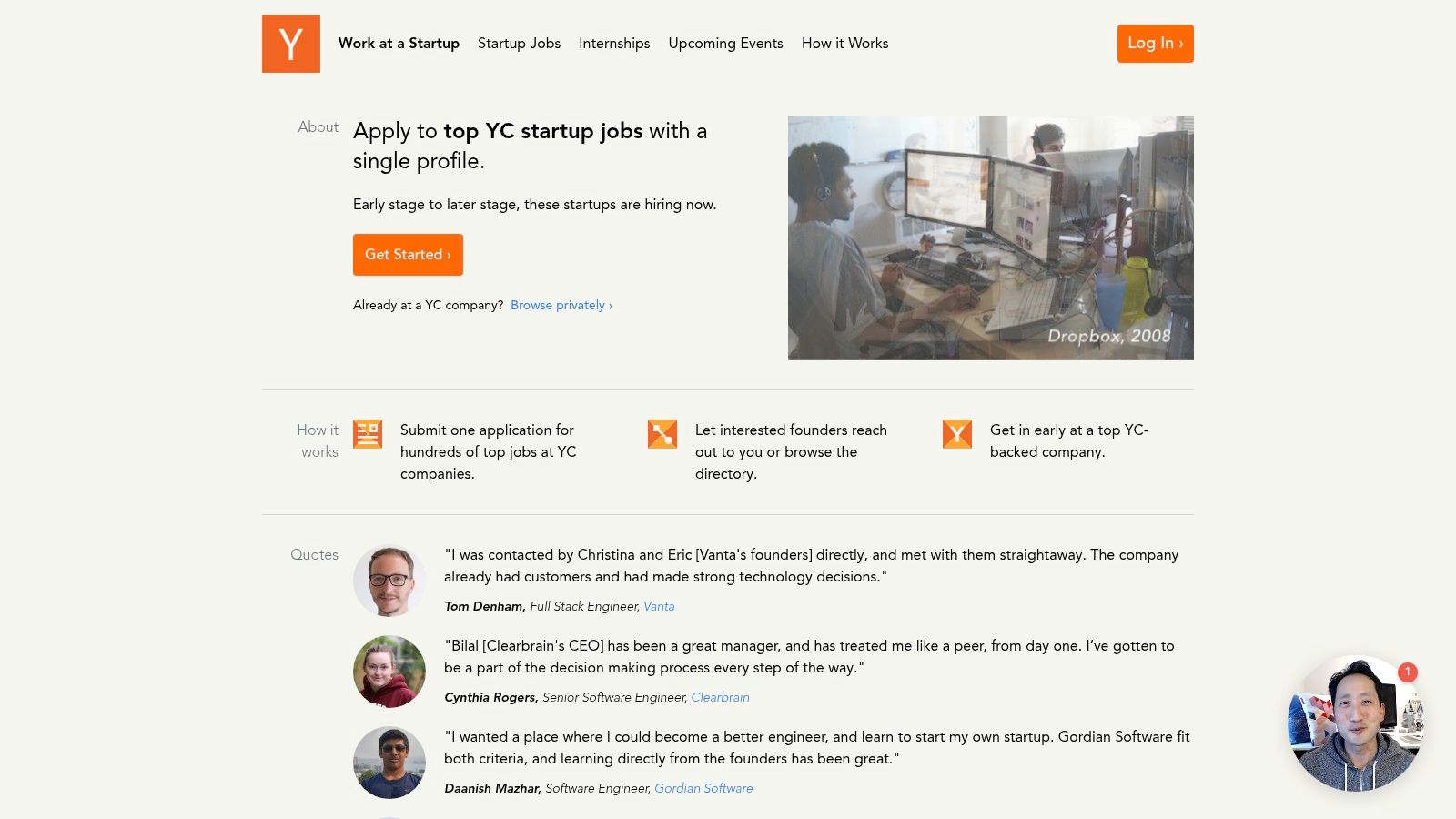
The platform’s core value lies in its efficiency and signal quality. By creating one universal profile, your application is surfaced to founders and hiring managers across the YC portfolio, from seed-stage to late-stage growth companies. The environment encourages direct outreach, removing the friction of third-party recruiters and generic HR portals. Many job descriptions are refreshingly transparent, often including salary bands and equity details upfront, which allows for a more informed and targeted job search.
Practical Tips for Work at a Startup
- Build One Strong Profile: Invest time in creating a single, detailed profile. Since this is what hundreds of founders will see, highlight your key projects, technical skills, and what kind of startup environment you’re seeking.
- Be Open to Direct Outreach: The platform’s design facilitates direct messages from founders. Be prepared for informal, fast-paced conversations and respond promptly to show genuine interest.
- Explore Company-Specific Listings: While the universal profile is powerful, don’t neglect the directory. You can browse and apply directly to specific YC companies that catch your eye, giving you more control over your search.
| Feature | Details |
|---|---|
| Primary Audience | Software Engineers (all levels), Product Managers, Designers |
| Role Types | High-signal startup roles; early-stage to growth-stage |
| Remote Coverage | Good; many roles are remote-friendly or hub-based |
| Pricing | Free for candidates |
| Application Volume | High-signal, low-noise; direct access to founders |
Visit Y Combinator – Work at a Startup
4. Dice
For engineers targeting established enterprise companies, consulting firms, or government contractors, Dice has long been a foundational tech-specific job board in the US. It carves out a niche by focusing on mid-to-senior roles in software, data science, cybersecurity, and cloud infrastructure, often at companies with more traditional corporate structures. Unlike startup-focused boards, Dice is heavily populated by third-party and in-house recruiters actively sourcing candidates for large-scale projects.
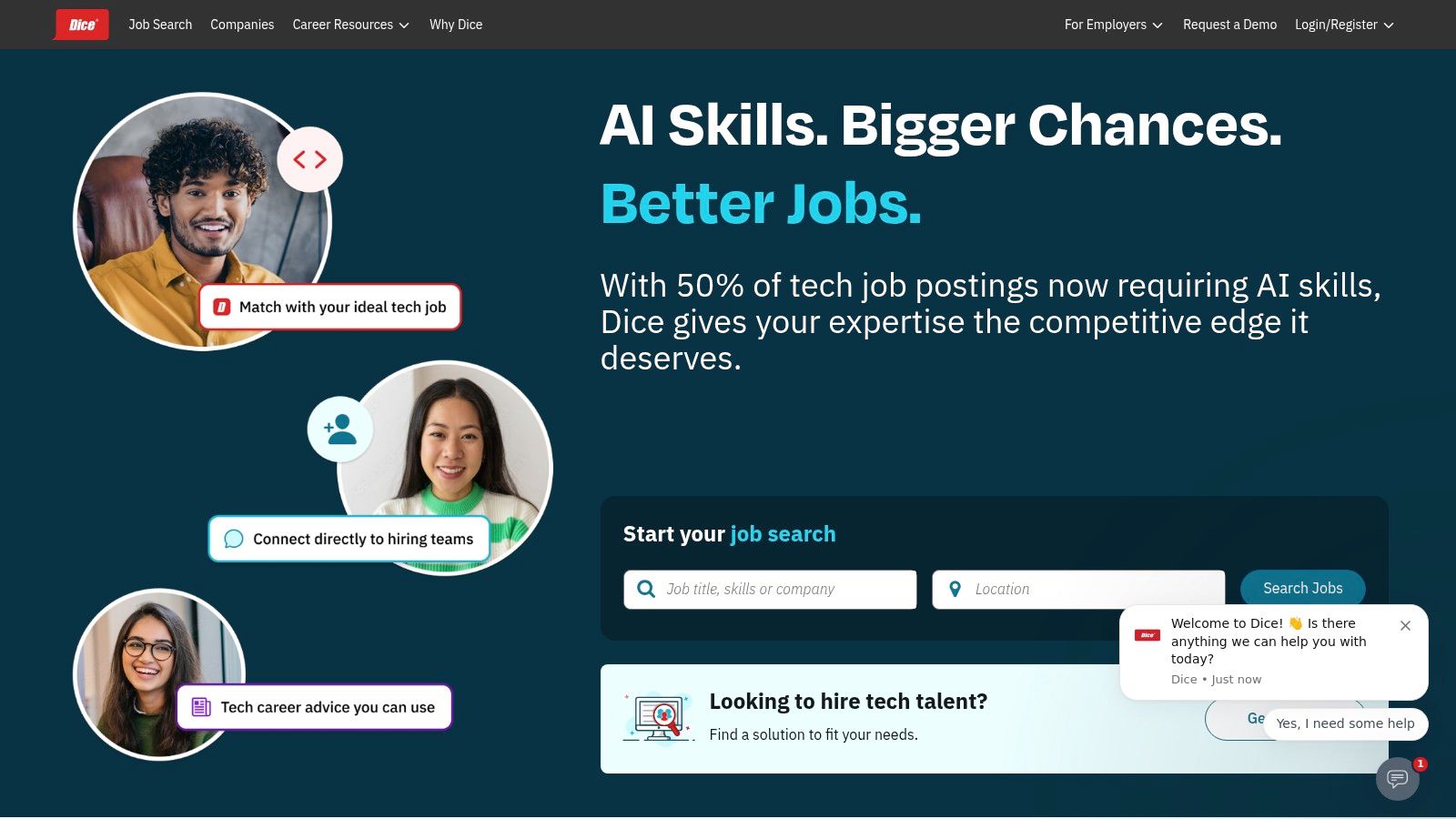
The platform’s main benefit is its deep pool of recruiter connections and its sheer volume of tech postings. Candidates can create a profile and toggle their visibility to signal they are open to new opportunities, often resulting in direct outreach from recruiters. While this can lead to a high volume of messages, the platform provides recruiter profiles and messaging tools to manage conversations. For those seeking stability at a large organization rather than equity at a startup, Dice is one of the best job sites for software engineers to find such roles.
Practical Tips for Dice
- Refine Your Profile and Alerts: To cut through the noise, be highly specific in your profile keywords and job alert settings. Use precise titles, skills, and clearance levels (if applicable) to attract relevant recruiters.
- Toggle Visibility Strategically: Set your profile to “Visible” when you are actively searching to maximize inbound messages. If you are passively looking, you can hide your profile to reduce unwanted contact.
- Vet Recruiters: Because many posts come from agencies, take a moment to look up the recruiting firm or the recruiter on LinkedIn. This helps verify that they are representing a legitimate, interesting opportunity.
| Feature | Details |
|---|---|
| Primary Audience | Mid-to-Senior Software Engineers, Security & Cloud Specialists |
| Role Types | Enterprise, consulting, and government contractor roles |
| Remote Coverage | Good; filters for remote, hybrid, and on-site within the US |
| Pricing | Free for candidates |
| Application Volume | High; significant recruiter and agency activity |
5. Built In
Built In is a unique blend of a tech job board and an editorial hub, making it an excellent resource for software engineers who value context. It focuses heavily on specific US tech hubs like Austin, SF, and NYC, alongside a comprehensive national/remote portal. This approach allows you to explore opportunities not just by role, but by the local tech scene or company culture you want to join.
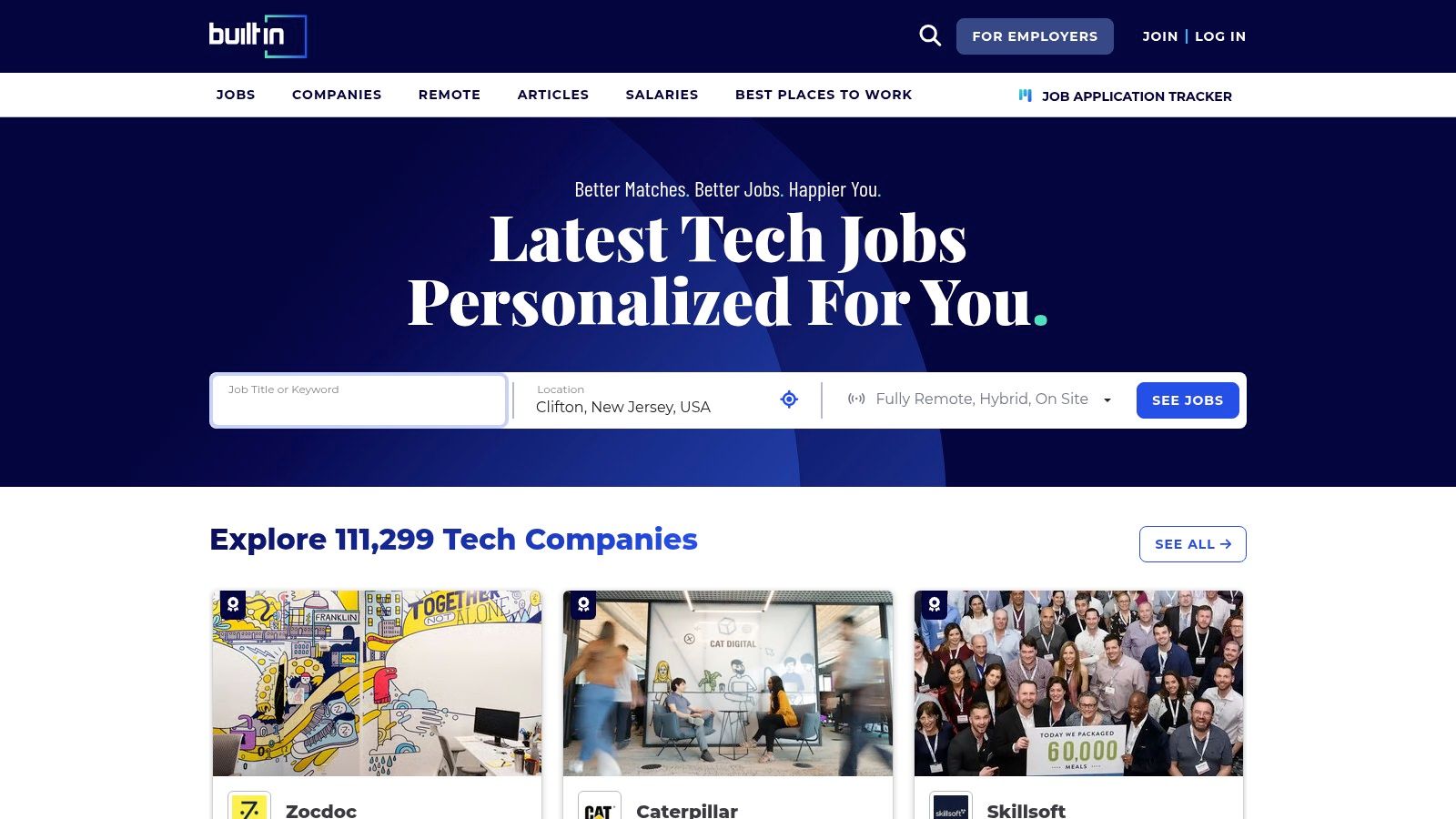
The platform’s strength lies in its rich company profiles. Before you even apply, you can get insights into a company’s culture, mission, tech stack, and employee benefits, which helps avoid a culture mismatch later on. While many listings are for startups and scale-ups, the quality is high, and the site does a good job of curating legitimate tech employers. This makes it one of the best job sites for software engineers who want to make an informed decision based on more than just a job description. The main drawback is that some applications redirect to external applicant tracking systems (ATS), adding an extra step to the process.
Practical Tips for Built In
- Explore City Hubs: If you are open to relocating or want to understand a local market, browse the dedicated city pages. They contain market salary data, featured companies, and local tech news.
- Study Company Profiles: Use the detailed company pages to vet potential employers. A company that invests in a strong Built In profile is often serious about attracting and retaining tech talent.
- Use Salary & Remote Filters: The platform includes filters for salary ranges and remote work options. Apply them early in your search to narrow down the results to roles that meet your core requirements.
| Feature | Details |
|---|---|
| Primary Audience | Junior to Senior Software Engineers, Tech Leaders |
| Role Types | Product-company roles, city-specific & remote tech jobs |
| Remote Coverage | Good; offers a dedicated remote section and filters |
| Pricing | Free for candidates |
| Application Volume | Moderate; higher quality than generalist boards |
6. We Work Remotely
As one of the original and largest remote-specific job boards, We Work Remotely is a foundational resource for any software engineer committed to a location-independent career. It has a long-standing reputation and a massive audience, meaning it attracts a high volume of listings directly from companies that have built their cultures around distributed teams. The platform is straightforward, presenting jobs in a simple, reverse-chronological list without complex algorithms.
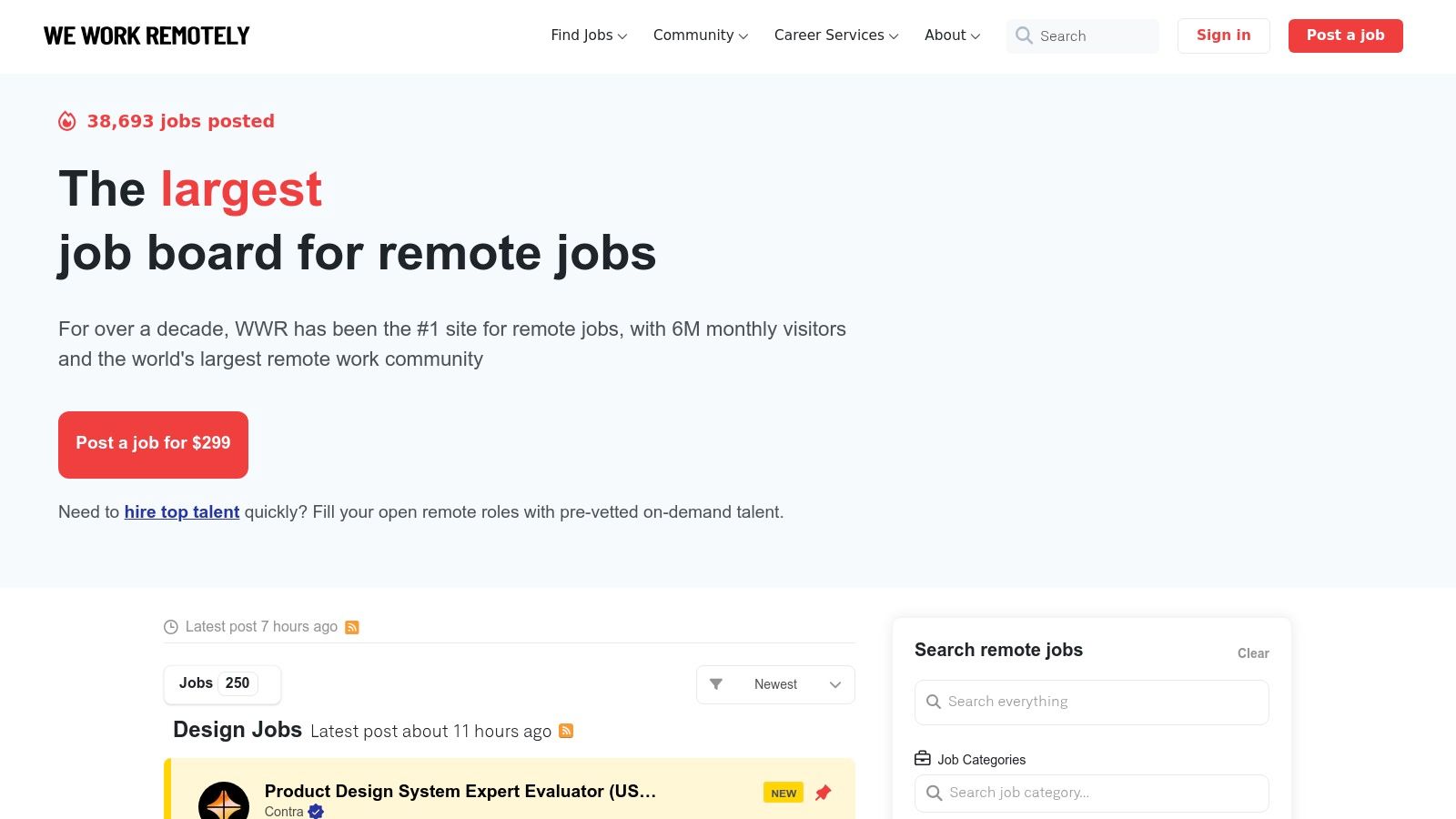
Its primary strength lies in its simplicity and focus. Categories for Programming, DevOps, and Systems Administration are heavily populated, making it easy to zero in on relevant technical roles. Unlike generalist sites where “remote” can be an afterthought, every company posting here is explicitly hiring for a remote position. This focus makes it one of the best job sites for software engineers who want to filter out the noise of hybrid or office-based roles and connect with established remote-first employers.
Practical Tips for We Work Remotely
- Subscribe to Category Feeds: Use the RSS feeds for specific categories (e.g., “Programming”) to get real-time updates in your feed reader or Slack. This gives you a speed advantage over candidates who only browse the site occasionally.
- Use Regional Filters Carefully: The “Americas” or “USA-only” filters are useful for finding roles with specific regional or time-zone requirements. However, don’t ignore the “Anywhere” listings, as many are still open to US-based candidates.
- Check Post History: Look at a company’s past job listings on the site. A history of consistent hiring for remote roles is a strong indicator of a stable, remote-friendly culture, rather than a company simply testing the waters.
| Feature | Details |
|---|---|
| Primary Audience | All levels of Software Engineers, DevOps/SRE, Product |
| Role Types | Fully remote roles, time-zone specific & global |
| Remote Coverage | Excellent; filters for region and “anywhere” |
| Pricing | Free for candidates |
| Application Volume | High; popular roles attract many applicants |
7. Remote OK
For software engineers dedicated to a remote-first career, Remote OK is a high-velocity job board that cuts straight to the chase. It has gained significant traction for its sheer volume of remote tech postings, spanning categories from frontend and backend development to emerging fields like Web3 and AI/ML. The user interface is dense but functional, prioritizing the rapid display of new opportunities over a polished aesthetic.
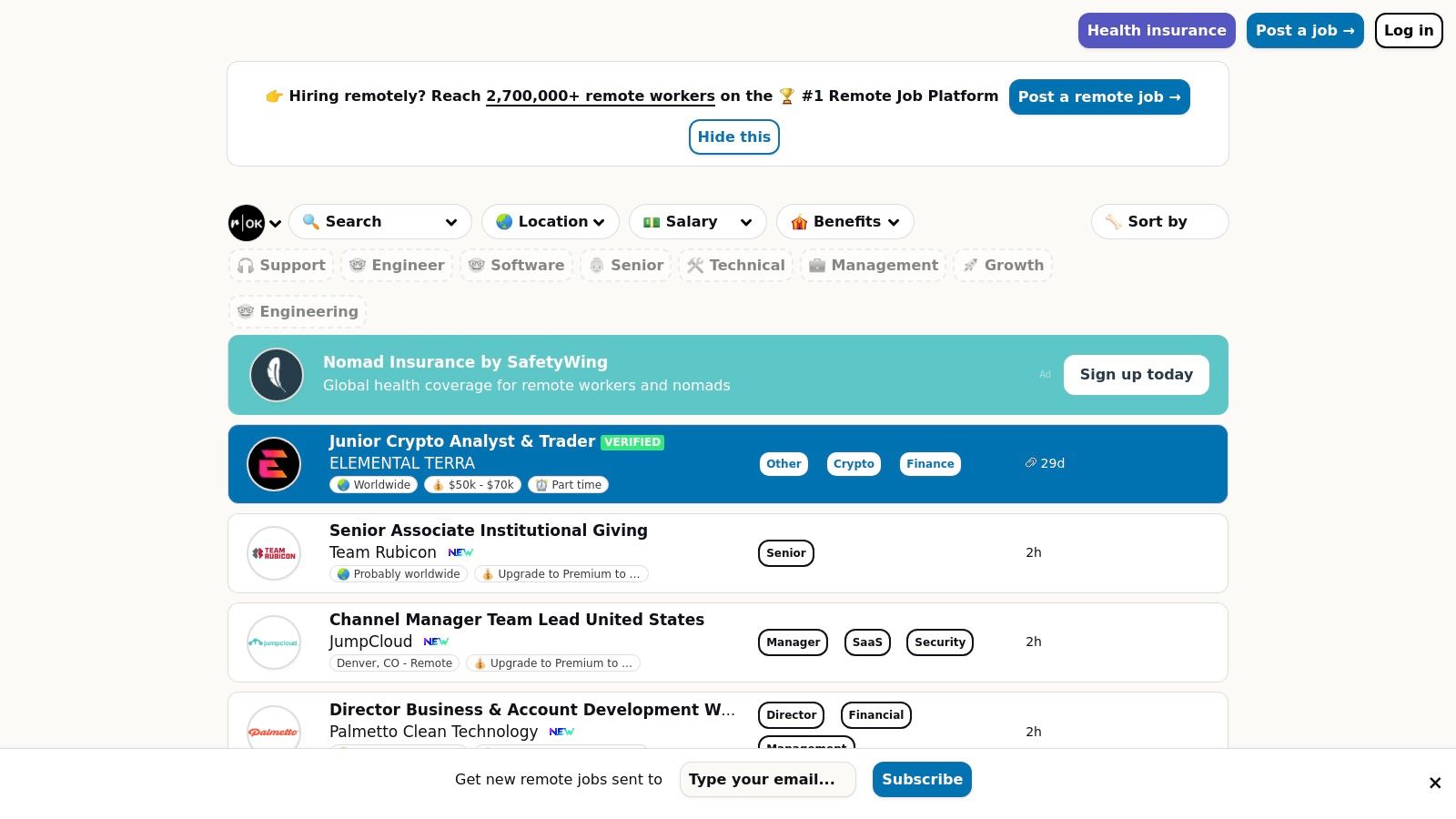
The platform’s core strength lies in its extensive and clearly tagged listings. Each job post is marked with flags like “Worldwide” or specific country restrictions, which helps filter out roles that are not truly global. While the site aggregates many positions, it provides a direct link to the company’s application tracking system (ATS), ensuring your resume goes directly to the source. This direct application model is a key reason it’s considered one of the best job sites for software engineers who prefer to bypass third-party recruiter platforms.
Practical Tips for Remote OK
- Use the Tags: Pay close attention to the visual tags on each listing. They quickly tell you if a role is worldwide, region-specific (e.g., USA Only), or requires overlap with certain time zones.
- Check Posting Dates: The feed moves quickly, so prioritize applying to jobs posted within the last week. Older listings may be stale or have already received a high number of applicants.
- Filter by Tech Stack: Use the category filters to narrow your search to specific technologies like “React,” “Python,” or “DevOps.” This is the most efficient way to find relevant roles in the high-volume feed.
| Feature | Details |
|---|---|
| Primary Audience | Junior to Senior Software Engineers, DevOps, AI/ML Specialists |
| Role Types | Fully remote roles, contract and full-time, significant Web3/crypto |
| Remote Coverage | Excellent; strong filters for “Worldwide” and country-specific roles |
| Pricing | Free for candidates |
| Application Volume | High; new jobs are posted daily across many tech stacks |
8. Arc.dev
Arc.dev positions itself as a high-signal marketplace connecting vetted remote developers with companies primarily in the US and EU. It is designed for engineers tired of the high noise and low response rates on larger platforms. By focusing on a quality-over-quantity approach, Arc.dev provides a more curated and efficient job search experience, especially for mid-level to senior talent. The platform offers a clear path for both freelance contracts and full-time permanent roles.
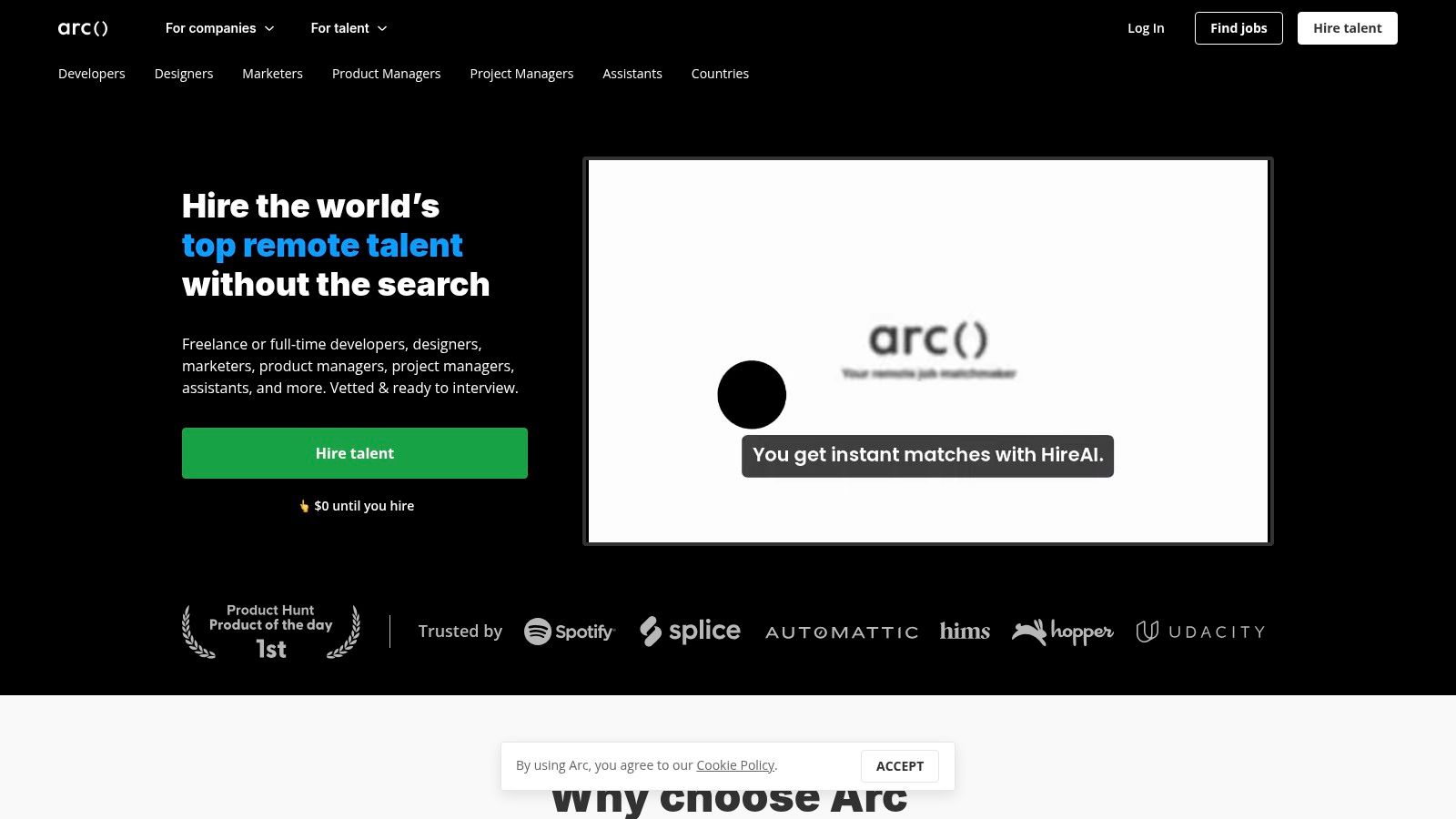
The core of Arc.dev’s model is its optional but recommended vetting process. Passing the technical and communication assessments signals a high level of expertise and English fluency to employers, which often leads to direct introductions with hiring managers. This reduces the number of applications needed to secure a role. While the process favors experienced developers, the platform’s job board is open to all, providing a valuable resource for finding quality remote opportunities.
Practical Tips for Arc.dev
- Undergo the Vetting Process: If you have 3+ years of experience, completing the vetting is the best way to stand out. Vetted developers get priority access to top-tier roles and skip much of the initial screening.
- Highlight Remote-Work Skills: On your profile, emphasize your experience with asynchronous communication, distributed teams, and self-management. Arc.dev’s clients are looking for candidates who can thrive in a remote setting.
- Be Open to Both Freelance and Full-Time: The platform supports both work types. Being flexible can open up more opportunities, as a successful contract can often convert to a permanent position. It’s one of the best job sites for software engineers who value this flexibility.
| Feature | Details |
|---|---|
| Primary Audience | Mid-Level to Senior Software Engineers, Freelance Developers |
| Role Types | Fully remote full-time & contract roles in US/EU markets |
| Remote Coverage | Excellent; focus is almost exclusively on remote positions |
| Pricing | Free for candidates |
| Application Volume | Low; vetting process creates high-signal, direct introductions |
9. Underdog.io
Underdog.io offers a refreshing “reverse marketplace” model that flips the traditional job search on its head. Instead of endlessly applying to listings, candidates submit a single, comprehensive profile. Underdog then curates these profiles and presents them in weekly batches to its network of vetted, high-growth US startups. This approach means hiring managers and founders reach out to you with interview requests, often including salary details upfront.
The platform’s main advantage is its high-signal, low-noise environment. Because candidates are selectively admitted and presented in curated cohorts, the quality remains high. This results in significantly better response rates and direct conversations with decision-makers, bypassing the typical recruiter spam common on larger job boards. A confidential mode allows you to hide your profile from current or past employers, giving you control over your search. The focus is almost exclusively on full-time roles at US-based startups.
Practical Tips for Underdog.io
- Treat Your Profile as Your Only Application: Since you only submit one profile, make it count. Highlight your most significant technical achievements, link to your GitHub or portfolio, and be clear about your career aspirations.
- Be Patient with the Batch Model: You won’t get instant feedback. Your profile is reviewed and, if selected, released in a weekly cohort. The most intense activity will happen in the days following that release.
- Know the Niche: Underdog.io excels at connecting engineers with venture-backed US startups. It’s one of the best job sites for software engineers looking for this specific ecosystem, but less ideal for enterprise roles or international opportunities.
| Feature | Details |
|---|---|
| Primary Audience | Mid-level to Senior Software Engineers |
| Role Types | Full-time roles at high-growth US startups |
| Remote Coverage | Good; strong focus on Remote (US-only) and major US tech hubs |
| Pricing | Free for candidates |
| Application Volume | Low; candidates receive inbound requests instead of applying |
10. Levels.fyi Jobs
For any software engineer focused on maximizing compensation, Levels.fyi has long been the gold standard for salary data. Its job board is a natural extension of this core mission, integrating real-world compensation information directly alongside job listings. This unique context makes it one of the best job sites for software engineers who want to ensure they are targeting roles that meet their financial expectations from the very start of their search.
The platform’s main advantage is its data-rich environment. Instead of applying blindly, you can see verified salary bands, total compensation breakdowns, and company-specific pay levels for similar roles. The listings themselves are sourced directly from company career pages, and the “Apply” button typically links straight to the employer’s applicant tracking system (ATS). This direct-to-company approach eliminates recruiter noise and gives you confidence that the role is legitimate and currently open, helping you avoid the dreaded “ghost job” problem.
Practical Tips for Levels.fyi Jobs
- Cross-Reference Compensation: Before applying, use the main Levels.fyi site to research the company’s compensation trends for your level (e.g., L4, Senior, etc.). This gives you a powerful negotiation tool.
- Filter for Your Level: The job board attracts a high volume of senior talent. Use the seniority filters to narrow down the results to roles that match your experience, whether you are a new grad or a principal engineer.
- Verify Recency: While listings are generally current, it’s a good practice to double-check the post date on the company’s own career site to ensure you’re among the first to apply.
| Feature | Details |
|---|---|
| Primary Audience | Mid-level to Principal Software Engineers, Compensation-focused job seekers |
| Role Types | Mostly engineering roles at established tech companies and high-growth startups |
| Remote Coverage | Good; filters are present but less granular than dedicated remote boards |
| Pricing | Free for candidates |
| Application Volume | High for popular companies; direct ATS link means you compete with all sources |
11. FlexJobs
For software engineers who prioritize safety, flexibility, and a scam-free job search, FlexJobs is a standout resource. It operates on a paid subscription model, but that fee funds a team of human researchers who hand-screen every single posting. This manual verification process effectively eliminates fraudulent listings, multi-level marketing schemes, and jobs with unclear or commission-only pay structures, which is a major relief for anyone tired of sifting through noise on larger, free-for-all boards.
While FlexJobs covers over 50 career categories, its “Computer & IT” section is robust, with plenty of listings for software developers and engineers. The platform’s main appeal is its powerful filtering for remote work arrangements, including 100% remote, hybrid, and flexible schedule options. This makes it one of the best job sites for software engineers seeking family-friendly roles or a better work-life balance. The subscription also provides access to skills tests, company research guides, and career coaching webinars.
Practical Tips for FlexJobs
- Verify Post Dates: While listings are vetted, some users report finding older posts. Always double-check the job on the company’s own careers page before investing time in an application.
- Use the “Flexible Work” Filters: Go beyond the “100% remote” filter. Explore options like “flexible schedule” or “alternative schedule” to find roles that accommodate non-traditional working hours.
- Take Advantage of the Resources: Your subscription includes more than just job listings. Use the company guides to research potential employers and the skills tests to bolster your profile and demonstrate your expertise to recruiters.
| Feature | Details |
|---|---|
| Primary Audience | Junior to Senior Software Engineers, professionals seeking work-life balance |
| Role Types | Heavily focused on remote, flexible, and family-friendly roles |
| Remote Coverage | Excellent; human-screened listings with specific flexibility filters |
| Pricing | Paid subscription required for full access (starts around $25/month) |
| Application Volume | Low to Moderate; the paywall acts as a natural filter |
12. Otta (now part of Welcome to the Jungle)
Otta has built a loyal following among engineers for its candidate-first approach, which prioritizes transparency and a high-quality user experience. The platform curates roles from tech companies and startups, enriching listings with details like recent funding rounds, company mission, and diversity stats. This context helps you understand a company’s culture and trajectory before you even apply, making it one of the best job sites for software engineers who value a good fit.
What makes Otta unique is its machine learning-driven matching algorithm that scores your profile against open roles, giving you a clear sense of suitability. Following its acquisition by Welcome to the Jungle, its reach across US and European markets is expanding, though users may notice some flux as the platforms integrate. The emphasis on salary transparency is a major draw; while not universal, a significant portion of listings include compensation ranges, saving engineers from wasting time on misaligned opportunities.
Practical Tips for Otta
- Trust the Matching Score: Pay close attention to your match percentage for roles. If it’s consistently low, refine your profile preferences to get more relevant suggestions and improve your visibility to recruiters using the platform.
- Use the Company Data: Don’t just look at the job description. Review the funding information, team size, and founder backgrounds provided on company pages to get a complete picture and prepare for interviews.
- Verify Recency: During the platform’s integration phase, double-check the posting date of a role. Prioritize newer listings to ensure they are still active and receiving applications.
| Feature | Details |
|---|---|
| Primary Audience | Junior to Senior Software Engineers, Data Scientists |
| Role Types | Tech and startup roles; strong in US & UK markets |
| Remote Coverage | Good; filters for remote, hybrid, and in-office |
| Pricing | Free for candidates |
| Application Volume | Low to moderate; curated feed reduces noise |
Top 12 Software Engineer Job Sites Comparison
| Platform | Core features ✨ | Quality & Speed ★ | Pricing & Value 💰 | Target audience 👥 | Why choose / USP 🏆 |
|---|---|---|---|---|---|
| Remote First Jobs 🏆 | 100% ATS-sourced; 21k+ companies; anti-MLM filters | ★★★★★ — new roles in hours; 44k+ active | 💰 Pricing not public; high signal-to-noise | Mid–senior tech/product/design/marketing; remote-first seekers | 🏆 First-mover verified leads; minimal noise & recruiter spam |
| Wellfound | Startup listings; Featured boosts; TZ & salary filters | ★★★★☆ — high recruiter responsiveness | 💰 Free for candidates; paid Featured options | Startup-minded engineers, PMs, marketers | Featured visibility; startup insights & salary calc |
| Y Combinator – Work at a Startup | One YC profile; direct founder outreach; company directory | ★★★★☆ — concentrated YC hiring cycles | 💰 Free | Early-stage startup seekers; engineers & founders-friendly | Direct founder/hiring-manager access; one-profile reach |
| Dice | Tech-only US board; recruiter profiles; job alerts | ★★★☆☆ — broad enterprise reach; higher recruiter volume | 💰 Free for candidates; employer-paid postings | Mid–senior software, cloud, security roles (US) | Strong enterprise & government contractor coverage |
| Built In | City hubs + national; company pages with culture & tech stack | ★★★★☆ — curated by city; strong editorial context | 💰 Free for seekers; employer-paid listings | Product engineers wanting city-aware or remote roles | Company culture & tech-stack context for discovery |
| We Work Remotely | Remote categories; region/time-zone filters; long community | ★★★☆☆ — steady remote listings; comp transparency varies | 💰 Free for jobseekers; employer-paid posts | Developers, DevOps, product roles with US-friendly options | Long-established remote board; category RSS feeds |
| Remote OK | Country & time-zone filters; category-heavy for devs | ★★★★☆ — high posting velocity; crypto/ML presence | 💰 Free for seekers; employer-paid posts | Developers across stacks; web3/AI/DevOps talent | High-velocity developer roles; broad tech coverage |
| Arc.dev | Vetting-driven matching; US/EU companies; FT & freelance | ★★★★☆ — high-signal matches; direct intros | 💰 Free; optional vetting for better matches | Senior remote developers (5+ yrs); English-fluent | Vetting + hiring-manager introductions; fewer apps needed |
| Underdog.io | Reverse marketplace; weekly cohorts; confidential mode | ★★★★☆ — high response & interview rates | 💰 Free for candidates; employer-paid model | US startup candidates; senior engineers & PMs | Curated cohorts; direct interview requests with salary signals |
| Levels.fyi Jobs | Jobs + integrated compensation data & company pages | ★★★★☆ — strong comp transparency for engineers | 💰 Free | Engineers focused on pay & leveling | Verified compensation context + ATS links for verification |
| FlexJobs | Human-screened remote & flexible roles; fraud resources | ★★★★☆ — manual vetting reduces scams | 💰 Paid membership required | Professionals seeking vetted flexible/remote roles | Hand-reviewed listings; strong anti-scam stance |
| Otta (Welcome to the Jungle) | Curated roles; ML matching; company context & comp ranges | ★★★★☆ — curated discovery with company insights | 💰 Free | Startup/tech candidates (US/UK/EU) | ML-driven matching + company funding/diversity context |
Build a Smarter Job Search Strategy
Navigating the modern job market requires more than just a polished resume; it demands a deliberate, multi-channel approach. The days of relying solely on massive aggregators are over, especially for software engineers tired of “ghost jobs” and endless competition. The most successful job searches are built on a portfolio of platforms, each serving a specific purpose.
This curated list of the best job sites for software engineers demonstrates that no single platform is a silver bullet. Instead, the key is to combine their strengths. A truly effective strategy involves a blend of speed, access, and data-driven insight.
Crafting Your Job Search Portfolio
Think of these platforms as different tools in your professional toolkit. You wouldn’t use a hammer to drive a screw, and you shouldn’t use a generic job board when you need direct access to a hiring manager at a fast-growing startup.
Here’s a practical way to combine the resources we’ve explored:
For Speed and Early Access: Start with a direct-sourcing platform like Remote First Jobs. Its ability to pull roles directly from company career pages gives you a critical time advantage, letting you apply before the listings are syndicated to larger, slower boards. This is your “first-mover” tool.
For Startup and Niche Opportunities: Layer in curated networks like Wellfound (formerly AngelList) and Y Combinator’s Work at a Startup. These platforms provide direct lines into the startup ecosystem, connecting you with innovative companies that are actively and urgently hiring.
For Compensation and Company Insight: Use data-rich sites like Levels.fyi Jobs and Otta to validate opportunities and benchmark compensation. These tools help you understand a company’s culture, salary bands, and interview process, ensuring you only spend time on roles that meet your specific career and financial goals.
For Specialized Roles: If you have specific needs, like contract work or a focus on a particular city’s tech scene, supplement your search with specialized boards like Arc.dev for remote contractors or Built In for local tech hubs.
Putting Your Strategy Into Action
The core takeaway is to shift from a passive, high-volume application strategy to an active, high-signal one. Stop wasting energy on applications that go into a black hole. Instead, focus your efforts where they count most. By selecting the right combination of these job sites, you move from being one applicant among thousands to a well-informed candidate who connects with the right people at the right time.
The most effective job seekers are intentional. They understand that finding a great role isn’t about luck; it’s about using the right tools to create opportunities. Your next great software engineering role is out there, and with a smarter strategy, you are now equipped to find it efficiently and on your own terms.
Ready to apply to fresh, verified job postings before anyone else? Remote First Jobs scans thousands of company career pages in real time, giving you a direct link to the source so you can be one of the first to apply. Ditch the stale listings and recruiter spam by starting your search at Remote First Jobs.