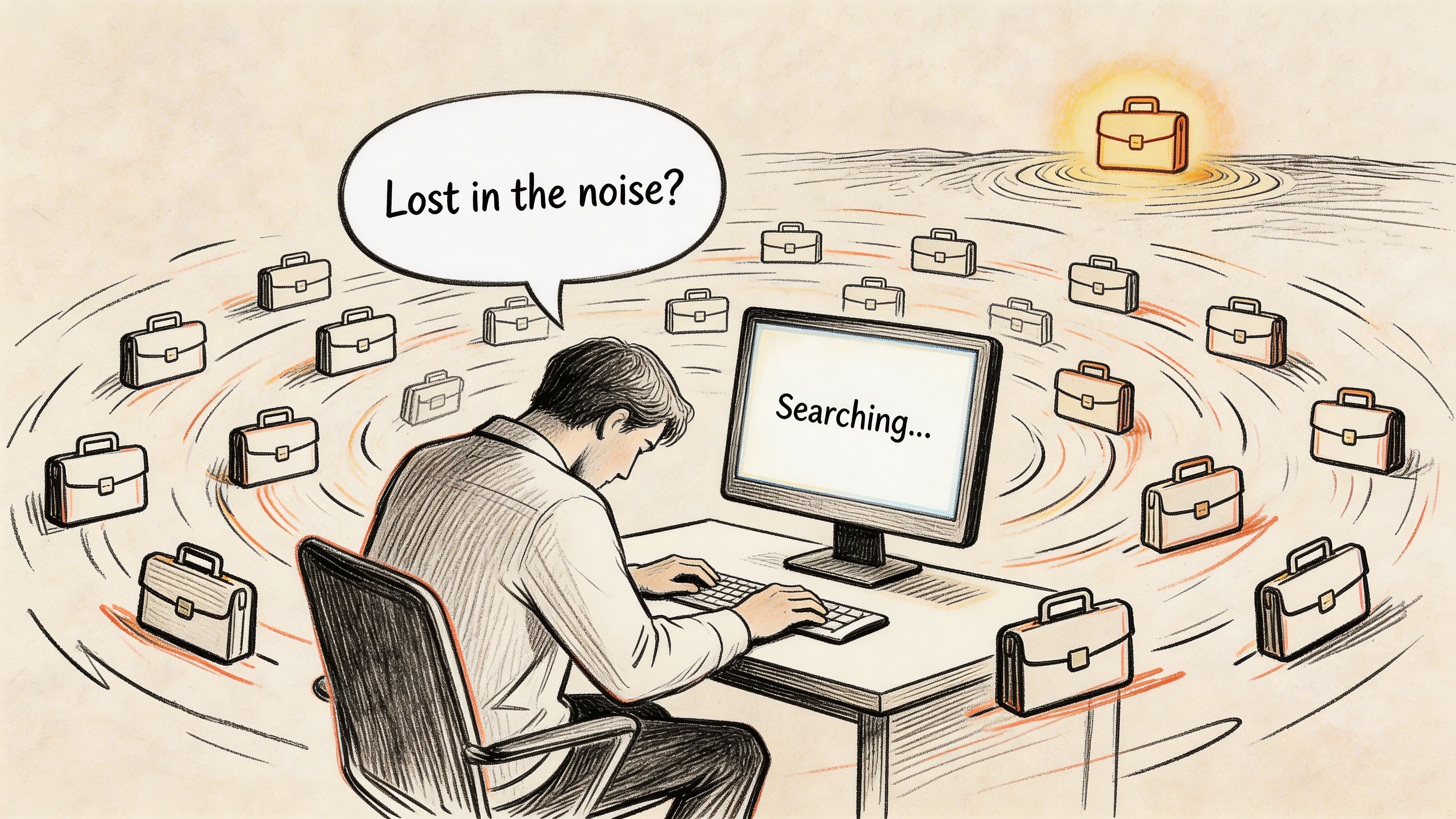
You open a role on LinkedIn. It looks perfect. Remote. Strong stack. Decent product. Then you see the applicant count and your motivation drops.
That experience is common in remote full stack developer jobs now. The problem is not that good roles disappeared. The problem is that most candidates are shopping in the noisiest place possible, after the role has already been pushed through every algorithm, reposted by aggregators, and buried under a flood of low-fit applications.
The developers who still land strong remote roles consistently do a few things differently. They move earlier. They search closer to the source. They package their experience around remote execution, not just coding ability. And they treat the search like an engineering system with inputs, feedback loops, and iteration.
The New Rules for Landing Remote Full Stack Jobs
If your current job search feels slower and more frustrating than it should, the market data explains why.
According to the Stack Overflow Developer Survey 2025 coverage, the share of full-time software developers in the USA working fully remotely fell to 32.4% in 2025, down from 38% in 2024. In the same source, average US full stack developer salaries rose 6.15% to $138,000.
That combination matters. Fewer fully remote seats. Strong pay for people who win them. More pressure on every serious opening.
Why the old playbook stopped working
The old approach was volume. Refresh five big platforms, fire off applications, tweak a resume once, and hope one recruiter replies.
That worked better when remote hiring was less crowded. It works badly now.
A modern search for remote full stack developer jobs has a different constraint. Visibility is scarce. Your application is not competing only on quality. It is competing on timing, relevance, and whether a human ever sees it before the queue gets flooded.
Three rules matter more now:
- Apply early, not widely. A good application sent late often loses to a solid application sent early.
- Target direct employers. Third-party reposts create delay, duplication, and noise.
- Show distributed-team readiness. Hiring managers want proof that you can ship code without hand-holding across Slack, GitHub, Jira, and async review cycles.
What strong candidates do instead
The strongest candidates stop acting like shoppers on a public marketplace. They act like operators.
They keep a short list of target companies. They monitor fresh postings. They tailor each resume to the role family. They prepare portfolio examples that show backend, frontend, deployment, and collaboration decisions, not just pretty UI screenshots.
Tip: In remote hiring, being slightly early with a role-specific application usually beats being slightly better with a generic one.
If you need a practical overview of search channels, filters, and outreach basics, this guide on How To Find Remote Jobs is a useful companion. Use it as a base layer, then get much stricter about where listings originate.
Why Your LinkedIn Search Is Failing You
LinkedIn is useful for networking. It is weak as a primary discovery engine for serious remote full stack developer jobs.
The issue is not one bad feature. It is the structure of the platform itself. By the time a role trends there, your application joins a pile that includes qualified engineers, low-fit applicants, agency submissions, and automation spam.
The applicant firehose problem
Large job boards reward exposure, not precision.
A hiring team may want one backend-leaning full stack engineer who knows React, PostgreSQL, API design, and async team habits. The platform surfaces that role to a much wider audience. People apply because it says “remote,” not because they match the problem the team is hiring to solve.
That creates a screening bottleneck. Even excellent candidates can disappear in it.
A few patterns show up again and again:
- Reposted listings that circulate long after the initial posting wave.
- Recruiter duplicates for the same opening, often with slightly different titles.
- Broad-match search results that pull in adjacent jobs with weak fit.
- Easy Apply behavior that encourages speed without relevance.
Ghost jobs are not always fake, but they are still costly
Some listings are not scams. They are stale.
A team may have paused hiring, filled the role internally, or left the listing up while headcount approval drifts. From the candidate side, the effect is the same. You spend time on a role that no one is actively moving.
That wasted effort adds up. It also distorts your feedback loop because silence feels like rejection when the issue is that the role was never live in practice.
LinkedIn is better for follow-up than discovery
There is still one useful lane for LinkedIn. Use it after you identify a real opening elsewhere.
Find the engineering manager. Check whether the company has a distributed culture. See how team members talk about shipping, code reviews, and product ownership. That research is far more valuable than scrolling generic search results for hours.
If you are building a stronger professional signal while job hunting, this piece on how to grow your LinkedIn followers is worth reading. A credible profile can support outreach. It just should not be the center of your search strategy.
Key takeaway: LinkedIn works best as a relationship layer. It works poorly as your main feed for high-quality remote roles.
Unlocking the Direct-Sourcing Advantage
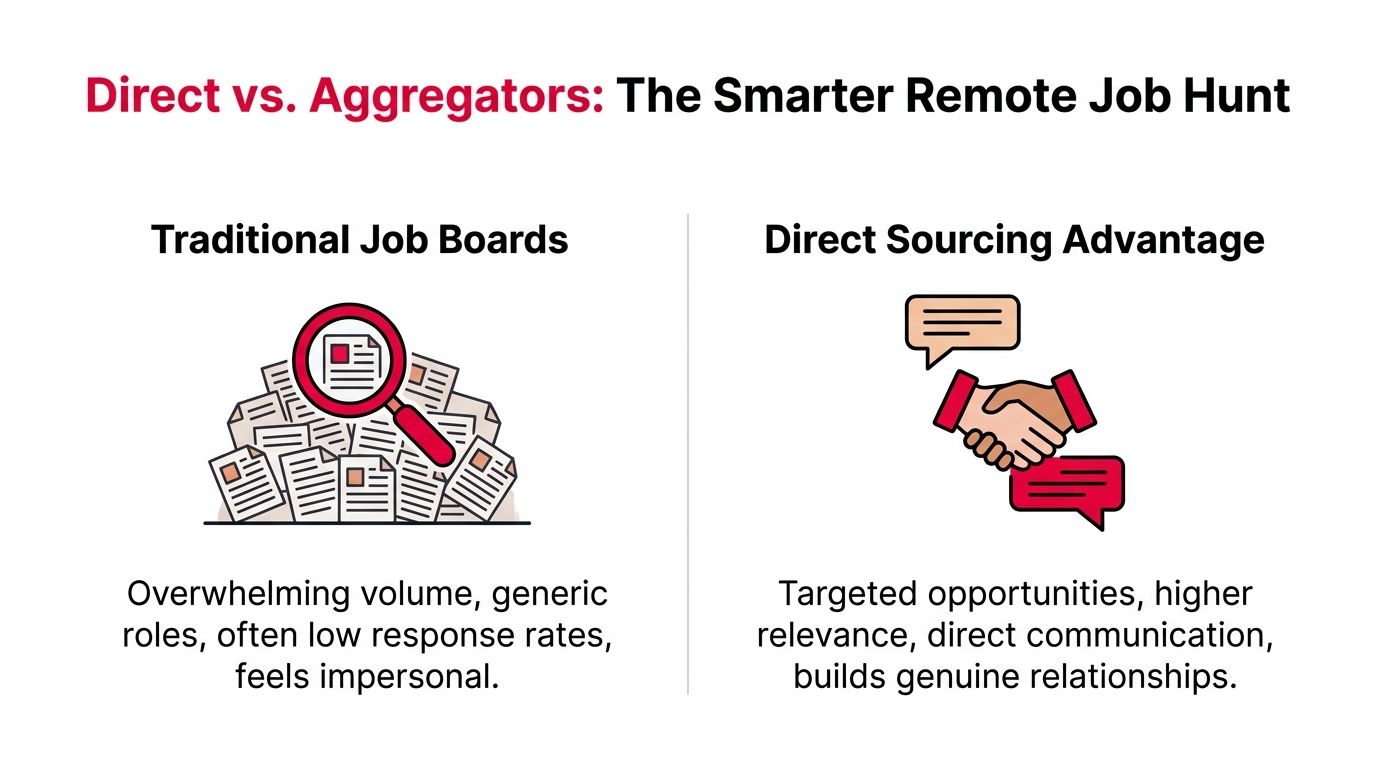
Traditional job boards feel like a crowded public market. Everyone enters through the same door, sees the same stalls, and shouts over each other.
Direct sourcing works differently. It is closer to checking a company’s hiring desk before the crowd shows up.
That distinction matters because many of the best remote full stack developer jobs are most useful at the moment they first appear, not after they have been syndicated everywhere.
What direct sourcing changes
A direct-sourced listing comes from the employer’s own ATS or career page.
That gives you several practical advantages:
| Search method | What usually happens |
|---|---|
| Big aggregator | You see the job after reposts, duplicates, and mass exposure |
| Direct-sourced listing | You see the role closer to the company’s original post |
| Agency-heavy board | You spend time sorting who owns the role |
| Direct employer source | You know where the application is going |
This changes the quality of your pipeline in two ways.
First, you waste less time on junk. Ghost listings, third-party spam, and dead-end recruiter loops become easier to avoid.
Second, you gain a first-mover advantage. Early applicants often get reviewed while the hiring team is still attentive and the queue is still manageable.
Why niche markets matter more than most candidates realize
The best candidates do not search only for familiar US logos. They look for hiring velocity in places other people ignore.
A good example appears in this write-up about niche non-US remote hiring through directly sourced company pages, including an opportunity tied to a Canadian ridesharing company expanding in underserved markets: directly sourced global remote roles from company career pages. The useful point is not the brand name. It is that global, lower-noise openings often get buried when your search is too dependent on US-centric platforms.
How to use this in practice
Do not replace one feed addiction with another. Build a tighter system.
Use a shortlist of target companies and role patterns such as:
Backend-heavy full stack Strong for candidates with API design, data modeling, queueing, auth, and cloud deployment experience.
Product-focused TypeScript full stack Good fit if you can move across React, Node.js, schema design, and feature delivery with design collaboration.
Global distributed teams Often better for candidates comfortable with async communication, documented decisions, and timezone discipline.
Tip: A smaller list of fresher, directly sourced roles will outperform a larger list of stale public listings almost every time.
The goal is not more applications. It is more applications that reach active hiring teams before the role turns into a public feeding frenzy.
Refining Your Full Stack Developer Toolkit
Once you are seeing better roles, your materials need to match the standard those teams expect.
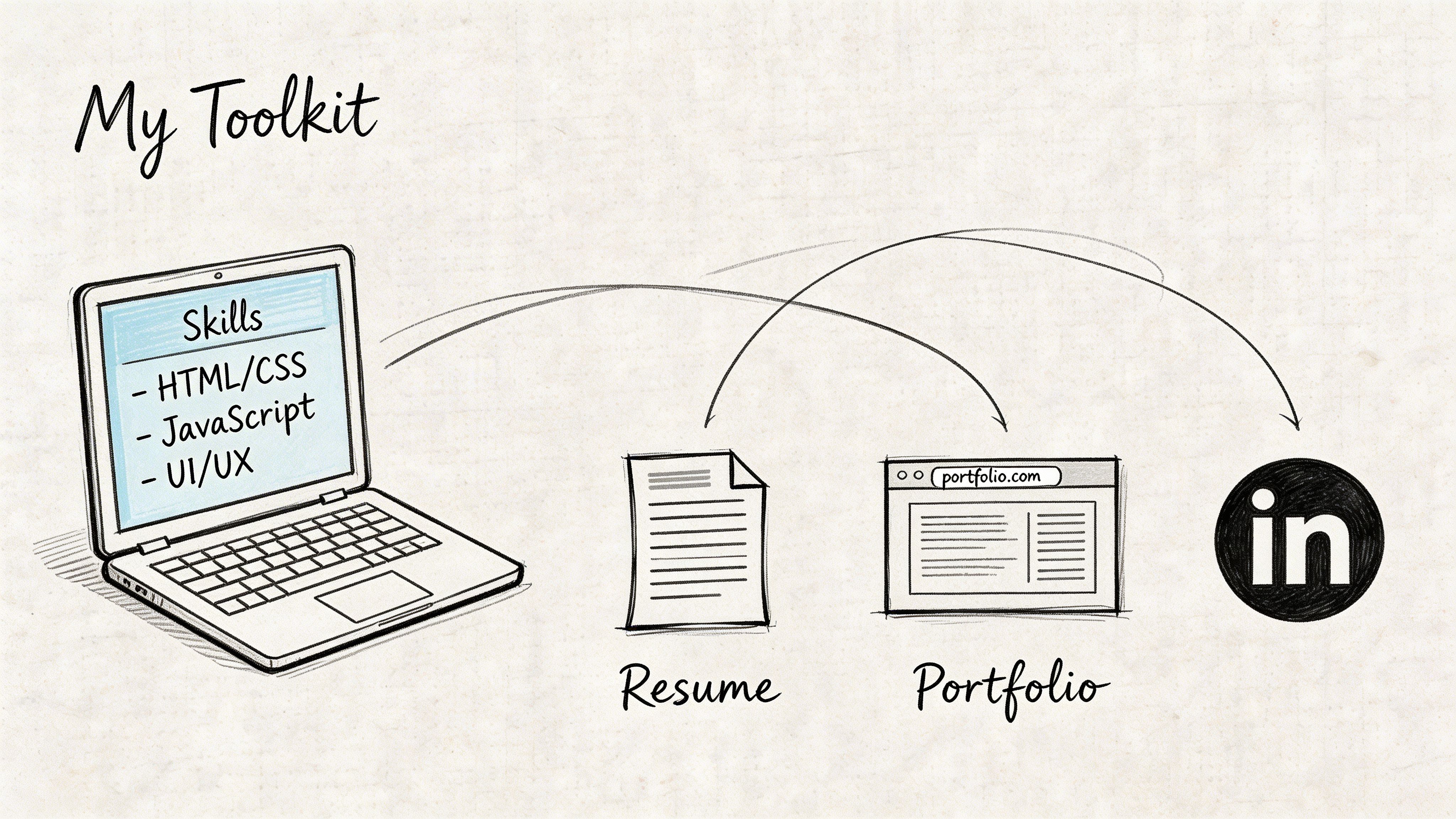
Many developers still present themselves as a generic mix of frontend and backend keywords. That is not enough. Remote hiring teams want proof that you can own slices of product and operate cleanly inside a distributed engineering process.
According to remote full stack job requirements collected from Turing listings, a common requirement is 3+ years of experience with ecosystems such as Java/Spring Boot, PostgreSQL, and Apache Kafka. That stack shows up because remote-first companies need developers who can build and maintain scalable asynchronous systems, not just wire up CRUD screens.
What your resume should emphasize
A strong resume for remote full stack developer jobs should answer four hiring questions fast:
- Can this person ship across the stack?
- Can this person work well without constant meetings?
- Can this person maintain quality in a shared codebase?
- Can this person explain impact clearly?
That means your bullet points should sound like engineering work, not task lists.
Weak:
- Worked on backend services
- Helped build frontend features
- Participated in Agile ceremonies
Stronger:
- Built Spring Boot services for order workflows, designed PostgreSQL schemas, and added API observability for production debugging
- Implemented React features tied to backend contracts, handled edge states, and coordinated rollout with QA and product
- Owned pull request reviews, incident follow-up, and Jira breakdown for a cross-functional sprint
Build a portfolio around ownership
Many portfolios fail because they show too little backend depth or too little product context.
A useful portfolio project for remote hiring should include:
A real frontend React, Next.js, or another interface with authentication, state handling, and clear user flows.
A backend with structure Routes, validation, data access, background jobs, and sensible error handling.
Data layer choices PostgreSQL or MySQL with an explanation of schema decisions.
Collaboration artifacts A README, issue log, architecture notes, and sample pull requests if possible.
Add the remote-work signals recruiters scan for
You do not need to force “remote” into every line, but you should show the habits that make remote teams trust you.
A short table helps frame what to include:
| Resume area | Better signal |
|---|---|
| Tools | GitHub, Jira, Slack, Linear, Notion, Postman |
| Delivery | Async updates, code review ownership, documentation |
| Architecture | APIs, queues, caching, auth, observability |
| Product work | Feature specs, bug triage, user-facing trade-offs |
Tip: Hiring managers remember candidates who explain trade-offs. They forget candidates who only list frameworks.
If your experience is proprietary, create one polished public project that mirrors the shape of your real work. Show request flow, database design, retries, and deployment decisions. That tells a better story than ten unfinished side projects.
Executing a High-Impact Application Strategy
Good materials only matter if they arrive at the right time and in the right form.
The software job market remains large. The challenge is execution speed. The job market overview citing US Bureau of Labor Statistics projections notes a 17% increase for software development roles from 2023 to 2033, adding around 327,900 new jobs, with job postings also up 30% year-over-year. In a growing field like that, a slow application process still loses because competition concentrates around visible roles.
The first 48 hours matter most
When a strong remote role appears, act quickly.
Do not spend half a day polishing a perfect application for a role that will receive a huge wave of attention. Use a prepared system so you can customize fast without sounding generic.
A practical process looks like this:
Save the role immediately Copy the job URL, title, company, and date into a tracker.
Match your resume to the stack If the role emphasizes Spring Boot and PostgreSQL, move those items higher than less relevant skills.
Write a short custom note Mention one product, architecture, or domain detail that proves you read the listing.
Submit, then verify Make sure the application went through the company’s ATS flow.
Track your search like a pipeline
A simple spreadsheet is enough if you maintain it.
Use columns for:
| Company | Role | Applied date | Source | Contact | Follow-up date | Status |
|---|
This is boring. It also works.
Without a tracker, most candidates repeat the same mistakes. They forget where they applied, miss follow-ups, and cannot tell which role types are producing interviews.
Follow up without sounding needy
After applying, a short outreach message can help if it is targeted.
Good message: “Hi, I applied for the Full Stack Developer role. My background is strongest in backend-heavy product work across APIs, relational databases, and React-based frontends. I was especially interested in your team’s focus on developer tooling and reliability. Happy to share relevant project examples if useful.”
Bad message: “Just following up on my application!!! Please review!!!”
For a cleaner stream of fresh remote roles, keep a dedicated source in your search stack and check https://remotefirstjobs.com/ alongside your target company list. The benefit is speed and cleaner listings, which matters more than sheer volume.
Mastering Remote Interviews and Negotiations
Remote interviews reward clarity over charisma.
A candidate who explains trade-offs well, shares context cleanly, and stays steady over video will usually outperform someone who has good raw skills but communicates in a scattered way.

Prepare for the format, not just the questions
Remote interviews expose different weaknesses than onsite loops.
Common failure points include poor audio, rambling architecture answers, and weak screen-sharing habits. If you cannot present code, diagrams, or debugging logic smoothly on Zoom or Google Meet, the interview feels harder than it should.
Before the call:
- Test your setup with the exact camera, mic, IDE, and browser tabs you plan to use.
- Clean your desktop so screen sharing does not become distracting.
- Keep examples ready from frontend, backend, database, and team collaboration work.
- Practice concise answers that move from problem, to approach, to trade-off, to result.
Talk about modern stack choices like an operator
In newer remote full stack roles, you may be asked about TypeScript-heavy stacks, AI coding workflows, and how you keep quality high while moving fast.
According to Indeed remote full stack role trends summarized here, emerging roles increasingly ask for experience with TypeScript-integrated stacks such as Node.js and React, plus LLM agents. The same source notes that TypeScript’s static typing can reduce runtime errors by 15% to 20%, and that discussing how LLMs speed prototyping can differentiate you in interviews.
Use that material carefully. Do not speak in hype.
A better answer sounds like this:
- You use TypeScript to harden contracts across frontend and backend boundaries.
- You use LLM tools for scaffolding, tests, refactors, or documentation drafts.
- You still verify logic, edge cases, and security-critical paths manually.
That framing shows judgment.
A practical walkthrough helps here:
Negotiate the remote package, not just base salary
Compensation in remote roles is broader than salary.
Ask about:
- Time zone expectations
- Async work norms
- On-call load
- Equipment support
- Travel requirements for offsites
- How performance is measured
Tip: If a company is vague about remote expectations during negotiation, that vagueness usually becomes your problem after you join.
The best negotiation posture is calm and specific. Tie your request to scope, technical depth, and the kind of ownership you can take across the stack. Companies pay more comfortably when they can picture exactly where you remove risk for the team.
Spotting and Dodging Common Job Search Traps
A lot of job search frustration comes from staying in bad funnels too long.
When a role is weak, vague, or badly run, the goal is not to rescue it. The goal is to detect that quickly and move on.
Red flags worth acting on
Vague stack, vague mission If the description says “full stack developer needed” but gives no architecture, product context, or ownership boundaries, assume the team has not defined the role well. Ask clarifying questions early.
Remote in title, office-first in practice Some companies advertise remote and then reveal location limits, office days, or narrow time-zone demands deep in the process. Treat that as a screening issue, not a surprise to accommodate.
Disorganized interview flow Late interviewers, changing requirements, repeated questions, and missing context usually indicate weak internal alignment. That often carries into onboarding and delivery.
No direct employer path If you cannot tell who owns the role, where the application goes, or whether the recruiter is exclusive, slow down. The more layers between you and the team, the harder it is to get clean feedback.
A simple filter before you apply
Run each role through this checklist:
| Check | What to look for |
|---|---|
| Role clarity | Specific stack, product area, and ownership |
| Remote reality | Time-zone rules, async habits, meeting load |
| Process quality | Clear stages, prompt replies, respectful scheduling |
| Team signal | Engineers who explain the work clearly |
| Application path | Direct company application preferred |
What to do when you spot a trap
Do not argue with the listing.
Either ask one sharp question, or drop it.
Examples:
- “Is this role fully remote, or remote within a specific region?”
- “Which part of the stack would this hire own in the first six months?”
- “Will the application be reviewed directly by the hiring team?”
If those answers come back fuzzy, that is your answer.
The strongest candidates conserve energy. They do not let a weak process drain hours that could go into better opportunities.
Frequently Asked Questions About Remote Development Careers
What is the difference between fully distributed and remote-friendly
A fully distributed company builds its operating model around people working from different locations by default.
That usually means documentation matters, decisions are written down, meetings are more intentional, and people do not get penalized for missing hallway conversations that do not exist.
A remote-friendly company often started office-first and added flexibility later. That can still be a good environment, but you need to check whether promotions, visibility, and decision-making still cluster around one office.
Ask directly how engineering decisions are documented and how teams handle cross-time-zone collaboration. The answer will tell you more than the label.
Should I apply to roles outside my exact time zone
Yes, if the overlap expectations are realistic and clearly stated.
Some teams need a shared work window for pair programming, incident response, or product coordination. Others work mostly async and only need a few overlapping hours. The risk is not time-zone difference by itself. The risk is ambiguity.
If a company is global, ask which meetings are fixed, how handoffs work, and whether on-call follows local hours or a wider rotation.
How do I handle applications that ask for location
Be accurate and simple.
List your actual location and, if useful, your work authorization or willingness to work within specific time windows. Do not play games with geography. If a role has regional payroll, tax, or compliance constraints, that will surface eventually.
The stronger move is to reduce uncertainty:
- State your city and country
- Mention overlap availability if relevant
- Clarify authorization when it helps
What if most of my best work is hidden behind NDAs
That is normal in senior engineering careers.
You do not need to reveal proprietary code. You need to show how you think and what kind of systems you can own.
Use sanitized examples:
- Describe the problem shape
- Explain the architecture choice
- Share the constraints
- Discuss trade-offs and what changed after launch
Then back it up with one public project that demonstrates code quality and system design.
How many technologies should I highlight on my resume
Fewer than you think.
A long skill dump makes you look unfocused. Prioritize the technologies that match the role and the systems you have used in production.
For most remote full stack developer jobs, a focused presentation wins:
- Primary backend stack
- Primary frontend stack
- Database experience
- Cloud or deployment environment
- Testing and collaboration tools
That is usually enough to start a serious conversation.
Is it worth applying if I meet most, but not all, requirements
Usually yes, if the gaps are not in the core of the role.
If the job centers on React, Node.js, PostgreSQL, and API design, and you have strong experience in three of those with adjacent experience in the fourth, apply. If the role depends heavily on a domain you have never touched and the posting makes that central, move on.
The useful question is not “Do I match every bullet?” It is “Can I do the work with minimal ramp time?”
How should I present AI tool usage in interviews
Be concrete and disciplined.
Say where AI helps you. Examples include drafting tests, generating repetitive scaffolding, summarizing docs, or speeding up exploration of unfamiliar libraries. Then explain where you do not trust it blindly, such as auth logic, data migrations, edge-case handling, and production incident work.
That balance matters. Hiring teams want developers who can use modern tools without outsourcing judgment.
What makes a remote full stack candidate stand out fastest
Clear evidence of ownership.
Not just framework knowledge. Not just years of experience. Ownership.
That includes:
- Shipping across frontend and backend
- Making sensible trade-offs
- Writing readable PRs and docs
- Handling async collaboration without chaos
- Speaking clearly about product impact
Those signals travel well in resumes, interviews, and reference checks. They also map closely to how remote teams operate.
If you are tired of stale listings, recruiter clutter, and applying after the crowd arrives, Remote First Jobs is worth adding to your search stack. It focuses on directly sourced remote roles from company career pages, which gives you a cleaner pipeline and a better shot at seeing strong opportunities before they spread across the major platforms.