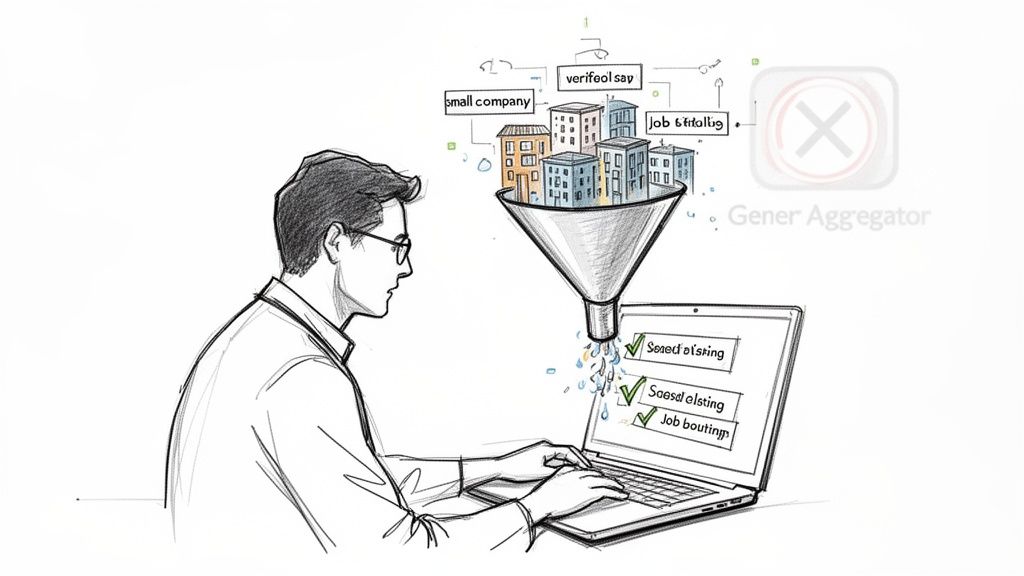
If you want to find a great remote job, your strategy needs to evolve beyond the crowded, generic job boards. The real secret is to stop mass-applying and start searching smarter. This means using platforms that pull jobs directly from company career pages, giving you a massive head start on high-quality, verified roles before they get flooded with applicants.
Your Modern Blueprint for Finding a Remote Job
Let’s be real: the world of work has completely shifted. Remote jobs now make up more than 15% of all job opportunities in the U.S. That’s a huge jump from just 4% before 2020.
Simply put, there are three times as many remote roles available now as there were just a few years ago, and this trend isn’t slowing down. If you’re curious about the data, check out these remote work statistics to see the explosive growth for yourself.
But this boom created a new problem: intense competition. Relying on the old method of endlessly scrolling through huge job aggregators is a fast track to burnout. You’re fighting against thousands of others for roles that might not even be real—the infamous “ghost jobs.”
This guide lays out a different approach. It’s a modern, strategic plan to cut through that noise and give you an insider’s edge.
The Shift from Volume to Value
The old-school job search was a numbers game. You’d fire off hundreds of generic applications, crossing your fingers that something, anything, would stick. The modern strategy is all about precision. It’s quality over quantity.
Instead of the “spray and pray” method, you’ll learn to focus your energy where it actually counts.
The secret to landing a great remote job isn’t applying everywhere; it’s being the perfect applicant somewhere. That starts with finding the right opportunities before everyone else does.
This is what the new approach looks like in practice:
- Targeting Specialized Job Boards: I’ll show you why platforms that scrape jobs directly from company career sites are your new best friend. This is how you find fresh, verified listings with a fraction of the competition.
- Building a Remote-Ready Brand: Your resume, LinkedIn, and portfolio need to scream “I thrive in a remote environment.” This means highlighting your autonomy, communication skills, and experience with the tools that distributed teams rely on.
- Executing with Precision: Every step, from tailoring your resume for a specific role to acing a remote interview, needs to be intentional and impactful.
Let’s put the old way to rest and embrace a strategy that actually works in today’s remote job market.
The table below breaks down the key differences between the traditional grind and the modern, targeted approach we’ll be covering.
| Approach | Traditional Method (The LinkedIn Grind) | Modern Strategy (The Insider’s Edge) |
|---|---|---|
| Source | Massive job aggregators (LinkedIn, Indeed) | Niche boards that source directly from company career pages |
| Competition | Extremely high (hundreds or thousands of applicants) | Significantly lower, as you find jobs early |
| Application | One-size-fits-all resume, generic cover letters | Highly tailored resume and cover letter for each role |
| Mindset | “I need a job.” (Volume-based) | “I need the right job.” (Value-based) |
| Outcome | Low response rate, burnout, ghost jobs | Higher response rate, better-fit opportunities |
This guide is your blueprint for making that shift. You’ll go from being just another resume in a massive pile to a standout candidate who knows exactly where to look and how to get noticed by top remote-first companies. Let’s get started.
Build Your Remote-Ready Application Toolkit
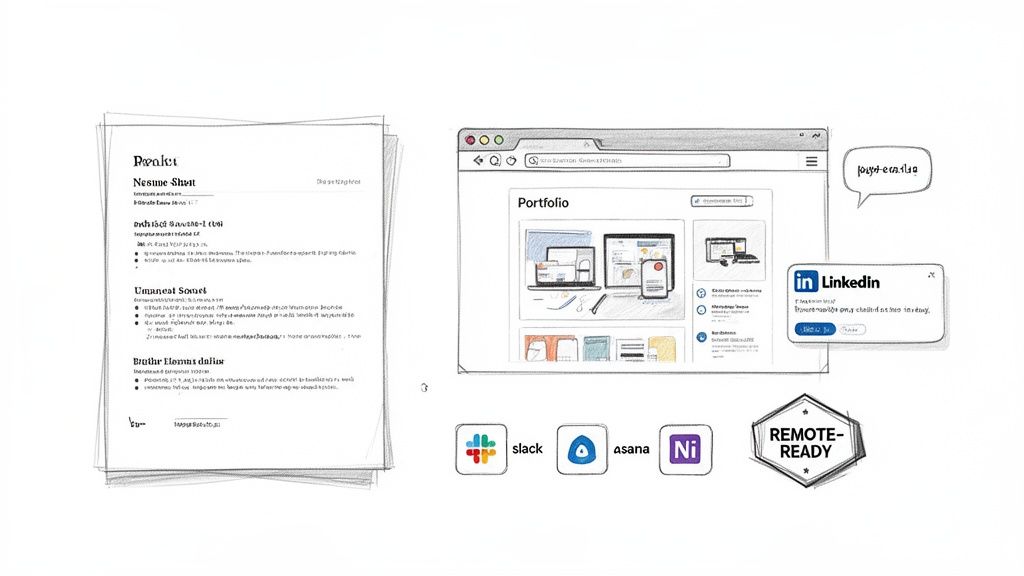
Before you even think about applying for a remote job, you need to get your gear in order. This goes way beyond just dusting off an old resume. It’s about building a complete application package that screams “I’m built for remote work” to companies that know what they’re looking for.
Remote employers aren’t just scanning for keywords; they’re hunting for proof that you can deliver incredible work without someone looking over your shoulder.
Your mission is to create a seamless story across all your professional platforms. This story should highlight your ability to work independently, communicate clearly, and get things done. It means showing you’re comfortable with the tools of the trade—think Slack for comms, Asana for projects, and Notion for keeping everything organized.
Crafting a Resume That Highlights Remote Competence
A resume for a remote role needs to do more than just list your old job duties. It has to sell your ability to work on your own by showcasing real, quantifiable achievements. Hiring managers want to see evidence that you’re a self-starter who doesn’t need constant direction.
Even if you’ve never officially held a “remote” title, you can absolutely frame your experience through a remote-friendly lens. Dig into your past work. Think about projects you ran with minimal supervision, times you worked with colleagues in other cities, or how you used digital tools to push a project over the finish line.
Here’s a quick before-and-after to show you what I mean:
Instead of: “Managed project timelines.”
Try this: “Independently managed a 3-month project from conception to launch using Asana, resulting in a 15% increase in team efficiency.”
Instead of: “Communicated with team members.”
Try this: “Led asynchronous communication via Slack and Notion, reducing unnecessary meetings by 40% and ensuring all stakeholders remained aligned across multiple time zones.”
See the difference? These small tweaks shift the focus from bland tasks to impactful, remote-relevant results.
The best remote-ready resumes prove your value before the interview. They showcase autonomy, clear communication, and a results-oriented mindset, making it obvious that you’re built for a distributed work environment.
Building a Portfolio That Shows Tangible Results
For a lot of jobs out there—especially in tech, design, or marketing—a portfolio isn’t just a nice-to-have; it’s essential. This is where you stop telling them what you can do and start showing them. Your portfolio should be a clean, professional, and easy-to-navigate site that features your absolute best work.
But don’t just dump your projects on a page and call it a day. For each piece, give them the story behind it.
- What problem were you trying to solve?
- What was your exact role and what did you contribute?
- Which tools and processes did you lean on?
- Most importantly, what were the measurable results?
A content marketer, for example, could feature a case study on a blog post that drove a 200% spike in organic traffic. A UX designer might walk through a redesign of a checkout flow that boosted conversions by 18%. This kind of detail shows you’re not just a doer; you’re a strategic thinker who cares about business outcomes.
Optimizing Your LinkedIn for Remote Recruiters
Let’s be real: your LinkedIn profile is probably the first place a remote recruiter is going to look you up. It needs to be more than just a digital copy-paste of your resume. Think of it as your personal brand headquarters, fine-tuned to attract the best remote opportunities.
Start with your headline. Make it crystal clear who you are and that you’re looking for remote work. Something like, “Senior Software Engineer | Python, AWS | Seeking Fully Remote Opportunities” tells a recruiter everything they need to know at a glance.
To make sure your profile is working for you 24⁄7, you really need to optimize your LinkedIn profile. Fill out every single section, ask for recommendations from people who can vouch for your remote work ethic, and start sharing content that’s relevant to your field. This shows you’re plugged in and passionate—a huge green flag for any remote company.
Master Your Search with the Right Platforms
Alright, your resume and portfolio are polished and ready to go. Now for the real tactical part: where you actually look for a remote job. This is where so many people stumble.
Relying on massive, catch-all job aggregators is a recipe for frustration. You end up competing with thousands of other applicants for “ghost jobs”—postings that are outdated, already filled, or just there to harvest data. It’s a grind.
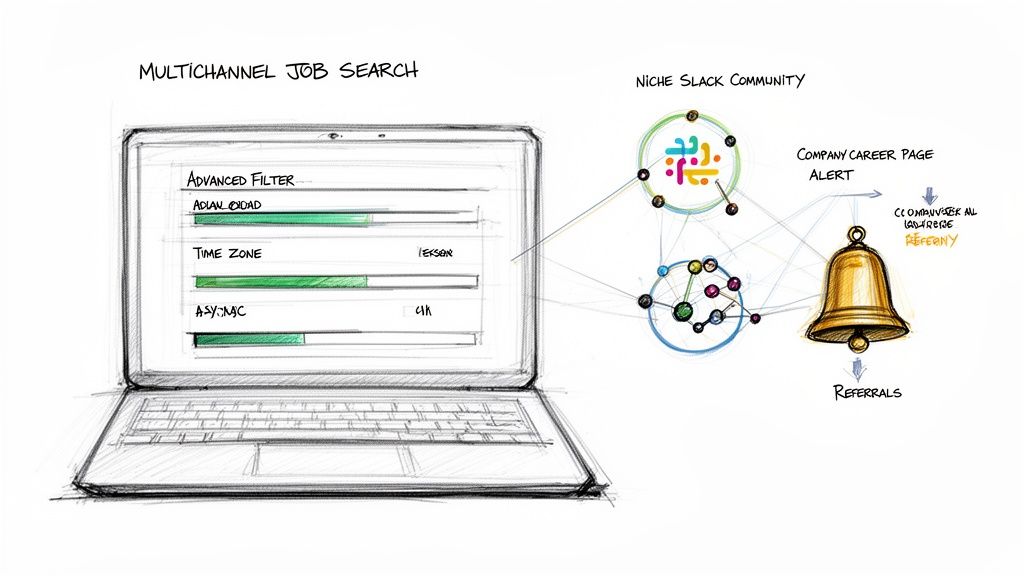
The smart move is to adopt a multi-channel approach. Think of it like fishing. You could cast a huge net in an overfished lake and hope for the best, or you could find those smaller, richer ponds where the competition is light and the quality is high.
Prioritize Direct-Sourcing Job Boards
Here’s the single biggest shift you can make: focus on job boards that pull listings directly from company career pages. This is the difference between being reactive and proactive.
When a platform scrapes directly from a company’s own site, you’re often seeing the role hours—sometimes days—before it hits the big aggregators.
Platforms like Remote First Jobs were built on this exact idea. Instead of just recycling old listings from other boards, they monitor thousands of company career sites around the clock. This direct-sourcing method gives you a huge edge:
- Less Competition: You’re in the door before the floodgates open on bigger platforms.
- Verified Roles: These jobs are real and active, which means no more wasting time on ghost postings.
- Higher Quality: Companies that invest in their own career pages are generally more serious about hiring.
By using a direct-sourcing board, you’re not just another face in the crowd. You’re one of the first in line, and that massively boosts your visibility.
Go Beyond Basic Search Filters
Once you’re on the right platform, your next move is to become a master of its search filters. Don’t just type in a job title and hit enter. The best remote job boards let you get incredibly specific.
This isn’t just about filtering by skill; it’s about finding a job that genuinely fits your life.
Look for advanced filters that let you dial in criteria like:
- Time Zone Requirements: Filter for jobs that match your working hours, whether that’s “GMT,” “PST,” or completely “Timezone Independent.”
- Asynchronous Work Policies: Search for companies that explicitly say they’re “async-first.” This is a massive green flag for a mature remote culture.
- Company Culture Tags: Zero in on perks that matter to you, like a “4-day work week,” “unlimited PTO,” or a “professional development stipend.”
For instance, you could run a search for “Senior Product Manager, PST Timezone, Async-First Culture.” This level of precision stops you from wasting time on roles that aren’t a true fit.
A smart search isn’t about finding the most jobs; it’s about finding the right jobs. Using advanced filters to match your personal and professional needs is the fastest way to a high-quality shortlist.
Tap into Unconventional Channels
While specialized job boards are your foundation, don’t ignore the hidden job market. These are the opportunities that never get publicly posted. Getting to them requires a bit more creativity and networking.
The move to flexible work has been huge. As of early 2025, nearly 80% of employees whose jobs can be done from home are working either hybrid (52%) or fully remote (26%). This has created countless online communities where jobs are shared organically.
Here are a few unconventional—but super effective—channels to tap into:
- Niche Slack and Discord Communities: Find the digital watercoolers for your industry, like “Mind the Product” for product managers or specific developer groups. They almost always have dedicated
#jobschannels where hiring managers post roles directly to a pre-vetted audience. - Company Career Page Alerts: Pick 10-15 dream companies you’d love to work for. Go straight to their career pages and sign up for job alerts. You’ll get notified the second a role opens, putting you miles ahead of the competition.
- Leverage Your Professional Network: Don’t just send a generic, “Know of any jobs?” message. Be specific. Try something like, “Hey, I’m exploring remote roles in marketing ops and I really admire what your team did with [specific project]. Would you be open to a quick 15-minute chat about your experience there?” This approach feels genuine and often uncovers opportunities that aren’t listed anywhere.
Craft an Application That Stands Out
Finding a great remote job feels like a win, but it’s only half the battle. Now you have to actually land it, and that means crafting an application that gets noticed.
In today’s remote market, firing off generic, one-size-fits-all resumes is a surefire way to get ignored. If you want to get to the interview stage, you have to be precise and personal. It’s about quality over quantity, every single time. Think of each application as your one shot to prove you’re the perfect person for that specific role.
Decode the Job Description to Beat the Bots
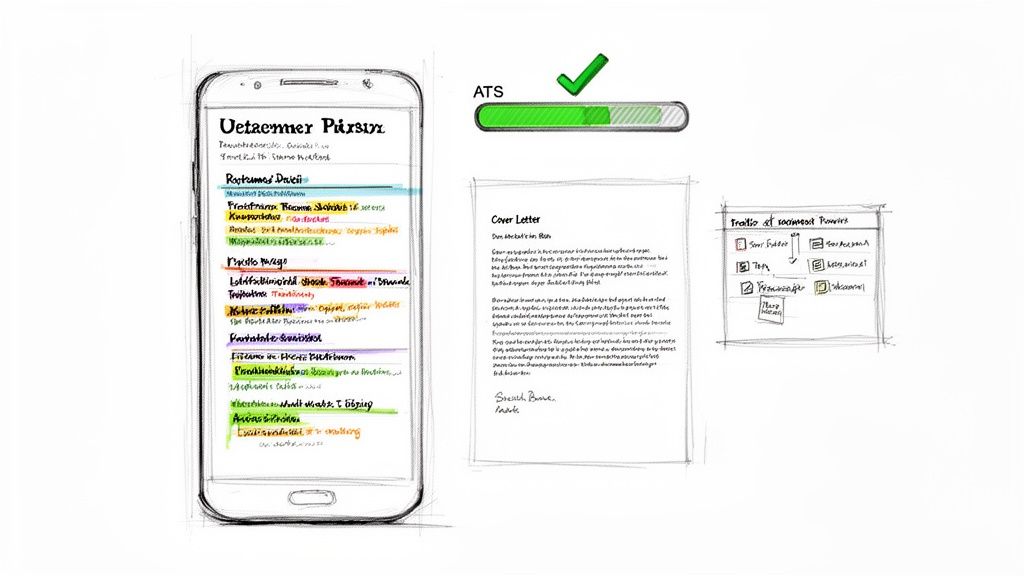
Here’s the hard truth: before a hiring manager ever sees your application, it’s almost certainly getting scanned by an Applicant Tracking System (ATS). This software is programmed to look for keywords and qualifications pulled directly from the job description.
If your resume doesn’t tick those boxes, you’re out. It doesn’t matter how qualified you are.
To get past the ATS, you have to tailor your materials for every single application. Go through the job description with a fine-tooth comb and pull out key phrases related to:
- Hard Skills: Specific software like Salesforce or Figma, languages like Python, or methodologies like Agile.
- Soft Skills: Terms like “asynchronous communication,” “cross-functional collaboration,” or “project ownership.”
- Company Values: Look for words that signal their culture—things like “autonomy,” “transparency,” or “customer-obsessed.”
Weave these exact terms into your resume and cover letter. Seriously, learning how to tailor your resume to a specific job description is probably the single most important thing you can do to boost your odds.
Write a Cover Letter That Tells Your Remote Story
A cover letter for a remote job is your chance to connect the dots. Don’t just rehash your resume—tell a story that proves you were built for a distributed team. Generic claims just won’t cut it.
Your cover letter needs to answer the one question on every remote hiring manager’s mind: “Can this person actually get things done without someone looking over their shoulder?” You need to show them, not just tell them.
Instead of saying you’re a great communicator, talk about a time you used async tools like Loom or Notion to keep a project moving across multiple time zones. Instead of claiming you’re a self-starter, mention a project you kicked off yourself that delivered a real, measurable result. That’s way more convincing than a bulleted list of skills.
Stay Organized with a Simple Tracking System
Once you start applying to multiple remote roles, things get messy fast. It’s easy to forget who you talked to, when you applied, or when you should follow up. A simple tracking system is a must.
You don’t need anything fancy. A basic spreadsheet or a Trello board will do the trick. Just create a few columns to keep your search organized and professional.
| Company | Role Title | Application Date | Status | Next Step |
|---|---|---|---|---|
| TechNova Inc. | Senior Product Designer | 2024-09-15 | Applied | Follow up on 2024-09-22 |
| Global Solutions | Marketing Ops Manager | 2024-09-18 | Interview Scheduled | Prep for video call |
| Innovate Co. | Full-Stack Developer | 2024-09-20 | Awaiting Response | N/A |
This little bit of organization keeps you from missing follow-ups and ensures you have all the details ready before an interview. It turns your job search from a chaotic mess into a project you can actually manage.
Ace the Remote Interview and Vet the Offer
Making it to the interview stage is a huge win. It means your resume, portfolio, and application resonated with the hiring manager. Now you have to prove you’re not just a great candidate on paper, but someone who can truly excel in a distributed team.
This part of the process is less about reciting your skills from your resume and more about showing you have the autonomy, communication chops, and self-discipline to succeed without a manager looking over your shoulder.
It’s a two-part mission. First, you need to nail the video calls and present yourself as the ideal remote hire. Second, you need to put on your detective hat and vet the company to make sure the role is everything it’s cracked up to be.
Setting the Stage for a Flawless Video Interview
A remote interview doesn’t start when you click “Join Meeting”—it starts the moment you accept the invite. Your preparation signals your professionalism and how seriously you’re taking the opportunity. The last thing you want is a choppy connection or a messy room to distract from your expertise.
Before the call, do a quick run-through of your setup. This simple check shows you’re proactive and detail-oriented, two of the most critical traits for any remote employee.
- Test Your Tech: Don’t wait until five minutes before the interview. Do a test call with a friend the day before. Check your camera, make sure your mic is clear, and confirm your internet connection is stable. Is your Zoom or Google Meet app up to date?
- Create a Professional Backdrop: You don’t need a fancy home studio, but your background should be clean and distraction-free. A simple, neutral wall or a tidy bookshelf is perfect. My advice? Steer clear of virtual backgrounds. They often look glitchy and can come off as unprofessional.
- Optimize Your Lighting: This is a simple one that makes a huge difference. Face a light source, like a window or lamp, instead of having it behind you. This way, you won’t look like a mysterious silhouette.
Answering Remote-Specific Interview Questions
Hiring managers for remote jobs are looking for something more than just technical skills. They need to know you can handle the unique challenges of working in a distributed environment. They’re listening for proof of self-motivation, clear communication, and async problem-solving.
Expect questions designed to dig into how you operate without the daily structure of a physical office.
A strong answer to a remote-specific question goes beyond a simple claim. It tells a concise story with a clear example, demonstrating how you’ve already embodied the traits of a successful remote worker.
Get ready for questions like these:
“How do you stay motivated without direct supervision?”
- Weak Answer: “I’m a very self-motivated person.”
- Strong Answer: “I actually do my best work with a high degree of autonomy. In my last role, I used a personal Kanban board in Trello to map out my weekly priorities and set daily goals. That system helped me consistently stay ahead of deadlines, like when I delivered our Q3 marketing report two days early without needing any check-ins from my manager.”
“Describe your experience with asynchronous communication.”
- Weak Answer: “I’ve used Slack and email before.”
- Strong Answer: “I’m a big believer in clear, documented communication to cut down on meeting fatigue. At my previous company, I started using Loom to record short project updates and spec walkthroughs for the team. This single change cut down our meeting time by about 30% and made it much easier for our international team members to stay in the loop on their own schedule.”
Vetting the Company and the Offer
Remember, an interview is a two-way street. While they’re deciding if you’re a good fit for them, you need to figure out if they are a good fit for you. A fantastic salary can’t fix a toxic remote culture or expectations that don’t align with your life.
This is your chance to ask smart, insightful questions. Your goal is to get a real feel for what it’s actually like to work there.
Key Areas to Investigate
- Remote Culture: Dig deeper than “Do you have a good culture?” Ask things like, “How does the team build rapport and connection when everyone is distributed?” or “What does a typical day or week look like for someone in this role?”
- Time Zone Policy: This is a big one. Get clarity on their working hours. Is there a required 4-hour overlap with the team in Berlin? Or are they truly timezone-agnostic? You need to know if their “flexible” schedule actually works for you.
- Benefits and Perks: Ask about the benefits that truly matter to remote employees. Do they offer a home office stipend, a co-working space membership, or a budget for professional development? Pay transparency is also a huge plus—if they haven’t shared a salary range, it’s fair to ask.
- Red Flags: Be on high alert for vague answers. If the hiring manager can’t clearly explain their onboarding process for remote hires or mentions things like constant surveillance software, consider it a major warning sign. A company that hasn’t figured out how to support its remote team is not a company you want to join.
Common Questions About Finding a Remote Job
Stepping into the world of remote work can feel like you’re learning a whole new language. It’s natural to have questions, and honestly, it’s a good sign—it means you’re thinking strategically about your career move. Let’s dig into some of the most common things people ask so you can move forward with confidence.
Is It Harder to Get a Remote Job with No Experience?
I won’t sugarcoat it: yes, landing a fully remote role when you’re just starting out can be a bit tougher. Many companies, especially nimble startups, tend to look for people who already have a proven track record of managing their own time and can jump into projects with minimal hand-holding.
But it’s far from impossible. You just have to be a little more strategic. Here’s how you can build a strong case for yourself:
- Go for entry-level or internship roles. Some companies are specifically set up to train junior talent remotely. Hunt those down.
- Build your own experience. Don’t wait for permission. Complete online courses, build a small portfolio of personal projects, and create tangible proof that you can do the work.
- Reframe your existing experience. Think about freelance gigs, volunteer work, or even complex university projects. You can frame these to highlight your ability to work independently and manage a project from start to finish.
The goal is to proactively build evidence that you can be productive and reliable without someone looking over your shoulder. Don’t just say you’re a self-starter; show them.
Getting that first remote job is often the biggest hurdle. Once you have that experience on your resume, you’ll find that many more doors open up for future remote opportunities.
What Is a Realistic Salary for a Remote Job?
This is the big one, isn’t it? The honest answer is, it completely depends on how the company approaches compensation. There’s no single “remote salary.” Companies usually fall into one of these camps:
- Location-Based Pay: This is the most common model. Your salary gets adjusted based on the cost of living where you are. So, a developer in San Francisco will earn more than a developer in the exact same role who lives in a small town in the Midwest.
- Global Standard Pay: This is the unicorn everyone’s looking for. These companies pay the same salary for a role no matter where you live, often benchmarking it against a high-cost city like New York or London.
- Hybrid Models: Some companies try to find a middle ground. They might have salary bands with different tiers for various regions, striking a balance between the two extremes.
Your best bet is to do your homework. Check out sites like Glassdoor and Levels.fyi to get a feel for the market rate for your specific role. Even better, prioritize companies that practice pay transparency and list salary ranges right in the job description. It saves everyone a ton of time.
How Can I Spot and Avoid Remote Job Scams?
The anonymity of the internet, unfortunately, makes it a playground for scammers, and the remote job market is a huge target. A little bit of healthy skepticism will be your best friend here.
Keep your eyes peeled for these red flags:
- Super vague job descriptions. Real companies know exactly what they need. Scammers often keep things fuzzy and generic.
- Unprofessional communication. Look out for bad grammar, emails coming from a personal Gmail account (not a company domain), or interviews happening exclusively over text message apps. That’s not how legitimate businesses operate.
- They ask you for money or sensitive data upfront. You should never have to pay for your own training, equipment, or background check. And definitely don’t give out your bank details or social security number before you have a legitimate, signed offer letter in hand.
- The offer seems way too good to be true. A massive salary for an entry-level position with few requirements? It’s almost certainly a scam. Trust your gut instinct.
Stop wasting your time scrolling through crowded job boards filled with scams and jobs that were filled weeks ago. Remote First Jobs gives you an edge by sourcing thousands of verified remote jobs directly from company career pages. Find your next role before the competition even knows it exists. Discover real opportunities on Remote First Jobs.