You’ve probably already seen the problem. You search for french remote jobs, click promising listings, and half of them turn out to be hybrid roles tied to Paris, Lyon, or a local office. The other half want fluent French plus timezone overlap, but they don’t care where you live. Those are two different markets, and treating them like one is why good candidates waste weeks.
I’ve seen smart professionals lose momentum because they apply broadly instead of precisely. In this niche, precision matters more than volume. The strongest searches start by choosing the right lane, then building speed into sourcing, tailoring, and outreach.
Define Your French Remote Job Goal
The phrase french remote jobs hides two very different paths.
One is remote in France. These jobs usually mean the employer is in France, the contract logic is French, and the role may still require occasional office presence. The other is French-speaking remote work from anywhere. These roles are often run by international employers that need French for support, sales, moderation, teaching, localization, or customer operations.
That split matters because job boards often blur it. As italki’s breakdown of French remote jobs notes, many listings that look remote are hybrid or location-bound, and role families differ sharply in hiring logic, pay, and visa requirements.
Pick one lane before you apply
Use this quick filter:
| Path | Usually means | Typical fit |
|---|---|---|
| Remote in France | French employer, local work rights often needed, hybrid is common | You live in France, can relocate legally, or already have work authorization |
| French-speaking remote from anywhere | Language skill is the asset, location may be flexible | You want global remote work and can compete internationally |
If you skip this step, your search terms will work against you. You’ll keep clicking listings that were never realistic for your situation.
What each path tends to include
For remote in France, the strongest fit is usually with employers already comfortable with distributed coordination. That often shows up in tech, professional services, and multinational teams. These employers may advertise flexibility, but they still screen for local employment fit.
For French-speaking remote from anywhere, language-only jobs exist, but don’t stop there. Commercial and operational roles often create better long-term options than pure translation work. Think customer success, support, inside sales, account coordination, or bilingual operations.
Practical rule: If the listing mentions office attendance, regional presence, or a country-specific contract, treat it as a local market role until proven otherwise.
Tighten your positioning
Write a one-line target statement before you touch a job board. Examples:
- I’m targeting French-speaking customer support and customer success roles that are fully remote and open internationally.
- I’m targeting France-based hybrid or remote product and operations roles where I already meet local work-rights requirements.
This one sentence will clean up your search terms, your CV, and your outreach.
If spoken fluency is part of your target role, sharpen that separately. Recruiters can tell when a candidate writes strong French but hesitates in calls. A practical prep resource is this guide to French pronunciation, especially if interviews will include client-facing or support scenarios.
Source Opportunities That Others Miss
Mainstream job boards are the noisiest place to hunt for french remote jobs. They’re useful for pattern spotting, but they’re weak for timing.
That matters because fully remote work is relatively scarce in France. A Pumble summary of 2024 remote-work data says less than 3% of private-sector employees in France worked fully remotely, compared with 13% in the US. When supply is that tight, broad boards become crowded fast.

Why broad boards underperform in this niche
The problem isn’t just competition. It’s mismatch.
A listing might rank for “remote French” because it needs French language skills, because it’s remote only within France, or because it’s hybrid and the platform’s filters are sloppy. By the time a strong role is syndicated everywhere, it already has a long queue.
That’s why direct sourcing works better. Instead of waiting for postings to spread across aggregators, track employers at the source.
One practical option is Remote First Jobs, which pulls roles directly from employer career pages and ATS listings rather than scraping other job boards. For this kind of search, direct-to-company discovery is often more useful than scrolling crowded feeds.
Build a sourcing stack
Don’t rely on one channel. Use three.
Direct employer career pages
Make a shortlist of companies that already work across locations or serve French-speaking customers. Visit their careers pages regularly and save role families, not just one job title.Niche remote search tools
Use tools that detect jobs close to the original posting date. Freshness matters more than volume here.Role-family search terms
Search for what companies hire, not what candidates wish existed. “French speaking customer success,” “bilingual French sales,” and “French moderator” often surface better opportunities than the generic “French remote jobs.”
Search where the demand is shifting
A lot of content still pushes people toward teaching and translation. Those roles exist, but they aren’t the whole market.
The stronger angle is to look for jobs where French supports revenue or retention. Sales development, customer support, onboarding, account management, and trust-and-safety work often need language skill plus business judgment. Those candidates are harder to replace than pure language generalists.
Don’t search only for “French teacher” or “translator” unless that’s your actual specialty. Search for the business function first, then add French.
Keep a living target list
The highest-conviction candidates don’t browse endlessly. They maintain a target list with:
- company name
- remote policy
- likely job families
- hiring page
- recruiter or team lead
- date last checked
That simple habit changes the search from reactive to systematic. In a tight market, the candidate who sees the role first usually writes the better application too.
Optimize Your CV for French Recruiters
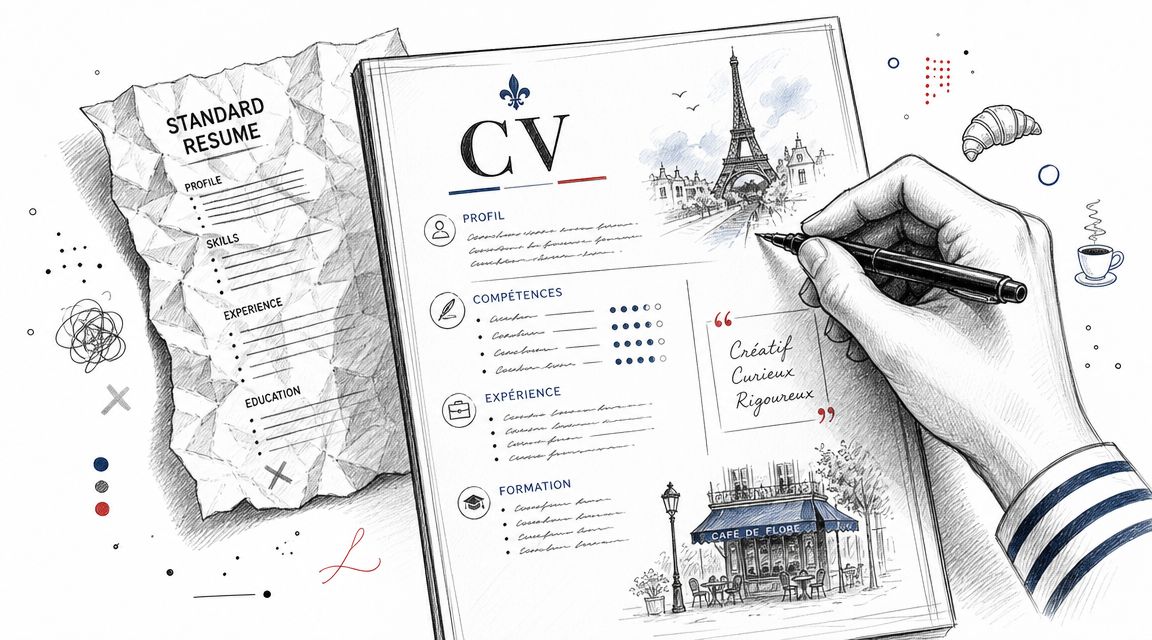
A standard remote-work resume often underperforms with French recruiters because it signals the wrong things. Strong experience helps, but format and documentation still matter.
Eurojob Consulting notes that French hiring often gives significant weight to academic qualifications, professional references, diplomas, and Certificates of Work. If your application package feels vague or incomplete, a recruiter may move on before they ever test your actual fit.
What to change on your CV
Start with structure. French recruiters usually respond better to a CV that is orderly, explicit, and easy to verify.
Use this checklist:
State your location and work status clearly
If you have the right to work in France, say it plainly. If you don’t, don’t bury that detail.List qualifications in a visible section
Degrees, certifications, language credentials, and relevant training should not be hidden at the end.Support claims with specifics
Instead of “experienced in remote collaboration,” name the tools, meeting rhythms, and cross-functional workflows you’ve used.Prepare supporting documents early
Keep diplomas, certifications, and prior work certificates ready to send if requested.
English CV or French CV
Use the language of the employer and the role. If the company communicates publicly in English and the job description is in English, an English CV is usually fine. If the role is French-facing or the hiring process is clearly local, prepare a French version too.
Don’t just translate word for word. Adapt.
A French recruiter reading your CV wants to understand your training, your role scope, and whether your profile matches the post with minimal guesswork. Dense branding language hurts you here.
Show remote work as disciplined, not casual
Many candidates present remote experience as a lifestyle perk. Recruiters care more about whether you can operate reliably.
Frame it like this:
- async communication across teams
- documented handoffs
- customer-facing work without office supervision
- stable home-office setup
- clear availability windows
- comfort with structured reporting
A good remote CV says, “I reduce coordination friction,” not “I like working from home.”
Fix the profile summary
A weak summary sounds broad: “Bilingual professional seeking remote opportunities.”
A better one sounds matched: “French-English customer success specialist with experience in remote onboarding, ticket triage, and cross-functional account support.”
That change looks small. It isn’t. It tells the recruiter where to place you immediately.
Master Application Timing and Outreach
For french remote jobs, timing isn’t a side issue. It’s part of the strategy.
Some market data cited by FlexJobs shows French remote roles closing in an average of 44 days in its tracked set of French remote jobs, which is a useful reminder that the window moves quickly in practice. See the reference in FlexJobs’ French remote jobs coverage. Early applicants usually get reviewed under lighter competition than candidates who arrive after syndication.
Apply early, but not sloppily
There’s no prize for being first with a weak application. The target is to be early and relevant.
A workable rhythm looks like this:
- Save the role immediately when it appears.
- Decide fit fast. If the role misses on work rights, location, or language level, move on.
- Tailor only the high-impact parts. Adjust summary, key skills, and top bullet points.
- Submit while the listing is still fresh.
- Follow with light outreach if the company and role justify it.
This approach beats the common pattern of over-editing one application for days, then arriving after the first review batch is already done.
Who to contact and what to say
A lot of candidates message the wrong person. Don’t send generic notes to the CEO or blast recruiters with “just following up.”
Look for one of these instead:
- the hiring manager
- the team lead for the function
- an internal recruiter attached to that team
If you need help identifying direct contacts, this practical guide on finding hiring manager emails shows the process in a job-seeker context.
Keep the message short. Mention the role, one reason you fit, and one reason you care about this team specifically. That’s enough.
“Applied for your French-speaking customer success role today. My background is in remote onboarding and support for multilingual customers. I’d be glad to share examples of how I’ve handled handoff-heavy accounts across time zones.”
When not to outreach
Skip outreach if:
- the employer explicitly says not to contact the team
- you can’t identify a relevant person
- your message would be entirely generic
- the role is already far along and your fit is weak
Outreach works when it adds clarity. It fails when it adds noise.
Navigate Contracts Visas and Taxes
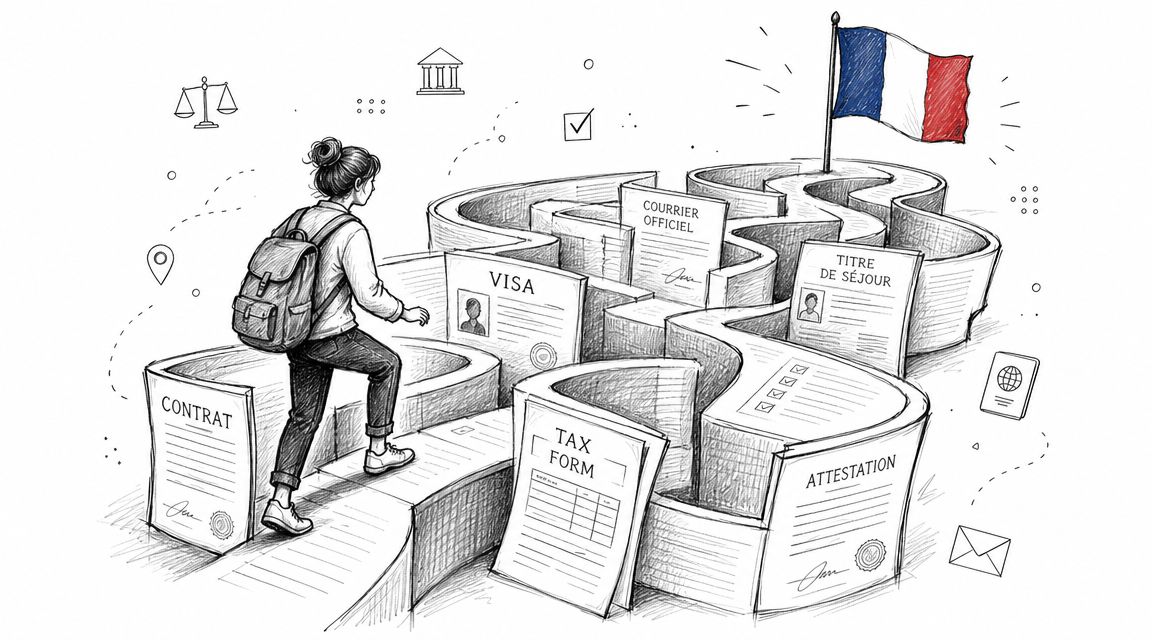
Many candidates are often surprised. They assume “remote” means paperwork becomes simpler. With french remote jobs, the opposite is often true.
In 2025, 19.7% of employees in France worked remotely, up 1.5 percentage points from 2024, according to Insee’s labor-market release. The same release says the average teleworker spent fewer days at home than in 2024, which points to a hybrid norm rather than fully remote by default. That has direct consequences for contracts, work rights, and where you can legally perform the work.
Remote in France versus remote for a French company abroad
These are not the same scenario.
| Scenario | Main issue to clarify |
|---|---|
| Living and working in France | Do you have the legal right to work there under the proposed arrangement? |
| Working for a French company from another country | What is your legal status: employee, contractor, or via an employer-of-record structure? |
| Hybrid role labeled remote | How often must you be physically present, and where? |
A lot of confusion comes from listings that say “remote” but assume the candidate can attend meetings, onboarding, or periodic office days in France. If you need a visa or cross-border arrangement, ask that before you get attached to the role.
Contracts to ask about
You don’t need to be a lawyer to ask the right questions.
Ask these early:
Employment status
Are you being hired as a French employee, an independent contractor, or through a third-party employment solution?Work location clause
Is the role restricted to France, the EU, or specific countries?Office attendance expectations
Are there required in-person days, onboarding weeks, or travel obligations?Benefits and compliance
What benefits attach to the contract, and who handles payroll and statutory obligations?
Visa and tax reality
If you want to live in France while working remotely, don’t assume any remote offer automatically makes that lawful. Immigration status, permitted work activity, and tax treatment can differ sharply depending on how the arrangement is structured.
For a broader orientation, this ultimate guide for remote professionals is useful for understanding how European remote-work and residency questions are commonly framed before you verify details with official channels and professional advice.
Ask “Can I do this legally under this exact contract structure?” before you ask “Can I do this remotely?”
That question saves people from the most expensive mistake in this market: winning the job, then discovering the arrangement doesn’t support where they want to live.
Spot Red Flags and Avoid Scams
A polished listing can still be junk. Remote job seekers often assume scam detection is obvious. It usually isn’t.
French-language and bilingual roles attract urgency. Scammers know that. They use vague language, fast promises, and informal communication to push candidates into acting before they verify anything.

Red flags that should stop you
Walk away if you see several of these at once:
Payment requests
No legitimate employer should ask you to pay for training, equipment release, application processing, or account setup.Messy job definitions
If the company can’t explain whether the role is remote, hybrid, local-only, or contract-based, expect more confusion later.Off-platform pressure
Interview requests that move straight to WhatsApp, Telegram, or personal email without a proper company process deserve scrutiny.No verifiable company footprint
If you can’t match the role to a real company careers page, team presence, or business activity, don’t hand over documents.
What legitimate roles usually look like
Real employers tend to be boring in good ways.
They define the team, responsibilities, reporting line, and hiring process. They can explain the work arrangement clearly. Their communication is consistent across email domain, careers page, and interviews.
If a company is fuzzy about basics before hiring you, they’ll be worse after hiring you.
Protect your time, not just your data
The cost of a bad listing isn’t only fraud. It’s also distraction.
Every hour spent on fake urgency is an hour not spent on a real opening with a real review process. That’s another reason to prefer verified employer-sourced listings over random reposts and recycled board spam. The cleaner your funnel, the better your judgment stays.
If you’re tired of sorting through mislabeled listings, late-stage reposts, and low-trust aggregators, Remote First Jobs is a practical place to tighten your search. It pulls roles directly from employer career pages, which is useful when you need fresher french remote jobs and cleaner signals about whether a role is remote, hybrid, or location-bound.