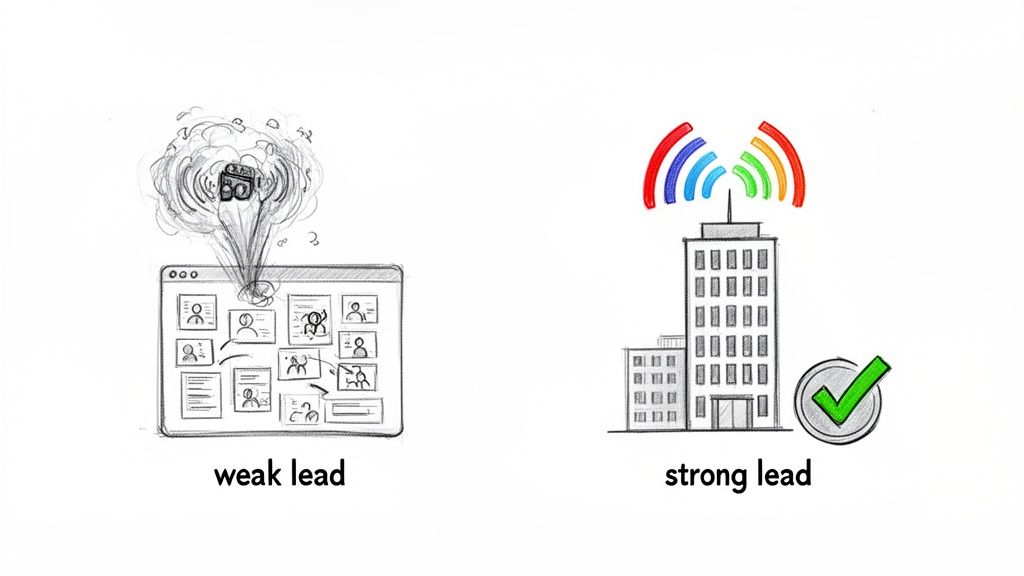
A job lead is far more than just another job posting. Think of it as a signal—a blip on your radar pointing to a potential opportunity. The quality of that signal is what separates a wild goose chase from your next great career move.
What Exactly Is a Job Lead in Today’s Remote Market
Think of your job hunt like scanning radio frequencies. A vague, month-old post on a massive, overcrowded job board? That’s pure static. You can barely make out the song. But a fresh, detailed opening posted directly on a company’s career page? That’s a crystal-clear broadcast you can tune into with confidence.
Especially in the world of remote work, the definition of a job lead has changed. It’s no longer about just finding a listing; it’s about the skill of quickly judging its quality. Honestly, learning this one skill will save you more time and frustration than anything else.
Understanding the Lead Quality Spectrum
Your main goal is to separate high-value opportunities from the digital noise designed to waste your time. This means learning to instantly spot the difference between a weak signal and a strong one.
A high-quality job lead is characterized by its source, freshness, and clarity. It points to a verifiable role from a specific employer, giving you the information needed to make a strategic application.
Getting good at this is non-negotiable in such a competitive market. It’s estimated that by 2026, there will be around 73 million remote-capable jobs worldwide, a figure expected to climb to 92 million by 2030. With that many roles out there, filtering for quality is the only way to avoid burnout and find a job you actually want. You can learn more about this growth by checking out the latest remote work statistics.
To get you started, here’s a quick guide to what you should be looking for.
Job Lead Quality Spectrum
This table breaks down the core differences between a time-wasting lead and one worth pursuing. Use it as a quick mental checklist as you browse job sites.
| Lead Characteristic | Low-Quality Lead (Weak Signal) | High-Quality Lead (Strong Signal) |
|---|---|---|
| Source | Aggregator site, anonymous post | Direct company careers page |
| Age | 30+ days old | Less than 48 hours old |
| Detail Level | Vague duties, no salary range | Specific tasks, clear requirements |
| Company Info | Hidden or “confidential” | Clearly identified employer |
By learning to focus only on those strong signals, you stop pouring energy into “ghost jobs” and opportunities that were never real in the first place. The rest of this guide will show you exactly how to find and act on those clear, high-quality broadcasts.
The Three Main Types of Remote Job Leads
Alright, so you know what a job lead is. But the real game-changer is knowing where they come from. Think of it like this: not all leads are created equal, and their source is a huge tell about their quality. Knowing where to focus your energy is what separates a frustrating job hunt from an efficient one.
Let’s break down the three main places you’ll find remote opportunities.
Direct Employer Listings
These are the gold standard of job leads, plain and simple. A direct listing is a job posted right on a company’s own careers page. It’s a clean, unfiltered signal coming straight from the source.
There’s no middleman muddying the waters, which means you have a direct line to the hiring manager. While these are often the highest quality leads you can find, they can be a pain to track down since you’d have to check hundreds of individual company websites.
Key Takeaway: Direct leads are your top priority. They represent real, active roles without the noise of third-party agencies or outdated aggregator sites. Your goal is to find these before they hit the mainstream job boards.
Recruiter and Agency Leads
This category is a true mixed bag. On one hand, a lead from a sharp, reputable recruiter can be a fantastic shortcut to a role that isn’t even public yet. They have a real relationship with the company and can put in a good word for you.
On the other hand, this channel is absolutely flooded with noise. You’ll run into “resume fishing,” where agencies just collect CVs for jobs that don’t exist, or get spammed by low-quality recruiters blasting the same generic message to thousands of people. The trick is learning to spot the good from the bad—and fast.
Networking and Referral Leads
These are often the most powerful leads you can possibly get. A networking or referral lead comes from someone you actually know—a former coworker, a friend from an industry meetup, or a contact who tips you off about an opening.
This kind of lead gives you an almost unfair advantage:
- Built-in Trust: Your connection is vouching for you, which immediately puts you at the top of the pile.
- Inside Information: You can get the real scoop on the company culture, the team, and what the hiring manager is really looking for.
- Less Competition: A lot of the time, you hear about a role before it’s even posted, giving you a massive head start.
Ultimately, a smart job search strategy involves tapping into all three of these channels. You’ll want to prioritize those direct listings, actively build your network for powerful referrals, and learn to look at recruiter leads with a healthy dose of skepticism.
How to Spot and Avoid Low-Quality Job Leads
Let’s be honest—not every job lead is a golden ticket. Many are just digital rabbit holes, designed to waste your time, harvest your data, or even pull you into a scam. Learning how to tell the difference is one of the most important skills you can develop for a successful remote job search.
Think of it like developing a sixth sense for junk mail in your career inbox. You quickly learn to spot the scams and worthless offers before you invest any energy, so you can focus on what’s real.
One of the biggest time-wasters you’ll encounter are ghost jobs. These are job postings for roles that aren’t actually open. A company might leave them up to look like they’re growing or to build a pipeline of resumes for some unknown future need. You apply, pour your heart into it, and hear nothing but crickets.
Red Flags for Low-Quality Leads
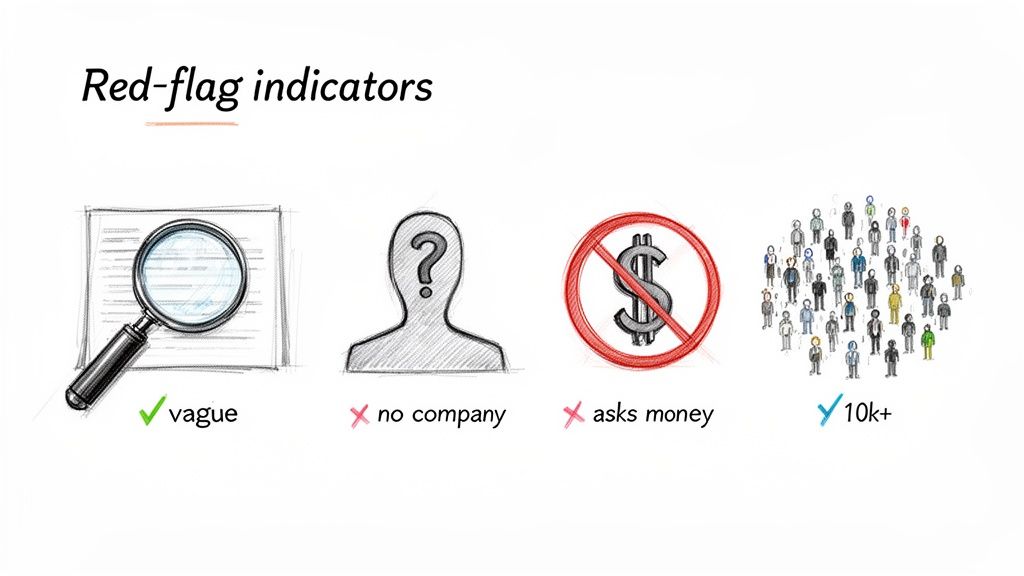
Beyond ghost jobs, you also have to watch out for recruiter spam and thinly disguised multi-level marketing (MLM) schemes that clutter up the big job boards. They prey on the eagerness of job seekers. To protect your time and energy, keep an eye out for these classic red flags:
- Vague Job Descriptions: The listing is full of buzzwords but gives you zero specifics about what you’d actually do every day. There are no clear responsibilities or required skills.
- Anonymous Company: The employer is listed as “Confidential” or some generic name you can’t find anywhere online. A legitimate company is proud to put its name on a job opening.
- Immediate Request for Money: If any job lead asks you to pay for training, software, or a background check upfront, run. It’s almost guaranteed to be a scam.
- Unrealistic Promises: The role promises a massive salary for very little experience or effort. If it sounds way too good to be true, it always is.
A key part of understanding the modern job lead definition is recognizing what isn’t a lead at all. A real lead is verifiable and specific; a low-quality one is often a dead end.
Finally, always check the application numbers if the platform shows them. If a post is just a few hours old and already has thousands of applicants, it’s probably a ghost job or a low-value role being blasted everywhere. Learning to instantly filter these out lets you pour your attention into opportunities that are real and winnable.
Evaluating and Prioritizing High-Value Job Leads
Once you’ve filtered out the obvious junk, you’re left with a list of job leads that look promising. But here’s the thing: not all good leads are created equal. It’s time to stop playing the job board lottery and start thinking like a project manager, strategically deciding where to invest your time and energy.
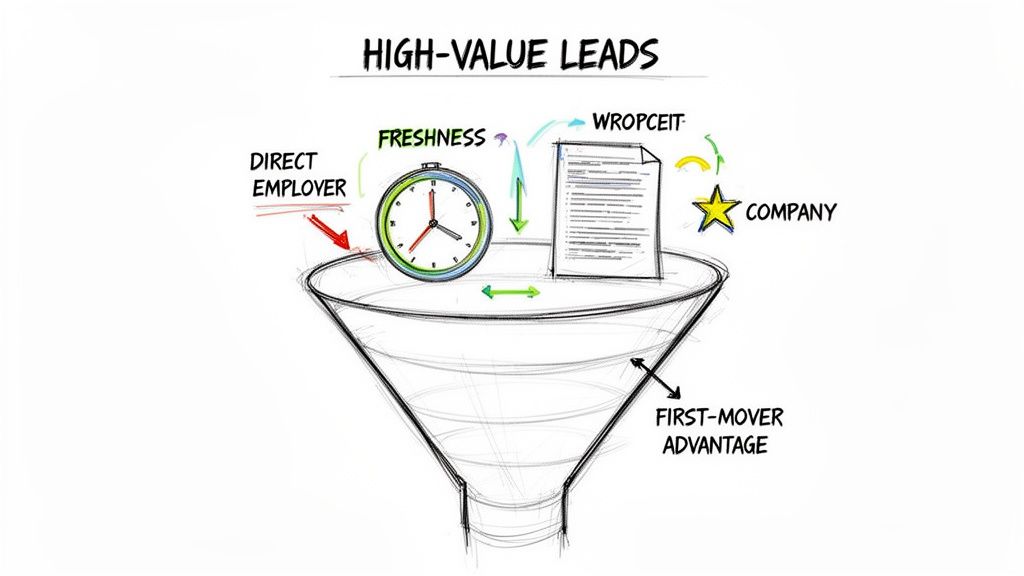
This means you need to weigh each lead against a few clear criteria to pinpoint the ones that actually have the highest chance of success. A high-value lead isn’t just about a cool job title; it’s about the entire context surrounding the opportunity.
The First-Mover Advantage
If there’s one secret weapon in the remote job market, it’s speed. It’s a well-known fact that remote job listings often get 2x more applications than their on-site counterparts. This creates ferocious competition, a reality you can explore in these current remote work statistics.
This intense demand is what creates the first-mover advantage. Getting your application in before a role goes viral on the massive job boards is often the difference between landing an interview and getting lost in a digital pile of a thousand other resumes.
Your goal is simple: be one of the first qualified candidates a hiring manager sees. This happens when you act on fresh, direct-source leads, not week-old posts from massive aggregators.
To make this happen, you need to evaluate every lead you find based on these four points:
- Source: Is this a direct listing on the employer’s own website? Put that at the top of your list. A lead from a trusted recruiter is a close second, while a post on a giant public board is the lowest priority.
- Age: How fresh is the lead? Anything under 48 hours old gives you a real edge. If a post is over a week old, your chances drop dramatically.
- Detail: Does the job description feel specific and written by a real person? A detailed post with clear requirements and a little about the company shows they’re serious about hiring.
- Reputation: What’s the word on the street about this company? A quick search can tell you if it’s a place you’d actually want to work.
When you start organizing your search around these principles, everything changes. You’ll shift from a reactive, frustrating process to a strategic, proactive one where you’re in control.
Finding Fresh Job Leads Before Anyone Else
Trying to keep up with new job openings by manually checking thousands of company websites is a surefire way to burn out. It’s an impossible game to win. But what if you could put that entire process on autopilot? That’s the secret weapon for a smarter job search, giving you a serious edge over everyone else stuck refreshing the same old crowded job boards.

The technology that makes this happen is called direct-sourcing. Instead of just scraping other job boards—which is how you end up with stale, duplicated, and even fake listings—this method has platforms that scan company career pages directly. It’s a straight line to the source.
Your Unfair Advantage: Speed
Think about a system that’s constantly monitoring over 21,000 company career pages, 24⁄7. The moment a new job is posted, it gets picked up, often within hours. This is how you get ahead of the pack—by seeing a real, high-quality job lead before it goes viral.
This direct-sourcing method is your first-mover advantage. It delivers fresh, vetted opportunities directly to you, often days before they appear on platforms like LinkedIn or Indeed, where thousands will eventually apply.
This approach plugs you into a massive, curated pool of roles. You could tap into a database of over 44,000 active jobs, with 200,000+ new opportunities surfacing every single month. These aren’t just random listings; they are direct signals from the hiring companies themselves. You can find these kinds of verified, low-competition roles by exploring the latest remote job opportunities on specialized platforms.
This is a much more strategic way to think about what a job lead really is, focusing on where it comes from and how fresh it is. It’s no surprise that highly educated professionals are actively seeking these kinds of quality remote roles. In fact, education level is a strong predictor of who gets to work remotely, with 42.8% of employees with advanced degrees and 37.6% with bachelor’s degrees doing so.
By using technology to find direct leads fast, you stop competing with the masses and start engaging with opportunities when your application can actually make an impact. It’s about applying smarter, not just harder.
Your Action Plan for a Smarter Remote Job Search
Alright, let’s put all this together. It’s time to stop playing the frustrating numbers game and start a strategic mission. The goal isn’t just to apply harder; it’s to work smarter by focusing your energy where it will actually pay off.
This shift starts when you stop chasing every single notification and begin building your search around high-quality job leads. As you map everything out, using a dedicated professional development planning template can be a huge help in aligning your job search with your long-term career goals.
Build Your Strategic Framework
Now, let’s create a simple, repeatable process that will give you a real edge. This isn’t about some complicated system. It’s about building a few solid habits that most other applicants just won’t do.
The goal is to escape the cycle of application burnout and find your next remote role with greater efficiency by being selective, strategic, and fast.
Here are the clear steps to make your job search more effective, starting today:
- Set Up a Vetting System: Use the red-flag checklist we covered to immediately toss out junk leads, ghost jobs, and recruiter spam. Your time is your most valuable asset—protect it.
- Automate Your Lead Discovery: Use a direct-sourcing tool that finds fresh, verified leads straight from company career pages. This automates the most soul-crushing part of the hunt.
- Apply Smart and Fast: When you find a high-value lead, jump on it. Aim to apply within 24-48 hours to get that critical first-mover advantage before the position gets buried in applicants.
With a clear path forward, you can finally sidestep the endless frustration and find your next great remote role with a lot more confidence and success.
Frequently Asked Questions About Job Leads
Still have a few questions lingering about job leads? Let’s clear them up. Here are some of the most common questions we get about finding and using them in a remote job hunt.
What Is the Main Difference Between a Job Lead and a Job Posting
Think of it this way: a job posting is just an advertisement on a wall. A job lead is a tip-off telling you exactly where the real opportunity is hiding. It’s actionable intelligence, not just another ad.
For example, a strong lead is a direct link to a brand new role on a company’s own careers page. A weak lead? That could be anything from a month-old posting on some random aggregator site to a vague message from a recruiter about a “mystery” client.
How Can I Tell If a Job Lead Is a Ghost Job
You can usually smell a ghost job from a mile away if you know what to look for. The biggest red flags are postings that have been open for months, have a super generic job description, or conveniently forget to mention the company’s name.
Pro Tip: High-quality leads are almost always specific, have the company’s name proudly displayed, and link directly to an application on their official website. If it feels shady or anonymous, trust your gut—it probably is.
Why Is It Important to Apply to a Job Lead Quickly
Speed is everything in the remote job market. A single great remote role can get buried under thousands of applications in just a couple of days. Applying within the first 24-48 hours is your secret weapon.
Getting your application in early gives you a massive “first-mover advantage.” It means a real human is far more likely to see your resume before their inbox explodes. It’s the single best thing you can do to boost your chances of getting that interview.
Stop wasting time on stale job boards. Remote First Jobs scans over 21,000 company career pages to bring you fresh, verified remote job leads before anyone else. Find your next role faster today!