Tired of Ghost Jobs? Here’s Where the Money Is.
If your search for high paying remote sales jobs feels like scrolling through expired listings, recruiter spam, and “remote” roles that turn into hybrid after the first call, you’re not imagining it. The worst advice in this market is still the most common: spray applications across LinkedIn, wait politely, and hope your résumé floats to the top. That’s how you become applicant number 800 on a role that was already half-filled through referrals.
The better jobs don’t sit around. They move through company career pages first, then niche channels, then public boards after the competition gets ugly. If you’re serious about landing a six-figure remote sales role, speed matters. So does source quality. A clean direct application to a hiring team beats a lazy one-click apply on a stale repost every time.
The market is still worth chasing. The average salary for remote sales jobs is $80,000, with ranges from $40,000 to $130,000 depending on level, and top performers in tech sales can push total compensation above $200,000, according to DailyRemote’s remote sales salary analysis. That spread is exactly why title alone doesn’t tell you much. A mediocre remote sales role can waste a year. A strong one can change your income trajectory fast.
This guide focuses on the roles and companies that serious sellers should target, but it also shows how to find them before they’re saturated. That means direct sourcing, cleaner signals, better outreach, and less dependence on noisy platforms. If your pipeline is full of applications and empty on interviews, fix the search process first. The same principle behind Why Am I Not Getting Interviews? applies here too. Better targets beat more volume.
1. Remote First Jobs
Public job boards create the illusion of access. In practice, they create competition.
Remote First Jobs is useful because it pulls remote roles from company career pages and ATS listings instead of depending on the usual pile of recycled posts. For sales candidates, that changes the quality of the search fast. You see more direct-hire roles, fewer duplicate listings, and less time wasted on jobs that were filled last week but never taken down.
That sourcing approach matters if you care about timing. Strong remote sales roles often get serious applicants early, especially for Enterprise AE, Strategic AE, Sales Engineer, and sales leadership openings. By the time a role is heavily distributed across LinkedIn, Indeed, and aggregator sites, you are competing with a much larger pool, including candidates referred internally after seeing the same post.
Cleaner inputs produce better outputs.
A feed tied closely to employer career pages also cuts down on several problems that waste hours in a search: fake remote labels, agency reposts, expired jobs, and vague listings designed more to collect résumés than to hire. If you have worked a sales territory, you already understand the principle. Better pipeline quality beats raw volume.
Why it works better than mainstream boards
The main advantage is source quality.
Mainstream boards are fine for market research, title mapping, and comp benchmarking. They are weaker as a primary search channel for competitive remote sales roles because they reward distribution, not freshness. A specialized source like Remote First Jobs is better for finding openings while they still feel close to the hiring team.
There is also a trust benefit. If the listing traces back to an official company careers page or ATS, the odds are much higher that the role is active, budgeted, and tied to a real hiring process.
Practical rule: If a sales job cannot be verified on the employer’s careers page, treat it as unqualified until you confirm it.
This matters more at the mid-market, enterprise, and leadership level. Senior candidates do not need 500 listings. They need a smaller set of credible openings they can pursue with speed and context.
Where it fits in a serious search
Use Remote First Jobs as an early-stage sourcing tool, not as your full strategy.
Start with narrow title searches based on roles you can already win. Search “Enterprise Account Executive,” “Commercial Account Executive,” “Senior Account Executive,” “Sales Engineer,” or “Regional Sales Director” instead of broad terms like “remote sales.” Then move each strong match into a short target list. From there, apply on the company site, identify the hiring manager or likely peer leader, and send a concise note that shows fit with the segment, deal size, or product motion.
That is the part many candidates skip. They apply and wait. Good sellers do not wait on a cold territory and they should not wait on a cold application either.
There are trade-offs:
- Remote-first bias: You will miss some strong companies that hire remotely but do not brand themselves that way.
- Less noise, fewer distractions: That is usually a plus, but candidates who rely on large-board filters and social proof may need to do a bit more manual research.
- Best for fast movers: The value drops if you save roles and come back three days later.
Best use case
Remote First Jobs makes the most sense for candidates who want high-paying remote sales jobs without relying on overcrowded public boards. It is especially strong for tech, SaaS, cybersecurity, and services roles where timing and direct access improve your odds.
The point is not to collect more listings. The point is to find better openings earlier, then work them like a real pipeline.
2. CrowdStrike
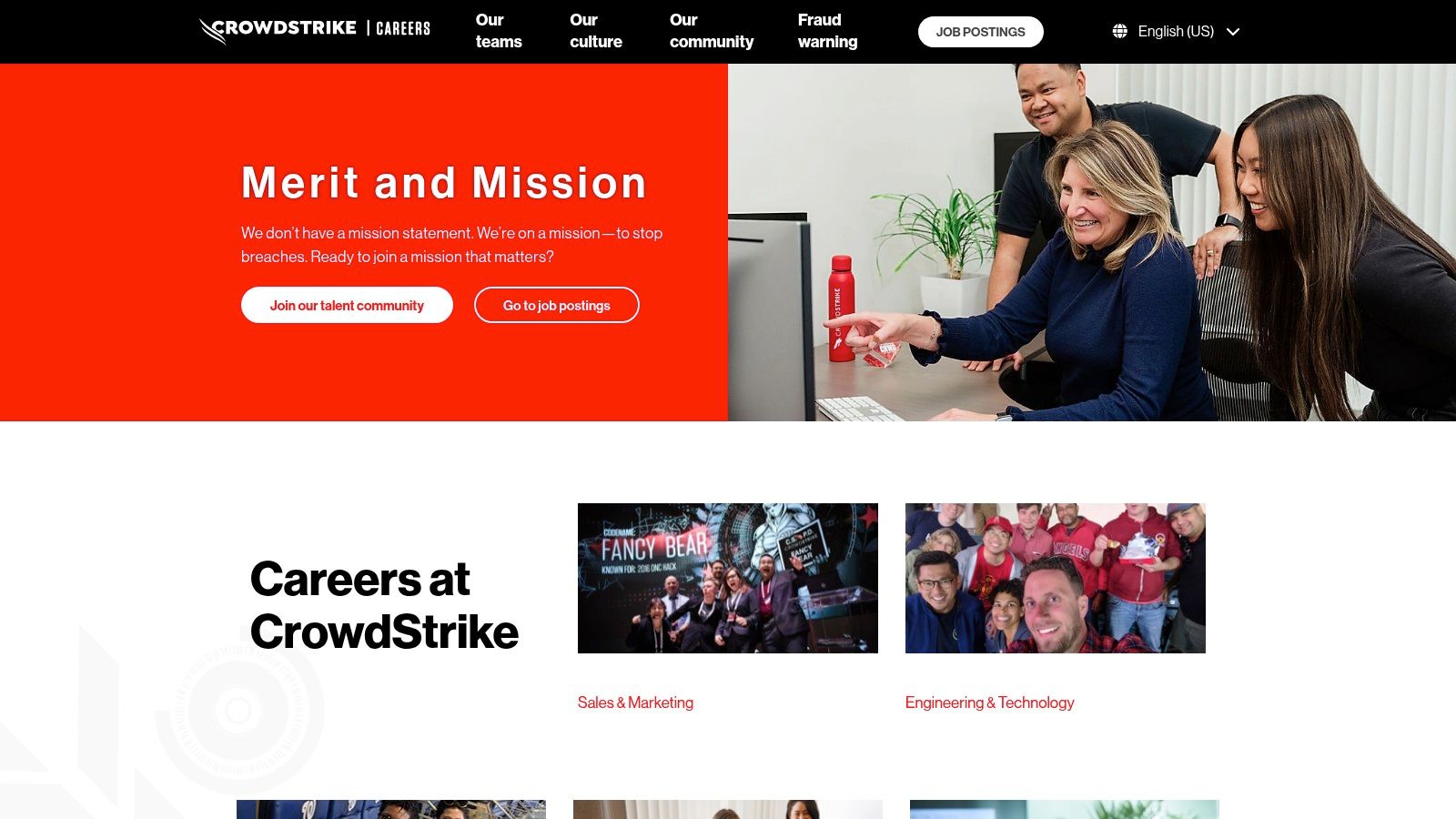
Cybersecurity is one of the cleanest paths into high paying remote sales jobs because buyers already understand the cost of getting security wrong. CrowdStrike benefits from that tailwind.
Its careers site is here: CrowdStrike careers
CrowdStrike is a strong target if you sell well in technical environments and you’re comfortable running deals with security teams, IT leaders, procurement, and executive stakeholders. That mix weeds out weaker candidates fast. This is good news if you’re built for enterprise selling.
What makes CrowdStrike attractive
The product category helps. Endpoint, identity, and cloud security are easier to justify internally than many “nice to have” tools. In practice, that gives reps a more credible business case and usually a stronger discovery conversation than generic software pitches.
There are also multiple routes in:
- Commercial and mid-market paths: Good for reps stepping up from SMB or transactional SaaS.
- Enterprise and strategic tracks: Better fit for sellers who can manage longer cycles and stakeholder-heavy buying groups.
- Presales and partner options: Useful if your background is more technical or channel-oriented.
CrowdStrike also makes sense for candidates who want internal mobility. A company with multiple segments gives you more ways to grow than a single-motion startup.
Trade-offs
The name carries weight, but brand alone won’t save a bad patch or rough segment.
Quota attainment can vary by territory, timing, and assigned book. That’s true in any serious sales org, but candidates often forget it when they get impressed by company logos. Ask hard questions about territory design, inbound support, partner influence, and how new business gets divided from expansion.
A strong logo gets you recruiter attention. A strong territory gets you paid.
Federal and public-sector roles can also come with extra friction. Depending on the role, you may run into location restrictions or security-related requirements that don’t apply in commercial segments.
Who should target it
CrowdStrike is best for reps who already know they want to stay in cybersecurity or move into it deliberately. It’s not ideal for someone who needs lots of coaching on technical context or who has only sold lightweight products with short, single-threaded cycles.
If your résumé shows credible B2B selling and your interviews show you can talk to security-conscious buyers without sounding scripted, it belongs high on your list.
3. Datadog
Datadog is where a lot of sellers underestimate the upside because they focus too narrowly on “monitoring.” That is a mistake.
The careers page is here: Datadog sales careers
A broad platform creates room for land-and-expand selling. That matters if you want commission upside tied to multi-product growth, not just one clean logo close and done.
Why Datadog is compelling
Datadog touches infrastructure, logs, observability, security, and DevOps workflows. For a good seller, this creates account expansion paths that are easier to sustain over time. You’re not just winning the first deal. You’re building reasons to come back.
That’s one reason Datadog attracts reps who like technical sales without going fully presales. The product story gives you enough depth to run serious discovery, but you still need to keep the commercial side moving.
A few things stand out operationally:
- Multiple sales ladders: SDR to AE progression exists, and there’s room to move into larger segments.
- Remote-eligible openings: Many postings are built for distributed hiring across different states.
- Product breadth: Helpful for reps who know how to expand use cases after the initial win.
What can go wrong
Datadog is not a place to wing technical credibility.
You don’t need to be an engineer, but you do need enough fluency to understand what the buyer is trying to monitor, secure, or optimize. Reps who fake their way through DevOps terminology usually get exposed in interviews, then again on calls.
It also pays to be picky about role specifics. Territory quality, account ownership, and segment assignment matter a lot in platform companies. One Datadog role can be a growth engine. Another can be a grinding rebuild.
If the recruiter can’t explain the patch, the onboarding expectation, and what a good first quarter looks like, keep digging before you commit.
Best candidate profile
Datadog is a smart target for sellers coming from cloud, infrastructure, developer tooling, or technical SaaS motions. It’s also attractive for reps who want a path from transactional success into larger, more strategic deals.
For high paying remote sales jobs, this is one of the stronger “career compounder” options on the list. It can sharpen both your earnings profile and your technical selling muscle.
4. Snowflake
Snowflake is where a remote sales job starts to look less like classic SaaS selling and more like account strategy.
You can monitor openings here: Snowflake careers
That matters for candidates who want six-figure upside tied to real enterprise work, not a high-velocity dashboard full of small deals. Snowflake sits at the center of data warehousing, analytics, governance, and AI projects. Buyers rarely treat that as a point purchase. They treat it as infrastructure, which changes the kind of rep who wins there.
What the role demands
Snowflake rewards sellers who can manage a long, political buying process from a home office without losing control of the deal. The work is part discovery, part orchestration, part internal project management. A rep may need alignment from data teams, security, finance, procurement, and an executive sponsor before anything closes.
That is the attraction.
It is also the filter. Reps who depend on momentum alone often stall in this environment because the buyer is not just choosing software. The buyer is weighing migration risk, cloud spend, implementation effort, and whether the internal team can support adoption after signature.
Why Snowflake belongs on the shortlist
Snowflake stands out for a few practical reasons:
- High-value sales motion: Strong fit for enterprise reps who know how to build consensus across technical and business stakeholders.
- Partner-driven pipeline: Cloud hyperscalers, consultancies, and implementation partners can influence deal flow if you know how to work an ecosystem.
- Multiple entry points: Commercial, enterprise, and public sector roles create different paths depending on deal size experience and industry background.
It also helps that Snowflake sells into a budget conversation executives already understand. Data platforms tend to tie into cost control, modernization, reporting, and AI readiness. That gives sellers a clearer business case than products that still need heavy category education.
What to verify before applying
Job title alone is not enough. Check whether the role is true remote, remote with travel expectations, or remote in name only with regional office pressure. Then verify the patch design.
I always want three answers before I take a Snowflake role seriously. Is the territory new logo or expansion. How much partner influence exists in the patch. What does a healthy first six months look like for pipeline, not just closed revenue.
Those answers usually tell you whether the role is a strong platform for earnings or a rebuild project dressed up as an enterprise opportunity.
One more thing. If you are also targeting platform companies in adjacent enterprise workflows, reviewing something like this ServiceNow Certified System Administrator practice exam can sharpen your read on how technical buying committees evaluate credibility, even outside a ServiceNow-specific process.
For candidates using direct outreach instead of waiting on crowded job boards, Snowflake is worth sourcing early. Good roles here get attention fast, and the best way in is often a recruiter or second-degree intro before the posting collects a few hundred applicants.
5. ServiceNow
ServiceNow is one of the better examples of a company where the sales role can be bigger than the title suggests.
The careers page is here: ServiceNow careers
A lot of candidates think “ITSM” and stop there. That is outdated. ServiceNow’s footprint spans workflow, operations, risk, customer and employee experience, and AI-related transformation language that enterprise buyers are already using internally. That breadth creates strong conditions for account expansion and for specialized roles around solution selling.
Why strong sellers target it
ServiceNow tends to appeal to candidates who want structure. Bigger enablement systems, clearer role definition, stronger collaboration with presales, and a more mature enterprise motion than many earlier-stage SaaS companies.
That matters if you’re moving upmarket and want support, not chaos.
The BLS ranks Sales Managers as the top-paying sales role at a median annual wage of $135,160, ahead of Sales Engineers at $116,950 and Technical or Scientific Wholesale Reps at $99,710, according to the same Account Makers remote sales hiring trends analysis. ServiceNow is exactly the kind of enterprise software environment where that management and technical-selling path can become realistic over time.
Practical fit and friction
This company works well for several profiles:
- Enterprise AEs: Especially if you’ve sold into complex operational or IT environments.
- Solution Sales Executives: Better fit when you bring domain depth in a particular workflow area.
- Solution Consultants and partner GTM roles: Strong option for technical communicators who influence deals without owning the full quota.
There are trade-offs. Some jobs are marked remote or flexible, but location still matters. Certain roles expect proximity to target metros or periodic travel. You need to read “remote” carefully here instead of assuming total location freedom.
One related angle matters if you’re targeting technical-adjacent sales: certifications can help your credibility when you’re selling into ServiceNow-heavy environments or adjacent ecosystems. A ServiceNow Certified System Administrator practice exam won’t get you hired by itself, but it can sharpen your vocabulary if you’re coming from outside the platform world.
Best candidate profile
ServiceNow is a strong target for reps who want process, product depth, and long-term career durability. It’s less attractive for people who only perform in lightweight startup chaos or who get bored by enterprise coordination.
If your idea of a good sales role includes enablement, clear segmentation, technical support, and multi-product expansion, ServiceNow deserves attention.
6. Okta incl. Auth0
Identity is one of those categories that buyers rarely treat as optional. That’s why Okta stays relevant for people chasing high paying remote sales jobs with strong business justification behind the product.
The careers page is here: Okta careers
Okta also gets an edge from having both enterprise identity motion and developer-facing motion through Auth0. This split creates more than one route into the company, and it creates more than one type of seller success story.
What makes the category attractive
Identity and access management can be sold through different value lenses: Security, compliance, user experience, developer velocity, customer identity. That gives good reps flexibility in how they frame urgency.
It also means your background matters. A seller from cybersecurity may align naturally with one side of the portfolio. A seller from developer tools or API-heavy products may fit better on another.
High-paying remote sales roles like Senior Account Executives and Sales Directors can command $150K to $350K OTE in sectors such as AI, healthtech, and machine learning, according to Built In’s remote sales market overview. Okta isn’t those exact categories, but it lives in the same upper band of technical B2B selling where experienced reps can justify premium compensation.
What to look for in postings
Okta is worth watching because many postings include clearer compensation detail in jurisdictions where salary transparency applies. That helps you qualify the role before sinking time into multiple rounds.
Still, read the location line carefully. “Remote” doesn’t always mean all states. Some roles narrow eligibility by geography, and that can affect whether your application gets considered at all.
A few signs of a strong fit:
- You can sell technical value without becoming a product demo robot.
- You’ve handled security, IT, or developer stakeholders before.
- You know how to run both direct and partner-influenced motions.
Where candidates miss
The common mistake is assuming identity sales is purely a security sale. It isn’t. Some roles lean more heavily into developer adoption, customer identity, or broader platform conversations. If you go into interviews with a one-note pitch, you’ll sound narrower than the team needs.
Good Okta candidates don’t just explain access control. They explain why identity touches onboarding, compliance, customer experience, and developer workflow.
For remote sellers who want a category with clear ROI, technical depth, and credible compensation potential, Okta remains a strong target.
7. Zscaler
Plenty of security reps say they want enterprise remote roles, then avoid the companies that require real architectural selling. That is why Zscaler stays attractive. The upside tends to sit with sellers who can explain network transformation, policy control, and secure access in business terms.
The company site is here: Zscaler
Zscaler sells into a problem set buyers cannot treat as optional. Remote access, branch replacement, cloud app usage, and zero trust policy design all touch core infrastructure. That changes the sales conversation. Instead of pitching another point tool, reps often work through broader questions about traffic flow, risk reduction, user experience, and migration from legacy network hardware.
That complexity is exactly why compensation can be strong.
Why the motion can pay well
These deals usually involve long evaluation cycles, technical validation, and a crowded stakeholder map. Security leadership cares about risk. Network teams care about performance and rollout pain. Finance cares about contract size and replacement timing. A good Zscaler rep has to keep all three moving without letting the process drift into endless education.
This is not a fast transactional environment. It is a high-friction enterprise sale with larger contract potential, meaningful presales support, and real expansion paths after the initial win. For experienced remote sellers, that mix often produces better upside than simpler mid-market roles with shorter cycles and smaller deal sizes.
Where strong candidates stand out
The best candidates do more than repeat zero trust talking points. They can diagnose whether an account is trying to modernize internet access, reduce VPN sprawl, replace legacy appliances, or clean up policy inconsistencies after cloud growth. That matters in interviews and in prospecting.
I would look for signs that the role matches your selling style:
- You can handle technical discovery without handing the whole conversation to the SE.
- You have sold into network, infrastructure, or security buyers with competing priorities.
- You are comfortable with multi-threaded deals that require partner and internal coordination.
Trade-offs to check before applying
Remote at Zscaler can still mean customer travel, territory coverage, and regional hiring limits. Read the location line closely and ask direct questions early. Some teams run true distributed coverage. Others expect regular field presence even if the posting says remote.
The second trade-off is ramp difficulty. If your background is lighter SaaS selling with clean demos and obvious ROI, this move can feel steep at first. Zscaler tends to reward reps who are comfortable selling change management, not just software features.
Best use case
Zscaler makes the most sense for enterprise sellers who want larger, more technical security deals and are willing to earn them through longer cycles. It is a weaker fit for early-career reps who still need a simplified product story or high-volume sales motion.
For candidates using this article as a search strategy, not just a company list, Zscaler is a strong direct-source target. Watch territory hiring patterns, map first-line sales leaders on LinkedIn, and reach out before the role gets flooded on major job boards. That approach works better here than waiting for a polished posting after the internal shortlist is already forming.
Top 7 High-Paying Remote Sales Jobs Comparison
| Item | 🔄 Implementation complexity | ⚡ Resource requirements | ⭐ Expected outcomes | 📊 Ideal use cases | 💡 Key advantages |
|---|---|---|---|---|---|
| Remote First Jobs | Low, sign up and configure alerts | Minimal time; possible paid membership (pricing not public) | High, early access to verified remote‑first roles | Power searchers seeking direct‑to‑employer remote‑only openings | Verified direct listings, fast discovery, low‑noise pipeline |
| CrowdStrike | Moderate, enterprise sales processes, possible clearance for some roles | High, cybersecurity sales experience preferred; market/segment knowledge | High, strong OTE potential and brand‑driven pipeline | Experienced AE/strategic sellers in cybersecurity | Category leader, partner ecosystem, high compensation upside |
| Datadog | Moderate, multi‑product selling; cloud/DevOps familiarity helpful | Mid‑to‑high, product knowledge and territory diligence needed | High, land‑and‑expand drives commission upside | Sellers with cloud/observability or DevOps background | Broad platform, clear career ladders, strong expansion motions |
| Snowflake | High, complex, strategic multi‑stakeholder sales cycles | High, enterprise data/analytics expertise and exec alignment required | Very high, top-tier enterprise AE OTEs and accelerators | Senior strategic sellers pursuing large ARR deals | Large deal sizes, strong ecosystem, significant accelerator potential |
| ServiceNow | Moderate, defined seller personas and extensive enablement ease ramp | Mid, technical knowledge beneficial; some roles need proximity/travel | High, competitive comp with strong enablement support | Technical sellers and presales seeking enablement and portfolio breadth | Strong enablement, multiple remote/flexible roles, clear seller personas |
| Okta (incl. Auth0) | Moderate, identity domain expertise and developer/enterprise motions | Mid, B2B/cybersecurity experience usually required; verify state lists | High, transparent OTEs and meaningful upside | Identity/security sellers and developer‑facing account reps | Transparent compensation, combined Okta+Auth0 motions, strong OTEs |
| Zscaler | Moderate, SASE/Zero‑Trust complexity with presales involvement | Mid, presales/support and travel expectations vary by team | High, enterprise deal potential and cross‑sell opportunities | Network/security sellers and technical presales | Leader in SASE, strong SE career paths, hybrid/remote flexibility |
Your Playbook for Landing a Six-Figure Remote Role
Knowing which companies to target helps. It doesn’t close the gap by itself. The difference between candidates who land high paying remote sales jobs and candidates who keep “networking” for months is execution speed, source quality, and relevance.
Start with role quality, not title vanity.
A remote sales opening can look elite and still be junk. Some companies hide weak pipeline behind inflated OTE language. Others post “remote” jobs that require office proximity, heavy travel, or full-time meeting culture that wrecks the flexibility you were chasing. Read the posting like a seller reads a contract.
Look for green flags. Direct application to the company careers page. Clear experience requirements. Specific segment language. Named product areas. Concrete expectations around territory, vertical, or customer size. If compensation is listed, a balanced structure is usually a healthier signal than fuzzy “uncapped earnings” copy with no substance behind it.
Red flags are easier to spot when you stop wanting the job so badly. Commission-only arrangements for full-time B2B roles, vague descriptions, personal financial requests, communication from random email domains, urgency pressure before you’ve even met the team. If it smells off, move on.
Then fix your sourcing.
Mainstream boards are fine for research, not for edge. The stronger move is to build alerts around exact titles and exact companies, then apply through direct listings as early as possible. That’s why Remote First Jobs belongs at the center of a serious search. It lets you work from employer-posted openings instead of stale repost ecosystems. In a market where timing is an advantage, that’s not a nice-to-have.
Remote job postings reached a record 424,778 in the Virtual Vocations database in 2025, with quarterly totals of 86,233 in Q1, 118,003 in Q2, 116,097 in Q3, and 104,445 in Q4, according to Virtual Vocations’ 2025 year-end report. Volume isn’t the issue. Signal is.
Once you apply, don’t disappear into the ATS.
Find the hiring manager, regional leader, or adjacent director. Send a short note that proves fit. Not a life story, not a motivational speech. Relevance wins.
Subject: Application for [Job Title] from [Your Name]
Hi [Name],
I applied for the [Job Title] role through your careers page. My background lines up closely with the work your team is doing, especially in [relevant segment, product area, or buyer type].
I’ve spent my recent roles selling into [buyer group or industry], with a focus on [new business, expansion, technical sales, partner-led deals]. That’s why this role stood out.
If helpful, I’m happy to share a concise summary of relevant results and why I think the fit is strong.
Best, [Your Name]
That template works because it respects the reader’s time. It also sounds like a seller, not a desperate applicant.
Two more rules matter.
First, qualify the company like they’re qualifying you. Ask how pipeline is generated. Ask what percentage of the role is new logo versus expansion if they volunteer it, but if they don’t provide hard numbers, keep it qualitative and ask about mix. Ask what the first six months look like. Ask what causes reps to miss.
Second, target roles where your proof already exists. If you’ve sold cybersecurity, lean into cybersecurity. If you’ve sold workflow software to operations teams, push that. The market pays for credible adjacency faster than it pays for heroic reinvention.
The best remote sales searches are boring in the right ways. Tight list. Direct sourcing. Fast application. Sharp outreach. Hard qualification. Repeat.
If you’re done wasting time on reposted roles and ghost jobs, use Remote First Jobs to build a cleaner pipeline. It sources directly from employer career pages at remote-first companies, filters out junk, and gives you a real shot at applying before the crowd shows up.